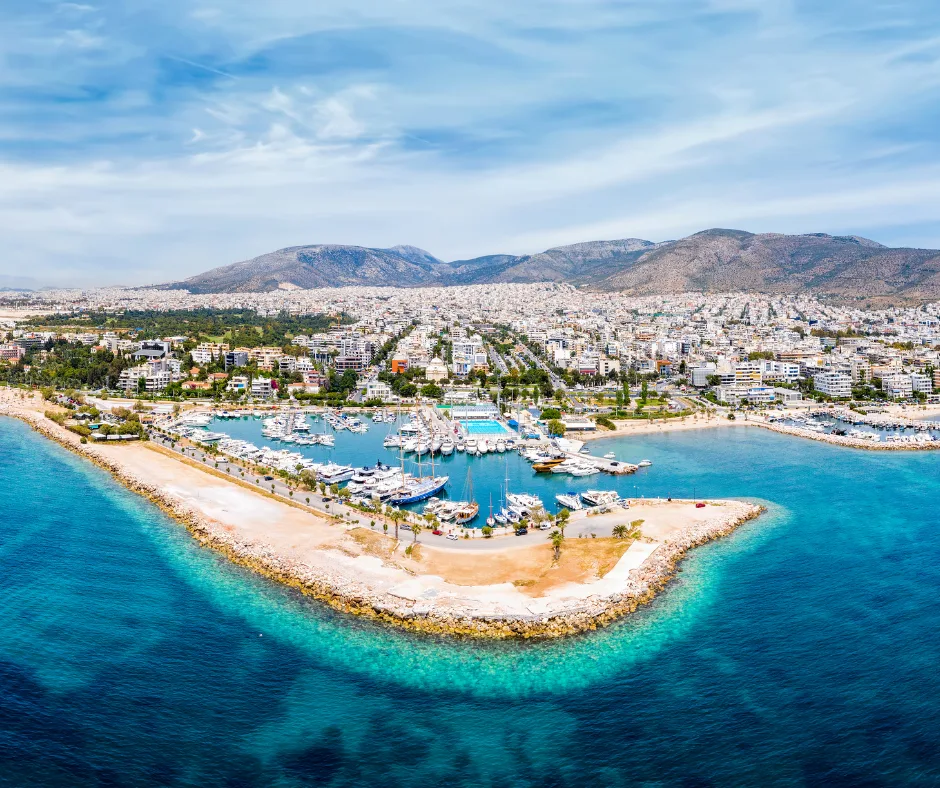
For anyone planning a corfu sailing itinerary, dropping the anchor in Voutoumi Bay on Antipaxos at 11am on a Tuesday is the ultimate experience. The water is so clear that you can read the depth gauge by eye before the hook even touches sand. Two other boats are there. By July that number will be thirty. But right now, in early June, you have half a turquoise lagoon to yourself, a cold bottle of Assyrtiko in the cooler, and nothing on the agenda until Nidri.
This is the Ionian. And a well-planned Corfu sailing itinerary is one of the best one-week sails in Europe.
The route covered here runs 180nm over seven days, starting and finishing at Gouvia Marina in Corfu. It takes in Paxos, Antipaxos, Lefkada, Meganisi, Ithaca, and Kefalonia, with a long final leg back north. The Ionian has no meltemi, predictable winds, and water temperatures between 22 and 26°C from June through October. It suits first-time Greek charter sailors as well as experienced crews who want variety without stress.
Here is what you need to know before you set off.

Why sail the Ionian Islands
The Ionian is a different proposition to the Aegean. The wind here in summer is the Maistros, a north-westerly that typically runs at 10 to 18 knots across most of the island chain. It is steady without being aggressive. You are not fighting 30-knot gusts in a narrow channel while trying to anchor with six other boats watching. For most of June, September, and October, it simply fills the headsail and sends you south in a straight line.
That gentleness is the Ionian’s main asset for beginners. It is the most recommended starting point for a first Greek charter. Passages are short enough that you can stop often. Most anchorages have clear holding ground, and the island chain is close-knit so you are rarely more than a couple of hours from shelter.
For experienced sailors, the appeal is the quality of the stops. Paxos is tiny and manicured. Ithaca has genuine myth-and-history weight. Kefalonia has Fiskardo, a Venetian village that survived the 1953 earthquake intact, which makes it unlike anything else in Greece.
The honest caveat: July and August are busy. Paxos, Fiskardo, and Voutoumi are on every charter boat’s list. If you want some space at the popular stops, go in May, June, or September. The route works in all three months. Peak season still has its appeal, but you will need to pre-book marina berths and arrive early at anchorages.
Best time for this itinerary
May is the quietest usable month. Winds can be variable and the water is still on the cooler side, around 20°C, but marinas have space, prices are at their lowest, and the scenery is lush. Good for experienced crews who want solitude.
June is arguably the best month for this itinerary. Maistros has settled into its summer pattern. Sea temperatures are comfortable. Tourist infrastructure is open everywhere but not overwhelmed. You can walk into Fiskardo for dinner without a reservation.
July and August bring peak prices and peak crowds. On the positive side, the Ionian’s lack of meltemi means July sailing is actually pleasant, unlike parts of the Aegean where mid-summer can be rough. Winds are light and consistent. The trade-off is Paxos in particular becoming very congested. Budget for marina berths in advance and book them before you leave Corfu.
September is the second-best month, and many experienced sailors prefer it to June. The sea is at its warmest (close to 26°C), the crowds thin out after the first week, and the Maistros is still reliable. Charter prices drop noticeably from high-season rates.
October is possible for the first two weeks. After that, weather becomes unpredictable and some facilities close. Not recommended unless you know what you are doing.
Recommendation: September for most people. June for families who want school-holiday timing without the full August circus.
7-day Corfu sailing itinerary
Total distance: 180nm
Start and end: Corfu (Gouvia Marina)
Difficulty: Suitable for beginners with a basic sailing certificate (RYA Day Skipper or equivalent). No technically demanding passages.
Day 1: Corfu (Gouvia) to Paxos (Gaios) (25nm)
Leave Gouvia Marina early, ideally by 9am. The channel south of Corfu runs close to the Albanian coast and the sight of a different country’s mountains across the water is one of the more unusual views in Greek sailing. The Maistros will be on your beam or quarter for most of this leg, making it a comfortable 3 to 4-hour passage.
Berth: Gaios is the main port on Paxos, and the quayside fills quickly. Arrive before 2pm in shoulder season or you will be anchored outside the bay. High season, pre-book or plan to anchor in the bay and take the dinghy in. Stern-to on the town quay costs around €30 to €50 per night depending on season. There are also private pontoons that charge similar rates.
Ashore: Gaios village is small enough to walk in twenty minutes but good enough to spend an afternoon in. The waterfront has several decent restaurants. Try Vassilis on the main quay for grilled fish; it is a straightforward no-frills taverna that has been there for years and does not need to try hard to fill tables. The village square with its church and plane trees is one of the more picturesque spots in the Ionian.
Tip: If you arrive late and the quay is full, the small bay of Lakka on the north end of Paxos has anchoring space and a very good waterfront taverna. It is 6nm from Gaios and worth considering as an alternative base for the evening.
Day 2: Paxos to Antipaxos then Nidri or Sivota (35nm)
This is the long day of the first half of the trip, but it earns its distance.
Leave Paxos in the morning and sail the 3nm south to Antipaxos. Drop the hook in Voutoumi Bay on the west side. The water here is the reason people repeat this itinerary. White sand, turquoise shallows, the kind of colour you expect on a postcard but rarely find in person. Swim, eat lunch on board, then weigh anchor by early afternoon.
From Antipaxos, the sail north and east to Nidri on Lefkada’s east coast (near Lefkada (Lefkas Marina)) is around 28nm. The wind typically favours this leg. Nidri is a functional rather than beautiful town but has excellent provisioning (a supermarket 5 minutes from the quay), fuel at the marina, and a wide range of restaurants.
Alternative: If Nidri feels too busy or too tourist-focused, continue an extra 5nm south to Sivota (sometimes written as Syvota). It is quieter, the bay is gorgeous, and the tavernas on the waterfront are better quality. The anchorage is free but space is limited in high season.
Berth: Nidri town quay or anchor off. The small marina in Nidri charges around €20 to €35. Sivota is primarily anchoring, with some tavernas running a simple pontoon service.
Day 3: Lefkada to Meganisi (15nm)
Short day. Use the extra time well.
Meganisi is the island directly south of Nidri that most charter boats overlook because it requires a deliberate decision to stop rather than pushing on. That is a mistake. The island has three main bays: Spartochori, Vathy, and Porto Spilia. All three are worth spending time in.
Spartochori has a village up on the hill with a taverna that puts tables out under a pergola and serves octopus that has been dried on the line outside the kitchen. Order it. It is some of the best on the route.
Vathy is the main port, with a longer quayside and more services. The Vathy Port of Ithaca entry in our marina guide has berth details for further along the route, but Vathy on Meganisi operates similarly, stern-to on a short quay with tavernas directly behind.
Berth: Anchoring in any of the three bays is free and holding is good. Some tavernas in Spartochori and Vathy have informal pontoons where you berth in exchange for eating dinner there. This is a fair deal and usually works out cheaper than a marina.
Tip: Meganisi is the best day of the trip for many crews. Do not rush it. Stay two nights if the schedule allows.
Day 4: Meganisi to Ithaca (Kioni or Vathy) (20nm)
Homer’s island. Whether or not Odysseus actually existed, arriving in Kioni by sailboat with the hills behind it carrying olive groves down to the water gives the place a weight that more famous destinations do not have.
The sail from Meganisi crosses the Ithaca Channel. Winds here can accelerate slightly in the afternoon, so an earlier departure is worthwhile. Expect around 2 to 3 hours on the water.
Kioni is the prettier of the two main ports: a small semicircular bay with three windmills on the headland and tavernas on the quay. Space is limited and it fills up. Arrive before noon in July or August.
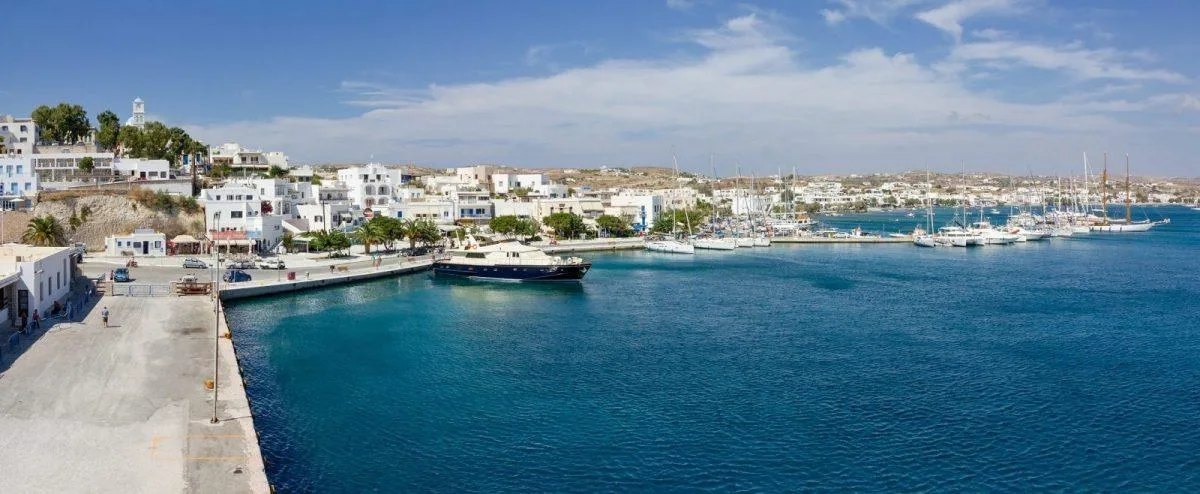
Vathy is Ithaca’s main port and has more space, a fuller quayside, and better provisioning. The Vathy Port of Ithaca handles stern-to berthing and has basic facilities. It is less immediately picturesque than Kioni but perfectly comfortable for the night.
Ashore: In Kioni, Calypso taverna on the waterfront is well-regarded for grilled fish and local wine. In Vathy, the main square has several options. The town is quiet in the evenings and genuinely traditional, with none of the souvenir-shop feel of more developed islands.
Hazard: The bay at Kioni has a reef on the south entrance. Enter from the north or stay in the centre of the bay. Well charted, but do not cut the corner on approach.
Day 5: Ithaca to Kefalonia (Fiskardo) (15nm)
A short, rewarding leg. The crossing from Ithaca to Kefalonia’s northern tip takes around 2 hours. Fiskardo is one of those places that makes you understand why people come back to the Ionian year after year.
The village was the only settlement in Kefalonia that survived the 1953 earthquake largely intact. That means Venetian-era buildings on the waterfront, narrow lanes with original stone paving, and a harbour that looks more like it belongs in Corfu’s old town than on a small Kefalonian headland. It is upscale and it knows it, but it does not feel contrived.
Berth: The main quay in Fiskardo is first-come, first-served for small yachts (stern-to). Private pontoons and mooring buoys also operate in the bay, run by local businesses who charge around €20 to €40. In high season the bay is packed. Get there before 1pm.
Ashore: Tassia restaurant on the waterfront has been there since the 1970s. It is not cheap (expect €35 to €50 per person with wine) but the location and the quality justify it for one night. For a more affordable dinner, the smaller places one lane back from the water are good and considerably quieter.
Day trip: If you have time, take the dinghy or a taxi north to Myrtos beach. The view from the road above it is one of the most photographed in Greece and the beach itself is worth the trip, though the water gets rough in the afternoon. Go in the morning.
Day 6: Kefalonia to Preveza or Lefkada canal (30nm)
This is the transition day, beginning the loop back north. You have two options.
Option A: Preveza. Sail north across the Kefalonia-Lefkada channel to Preveza on the mainland. The town is underrated by most charter itineraries. It has an excellent fish market, a lively waterfront that does not depend on tourism, and a range of restaurants that serve the local population rather than sailors. The anchorage off the town or a berth at the small marina works well. Fuel is available here if you need it.
Option B: Lefkada lagoon. Stop in one of the protected bays along Lefkada’s east coast, such as Tranquillo Bay or the anchorages south of the canal. These are calm, well-sheltered, and quieter than either Nidri or Preveza.
Wind note: The Kefalonia Channel can funnel the Maistros and produce short, steep chop. Conditions are rarely dangerous but can be uncomfortable. Keep an eye on the forecast and leave early to cross in the morning before the afternoon acceleration.
Day 7: Lefkada area to Corfu (Gouvia) (40nm)
The longest leg of the trip. Allow 6 to 7 hours, potentially more if winds are light.
Leave early, by 7 or 8am. The route runs north through the channel between Lefkada and the mainland, then up the coast toward Corfu. The Albania-facing coast is visible for much of this passage and the mountain backdrop is dramatic.
Optional stop: Sivota (on the mainland coast north of Lefkada) makes a good coffee-and-swim stop if conditions allow. The bay is sheltered and the village has a decent taverna. Add around 90 minutes if you stop.
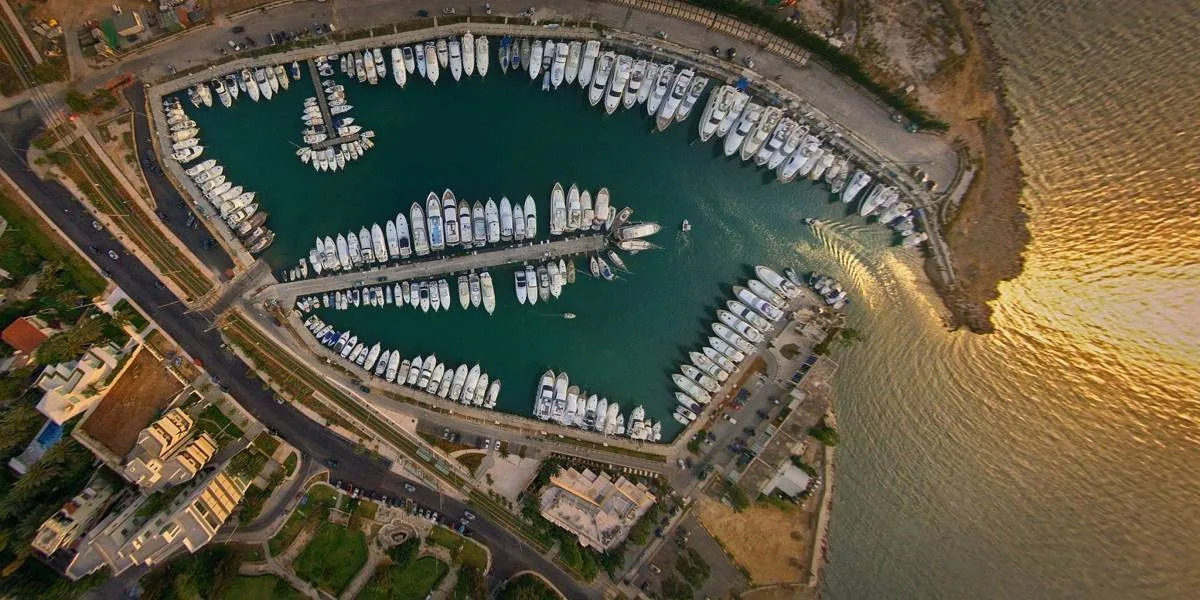
Arrival: Gouvia Marina in Corfu is the largest marina in the Ionian. It has full services, fuel dock, and a chandlery. The approach is straightforward. Call the marina on VHF 12 or VHF 16 for a berth assignment. Mandraki Marina Corfu is an alternative if Gouvia is full, located closer to Corfu town and the airport.
End of trip provisioning: If you have time the evening before departure, Gouvia has a supermarket nearby. Corfu town is 10 minutes by taxi and worth a final evening walk through the Venetian old town.

What boat to charter for this route
Monohull vs catamaran: Both work well on this itinerary. The passages are short enough that a monohull’s motion is never a problem, and most anchorages accommodate catamarans without difficulty. Catamarans are better for groups of 6 or more who want comfort, particularly in Fiskardo and Paxos where stern-to berthing on a catamaran can be tighter in peak season.
Monohull size: A monohull (35 to 40ft) comfortably handles two couples or a family of four. For the 2026 season, expect to pay €900 to €1,800 per week in shoulder season (May, June, September) and €1,600 to €3,000 per week in July and August for a bareboat in this range.
Catamaran: A 40ft catamaran costs €2,500 to €4,500 per week in shoulder season and €4,500 to €8,000 in high season. The extra space makes a real difference on a 7-day trip, particularly for crews who are not used to living on a boat.
Bareboat vs skippered: The Ionian is genuinely beginner-friendly. If you hold an RYA Day Skipper or equivalent and have logged some offshore miles, you can bareboat this route. The passages are short, the anchorages are straightforward, and the weather is predictable. If you are less confident, a skippered charter is worth it for the peace of mind and the local knowledge. A skipper will know the uncharted reef at Kioni, the best table at Tassia, and when to leave early to beat the afternoon chop in the Kefalonia Channel.
Cabin charter: Several operators run cabin charter on this route from Corfu, which means booking a berth on a crewed boat rather than chartering the whole vessel. This works well for solo travellers or couples who do not want to organise a full crew. Prices vary but typically run €800 to €1,400 per person per week including meals.
You can search available charters in Greece to compare boats across multiple platforms in one place.

Practical tips before you go
Provisioning: Stock up at Gouvia before departure. There is a supermarket within walking distance of the marina. Top up at Nidri on Day 2 (good supermarket) and at Vathy on Ithaca if needed. Paxos and Fiskardo have shops but prices are high and selection is limited.
Fuel: Fill at Gouvia on departure. Fuel is available at Nidri (diesel pontoon in the marina), Vathy on Ithaca, and Preveza. Expect to pay around €1.80 to €2.00 per litre for diesel in 2026. A 35ft monohull on this route will use 60 to 80 litres in motoring, mainly on the calmer morning departures.
VHF: Marina channels vary. Gouvia monitors VHF 12 and 16. Lefkada marina uses VHF 69. Call ahead from 10nm out in peak season to confirm a berth. All Greek marinas monitor VHF 16 as a working channel.
Documents: You need your competency certificate (RYA Day Skipper or equivalent, or national equivalent), logbook, boat insurance papers, and a completed crew list. Greece also requires a transit log if you cross into Albanian or Montenegrin waters, though this itinerary stays within Greek territory throughout.
Budget: A rough daily breakdown per boat (not per person):
| Item | Estimated daily cost |
|---|---|
| Marina or anchorage | €25–50 |
| Fuel | €15–25 |
| Provisioning (on board meals) | €40–60 |
| Eating ashore (1 meal for 4) | €60–120 |
| Total per day | €140–255 |

Find charter yachts for this itinerary
Searadar searches across the top charter platforms so you can compare real availability and prices in one place. It covers bareboat, skippered, and cabin charter options across Corfu and the wider Ionian.
Find Your Perfect Charter
Compare yachts, catamarans and prices from top charter companies in one search.
Powered by Searadar · No booking fees
Book early if you are planning a June or September departure. Those months fill up well before spring, particularly for the more popular boat sizes.
Frequently asked questions
Do I need sailing experience to do this itinerary?
An RYA Day Skipper certificate or equivalent is the standard requirement for bareboat charter on this route. The Ionian is considered the most beginner-friendly sailing area in Greece, with short passages, predictable Maistros winds at 10 to 18 knots, and no meltemi. If you have completed a competency course and want to put it into practice, this is an ideal route. Hire a skipper for your first trip if you are unsure.
Can I sail this route in reverse?
Yes. Starting in Kefalonia (or Lefkada) and working north to Corfu is perfectly viable. The Maistros blows from the north-west, so sailing south is typically more comfortable on the outward legs, but the reverse route is manageable. Many charter bases in Lefkada offer a Corfu return option. The advantage of the reverse is finishing in Fiskardo or Paxos, which are genuinely nicer departure points than a return to Gouvia.
Is July a good month for this itinerary?
Better than many people expect, because the Ionian does not have the meltemi that makes Aegean sailing difficult in mid-summer. July winds are light and consistent, typically 10 to 15 knots. The downside is crowds and prices. Paxos and Fiskardo are at their busiest. Pre-book marina berths in both locations and arrive early at anchorages. If you are flexible, September gives you similar conditions with significantly fewer boats.
What happens if there is no wind?
Light air days are common in July and August in the Ionian. On most legs of this itinerary, motoring is a realistic option: the longest day (Lefkada to Corfu at 40nm) takes around 7 hours under motor. The charter boat will include fuel in the package or bill it separately at the end. Budget for 60 to 80 litres of diesel over the week if you motor half the legs.
How much does a 7-day Ionian charter cost in total?
The boat itself is the main variable. A 35 to 40ft bareboat monohull runs €900 to €1,800 per week in shoulder season and €1,600 to €3,000 in peak. Add €140 to €255 per day in running costs (marinas, fuel, food, one ashore meal) and a week for four people in shoulder season comes to roughly €2,500 to €4,000 total excluding flights. In high season, the same trip costs €4,000 to €7,000. A skippered charter adds €160 to €200 per day on top.