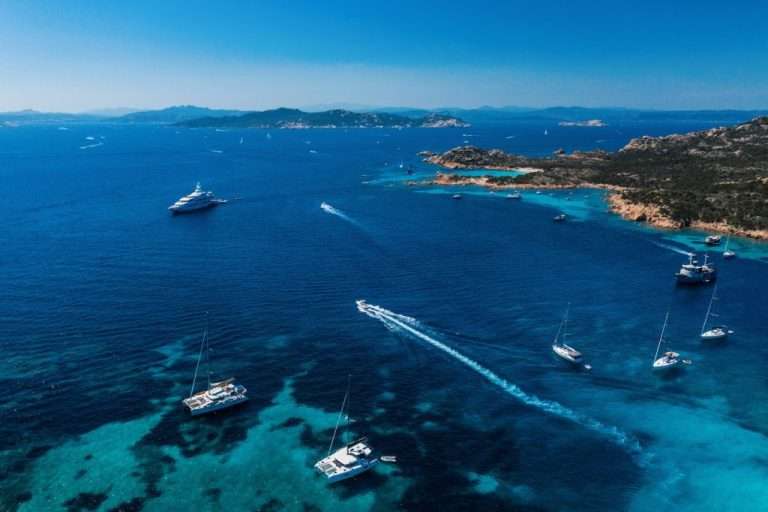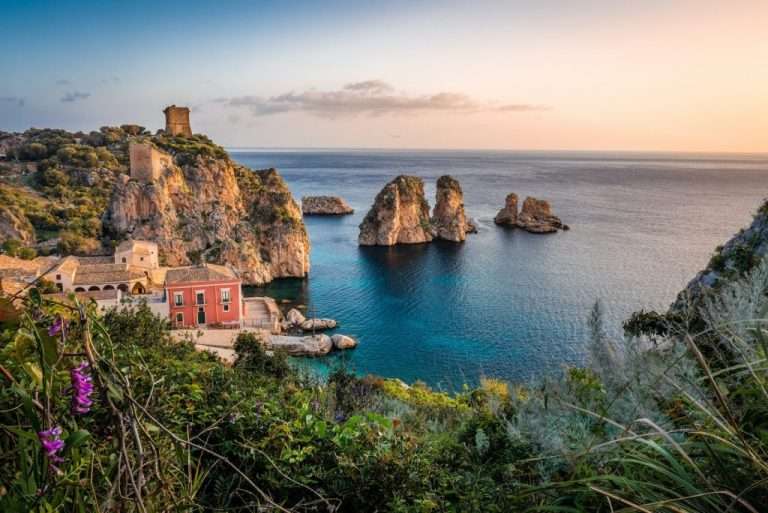
You are anchored in Palinuro Bay on the fifth evening. The headland curves behind you, the sea caves are turning orange in the last light, and there is not another boat within half a mile. Two days ago you were threading through ferry traffic off Capri with 200 tourists watching from a hydrofoil. This is what makes an amalfi coast sailing itinerary worth planning carefully: it gives you both ends of the spectrum, and it does so within a week.
This is a 7-day loop of roughly 140 nautical miles. You depart from Marina di Stabia near Castellammare di Stabia, work your way south along the coast through Capri, Positano, Amalfi town, Cetara, and Palinuro, then return north via Procida. The route suits sailors who want scenery and culture in equal measure, with a few longer offshore legs to give the trip a proper sailing feel.
Here is what you need to know before you set off.
Why sail the Amalfi Coast
The Campania coast packs more variety into 140 miles than most sailing regions manage in twice the distance. You move from the volcanic drama of the Gulf of Naples, past 600-metre limestone cliffs above Amalfi town, to the quieter sea caves at Palinuro in the south. Ashore, each stop has a distinct character: Capri is expensive and glamorous, Procida is working-class and genuine, Cetara is the kind of village most tourists never see.
The prevailing winds are the Libeccio (SW, 10-20 knots) and Tramontane (NW), with afternoon thermals building reliably in summer. On the downwind legs this is an absolute pleasure. On the return north you will sometimes be punching into SW chop, which is why starting early matters on every passage.
This route suits intermediate sailors best. Experienced beginners can handle it with a skippered charter. It is genuinely good for families with children who are old enough to find overnight passages exciting rather than terrifying. Couples doing their first Mediterranean charter are also well served here, provided they understand the ferry traffic around Capri is real.
The honest caveat: the Amalfi Coast is one of the most photographed coastlines in Europe, and in July and August that photograph includes 300 other boats. Marina space in Capri and Amalfi is limited, mooring buoys fill by midday, and prices are high. This is not a route for those who want solitude in peak summer.
Best time for this itinerary
May and June are the best months for most sailors planning this route. The sea is calm, the Libeccio is steady without being aggressive, and the anchorages have space. Restaurants are fully open but not overwhelmed. Prices are 20-40% below peak. Lemon trees along the coast are still in flower. Water temperature reaches around 22-23°C by late June, cold enough to feel refreshing.

September and October run May and June close. September is arguably better than either, because the thermal winds remain reliable, the sea temperature is at its summer peak (24-27°C), and the crowds thin out noticeably after the first week. October becomes marginal in the second half: some anchorages start feeling exposed, and a few smaller restaurants close for the season.
July and August are busy, expensive, and beautiful. Afternoon thunderstorms can build fast after 3pm, particularly in late July. Marina berths at Capri in August need to be called in 3-4 days in advance on VHF Ch 16 or by email. If you are sailing in peak season, the solution is simple: start every passage by 7am and be anchored or berthed by early afternoon.
November through April is theoretically possible in terms of marina access, but the exposed anchorages on the Amalfi Coast become rough with S or SW swell, and several key stops lose much of their appeal. Unless you are an experienced passage sailor who specifically enjoys off-season sailing, this period is not recommended for this route.
The specific recommendation for 2026: book a departure in the last two weeks of May, or any week in September.
7-day Amalfi Coast sailing itinerary
Total distance: 140 nautical miles Start and end base: Marina di Stabia, Castellammare di Stabia (30km from Naples Airport, approximately €25 by taxi)
Difficulty: Intermediate. Exposed passages, significant ferry traffic, limited anchoring options. At least 1,000nm prior experience is recommended for bareboat. For transit, Rome Fiumicino Airport and Rome Ciampino Airport offer convenient train connections to the region.
| Day | Route | Distance |
|---|---|---|
| 1 | Marina di Stabia to Capri (Marina Grande) | 22nm |
| 2 | Capri to Positano | 18nm |
| 3 | Positano to Amalfi town | 10nm |
| 4 | Amalfi to Cetara or Vietri sul Mare | 18nm |
| 5 | Cetara / Salerno to Palinuro | 45nm |
| 6 | Palinuro to Procida | 55nm |
| 7 | Procida to Marina di Stabia | 22nm |
Day 1: Marina di Stabia to Capri (22nm)
Get off the dock early. The southwest afternoon thermal builds reliably in summer and by 2pm the ferry traffic in the approaches to Capri is significant. Leaving by 7-8am puts you at Marina Grande around midday with the thermal just starting to fill in, which can make for a cracking reach across the gulf if you catch the angle right.
The passage crosses the Gulf of Naples. It is exposed and open water, which means it is also one of the more enjoyable sailing legs of the week. Watch for hydrofoils and high-speed ferries coming out of Naples port: they move fast and they do not give way easily.
At Capri, berth assignments at Marina Grande are handled by the harbourmaster. The cost runs from €100-200 per night for a 40ft boat, which is steep, but Capri on one night’s budget is a fair trade. Leave the boat in the afternoon and walk up to Capri town. The Faraglioni rock stacks at sunset look exactly like every postcard you have ever seen, and they look like that for a reason.
Book dinner at a trattoria in the backstreets behind the Piazzetta rather than on the main square, where you are paying for the view instead of the food.
Day 2: Capri to Positano (18nm)
An easy morning departure heading east. The leg follows the coast past Punta della Campanella, the tip of the Sorrento Peninsula, and then you are looking at Positano from the sea: colourful houses stacked vertically up the cliff face, the kind of scene that makes you understand immediately why people spend months here.
Anchoring in the bay is possible in 10-15m on a sandy bottom, but the holding is good only in calm conditions. The anchorage is exposed to S swell, and in summer that swell can arrive without much warning. Mooring buoys are available at current market rates (check before you go, as prices are revised seasonally). Take the tender into the small port.
Do not let the tender logistics put you off. Positano from the water, on your own boat, with a glass of something cold, is genuinely one of the better moments available to a person on a sailing holiday. Walk up the main street (Via dei Mulini) as far as your legs are willing, and come back down for a late lunch at one of the waterfront restaurants.
Tip: Leave a crew member aboard if the anchorage feels exposed. The swell can shift quickly with afternoon thermals.
Day 3: Positano to Amalfi town (10nm)
The shortest leg of the week, which is intentional. Amalfi town deserves time, and arriving in the morning gives you a full day.
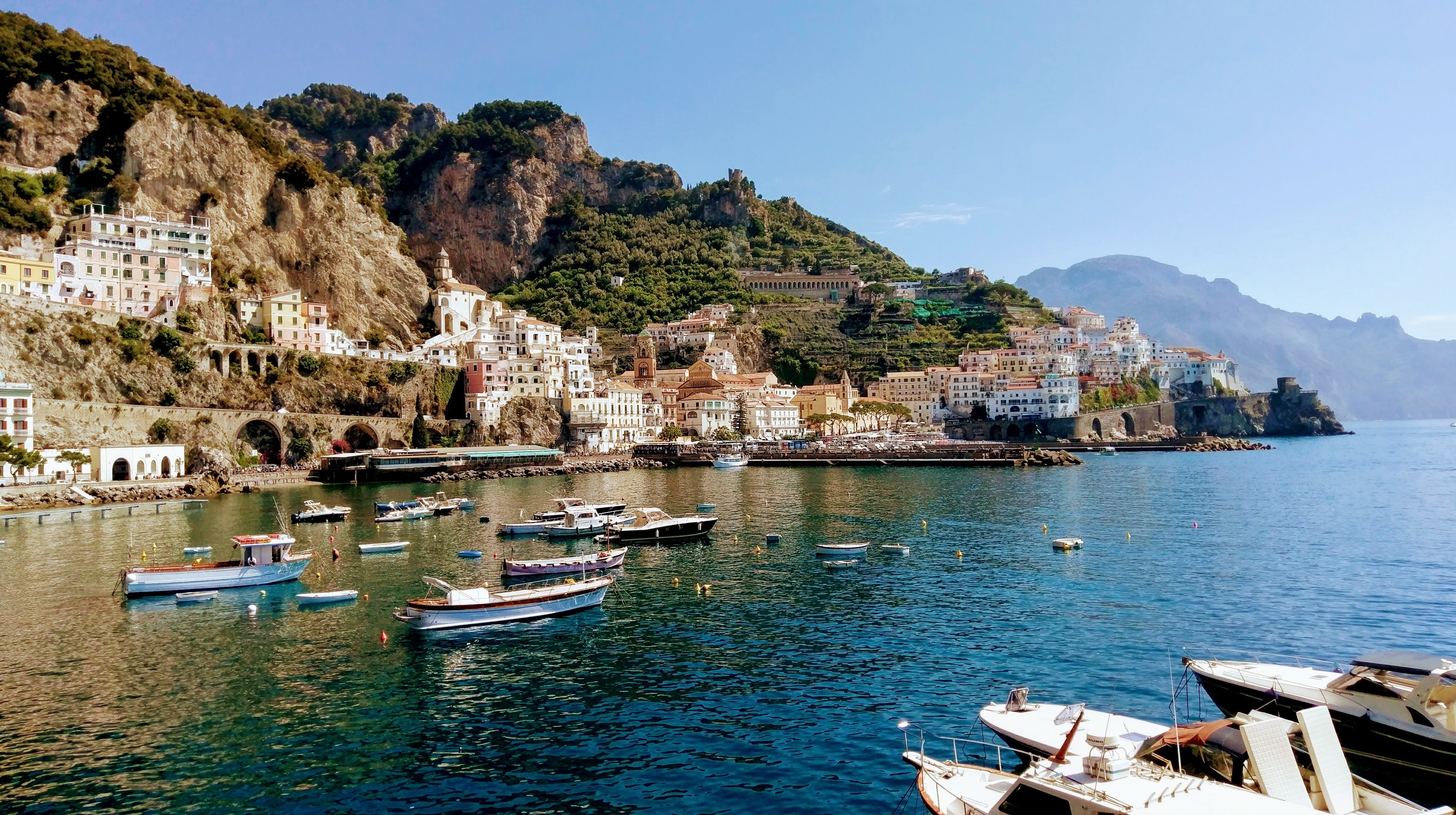
The approach is one of the more dramatic arrivals in Mediterranean sailing: 600-metre cliffs frame either side of the town, and the 9th-century Duomo appears as you round the final headland. The harbour at Amalfi has very limited space. Call ahead on VHF Ch 16, ideally the day before. Alternatively, anchor outside and use the tender. The small harbour charges approximately €80-150 per night for a 40ft boat.
Ashore: the Duomo di Sant’Andrea takes 20 minutes and is worth every one of them. The paper mills in the Valle dei Mulini are a 15-minute walk and genuinely interesting. Buy limoncello from one of the producers in town, not from a gift shop, and taste the difference. Lunch at Trattoria il Teatro on Via E. Marino, which has been feeding sailors and locals without too much fuss for years.
Day 4: Amalfi to Cetara or Vietri sul Mare (18nm)
The coast east of Amalfi is quieter and less visited. That is partly the point of this leg.
Cetara is a small fishing village with one main industry: anchovies. Specifically, colatura di alici, an anchovy sauce that is to Worcestershire sauce as a proper espresso is to instant coffee. Walk up through the village, buy a small bottle from a local shop (not a tourist stand), and use it on pasta that evening. It keeps for months.
Vietri sul Mare, a few miles further east, is known for its hand-painted ceramic tiles. The colours are extraordinary. If you are bringing anything home from this trip, this is the place to buy it rather than at a market stall in Capri.
Both Cetara and Vietri offer reasonable overnight anchorages in settled conditions. Marina di Salerno is 8nm further east if you need fuel, showers, or a more secure berth for the night before the longer passage south.
Day 5: Cetara / Salerno to Palinuro (45nm)
The longest inshore leg of the trip, and one of the best. This is the day the route earns its sailing credentials.
Depart by 6am from Salerno if you are stopping there, or 7am from Cetara. The passage runs south past Punta Licosa, an offshore headland with a lighthouse, and then continues to Palinuro. The wind angle in settled conditions is a beam reach with the Libeccio, which means this leg can be genuinely fast. In less settled conditions, the stretch between Punta Licosa and Palinuro is open and exposed, with limited shelter options.
Palinuro is worth the extra miles. The headland has natural arches and sea caves you can take the tender into. The main bay offers anchoring in 8-15m with good holding on sand. Acciaroli, 15nm north of Palinuro, is a quieter alternative if you want to arrive earlier: it is a small fishing port with a restaurant where the catch is still decided by what came in that morning.
Stay in Palinuro Bay if the weather is settled. It is the most peaceful anchorage of the week.
Day 6: Palinuro to Procida (55nm)
The longest passage of the trip, and an early start is essential. Departing at 5:30-6am gets you to Procida in early afternoon. The leg runs north, largely offshore. In good conditions with a NW or W wind, this is a fast reach. In SW conditions it can be a hard beat for the second half. Check the forecast the evening before and adjust plans if needed.
Procida is the least visited of the islands in the Gulf of Naples, and consequently the most honest. The film The Talented Mr. Ripley (the 1999 version with Jude Law) was partly shot here, which brought some attention, but the island has not been transformed by tourism in the way Capri has. The Corricella harbour on the southwest side is the place to berth: pastel-coloured fishermen’s houses stack up behind the quay, and on a summer evening the light on those buildings is extraordinary.
Dinner in Corricella is one of the better meals of the trip. La Conchiglia on Via Pizzaco has been consistently recommended for grilled fish and pasta with local ingredients. Book ahead in summer.
Day 7: Procida to Marina di Stabia (22nm)
The return leg. If time allows before departure, take the dinghy through the channel between Procida and the uninhabited Vivara island. The nature reserve channel is a calm, green corridor between the two islands, with bird life that feels completely at odds with the busy gulf you have been sailing through for a week.
The 20nm motor back to Marina di Stabia is the least exciting sailing of the week, but the gulf in the morning light on a calm day is still a pleasant way to end a trip. Budget an extra hour for marina check-in and the handover formalities: charter companies are thorough and paperwork takes time.
What boat to charter for this route
Monohull or catamaran? Both work, but they suit different groups.
A monohull between 38ft and 44ft is the practical choice for a couple or a group of four. The route has limited secure anchoring, which means you will spend several nights paying marina fees. Monohull marina costs are lower than catamaran fees at the same locations. Prices run from €1,500-2,800/week in shoulder season and €2,800-4,500/week in high season.
A catamaran between 42ft and 46ft works well for groups of six to eight. The shallower draft is a genuine advantage in some of the anchorages, particularly at Palinuro. The extra space and the second hull give families more room to live comfortably for a week. Catamaran charter costs €3,500-5,500/week in shoulder season and €5,500-9,000/week in high season.
Bareboat vs skippered: The Italian coast guard patrols this area regularly in summer, and you need an ICC or national certificate for bareboat. More practically, the ferry traffic around Capri, the exposed passages, and the limited anchoring spots on the Amalfi Coast make this a route that rewards experience. If you are doing your first Mediterranean charter, hire a skipper. At €200-250 per day plus a food allowance, a good skipper pays for themselves in reduced stress and better anchorage choices within the first two days.
Cabin charter is an option through some operators and suits solo sailors or couples who want the Amalfi experience without the full charter cost.
Charter bases for this route are Marina di Stabia (Castellammare di Stabia) as the main departure point, and Salerno as an alternative for one-way charters south.
Italian charter is expensive. An APA (Advance Provisioning Allowance) of 25-30% on top of the base rate is standard on skippered charters, and it covers fuel, marina fees, and provisioning. Budget for it before you sign.
Practical tips before you go
Provisioning: Marina di Stabia has a large supermarket about 10 minutes on foot. Stock up thoroughly before departure. Island shops in Capri and Positano are limited in selection and expensive. Bring enough fresh food and provisions for the first two to three days at minimum.
Fuel: Diesel is available at the fuel dock at Marina di Stabia and at Salerno. Current price is approximately €1.70-1.90 per litre. There is no fuel dock at Capri: plan your fuel stops around the start and the Salerno leg.
Marina booking: Call ahead on VHF Ch 16 for all marinas on this route. In July and August, Capri’s marina should be contacted 3-4 days in advance, by phone or email. Amalfi’s small harbour fills quickly: call the day before at the latest.
Documents: You will need your log book, ICC, insurance certificate, and passports for all crew. Italy requires an official crew list (ruolo equipaggio): your charter company prepares this, but confirm it before departure.
Daily budget (rough estimate, per boat):
| Category | Cost |
|---|---|
| Marina / mooring buoy | €80-200/night |
| Fuel | €30-60/day underway |
| Lunch (ashore, 4 people) | €60-100 |
| Dinner (ashore, 4 people) | €100-160 |
This is not a budget destination. A week on this route, on a bareboat monohull, with marina nights and a couple of restaurant dinners per day, typically runs €3,000-4,500 for a crew of four excluding the charter cost.
Find charter yachts for this itinerary
Searadar searches across the major charter platforms so you can compare real availability and prices for Italy in one place, without filling in the same form five times.
Find Your Perfect Charter
Compare yachts, catamarans and prices from top charter companies in one search.
Powered by Searadar · No booking fees
If you are planning a July or August departure, book the yacht at least three to four months in advance. Peak season inventory for the Amalfi Coast fills early, and the best-maintained boats go first.
Frequently asked questions
What experience is required to sail this route bareboat?
A minimum of 1,000nm logged and some experience of passage sailing is recommended. The route involves exposed stretches, significant ferry traffic in the Gulf of Naples, and anchorages that can become uncomfortable in S or SW swell. First-time Mediterranean sailors should seriously consider a skippered charter. The Italian coast guard checks papers and certificates regularly in summer.
Can the route be sailed in reverse?
Yes, and in some conditions it works better. Starting in the south (Salerno or Palinuro) and working north to finish in Procida and Capri means your longer passages are with the prevailing SW wind behind you. The downside is that it ends with the expensive stops, so budget accordingly. Some charter companies offer one-way charters that make this reverse route more straightforward logistically.
What is the best month to do this itinerary in 2026?
September is the best overall choice: reliable thermal winds, warm sea temperature (24-27°C), fewer crowds than August, and lower charter prices. Late May is a close second, particularly for sailors who prefer calmer seas. Avoid the second half of August if you want marina space at Capri and Positano without significant stress.
What happens if there is no wind?
Motor sailing is normal on the Amalfi Coast. The coastal scenery is worth watching even under engine, and the distances between stops are short enough that fuel costs remain manageable. The bigger concern is thunderstorms in July and August, which can appear fast after 3pm. The standard response is to be at anchor or in a marina before early afternoon on storm-risk days, which means early starts and flexible scheduling.
How much does a week on this route cost in total?
Rough total for a crew of four on a 40ft bareboat monohull, including the charter cost, marina fees, fuel, and food (some meals self-catered, some ashore): €5,000-8,000 depending on season and how many nights you eat out. Skippered charters add €200-250 per day for the skipper plus their food allowance. A catamaran for six to eight people increases the charter cost but the per-person split becomes more reasonable. Italy is not cheap, but the combination of sailing quality and destination puts the cost in context.