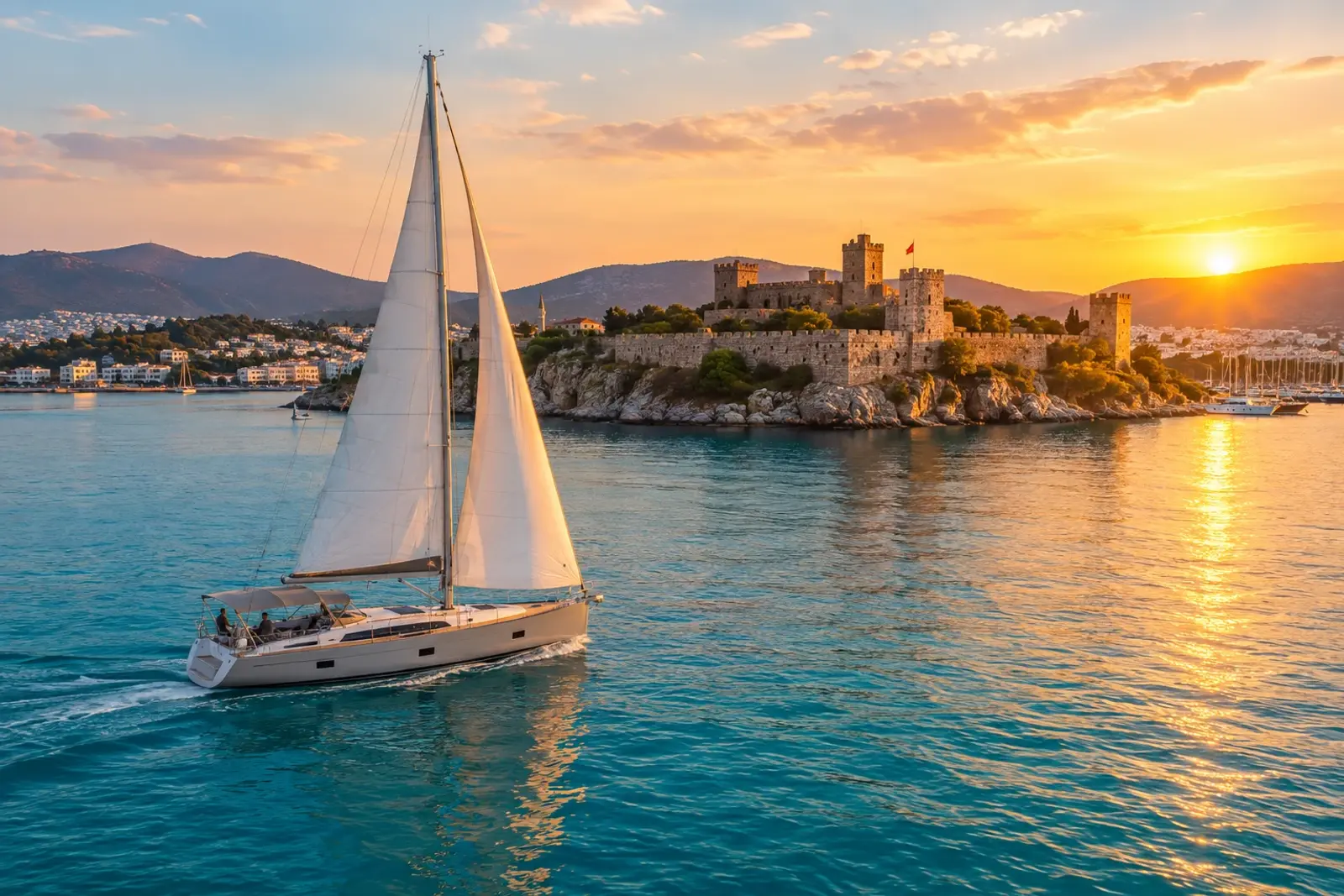
The top 10 sailing destinations in Turkey are Bodrum, Göcek, Marmaris, Fethiye, Kaş, Kekova, Datça, Bozburun, Ölüdeniz & Butterfly Valley, and Antalya. These regions offer stunning coastlines, excellent marinas, and a mix of historic sites and natural beauty, making Turkey a premier sailing destination. For anyone researching the best sailing spots Turkey has to offer, the choice comes down to matching the region to your experience level and the kind of week you want on the water.
Turkey's 4,000-mile coastline spans two distinct seas. The Aegean side delivers stronger meltemi winds and island-hopping, while the Mediterranean around Göcek and Fethiye offers calm, protected bays. This guide breaks down each destination, the best times to go, and what it really costs to charter.
Why Sail in Turkey? Unique Advantages for Yacht Charters
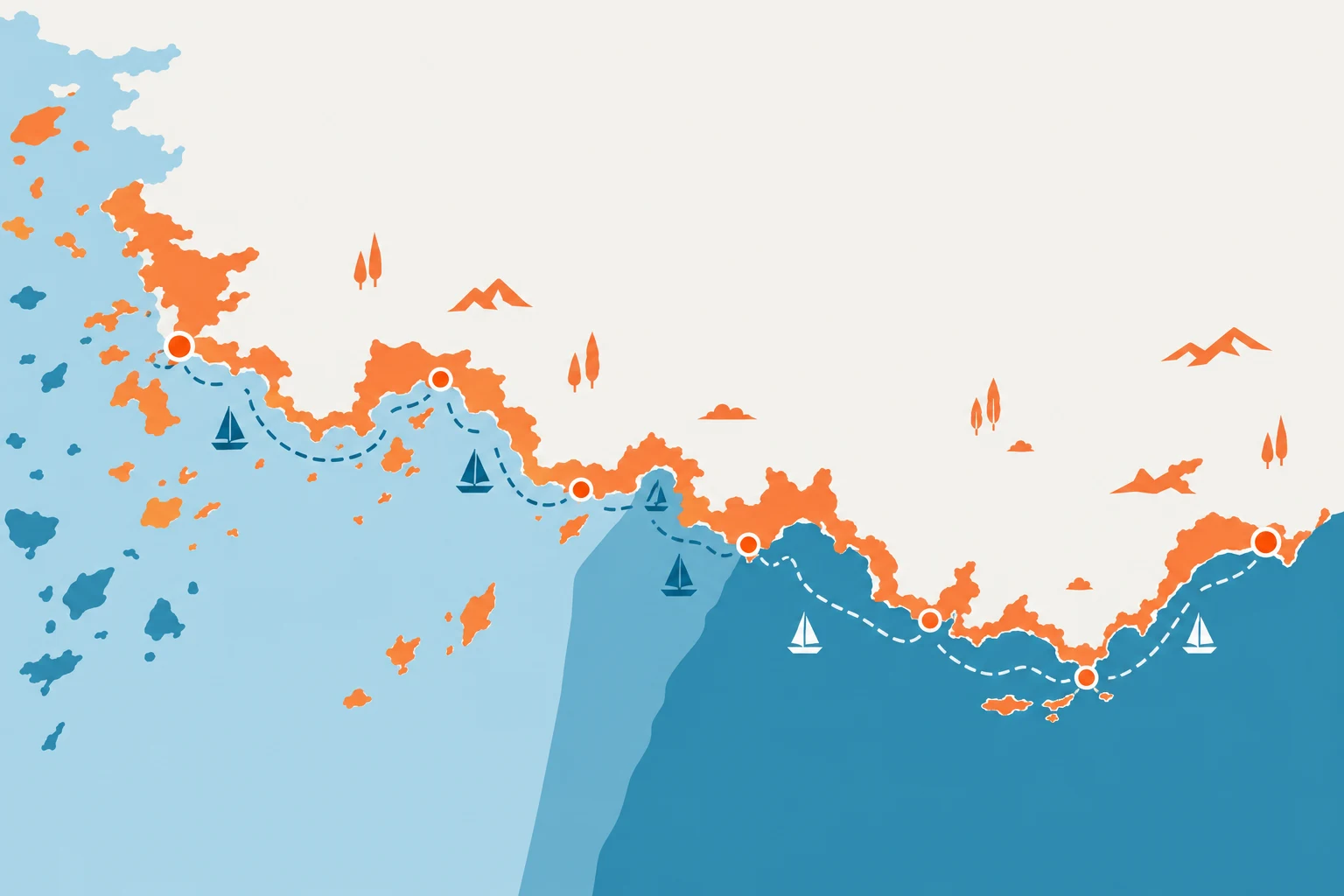
Turkey offers something few cruising grounds can match: two distinct seas, the Aegean and the Mediterranean, joined by a coastline of over 4,000 miles. The Aegean side, with its pine-clad islands and reliable meltemi winds, gives way to the Mediterranean's calmer, warmer waters near Göcek and Fethiye.
The meltemi blows steadily from the north during summer, typically reaching 15 to 25 knots in the afternoon, ideal for a monohull under full sail. Mornings are usually calm, which makes anchorages and marina approaches straightforward even for less experienced crews. The season runs reliably from May through October, with the most consistent winds in July and August.
For a Turkey yacht charter destination, the real advantage is the mix of sailing and sightseeing. You can anchor off the sunken city of Kekova in the morning, swim in a secluded cove by midday, and tie up at a modern marina in Kas by evening. The Turkish Riviera, particularly the stretch between Bodrum and Antalya, is dotted with ancient Lycian ruins, Byzantine harbors, and terraced hillsides, all reachable by dinghy or a short walk from the quay.
Modern marinas in Marmaris, Göcek, and Fethiye offer full services, from water and electricity to provisioning and haul-out facilities. Most charter bases sit within a short flight of Dalaman or Bodrum airports, so you can be aboard and underway within hours of landing.
Top 10 Sailing Destinations in Turkey: Overview & Comparison
| Destination | Region | Best Sailing Season | Marina Facilities | Yacht Charters | Signature Attractions |
|---|---|---|---|---|---|
| Göcek | Mediterranean | Spring, Autumn | Excellent | Bareboat, Crewed | Glassy bays, Forested coves |
| Fethiye | Mediterranean | Spring, Autumn | Excellent | Bareboat, Crewed | Glassy bays, Forested coves |
Turkey's coastline splits into two distinct sailing grounds: the Aegean and the Mediterranean. The Aegean side delivers stronger meltemi winds and island-hopping, while the Mediterranean side around Göcek and Fethiye offers glassy bays and forested coves.
The top 10 at a glance
1. Göcek — The gateway to the Göcek Gulf, with 12 islands and scores of protected anchorages. The calmest waters in the region make it the best base for first-time charters.
2. Fethiye — Dramatic mountain backdrops, the Blue Lagoon at Ölüdeniz, and easy access to the 12 Islands. Strong afternoon winds suit confident monohull sailors.
3. Marmaris — The largest charter hub on the Turkish coast, with the biggest marina network. A lively town and a sheltered bay perfect for provisioning before heading south.
4. Bodrum — The Aegean's social heart, mixing a Crusader castle, whitewashed houses, and the strongest nightlife of any Turkish sailing port. Best for crews that want evenings ashore.
5. Gulf of Gökova — Pine-covered hills and the famous English Bay and Cleopatra Island. The meltemi blows consistently here, making it a favorite for experienced bareboat crews.
6. Datça Peninsula — Quiet anchorages and the old town of Datça, far from the crowds. A good choice for sailors who want solitude over nightlife.
7. Kekova — The sunken Lycian city, visible through crystal-clear water. No charter base here, but it is the unmissable midpoint of any Mediterranean itinerary.
8. Kaş — A charming harbor town with excellent diving and a relaxed pace. The jumping-off point for Kekova and the Greek island of Kastellorizo.
9. Antalya — A historic Roman harbor at the eastern edge of the Turkish Riviera. Less crowded than the western bases, with a distinct old-town atmosphere.
10. Gulf of Hisarönü — Enclosed and calm, with the popular stop at Selimiye. Ideal for families and less experienced crews who want short hops between bays.
Charter options, marina quality, and timing
| Destination | Best charter type | Marina quality | Best months |
|---|---|---|---|
| Göcek | Bareboat and skippered | Excellent | May-Jun, Sep-Oct |
| Fethiye | Bareboat | Excellent | Jun-Sep |
| Marmaris | All types | Excellent | May-Oct |
| Bodrum | Bareboat and flotilla | Very good | Jun-Sep |
| Gulf of Gökova | Bareboat | Good | Jun-Aug |
| Datça Peninsula | Bareboat | Basic | Jun-Sep |
| Kekova | Skippered (transit stop) | None | May-Oct |
| Kaş | Skippered and bareboat | Good | May-Oct |
| Antalya | Skippered | Good | May-Sep |
| Gulf of Hisarönü | Bareboat | Good | Jun-Sep |
The busiest charter bases are Marmaris, Göcek, and Bodrum, all with full-service marinas within an hour of an international airport. July and August deliver the most reliable winds, but also the heaviest anchorage traffic; May, June, and September offer nearly the same sailing conditions with fewer boats and cooler evenings.
Bodrum Peninsula: The Gateway to the Turkish Riviera
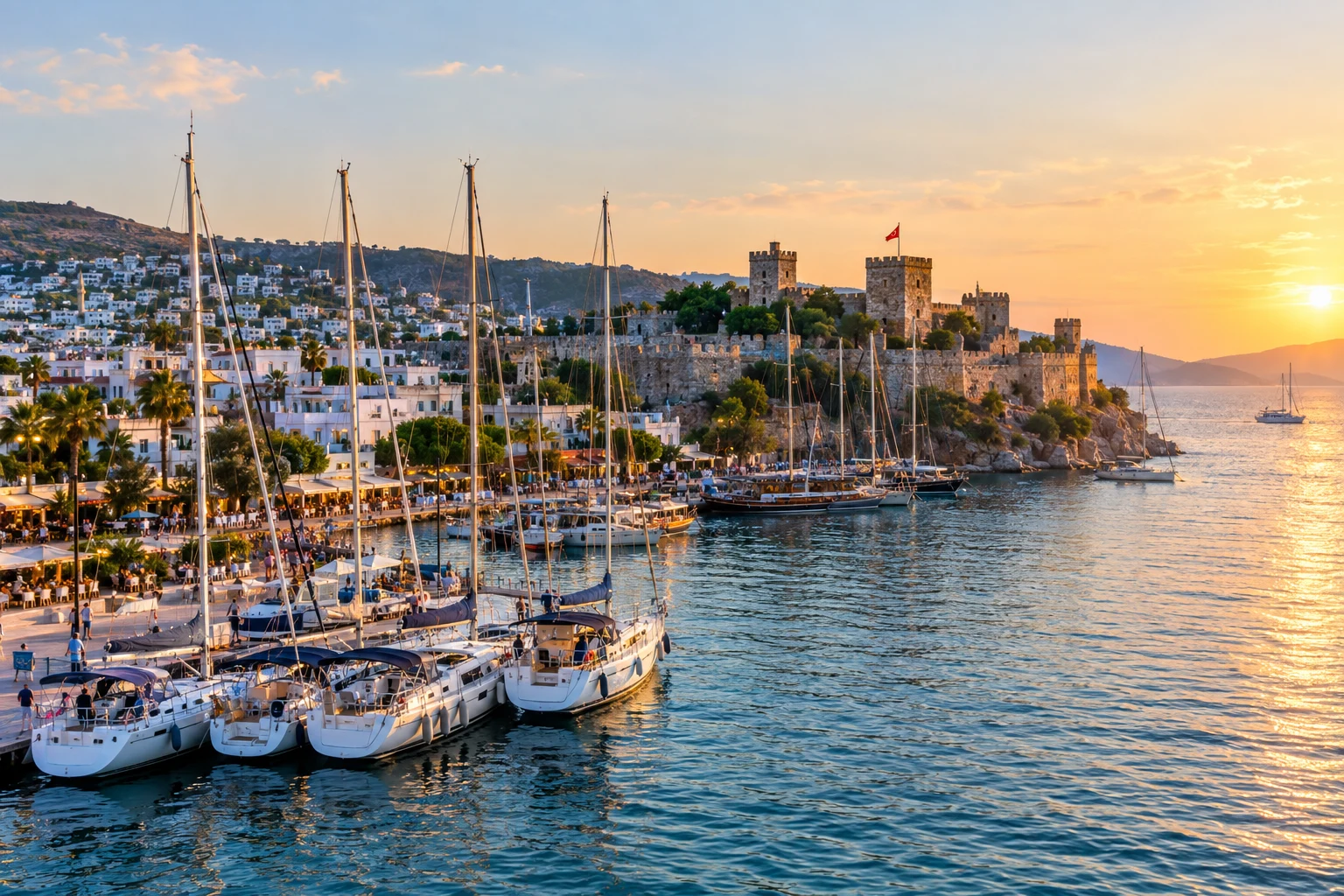
Bodrum is the Aegean's social hub, where a Crusader castle, whitewashed houses, and a lively waterfront meet a full-service charter infrastructure. It is the most convenient base in Turkey for crews who want evening entertainment ashore after a day of sailing.
The peninsula offers two distinct sailing experiences. Short trips can loop around the bay's protected anchorages, while longer routes push south toward the Gulf of Gökova, Datça, and onward to Marmaris.
Marina facilities in Bodrum rank among the best in Turkey. The main bases at Bodrum Marina and Milta Marina handle bareboat and skippered charters, with the airport only a 30-minute drive from the docks. You can clear in and provision within an afternoon, then sail the next morning.
Afternoon meltemi winds build to a reliable 15-25 knots across the Gulf of Gökova, which makes Bodrum a natural starting point for experienced monohull sailors. Less confident crews can hug the peninsula's north shore, where the wind is lighter and anchorages are more sheltered.
The mix of ancient history and modern convenience is what sets Bodrum apart from quieter bases like Göcek or Kaş. You get the marina quality of Marmaris with a more compact, walkable town and a livelier nightlife scene.
Göcek & Fethiye: Bays, Islands, and Protected Waters
Göcek and Fethiye anchor the Mediterranean end of the Turkish coast and are the two most popular bases for yacht rental Turkey itineraries. They sit within 30 nautical miles of each other, which makes pairing them into a single week-long route the standard choice for first-time charterers and families.
Göcek is the region's sailing centerpiece. Its gulf holds 12 named islands scattered close to shore, so most hops are under two hours and every anchorage sits in protected water. The town's marinas, including Göcek Marina, D-Marin Göcek, and Club Marina, are among the best-serviced in Turkey, with full haul-out, provisioning, and repair facilities.
The sailing here is gentle. The surrounding mountains blunt the meltemi, so afternoon breezes rarely exceed 15 knots, and many coves offer all-around shelter. Gocek sailing suits monohull crews of any experience level, and the short distances make it easy to anchor for lunch, swim, and move on before dinner.
Fethiye, 25 miles east, adds contrast. The town itself is livelier, with a marina, waterfront restaurants, and the cliff-top Tomb of Amyntas carved into the rock above the harbor. The ruins of Telmessos and the ghost village of Kayaköy give the area a historical layer that Göcek's quiet bays lack.
The sailing around Fethiye is more exposed. The bay opens to the southwest, so afternoon winds build more strongly than in Göcek, and the route to the 12 Islands runs through more open water. Confident crews are rewarded with the Blue Lagoon at Ölüdeniz, one of the most photographed anchorages on the Turkish coast, plus a string of coves along the peninsula that are empty even in August.
The standard loop is Göcek south to the 12 Islands, west to Fethiye, then back via the quieter eastern shore of the gulf. That route gives you calm-water days, one or two windier legs, and a mix of town nights and remote anchorages.
Signature Sailing Routes from Göcek & Fethiye
The classic one-week charter starts in Göcek, sails south through the 12 Islands, then west to Fethiye before looping back through the eastern gulf. The distance between the two bases is under 30 nautical miles, which makes combining them an easy week-long plan.
Cleopatra's Bath is the standout stop in the 12 Islands. A natural hot spring bubbles up through the seabed, and the ruined stone bathhouse sits right at the water's edge, so you can anchor and swim straight in. Gemiler Island, on the approach to Fethiye, is the other unmissable sight, with Byzantine church ruins climbing the hillside.
For a short break of three to four days, stay inside the Göcek Gulf and hop between its 12 islands instead. The legs are short, the afternoon breeze rarely exceeds 15 knots, and every anchorage is protected, which suits first-time charterers or families who want more swimming than sailing.
Butterfly Valley sits just west of Ölüdeniz and is worth the slightly longer sail from Fethiye. The valley shelters the Jersey tiger moth, and the only access is by boat or a steep footpath, so the beach stays uncrowded. It is a daytime stop only, since the bay drops off steeply and offers poor holding for an overnight stay.
Marmaris & Surroundings: Lively Towns and Secluded Bays
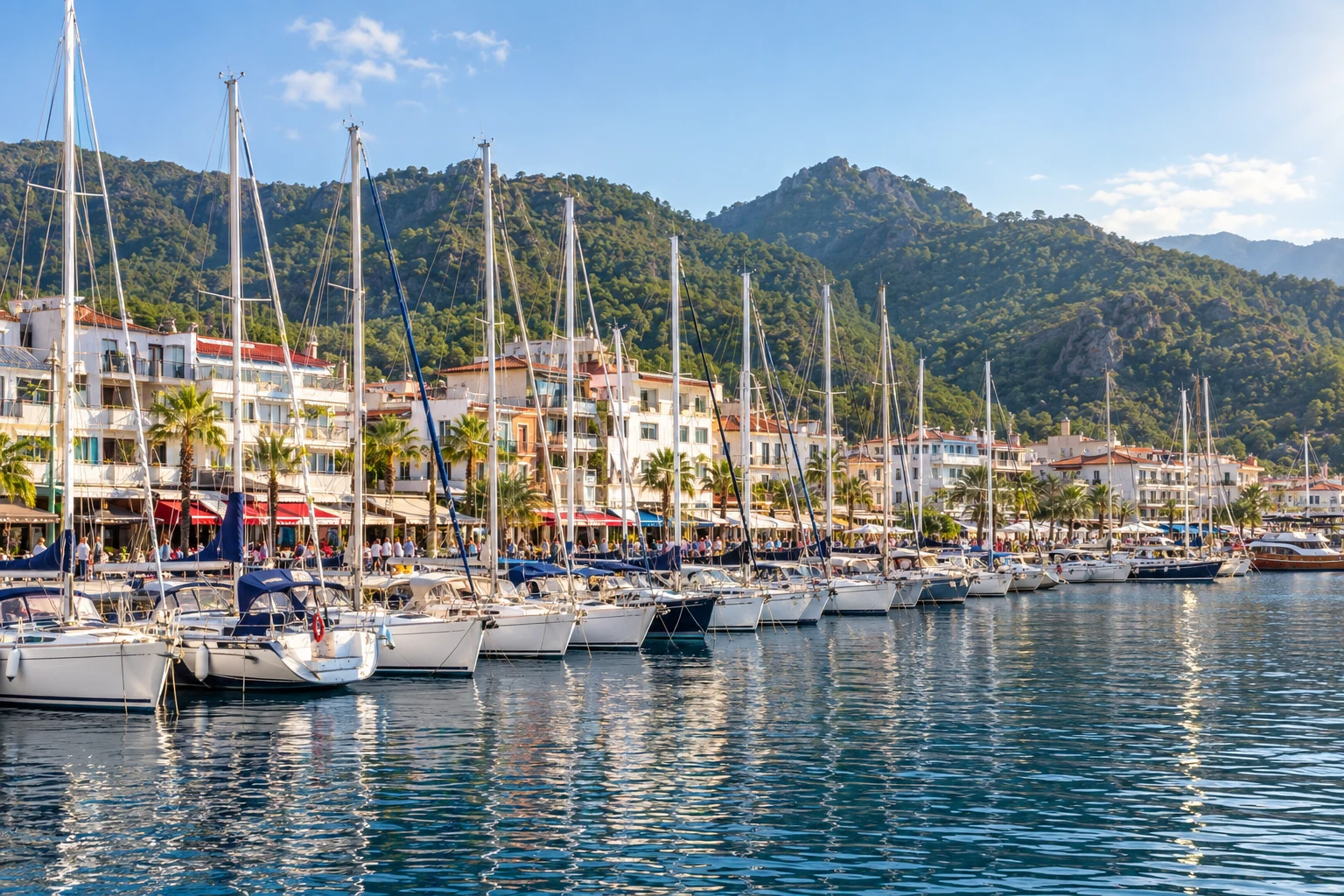
Marmaris is the largest and busiest charter hub on the Turkish coast, making it the default starting point for most bareboat and skippered charters in the Aegean. Its sheltered bay and sprawling marina network can handle hundreds of yachts, and the full range of support services, from riggers to provisioning, is within walking distance of the quay.
Within a few hours of leaving the marina, you reach the outer islands and forested coves where the anchorage is quiet and the water is clear. The Gulf of Hisarönü, a short sail west, offers protected bays and the charming village of Selimiye, while the Bozburun Peninsula to the south is dotted with tiny fishing harbors and secluded inlets.
The meltemi blows 15 to 25 knots most afternoons from July through September, which suits confident monohull crews but can intimidate beginners. If you prefer gentler conditions, plan a route inside the Gulf of Hisarönü or stay close to the coast, where the hills knock the worst of the breeze out of the gusts.
Kaş & Kekova: Lycian Coast's Ancient Wonders
Kaş and Kekova sit at the eastern end of the Turkish Riviera, where the Mediterranean sailing experience shifts from calm bays to a dramatic, history-rich coastline. Kaş is the best base for exploring the region, even though it has no dedicated charter base of its own; most crews sail in from Göcek or Fethiye, a two-to-three-day passage along the Lycian coast.
The town itself is worth a stop. Kaş is a lively harbor town with a relaxed pace, a waterfront lined with gulets and small yachts, and narrow streets filled with restaurants and shops. It is also Turkey's diving capital, with several documented wrecks and reef systems just offshore. The nearby Greek island of Kastellorizo is just a few miles across the water, a popular day sail for crews wanting to clear into Greece.
The real draw lies a short sail east: Kekova, a sunken Lycian city partially submerged beneath crystal-clear waters. You cannot anchor directly over the ruins, as the area is a protected archaeological site, but you can drift slowly over the submerged walls, staircases, and amphora scatter, visible in just a few meters of water. For the most dramatic perspective, time your approach for slack water, when the surface is glassy and the ruins are easiest to read from the deck.
The anchorages around Kekova are among the most sheltered and scenic in Mediterranean sailing Turkey. The bay at Üçağız, inland from the sunken city, offers good holding in mud and protection from most directions, though it can get busy in July and August. Kaleköy, perched above the ruins with a Byzantine fortress, has a small quay and a handful of waterfront restaurants; the setting, with the castle above and the sunken city below, is one of the most memorable overnight stops on the entire coast. Farther east, the bay at Gökkaya offers a more secluded option, with steep cliffs and turquoise water, though it is more exposed to afternoon winds.
A typical Kekova sailing itinerary runs east from Kaş to Kaleköy, spends a night in the bay, then loops back via Üçağız or continues toward Antalya. The total distance from Kaş to Kekova is roughly 20 nautical miles, an easy day sail even with a late-morning departure. The best months are May, June, and September, when the anchorages are quieter and the water is warm enough for swimming without the peak-season crowds.
For sailors who want to combine ancient history with genuinely protected anchorages, the Kaş-Kekova corridor is the most rewarding stretch of the Lycian coast.
Datça & Bozburun Peninsulas: Wild Beauty and Authentic Charm
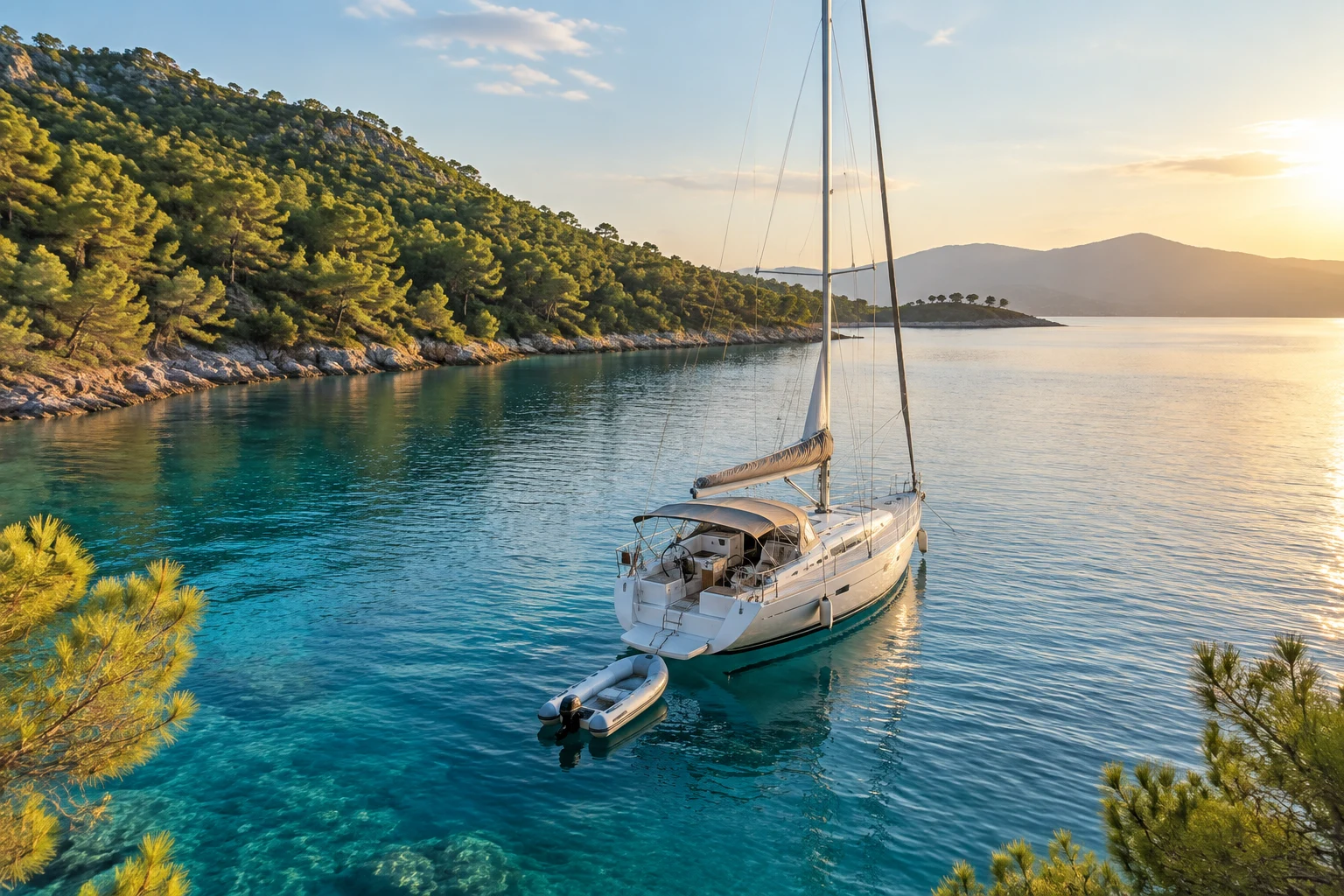
The Datça and Bozburun peninsulas sit between the Gulf of Gökova and the Mediterranean, forming one of the least developed stretches of the Turkish coast. This is the route for crews who want to trade marina amenities for pine forests, empty bays, and small fishing villages.
Datça's unspoiled landscapes are the main draw. The peninsula's north shore faces the meltemi winds across Gökova, while the south shore offers more sheltered, tranquil harbors like Palamutbükü and Karaincir. The town of Datça itself has a few restaurants and a working harbor, but the atmosphere stays low-key compared to Bodrum or Marmaris.
Bozburun, further east, is the heart of Turkey's traditional wooden boatbuilding. Its small marinas and boatyards still turn out hand-built gulets, and watching the construction is part of the charm. Bozburun sailing is genuinely off the beaten track, with few charter bases and quiet coves that rarely see more than a handful of boats.
The region suits experienced bareboat crews. Distances between sheltered stops are longer than in Göcek, and the meltemi can build quickly in the afternoon. Provisioning is limited, so stock up in Marmaris before you head out.
When Is the Best Time to Sail in Turkey?
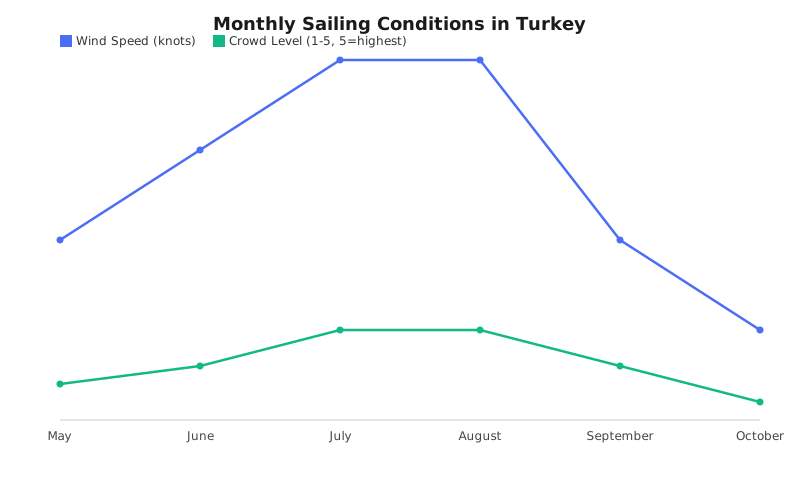
The best time to sail in Turkey is May, June, and September, when the seas are warm, the winds are reliable, and the marinas are not yet at peak capacity. July and August deliver the strongest and most consistent meltemi winds, often blowing 15 to 25 knots, but they also bring the highest charter traffic and the hottest days.
The sailing season in Turkey runs from May through October. In May and early June, the water is still warming up, but the air is pleasant and the anchorages are quiet. By late June, the meltemi settles into a steady rhythm, and from July through August it dominates the Aegean, providing excellent monohull sailing but requiring confident helm skills in exposed stretches. September brings back calmer seas and lighter winds, making it a favorite month for families and less experienced crews.
October is a transition month, with mild days and fewer crowds, but the meltemi fades and weather systems become more changeable. The Mediterranean coast around Göcek and Fethiye remains sheltered and warm well into the month, while the open Aegean routes near Bodrum and Datça can turn choppy.
Morning conditions across the entire coast are typically calm, with the wind building after midday and dying again toward sunset. This pattern suits cruising itineraries, allowing early starts and afternoon sailing under a reliable breeze. For planning purposes, the safest window for a week-long charter is between mid-May and the end of September, with the best all-around conditions in June and September.
Costs, Marinas, and Practical Tips for Sailing in Turkey
| Item | Cost (EUR) - High Season (July/Aug) | Cost (EUR) - Shoulder Season (May/Jun/Sep) | Notes |
|---|---|---|---|
| Charter Rates | |||
| 40-ft Monohull | 2,500 - 4,500 | 2,000 - 3,600 | 20-30% lower than high season |
| 40-ft Catamaran | 3,250 - 6,750 | 2,600 - 5,400 | 30-50% more than monohull |
| Skipper (per day) | 150 - 250 | 150 - 250 | Plus food & fuel |
| Mooring Fees (per night for 40-ft boat) | |||
| Full-service Marina | 60 - 120 | 60 - 120 | Göcek, Marmaris, Bodrum |
| Town Quay/Municipal | 20 - 50 | 20 - 50 | |
| Anchoring | Free | Free | Countless bays |
| Provisioning | Varies | Varies | Cheaper than Western Europe |
| Fuel | Varies | Varies | Skippered charters include skipper's fuel |
How much does a sailing trip in Turkey cost depends on the season, boat size, and whether you book bareboat or with a skipper. A one-week bareboat charter for a 40-foot monohull runs roughly 2,500 to 4,500 EUR in high season (July and August), with May, June, and September prices about 20-30% lower. Catamarans of similar length typically cost 30-50% more. Skippered charters add 150 to 250 EUR per day plus the skipper's food and fuel.
Mooring fees are the variable to budget for. A night in a full-service marina in Göcek, Marmaris, or Bodrum costs 60 to 120 EUR for a 40-foot boat, depending on the season and facilities. Town quays and municipal docks run 20 to 50 EUR, while anchoring in the countless bays along the coast is free. Most sailors mix a few marina nights for laundry, fuel, and showers with free anchorages to keep the total reasonable.
Marinas in Turkey are consistently good quality. The major bases at Marmaris, Göcek, and Bodrum offer finger berths, electricity, water, fuel docks, chandleries, restaurants, and showers. Smaller marinas like those at Kaş and Fethiye have the essentials. Book berths ahead in July and August, when the popular harbors fill by late afternoon.
Local regulations for bareboat charter Turkey are straightforward. A valid CEVNI or ICC certificate is required, along with a passport and a sailing resume. The charter company handles the boat's transit log, which is your permit to move between Turkish ports. You cannot sail directly to Greek islands on a standard Turkish charter unless the boat is cleared for international travel, which adds fees and paperwork.
For booking, reserve 4-6 months ahead for July and August, especially for catamarans and flotilla slots. For May, June, or September, 2-3 months is usually enough. Book through a charter company based at the marina you plan to start from, and confirm the boat's age, equipment list, and whether the final cleaning fee is included. A deposit of 1,000 to 2,000 EUR is standard.
Frequently Asked Questions
Which Turkish destinations are best for bareboat sailing?
Göcek, Fethiye, and Bodrum offer the best conditions for bareboat charters, with reliable winds, sheltered bays, and modern marinas. These regions have well-charted waters and a wide range of yacht options. First-time charterers should start in Göcek, where the distances between anchorages are short and the water stays calm.
Can I sail to the Greek islands from Turkey?
Yes, some Turkish sailing routes allow short crossings to nearby Greek islands, but you must clear customs and comply with both Turkish and Greek regulations. The Greek island of Kastellorizo is a popular day sail from Kaş. Check with your charter provider for permitted routes and necessary documentation, since standard Turkish charters are not automatically cleared for international travel.
What kind of scenery can I expect while sailing in Turkey?
Expect dramatic cliffs, pine-covered hills, turquoise bays, ancient ruins, and picturesque fishing villages along the Turkish coast. Many anchorages offer both natural beauty and historical interest, especially in regions like Kekova and Fethiye. The sunken Lycian city at Kekova and the Blue Lagoon at Ölüdeniz are two of the most striking sights on any itinerary.
Are mooring and marina fees expensive in Turkey compared to other Mediterranean countries?
Turkey generally has lower marina and mooring fees than popular Western Mediterranean destinations, offering good value for sailors. A night in a full-service marina in Göcek, Marmaris, or Bodrum costs 60 to 120 EUR for a 40-foot boat, while town quays run 20 to 50 EUR. Fees vary by region and marina quality, but anchoring in bays is free.
How does Turkey compare to other top sailing destinations worldwide?
Turkey stands out for its unique blend of history, scenery, and value, rivaling the Greek Islands, Croatia, and the Amalfi Coast. Its diverse sailing regions cater to all experience levels, from relaxed cruising in Göcek to adventurous meltemi-driven passages out of Bodrum. The coastline's 4,000 miles of sailing waters give it a scale few European destinations can match.
Turkey's sailing scene rewards a little planning. If you are new to bareboat charters, book Göcek or the Gulf of Hisarönü for calm, short hops in May or September, when marinas are quieter and prices run 20-30% below peak. Experienced crews should target Bodrum or Marmaris in July or August to ride the meltemi across the Aegean.
Reserve 4-6 months ahead for high season and confirm your ICC or CEVNI certificate before you fly. Start with a one-week Göcek loop, then expand to Kekova or Datça once you have your sea legs. Turkey's 4,000-mile coastline, modern marinas, and reliable winds make it an easy first choice for a Mediterranean charter.
Explore next
Destination guide
Turkey
Turkey's Aegean and Turquoise Coast offer some of the best sailing in the Mediterranean. Here's where to base your charter and what to expect.