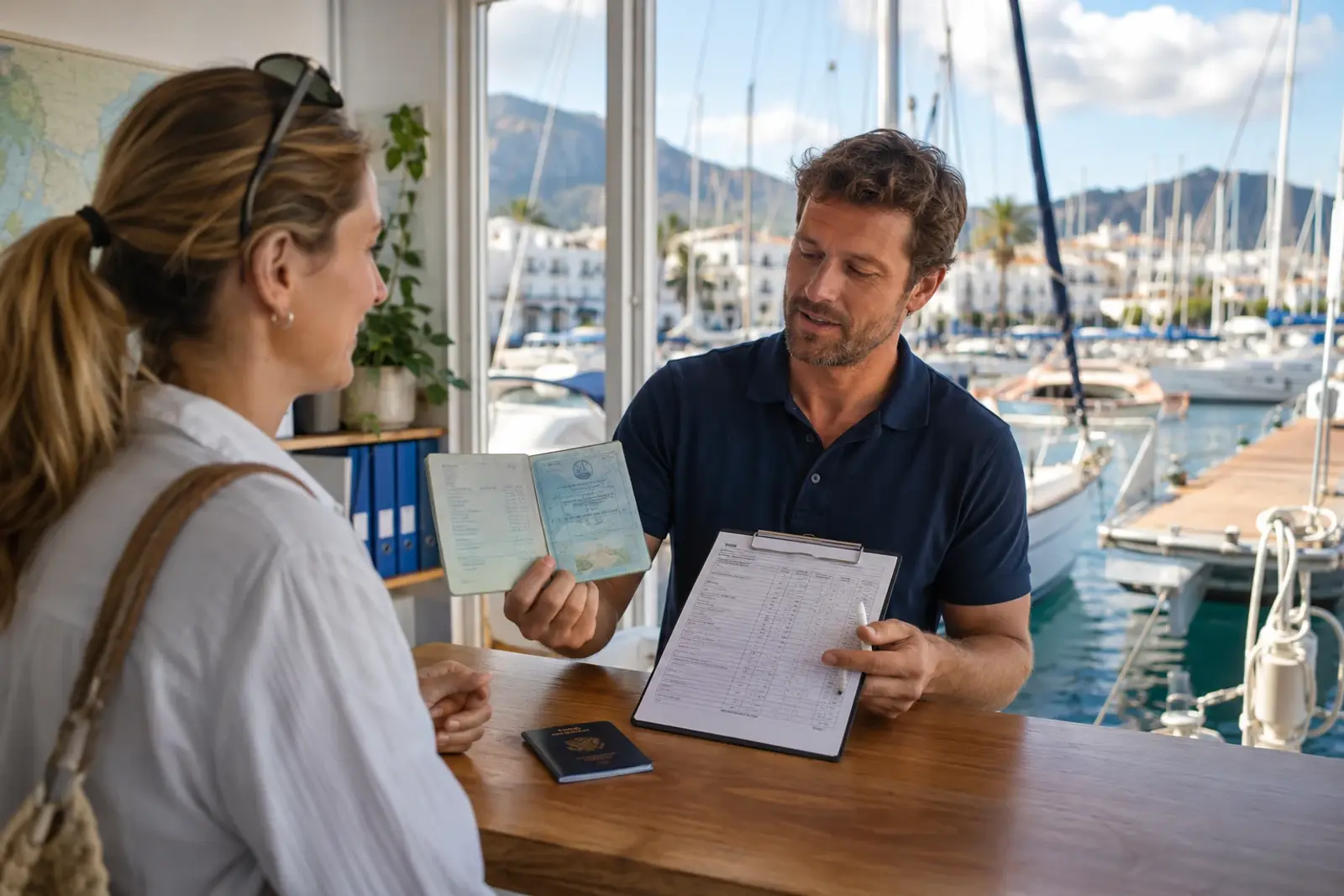
Bareboat sailing Spain requirements start with a recognized sailing licence, usually an ICC, RYA Day Skipper, or ASA 103/104, plus a sailing CV proving experience and, depending on the boat's flag, a VHF radio certificate. Meeting bareboat charter Spain licence rules also means knowing whether your boat flies the Spanish flag or a foreign one, since that decides which certificates actually get accepted.
None of this is unusual by Mediterranean standards, but Spain layers in a few specifics competitors skip entirely: the flag-state distinction, a residency wrinkle for anyone based in Spain, and what actually happens if your licence gets questioned. The sections below cover each of these along with practical tips for a smooth check-in.
Do you need a licence to bareboat charter in Spain?
| Qualification | Who it's for | Accepted in Spain |
|---|---|---|
| ICC (International Certificate of Competence) | Most European sailors | Yes, most straightforward |
| RYA Day Skipper | UK-trained sailors | Yes, heavily favored |
| ASA 103/104 | US sailors | Yes, heavily favored |
| National licence | Various nationalities | Varies by operator |
Yes. Spanish charter bases require a recognized sailing qualification, most commonly an International Certificate of Competence (ICC), before handing over a boat with no skipper aboard.
National and regional equivalents work too. An RYA Day Skipper certificate or an American Sailing Association ASA 103/104 credential are both heavily favored alternatives, accepted at most mainstream charter bases without extra paperwork.
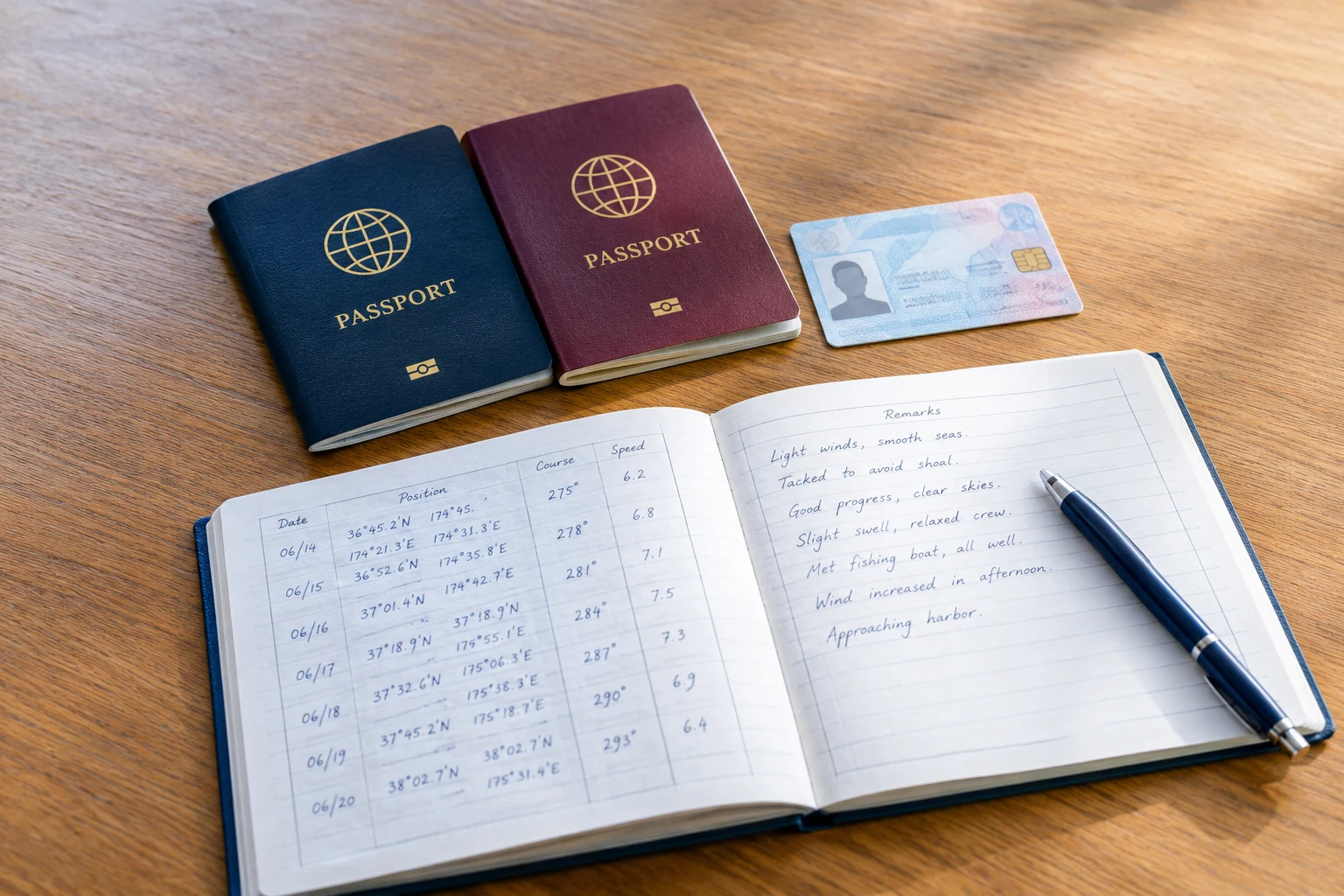
Alongside the licence itself, charter operators also require a sailing CV or logbook, a written record proving you have served as skipper or master on a similarly sized vessel before. Spanish authorities and local companies both expect this document, not just the certificate card.
The ICC specifically carries the most straightforward acceptance across Spain. Other certifications generally work too, but confirming with your specific charter base before booking avoids a surprise at check-in.
Spanish-flagged vs foreign-flagged boats: why it matters for your licence
Which flag the boat sails under actually decides which certificates get accepted, a detail most charterers never think to ask about before booking.
Spanish maritime law spells out exactly which foreign certificates are officially recognized for Spanish-flagged vessels. An ICC or RYA certificate that works everywhere else in the Mediterranean can, in theory, face stricter scrutiny on a boat flying the Spanish flag specifically.
A foreign-flagged charter boat, common at many international charter companies operating out of Spanish marinas, generally follows the licensing rules of its own flag state instead. This is often more straightforward for a standard ICC or RYA holder.
Most mainstream charter operators have already sorted this out for their own fleet and won't hand you a boat you can't legally skipper, but it's worth confirming directly rather than assuming.
Do residents face different rules than tourists?
Yes, legal residents of Spain can be held to stricter domestic Spanish nautical qualification standards than someone visiting on a short-term tourist trip.
A tourist chartering for a week or two typically qualifies under the more permissive international rules that recognize an ICC, RYA, or ASA certificate without further question.
Someone legally resident in Spain, by contrast, may find local port authorities expect a Spanish-issued qualification rather than accepting a foreign tourist certificate at face value.
This distinction rarely comes up for a standard holiday charter, but it matters if you've relocated to Spain, hold residency, and plan to charter regularly rather than as a one-off visitor. Clearing your specific situation with the charter base directly avoids an unpleasant surprise at handover.
What counts as enough sailing experience?
A licence alone does not guarantee a bareboat booking. Charter companies also want proof you have actually skippered a boat close to the size of the one you are renting.
This gets checked through a sailing CV or logbook, listing the boats you've skippered, their length, and roughly how much time you spent on each. Specific boat names and dates get approved faster than a vague "several charters" entry.
Most bases also expect at least one other competent crew member aboard, someone who can handle lines and help anchor, rather than one person managing everything solo.
Some bases verify further by calling references listed on the CV, or by asking new charterers to complete a short check-out sail before releasing the boat unsupervised.
VHF radio licence: when is it required?
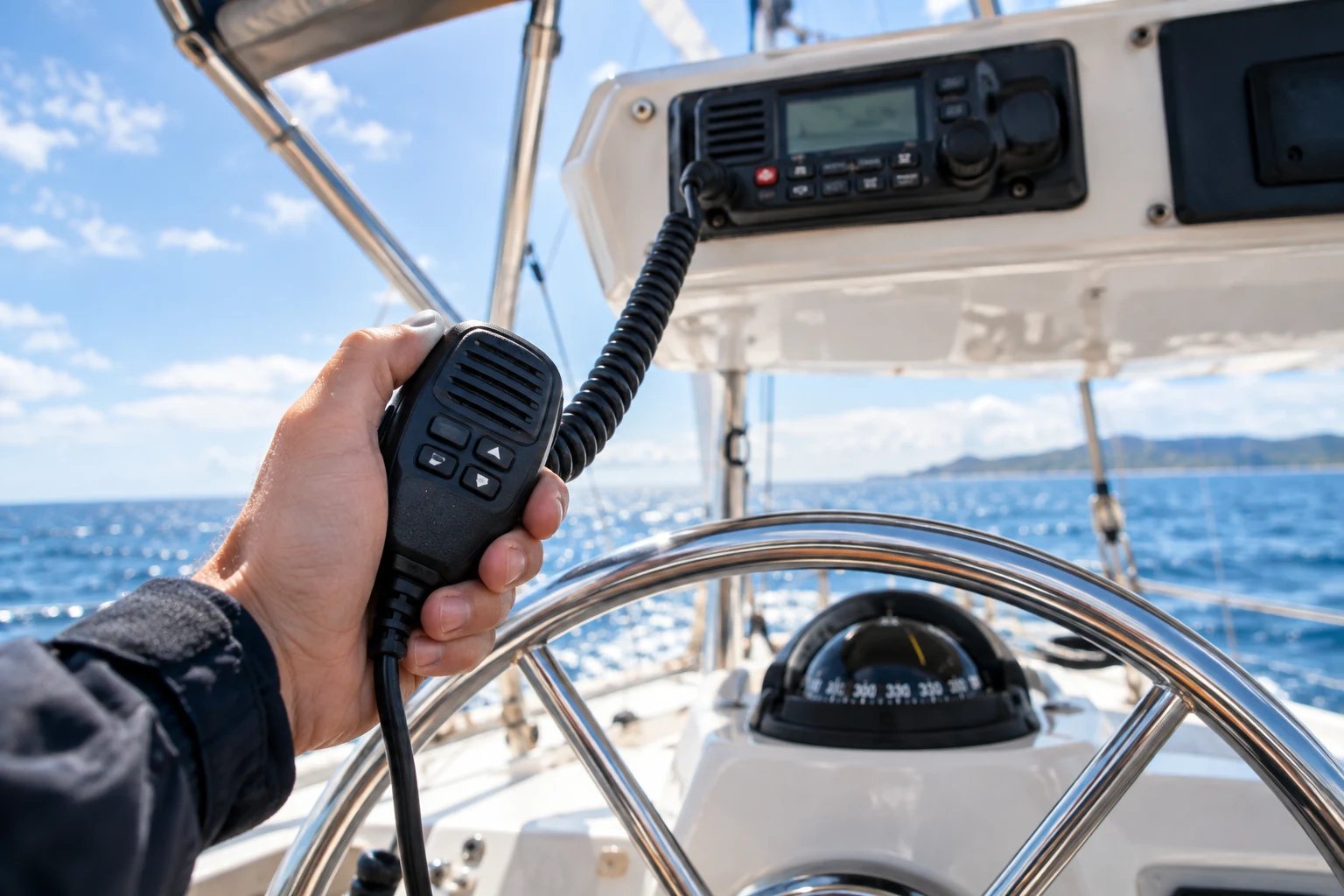
A VHF radio operator's certificate is recommended or required depending on whether the boat carries a fixed VHF radio and which flag it's registered under.
In practice, this makes the certificate effectively mandatory for most charters. The overwhelming majority of charter boats in Spain carry a fixed VHF set as standard safety equipment, which triggers the requirement regardless of the vague "recommended" wording some sources use.
Rules vary slightly by the boat's specific flag and registration, so a certificate that's merely advisable on one boat can be a hard requirement on another.
Check directly with your charter base rather than assuming the certificate is optional. If you don't hold one, ask whether the base can arrange a short VHF course or an alternative before your charter dates.
What happens if your licence isn't accepted?
A rejected licence rarely cancels the booking outright. Most charter bases offer a paid local skipper for the trip instead, turning a bareboat booking into a skippered one for a daily fee.
A short check-out sail with a base instructor can sometimes resolve a borderline case on the spot. If your CV looks thin rather than genuinely unqualified, an hour on the water with staff watching can satisfy what the paperwork alone could not prove.
Joining a flotilla is another option worth asking about. A lead boat with a qualified skipper travels alongside a group of charter yachts, so you still sail your own boat day to day while the flotilla leader handles the parts a base is unsure about trusting to your paperwork.
Whichever fallback applies, sorting it out before departure is far cheaper than discovering it at the dock.
Tips for a smooth bareboat charter in Spain
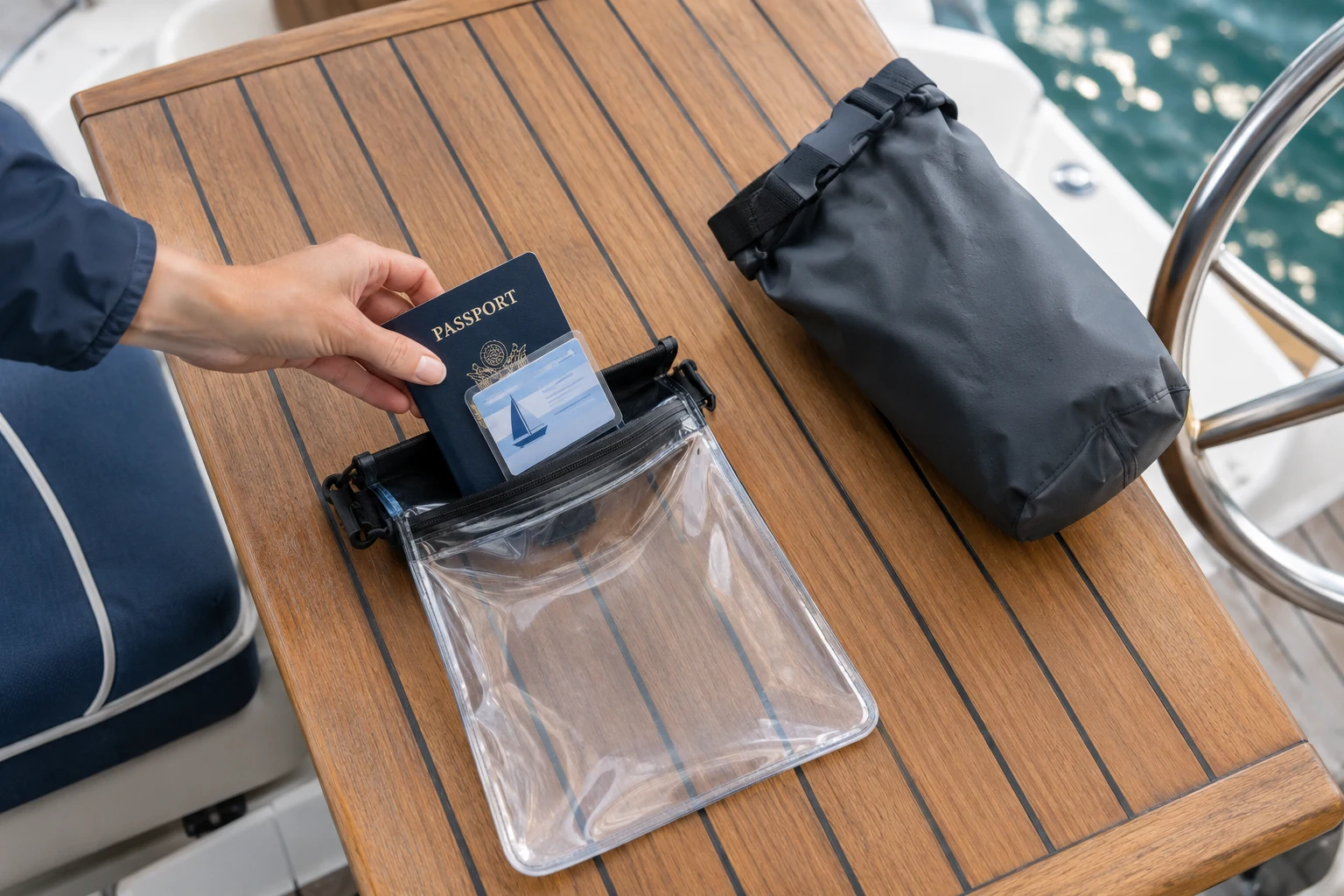
Email your charter base your licence details and sailing CV before booking, then get written confirmation that it's accepted. A confirmed yes avoids discovering a problem at the dock.
Bring original paper certificates, not photos or PDFs. Charter companies and port officials check the physical card or booklet at check-in, so pack it with your passport rather than leaving it at home.
Confirm the boat's flag state and whether a VHF certificate is genuinely required before you arrive. Both details change which rules actually apply to your specific charter.
A calm, unhurried check-in that walks through every document carefully is usually a good sign about the charter company itself. One that rushes through the paperwork is worth noting for how the rest of the charter might go.
Frequently asked questions
How do I get an ICC if I don't already have one?
The ICC is issued through recognized national sailing authorities after a practical and theory assessment of your sailing skills. RYA and other national certifications can often be converted into an ICC without re-testing if you already hold one. Processing takes a few weeks, so apply well before your charter dates rather than at the last minute.
What is the 12-guest rule on a charter yacht?
Commercial charter yachts in Spain, like most of the Mediterranean, are licensed to carry a maximum of 12 paying guests. A larger group needs two boats or a bigger, commercially-coded vessel. The limit is a safety and certification rule, not a pricing tier that changes with what you pay.
What is not included in a bareboat charter in Spain?
Fuel, final cleaning, and a security deposit are typically billed separately from the base charter fee. Bed linen and towels aren't always included either, and this varies by operator. Provisioning and any onboard extras like paddleboards are usually the charterer's own responsibility to arrange.
Are there restricted or no-sail zones in Spain?
Military and naval areas along parts of the Spanish coast are off-limits and marked on local nautical charts. Some marine protected areas limit anchoring or require mooring buoys instead of free anchoring. Charter bases typically brief new sailors on the nearest restricted zones for their route during handover.
Can non-EU nationals bareboat charter in Spain?
Yes, the same licence and experience rules apply regardless of nationality. Most non-EU nationals, including US and UK sailors, need no visa for short charter stays. Carrying a passport valid well beyond the charter dates is standard advice for any port authority check.
Email your charter base your licence details and sailing CV before you book, not after, and get it confirmed in writing. That single step avoids the worst-case scenario: arriving at the dock to find your qualification isn't accepted and scrambling for a skipper on short notice.
Ask specifically which flag the boat sails under and whether a VHF certificate actually applies to your charter. These two Spain-specific details catch out more first-timers than anything about the licence itself.
Once the paperwork is sorted, the rest is just sailing: a technical handover, a second crew member aboard if you're going it alone, and a coastline that rewards the preparation.
Explore next
Destination guide
Spain
Sail the Balearic Sea and the Spanish Mediterranean, where calm coves, lively ports, and steady breezes shape every leg of the journey.