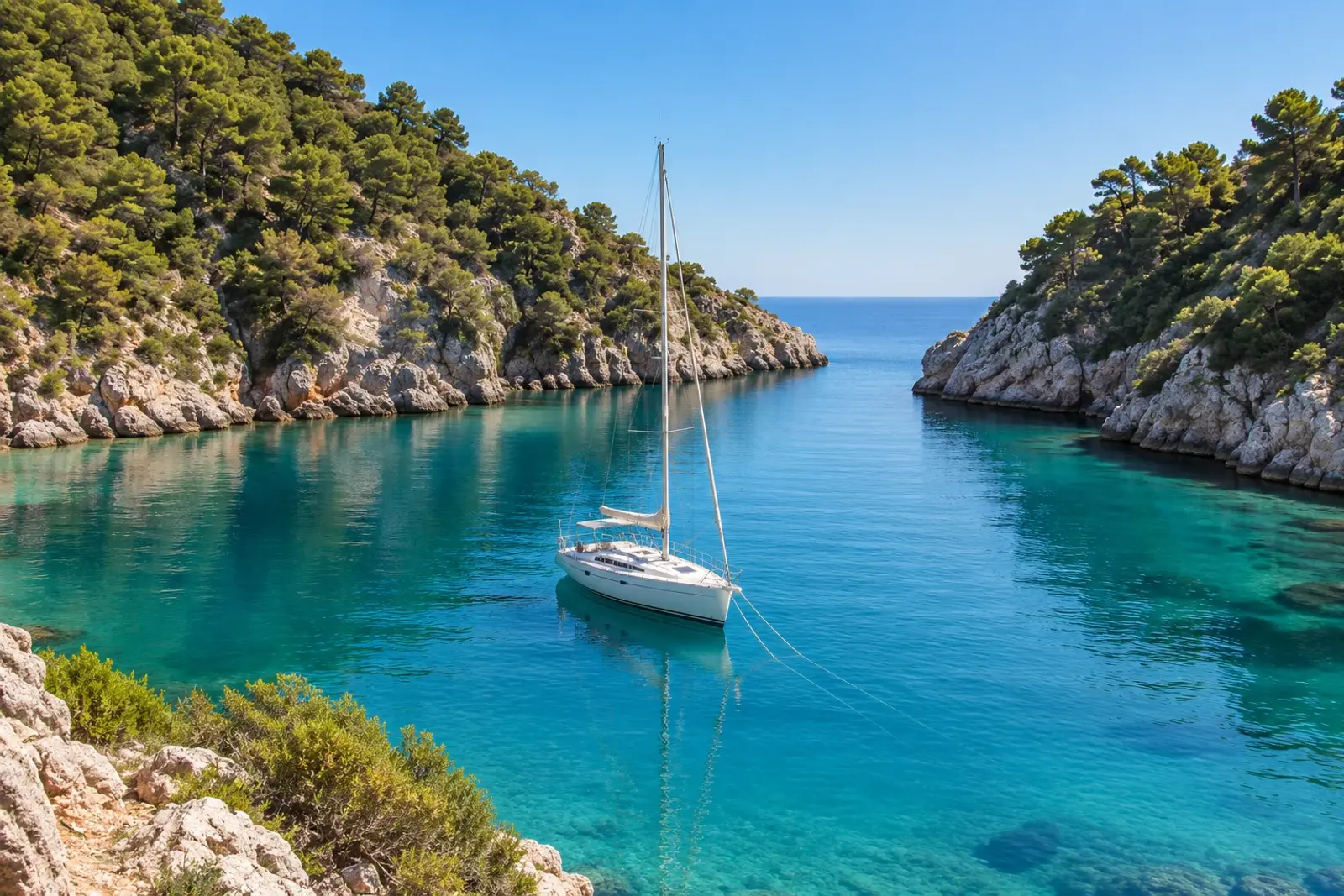
Best sailing destinations in Spain span four very different regions: the Balearic Islands (Mallorca, Ibiza, Formentera, Menorca), the mainland Mediterranean coast (Costa Brava, Costa del Sol), the Atlantic coast (Galicia, the Strait of Gibraltar, the Basque Coast), and the year-round Canary Islands. Each of these top sailing spots in Spain suits a different skill level and season, from sheltered island-hopping for beginners to open-ocean swell for experienced crews.
Picking the right one matters more than picking the prettiest. A first-time charterer dropped into the Basque Coast's Atlantic swell will have a very different week than one exploring Mallorca's calm southwest bays. The breakdown below covers all ten destinations by region, then matches each to the skill level it actually suits.
Spain's best sailing destinations at a glance
| Destination | Region | Best skill level | Best season |
|---|---|---|---|
| Mallorca | Balearic Islands | Beginner-friendly | May-Oct |
| Ibiza | Balearic Islands | All levels | May-Oct |
| Formentera | Balearic Islands | All levels | May-Oct |
| Menorca | Balearic Islands | Beginner (south), intermediate (north) | May-Oct |
| Costa Brava | Mainland Mediterranean | Intermediate | May-Oct |
| Costa del Sol | Mainland Mediterranean | Beginner-friendly | May-Oct |
| Rias Baixas (Galicia) | Atlantic coast | Experienced | Jun-Sep |
| Strait of Gibraltar | Atlantic coast | Experienced | Jun-Sep |
| Canary Islands | Canary Islands | Intermediate+ | Year-round |
| Basque Coast | Atlantic coast | Experienced | Jun-Aug |
Spain's ten best sailing destinations split across four regions, each with its own wind pattern and sailing season.
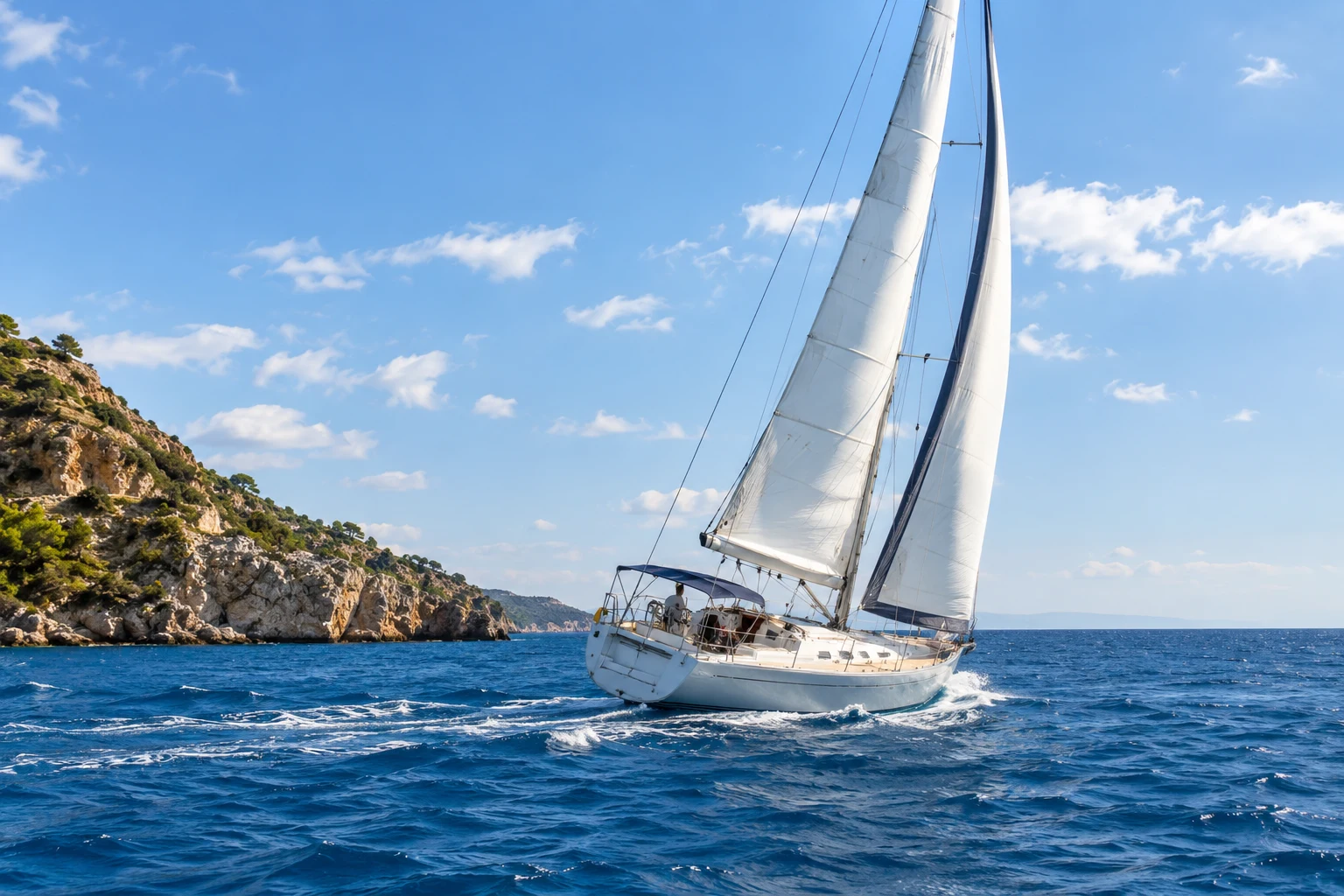
The Balearics draw the most charter traffic, with short hops between sheltered anchorages suiting everyone from first-timers to experienced crews. The Atlantic coast brings real ocean swell and stronger currents, better suited to sailors with some open-water experience. The Canary Islands sit apart, with trade winds that keep the season open through winter.
The Balearic Islands: Spain's most popular sailing grounds
Mallorca anchors most Balearic charters, with sheltered bays along its southwest coast and the largest charter fleet in the archipelago, making it the easiest starting point for beginners and families new to sailing.
Ibiza and Formentera sit close enough together to cover both in a single week, hopping between quiet anchorages by day and livelier ports by evening. The short crossing between them, under two hours in good conditions, keeps the itinerary relaxed rather than rushed.
Menorca splits more sharply by coast than the other islands. Its north shore catches the tramontana wind and stays choppier, while the south coast's calas stay sheltered and calm, so where you sail on Menorca matters as much as when.
All four islands sit close enough to combine into longer itineraries, but each has enough distinct character that picking one or two usually makes for a better trip than rushing through all four.
Mainland Mediterranean coast: Costa Brava and Costa del Sol
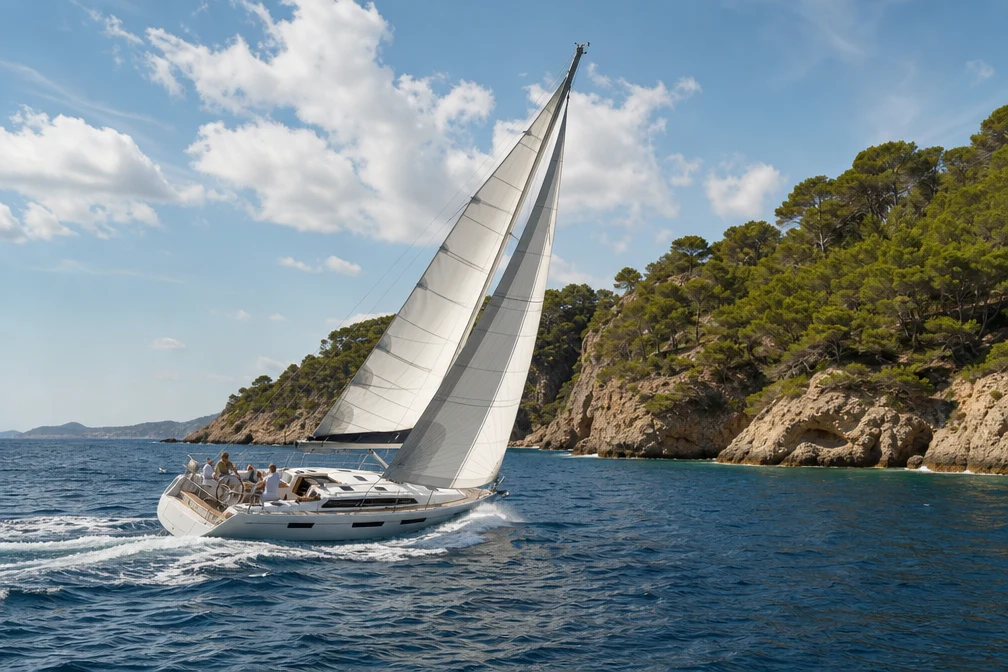
Costa Brava, Catalonia's rocky northern coast, offers pine-backed cliffs and small coves between towns like Begur and Cadaques, with afternoon thermal winds that build reliably enough to plan a day's sail around.
Those thermal winds mean Costa Brava suits intermediate sailors more than total beginners: mornings stay calm, then the breeze fills in by early afternoon, so timing a passage around it matters here.
Costa del Sol, further south in Andalusia, trades Costa Brava's rugged coves for a calmer, more developed stretch of coast. Marinas sit closer together, provisioning is easier, and the sailing itself asks less of a crew.
Both stretches see heavier charter and leisure-boat traffic in July and August than the Balearics' more spread-out anchorages, simply because they sit closer to major resort towns and draw a bigger day-tripper crowd on top of overnight charterers.
The Atlantic coast: Galicia and the Strait of Gibraltar
Galicia's Rias Baixas, a string of sheltered estuaries on Spain's northwest coast, bring real Atlantic character: stronger tidal currents, cooler water, and a swell that the Mediterranean simply doesn't produce.
That tidal movement rewards sailors who already know how to read a current and time a passage around it, rather than first-timers expecting Mediterranean-style calm.
The Strait of Gibraltar, at Spain's southern tip, adds a different complication: heavy commercial shipping traffic funneling between the Atlantic and Mediterranean, plus accelerated winds squeezed through the narrow gap between Europe and Africa.
Both stretches ask more of a crew than the Balearics or mainland Mediterranean, but reward it with wildlife and scenery the calmer coasts further east don't offer.
Canary Islands: Spain's year-round sailing destination
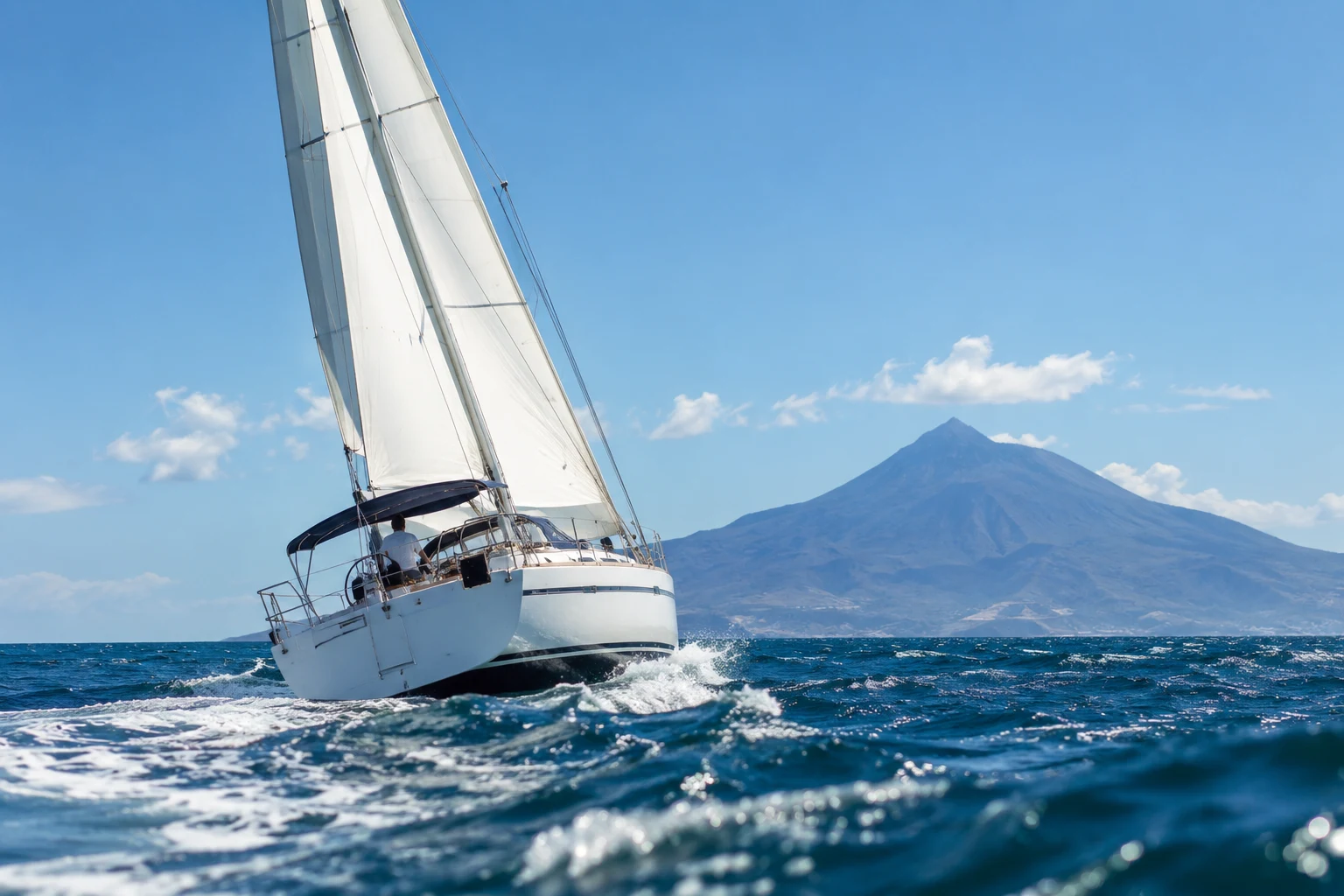
While the rest of Spain's coast quiets down for winter, the Canary Islands keep sailing through it, held up by steady trade winds that blow reliably from October through to spring.
That year-round season is the real draw: sailors escaping a cold European winter can still find consistent wind and comfortable temperatures in January or February.
The islands' volcanic terrain creates its own complication: wind acceleration zones between islands, where the trade winds squeeze through gaps in the terrain and pick up noticeably more strength than the open-water forecast suggests.
Given the distance from mainland Spain, roughly 1,000 kilometers to the Balearics or Costa del Sol, the Canary Islands work best as their own dedicated trip rather than an extension tacked onto a mainland charter.
Basque Coast: San Sebastian and the Bay of Biscay
The Basque Coast, along the Bay of Biscay in Spain's far north, feels closer to Atlantic France than to the Mediterranean: green hills meet the water, and real ocean swell replaces the calmer chop found further south.
The sailing season here runs shorter than anywhere else on this list, narrowing mostly to summer months when the swell and weather settle enough for comfortable cruising.
San Sebastian anchors the region, known as much for its surf culture and beaches as for sailing, which gives the whole coast a different character from the yacht-focused marinas of the south.
Open-ocean swell and a narrower weather window mean this coast suits confident, experienced sailors far more than first-timers looking for an easy introduction.
Which Spanish sailing destination fits your skill level?
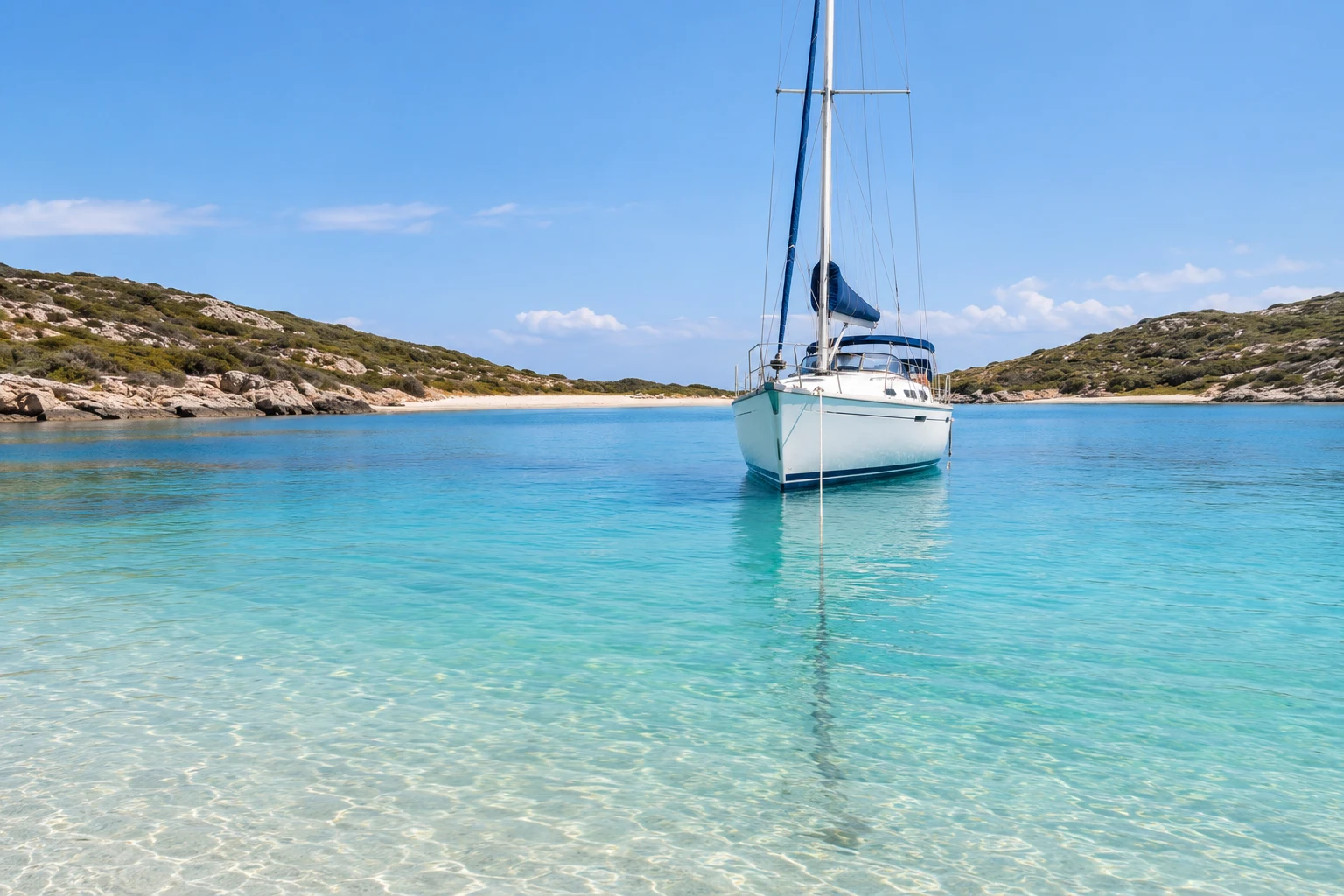
Beginners and families get the easiest start in the Balearic Islands: short hops between sheltered anchorages, land always within reach, and the largest charter fleet in Spain to pick a forgiving boat from.
Intermediate sailors have the widest choice: Costa Brava's thermal winds, Costa del Sol's calmer runs, and the Canary Islands' trade winds all ask a bit more than the Balearics without becoming genuinely demanding.
Experienced sailors get the most out of Galicia's tidal estuaries, the Strait of Gibraltar's funnel winds, and the Basque Coast's open swell, three stretches that reward real skill.
Matching the coast to your actual experience, rather than the prettiest photos, makes the difference between a trip you enjoy and one spent managing conditions you didn't plan for.
Frequently asked questions
What's the best month for sailing in Spain overall?
May, June, September, and October balance good weather with lower crowds and costs across most of Spain's coast. July and August are warmest but busiest, especially in the Balearics. The Canary Islands are the exception, staying sailable through winter when the rest of the coast quiets down.
What's the cheapest month to sail in Spain?
Shoulder months, May, June, September, and October, run noticeably cheaper than July and August across charter rates and marina fees. Winter is cheapest specifically in the Canary Islands, since the season never fully stops there. Booking outside peak summer is the single biggest lever on cost for a Spain sailing trip.
How much does it typically cost to moor a boat overnight in Spain?
Marina fees vary widely by region and season, generally running higher in the Balearics and Costa del Sol than in Galicia or the Basque Coast. Peak summer rates in popular marinas sit well above shoulder-season prices. Free anchoring remains common outside marina zones, especially on less developed stretches of coast.
When within the year-round Canary Islands season is best?
Winter, roughly November to March, draws sailors escaping mainland Europe's cold with steady trade winds. Summer runs hotter and slightly less windy, more comfortable for sailors who prefer calmer conditions. Inter-island wind acceleration zones can run strong regardless of season.
What's the prettiest beach to reach by boat in Spain?
Ses Illetes in Formentera is one of the most photographed anchorage beaches in the Mediterranean, with turquoise shallows and white sand. Cala Macarelleta in Menorca offers a quieter, cliff-backed alternative reachable mainly by water. Both are best visited outside midday in peak season to avoid day-tripper crowds.
What's the real difference between sailing the Balearics and mainland Spain's coast?
The Balearics offer shorter hops between islands and anchorages, with denser charter infrastructure packed into a smaller area. Mainland coasts like Costa Brava involve longer coastal runs with fewer island-hopping options between stops. Mainland marinas and provisioning towns also tend to run larger and less seasonal than island ports.
Start with the Balearics if this is your first Spanish charter, Mallorca's southwest coast or Menorca's southern calas specifically, and save Galicia, the Strait of Gibraltar, or the Basque Coast for a later trip once you know your own limits.
If winter sailing is the goal, the Canary Islands are the only region on this list that stays genuinely sailable through the colder months, worth treating as its own dedicated trip given the distance from the mainland.
Whichever coast you pick, matching it to your actual experience, not the prettiest photos, is what turns a week of sailing in Spain into a trip you'd book again.
Explore next
Destination guide
Spain
Sail the Balearic Sea and the Spanish Mediterranean, where calm coves, lively ports, and steady breezes shape every leg of the journey.