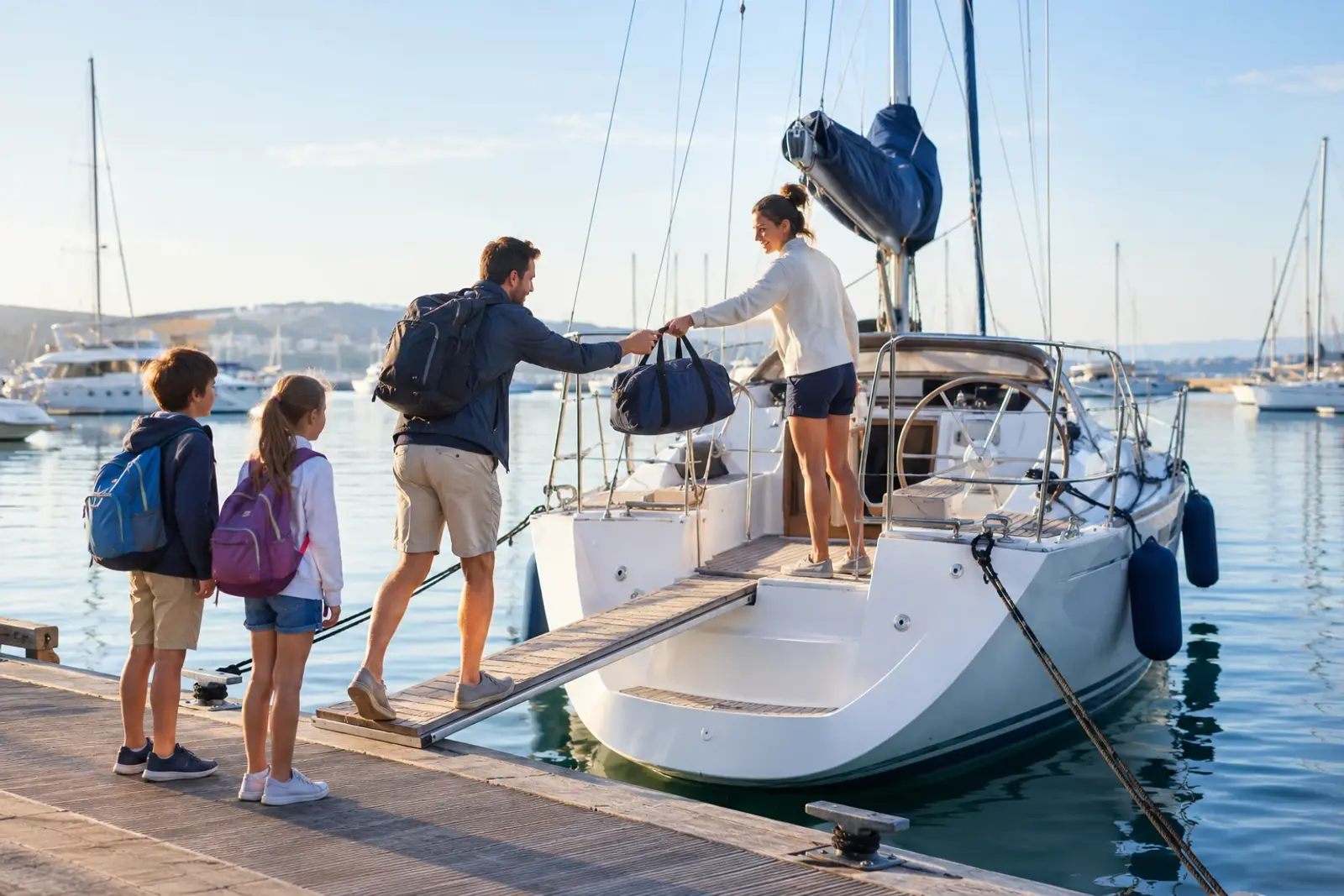
How to charter a yacht in Spain comes down to six decisions in order: choose a charter type (bareboat, skippered, or crewed), pick a destination and season, work out your budget including Spain's 21 percent VAT, check licence requirements if you're sailing yourself, book with a company, and provision before departure. Most yacht charter Spain first-timers go skippered or crewed, since neither requires a personal sailing licence.
A few Spain-specific details, the VAT, the booking window by season, what happens if weather or damage disrupts the trip, catch out people used to chartering elsewhere. The six steps below walk through the whole thing in the order you'll actually make each decision.
How does chartering a yacht in Spain actually work?
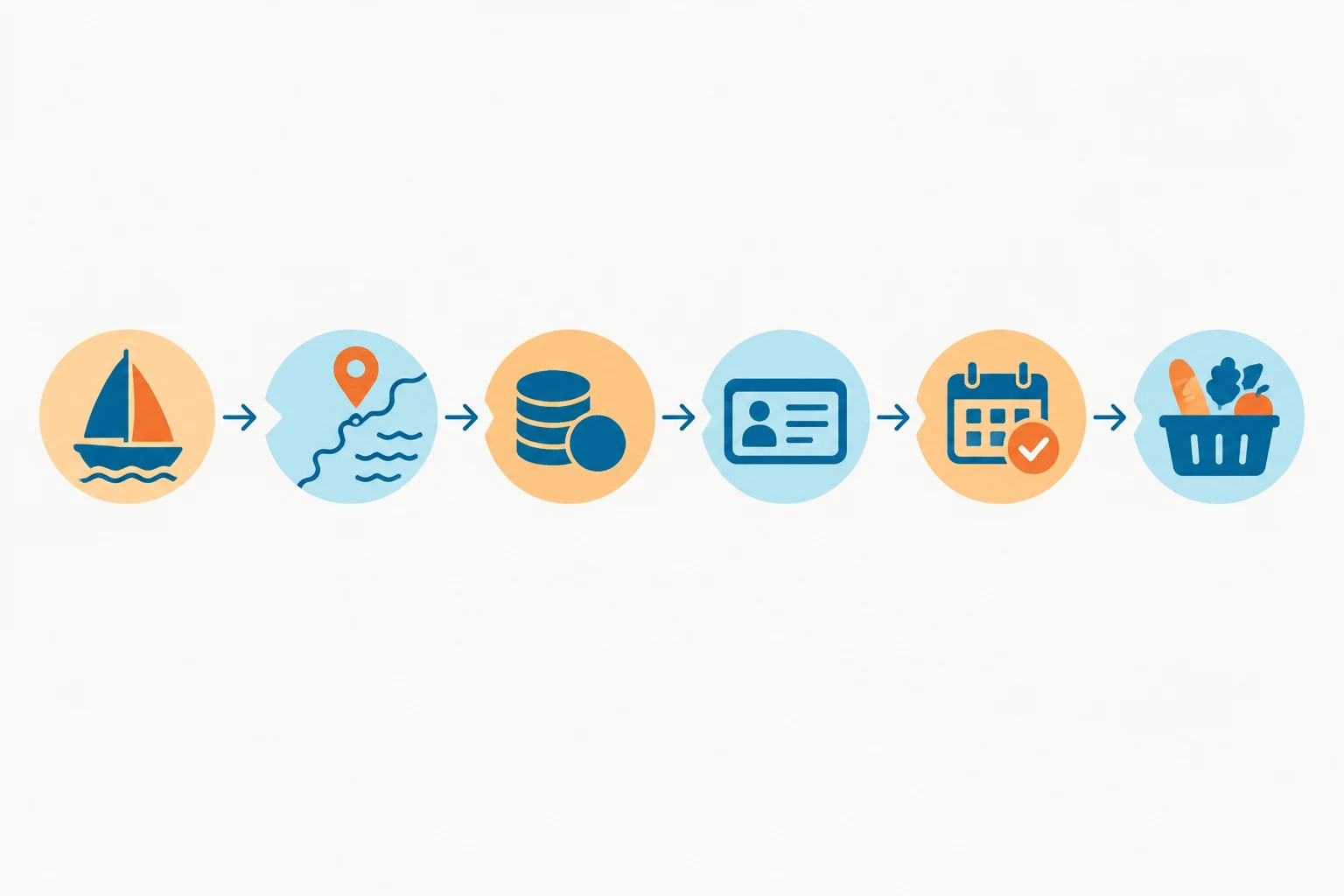
Chartering a yacht in Spain runs through six decisions in order: pick a charter type, choose a destination and season, work out a budget, check licence requirements, book a company, and provision before you sail.
Most first-time charterers go skippered or crewed rather than bareboat, since neither requires a personal sailing licence. A professional captain handles the boat while you decide how much of the sailing itself you want to be part of.
From your first search to a signed contract, the whole process typically takes a few weeks, longer if you're booking for the July or August peak, shorter for a shoulder-season trip with more availability.
Step 1: Choose bareboat, skippered, or crewed
| Charter type | Licence required | Who it suits | Cost tier |
|---|---|---|---|
| Bareboat | ICC, RYA Day Skipper, or equivalent + VHF cert | Licensed, experienced sailors | Lowest |
| Skippered | None | No licence, want to sail hands-on | Mid |
| Crewed | None | Full service, no sailing involved | Highest |
Bareboat charter puts you in command yourself, requiring an International Certificate of Competence (ICC), RYA Day Skipper, or equivalent licence, plus a VHF radio operator's certificate before any company hands over the keys.
Skippered charter removes that requirement: a professional captain joins the boat and handles navigation and docking, so no personal licence is needed.
Crewed charter goes further, adding a chef, hostess, or deckhand depending on boat size, the full-service option priced well above the other two.
The right choice comes down to how much of the sailing you actually want to do yourself, and whether anyone in your group already holds a qualifying licence.
Step 2: Pick your destination and season
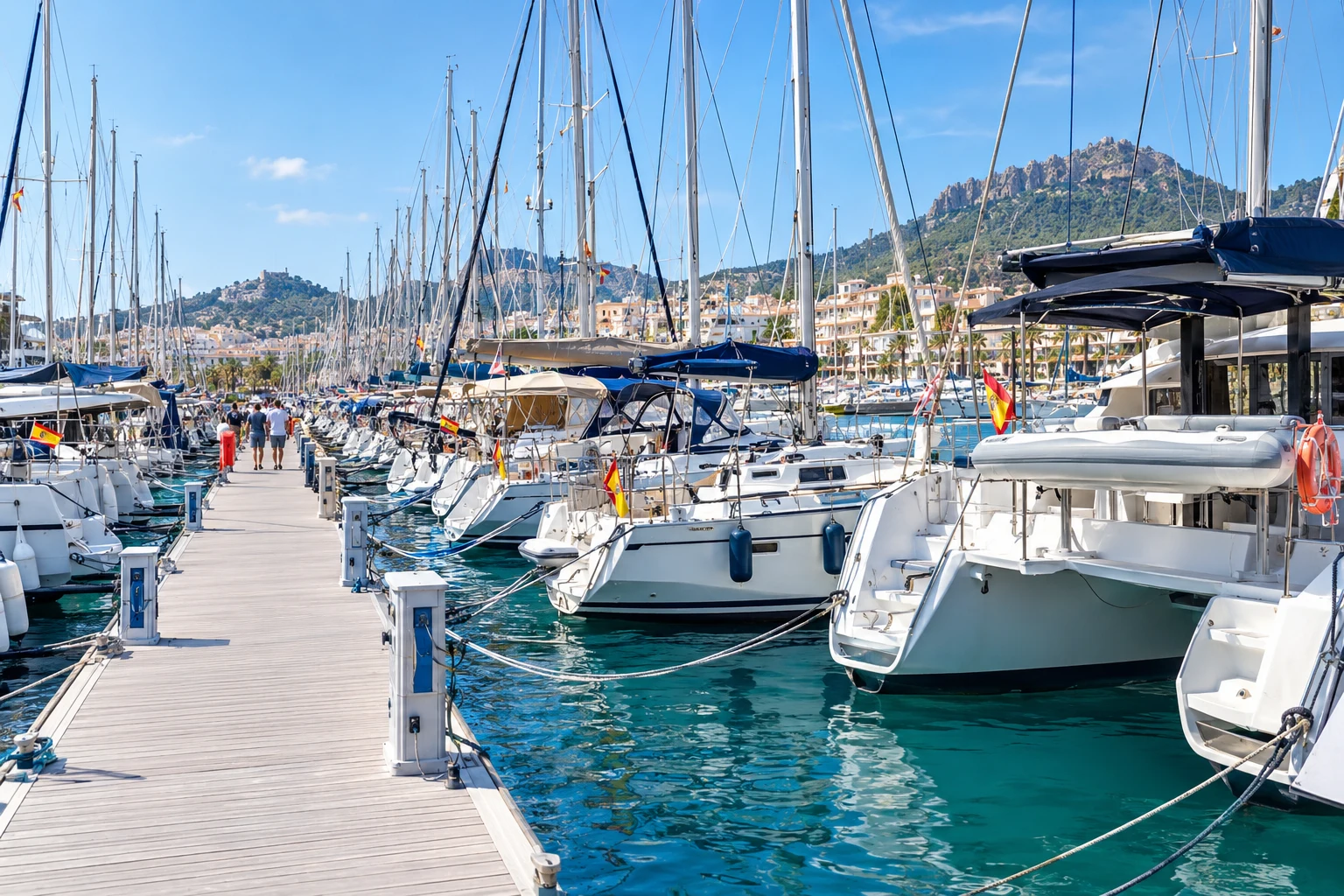
Spain's sailing season runs April through October, with July and August bringing the warmest weather, the busiest marinas, and the highest rates of the year.
Shoulder months, May, June, and September, offer much the same weather with fewer crowds and noticeably lower prices.
Region matters more for skill level than for any single "best" answer: the Balearic Islands suit most levels with sheltered sailing, Costa Brava and Costa del Sol work on the mainland, and the Canary Islands stay sailable through winter.
Pick the season first, then let it narrow down which region actually makes sense for your dates.
Step 3: Work out your budget
Base weekly rates vary hugely by boat type and season, from budget sailboats to premium catamarans at several times the price for the same week.
Spain adds 21% VAT to the charter fee itself, a cost many first-time charterers don't budget for until it shows up on the final invoice. Mooring, fuel, and a refundable security deposit all sit on top of that.
Knowing roughly what a week costs all-in makes it easier to compare offers on the same basis instead of being misled by a lower headline price.
Step 4: Check licence and crew requirements
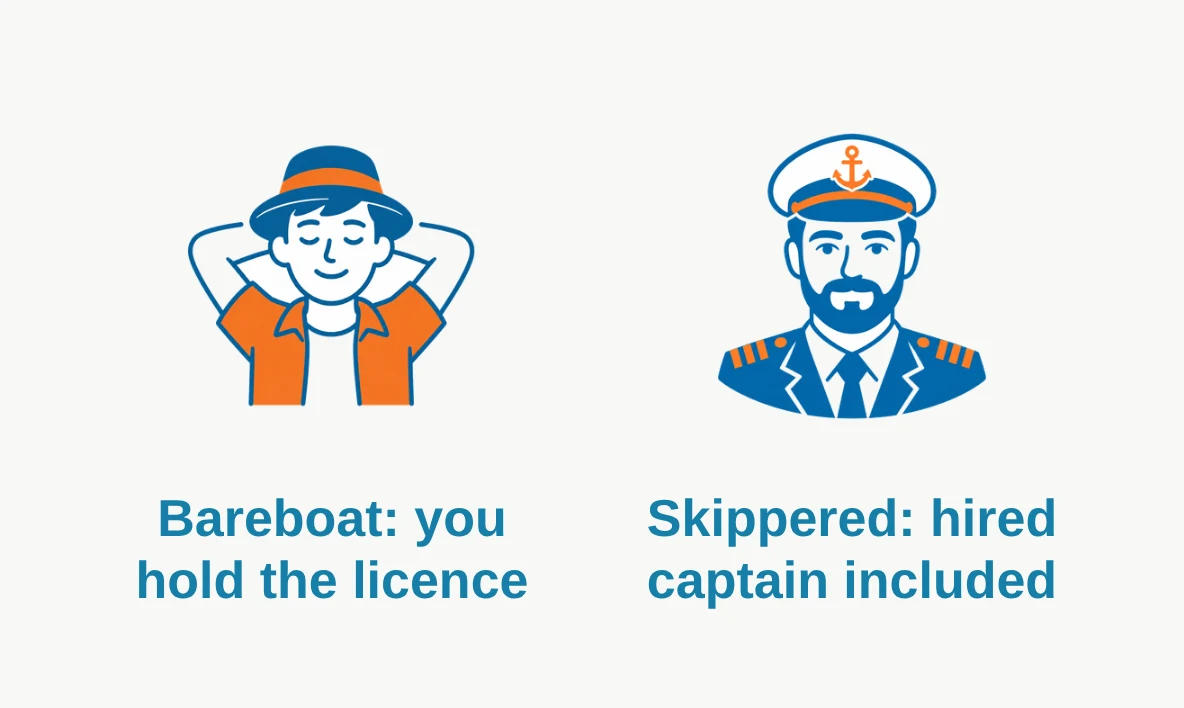
Only bareboat charter actually requires a personal sailing licence and VHF certificate from you. Skippered and crewed charters need neither, since a professional handles that side entirely.
For bareboat bookings, companies typically ask for a sailing resume alongside the licence, listing boats you've skippered before and your experience on a similarly sized vessel.
Most operators also expect at least one other competent crew member aboard for bareboat, someone who can handle lines and help anchor rather than one person managing everything solo.
Step 5: Find and book a charter company
Book 2 to 3 months ahead for a July or August date, or 2 to 4 weeks ahead for shoulder-season dates when more boats sit available at the last minute.
Compare quotes on the same basis, not headline price alone. Confirm whether VAT, fuel, and final cleaning are already folded in, since one company's "all-in" quote can hide costs another lists separately.
Check cancellation terms before committing, especially the notice needed for a refund. Weather-related cancellations are sometimes handled differently from a simple change of plans, so ask the specific policy rather than assume.
Step 6: Provision and pack before departure
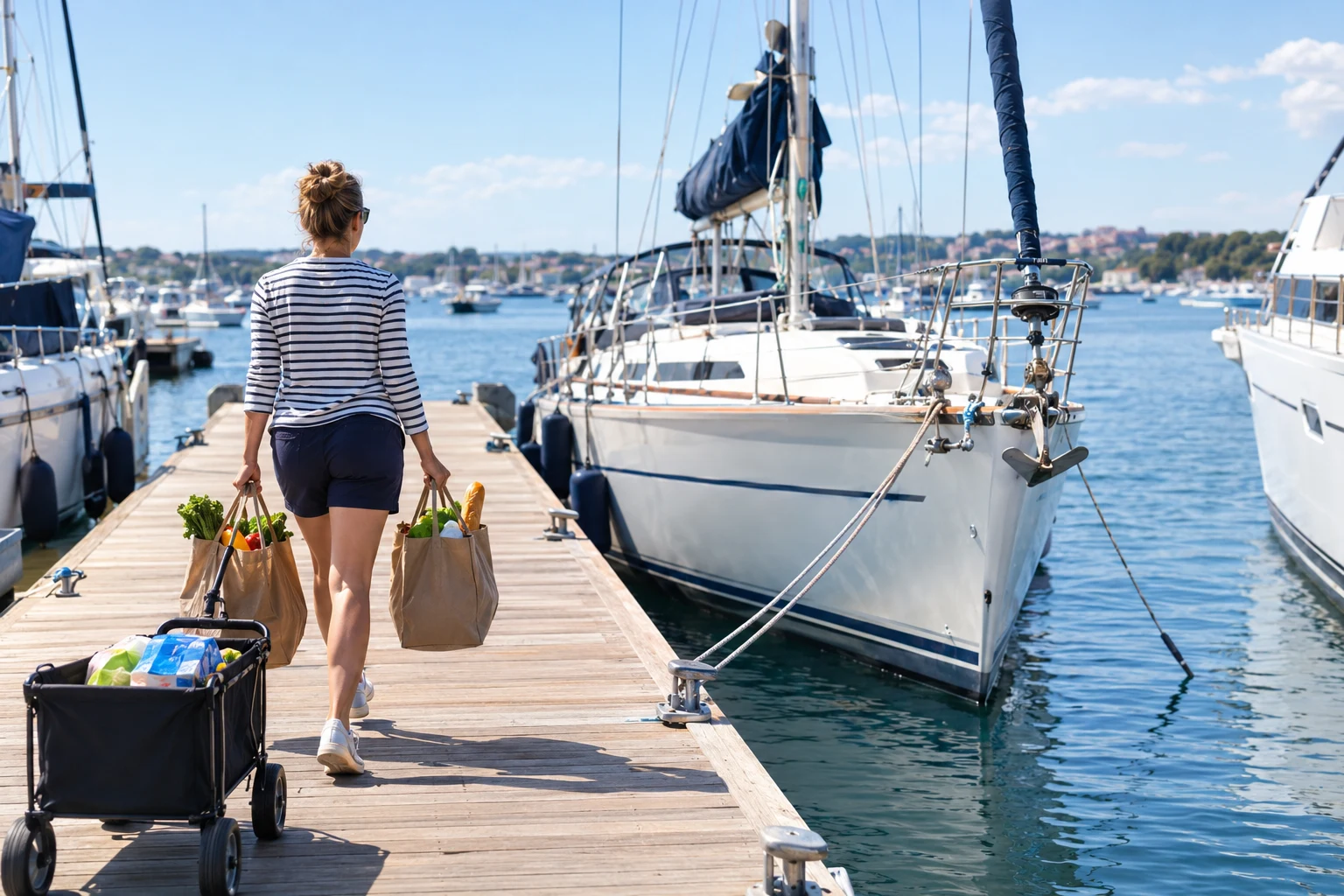
Most charterers provision at a supermarket near the marina, either the day before or the morning of departure, picking up food and drinks before heading to the boat.
Pack in soft bags rather than hard suitcases. A yacht's storage lockers are built for duffel bags that fold into odd-shaped gaps, not rigid cases that take up more room than they need to.
Confirm with your charter company whether bedding and towels are included or need to be brought or rented separately: this varies by operator, and assuming wrong means an awkward first night or an unexpected fee.
Leave some slack in your packing list for the first provisioning run. Local markets near most marinas sell fresh produce and bread that beat whatever you'd have brought from home.
What to expect at check-in and during the charter
Check-in includes a technical handover briefing, usually an hour or two, covering the engine, electrics, safety gear, and any quirks specific to that boat before you're handed the keys.
If weather turns too rough to leave safely, the charter company and skipper make that call together, not the guest. Departure gets delayed rather than forced, and most operators adjust the itinerary without losing the trip entirely.
Any damage gets assessed against the security deposit at check-out, with repair costs deducted before the rest is returned. This is why photographing the boat's condition at check-in, before you leave the dock, matters: it gives you evidence if a dispute comes up later.
A calm, unhurried check-in is usually a good sign about the company itself, while one that feels rushed is worth noting for how the rest of the charter might go.
Frequently asked questions
How much does it cost to hire a yacht in Spain for just one day?
Day charters run noticeably higher per day than a weekly rate works out to. Motor yachts and premium boats can run from roughly 1,000 to 5,000 or more euros for a single day, depending on size and luxury level. Sailboats and catamarans are generally cheaper per day than motor yachts of comparable size.
Is chartering a yacht in Spain expensive overall?
Spain adds 21 percent VAT to the charter fee, which catches many first-time charterers by surprise when comparing the headline rate to the final invoice. Budget sailboats in low season start well below premium catamarans in peak summer. Comparing the all-in price, VAT plus fuel plus mooring, gives a more honest picture than the headline rate alone.
Is there a standard tipping rule for charter crew in Spain?
A common guideline for crewed or skippered charters is around 10 percent of the base charter fee as a gratuity. This isn't a legal requirement, just a widely followed convention in the charter industry. Gratuities are paid directly to the crew, separate from the charter fee and security deposit.
What if I have zero sailing experience at all?
Skippered and crewed charters need no sailing experience or licence from you at all. A professional captain handles navigation, docking, and safety throughout the trip. Bareboat is the only charter type where your own experience and licence actually matter.
Can I start in one marina and finish in another?
Yes, most charter companies allow a one-way route between two marinas. This usually adds a repositioning fee, since the company has to move the boat back empty afterward. Starting and finishing at the same marina avoids this fee entirely.
What happens if the boat gets damaged during the charter?
Damage gets assessed against the security deposit at check-out, with repair costs deducted from it before the remainder is returned. Deposit insurance or a damage waiver, where offered, caps your liability well below the full deposit amount. Photographing the boat's condition at check-in gives you evidence if a dispute comes up later.
Start with the charter type, since it decides whether licence requirements even apply to you, then let season drive everything else: destination, price, and how far ahead you need to book.
If you're flexible on dates, shoulder-season sailing (May, June, September) gets you the same Spanish coast at a noticeably lower price with fewer boats competing for the same marina space.
Whatever you book, confirm the all-in cost, VAT included, and the cancellation policy before paying a deposit. Those two checks prevent more first-charter headaches than anything else on this page.
Explore next
Destination guide
Spain
Sail the Balearic Sea and the Spanish Mediterranean, where calm coves, lively ports, and steady breezes shape every leg of the journey.