Montenegro's Adriatic coastline delivers dramatic scenery, sheltered sailing, and excellent value for charterers. The Bay of Kotor, a UNESCO-listed fjord-like inlet, anchors most itineraries with protected anchorages and consistent summer winds. Charter options span bareboat to crewed yachts, with the sailing season running May through October. This Montenegro sailing holiday guide covers routes, costs, and practical tips for planning your trip.
The country's 293-kilometer coastline offers medieval towns, clear waters, and modern marinas at 30-40% lower costs than Croatia. The compact cruising area suits beginners and families, with typical week-long routes covering 60-100 nautical miles. Whether you're exploring Kotor's historic Old Town, anchoring in secluded Bigova Bay, or berthing at luxury Porto Montenegro, sailing in Montenegro combines accessibility with authentic Adriatic character.
Why Choose a Montenegro Sailing Holiday?
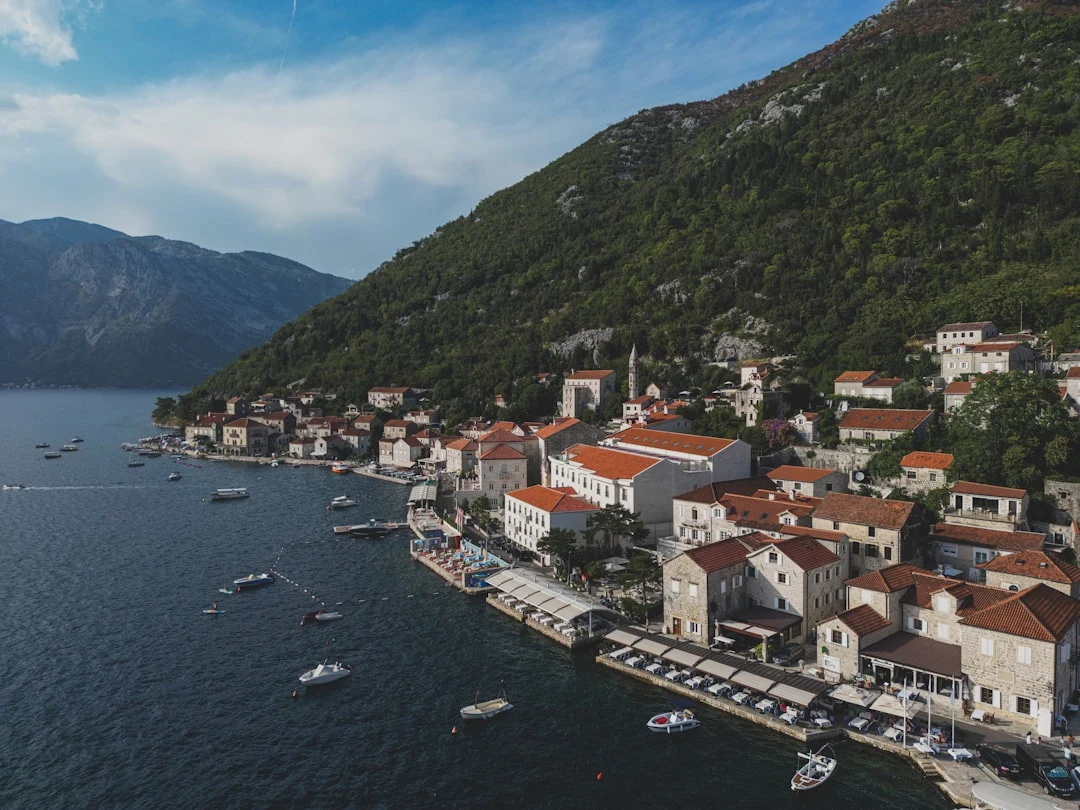
Montenegro's 293-kilometer Adriatic coastline delivers dramatic fjord-like bays, medieval walled towns, and transparent turquoise waters without the crowds that pack Croatian marinas in summer. The Bay of Kotor, a UNESCO site ringed by limestone cliffs and Venetian-era villages, anchors most sailing routes. You'll find protected anchorages, consistent summer winds, and a Mediterranean climate with 240 sunny days annually.
Compared to Croatia, Montenegro offers 30-40% lower mooring fees and charter costs. Most routes cover 60-100 nautical miles over a week, making this destination ideal for families, first-time charterers, and couples seeking relaxed day sails. The compact cruising area means less passage-making and more time exploring coastal towns like Perast and Budva.
Best Time to Sail in Montenegro: Seasons & Weather
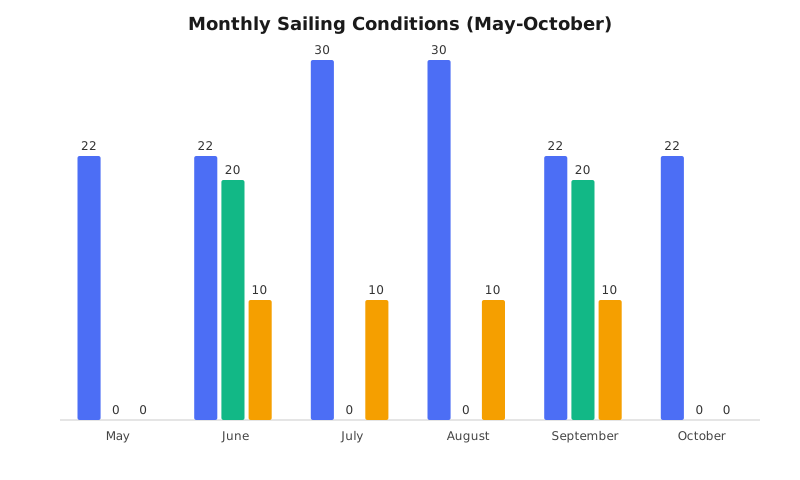
The sailing season runs May through October, with July and August bringing peak crowds, higher charter rates, and temperatures reaching 30°C. Shoulder months (May, June, September, October) offer 22-26°C weather, half-empty anchorages, and 20-30% lower costs, though May and October see more rain.
The maestral, a reliable northwest afternoon breeze of 10-20 knots, dominates summer conditions. The bura brings strong cold gusts from the northeast in spring and autumn, while the jugo creates southerly swells and humidity. Sea conditions stay calm in the sheltered Bay of Kotor year-round.
June and September balance warm swimming (20-24°C water) with fewer tourists. July hosts Kotor's summer carnival and numerous regattas. May suits nature lovers exploring quieter bays before peak season, while October appeals to experienced sailors comfortable with variable conditions.
For a full month-by-month breakdown of temperatures, pricing, and crowd levels, see our best time for a yacht charter in Montenegro guide.
Montenegro Yacht Charter Guide: Types, Companies & Licenses
| Charter Type | Requirements | Cost Range (per week) | Ideal Group Size |
|---|---|---|---|
| Bareboat | Valid sailing license (ICC, RYA Day Skipper, etc.), VHF radio operator certificate, sailing experience | €1,500 - €8,000+ | 2-10 |
| Skippered | No sailing license required, basic sailing knowledge helpful | €2,000 - €10,000+ (includes skipper fee) | 2-12 |
| Crewed | No sailing license required, desire for luxury and service | €5,000 - €50,000+ (includes skipper, chef, hostess, etc.) | 2-12+ |
| Flotilla | Valid sailing license (for bareboat within flotilla), VHF radio operator certificate, some sailing experience | €1,800 - €9,000+ | 2-10 per boat |
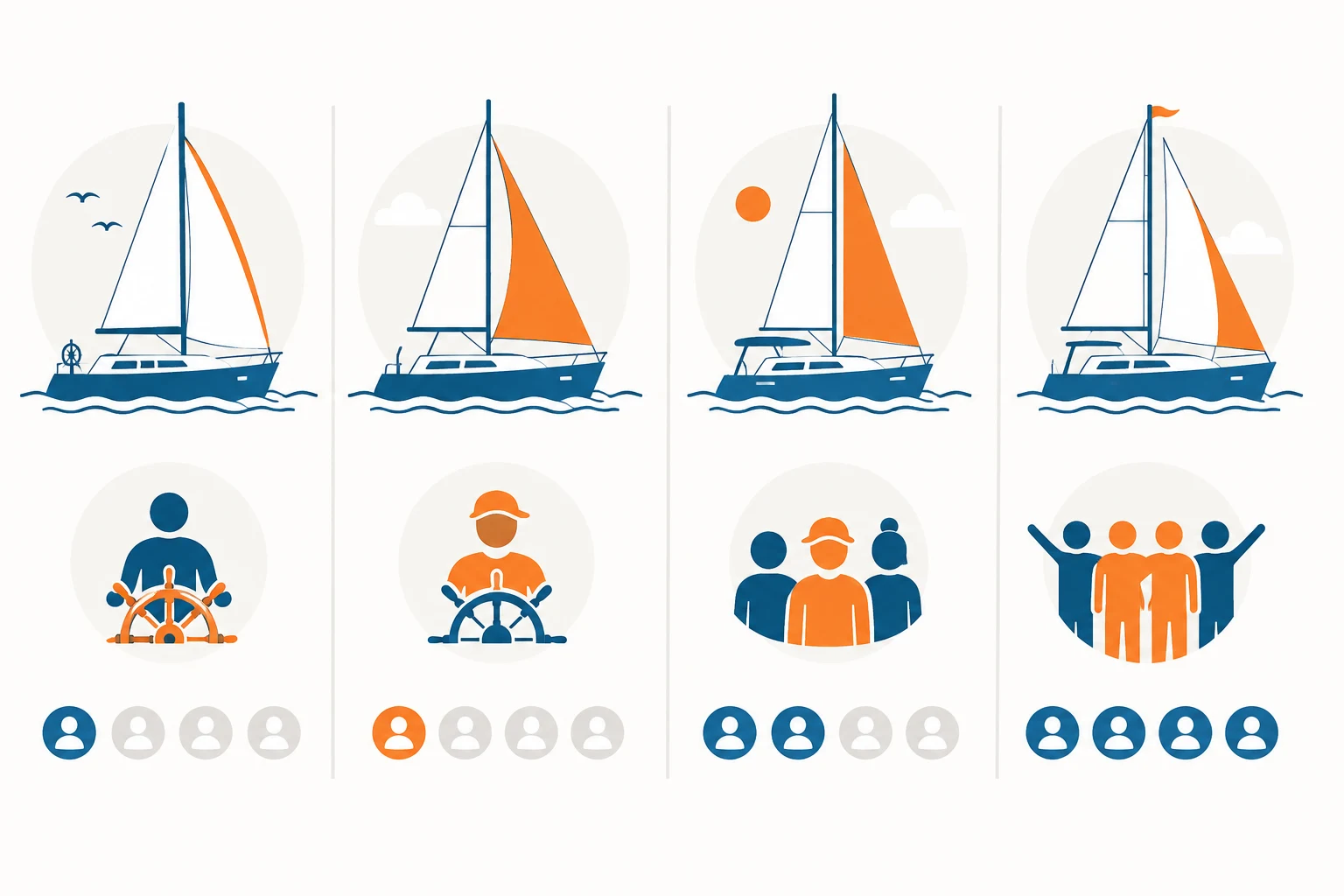
Montenegro yacht charter options include bareboat (self-sail), skippered (captain provided), crewed (full staff), and flotilla (group sailing with a lead boat). Bareboat charters require proof of sailing competence, typically an International Certificate of Competence (ICC), RYA Day Skipper, or equivalent national license. A VHF radio operator's certificate is mandatory for all bareboat charters.
Major charter companies include Sail Montenegro (Tivat), Adriatic Yacht Charter (Kotor), and international operators like Navigare Yachting. Look for companies with transparent pricing, comprehensive insurance options, and local knowledge of Bay of Kotor navigation restrictions.
You'll need passport copies, sailing licenses, a security deposit (€1,500-3,000), and proof of insurance. Most companies require skipper CVs listing recent sailing experience. Damage waiver policies typically cost 8-12% of charter fees and reduce your liability from full boat value to €500-1,500 excess.
Planning to sail yourself? Our dedicated Montenegro bareboat charter guide covers licensing, costs, and the best self-skippered routes in more depth.
Top Sailing Routes & Itinerary Ideas
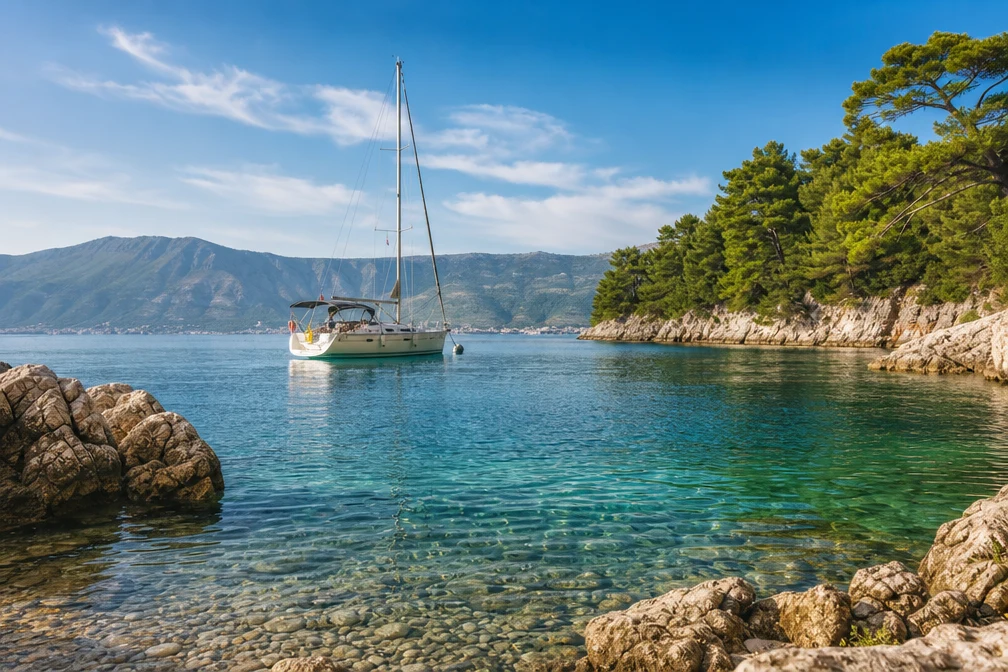
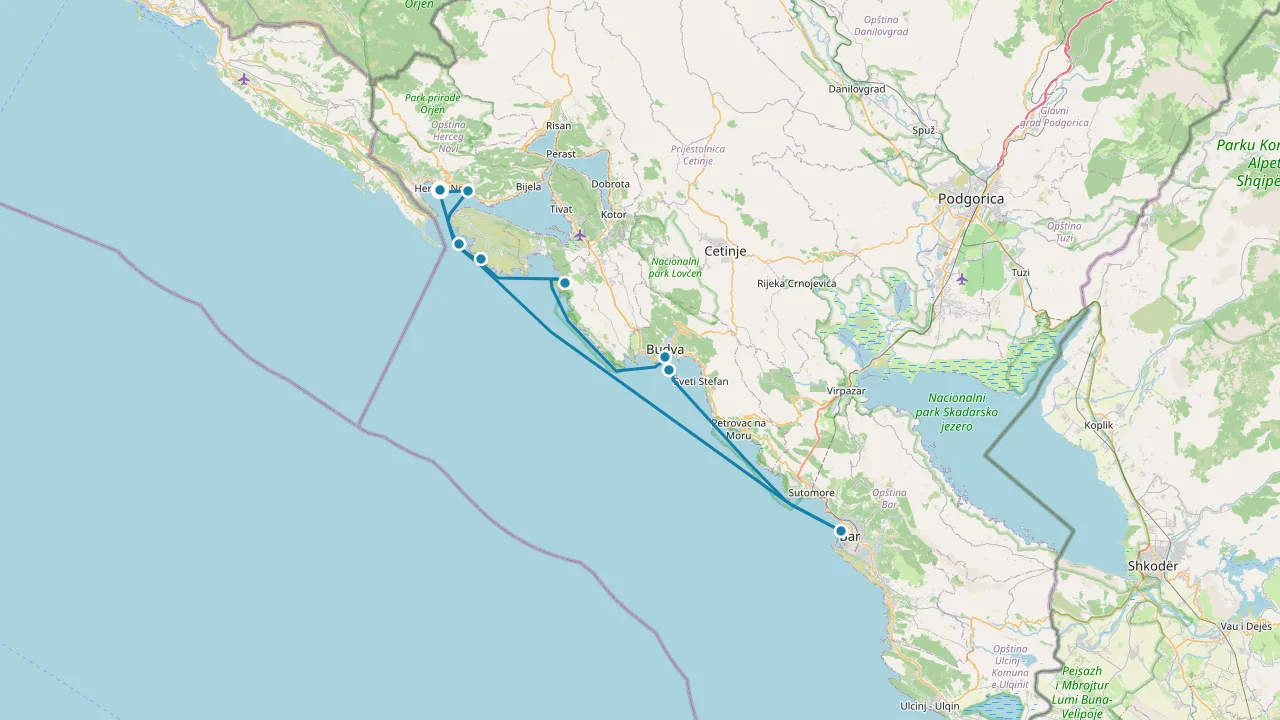
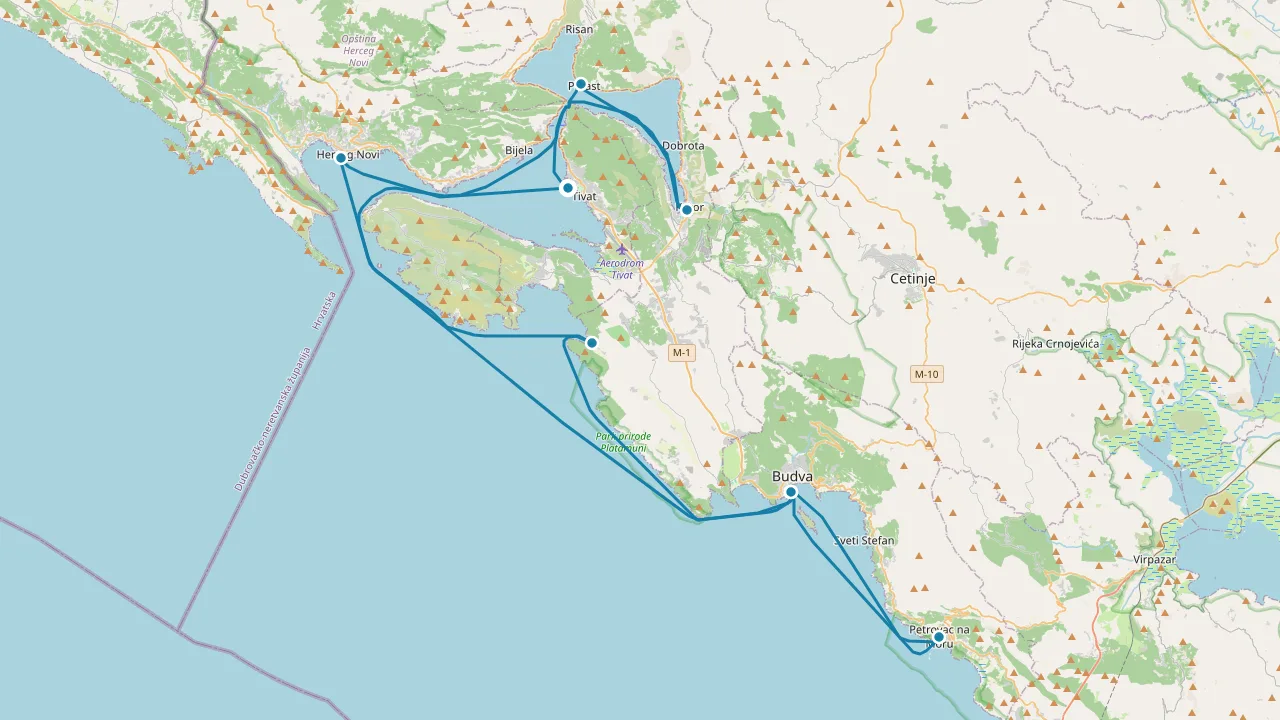
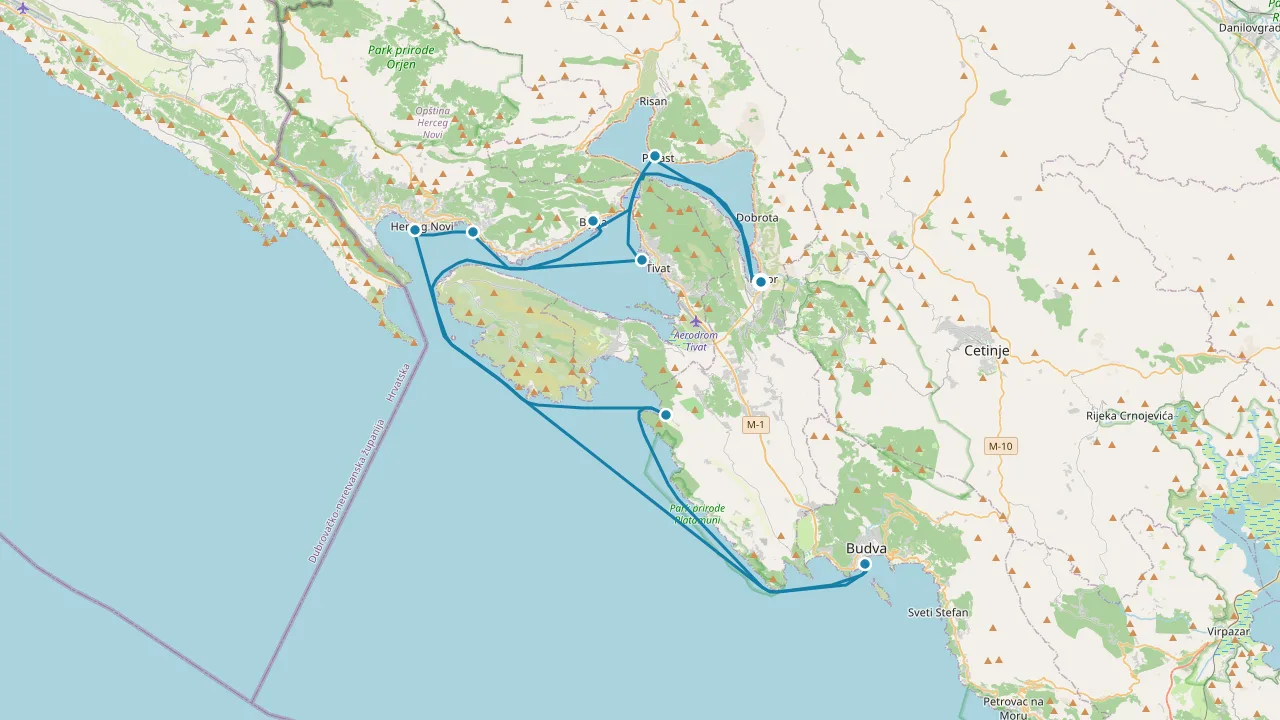
The best sailing routes center on three core circuits: the Bay of Kotor loop (30-40 nautical miles), the Budva Riviera coastal run (20-30 nautical miles), and the Tivat to Bar passage (45 nautical miles). A typical 7-day itinerary starts in Tivat, explores Perast and Our Lady of the Rocks island church on day one, anchors overnight in Kotor's medieval harbor on day two, then sails south to Budva's walled old town and Sveti Stefan's photogenic island resort on days three and four. Days five and six cover Bigova Bay's sheltered anchorage and Porto Montenegro's luxury marina before returning to Tivat on day seven.
A condensed 4-day route focuses on Bay of Kotor highlights: Tivat to Perast (day one), Kotor exploration (day two), Budva and nearby beaches (day three), and return via Porto Montenegro (day four). This compact itinerary covers 50-60 nautical miles total.
Customizing Your Sailing Itinerary
Families should prioritize the Bay of Kotor's calm waters and short 2-3 hour passages between anchorages with swimming platforms and beach access. Adventure seekers can extend south to Ulcinj or add hiking stops at Lovćen National Park above Kotor.
For extended trips, combine a week in Montenegro with Croatia's Dubrovnik region (25 NM north) or Albania's Ionian coast (40 NM south from Bar). This creates 10-14 day itineraries with varied landscapes, though crossing international waters requires advance charter approval and additional documentation.
Marinas, Moorings & Anchorages: Where to Dock
| Marina Name | Location | Berths | Amenities | Average Nightly Cost (EUR) | Contact Info |
|---|---|---|---|---|---|
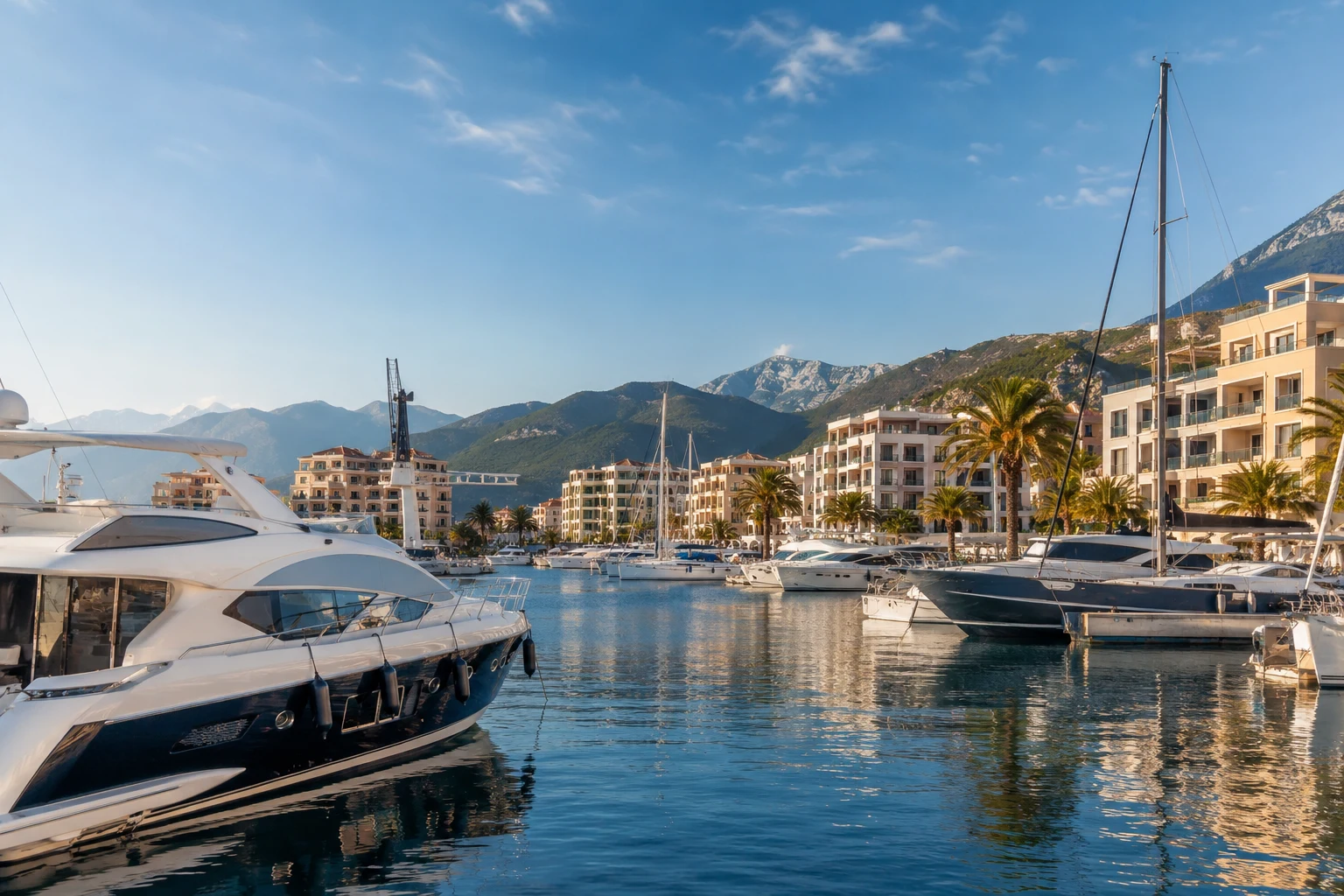
| Porto Montenegro | Tivat | 450+ (up to 250m) | Luxury boutiques, restaurants, bars, helipad, yacht club, 24/7 concierge, customs & immigration | 100-1000+ (depending on size) | +382 32 660 700, portomontenegro.com |
| Lustica Bay Marina | Lustica Peninsula | 176 (up to 45m) | Restaurants, cafes, shops, beach club, golf course, spa, 24/7 security | 80-500+ (depending on size) | +382 77 200 100, lusticabay.com |
| Dukley Marina Budva | Budva | 300 (up to 70m) | Restaurants, bars, beach access, swimming pools, gym, 24/7 security | 70-400+ (depending on size) | +382 33 451 100, dukleymarina.com |
| Marina Bar | Bar | 800+ (up to 35m) | Restaurants, shops, fuel station, repair services, customs & immigration | 50-250+ (depending on size) | +382 30 311 077, marina-bar.me |
| Marina Kotor | Kotor | 30 (up to 30m) | Restaurants, cafes, close to Old Town, limited services | 60-200+ (depending on size) | +382 32 322 411, portofkotor.com |
| Port of Herceg Novi | Herceg Novi | Limited (up to 25m) | Restaurants, cafes, close to Old Town, basic services | 40-150+ (depending on size) | +382 31 321 020, porthercegnovi.me |
Marinas cluster around the Bay of Kotor and southern coastline, offering modern facilities at prices 30-40% below Croatian equivalents. Porto Montenegro in Tivat features 450 berths, 24-hour security, fuel dock, chandlery, restaurants, and luxury shopping. Berths accommodate yachts up to 250 meters, with July-August rates from €80-150 per night for a 12-meter yacht. Advance reservations are essential during peak season.
Kotor's Old Town marina provides 30 berths in the medieval harbor, with stern-to mooring and limited facilities but unbeatable access to the UNESCO site. Bar Marina offers 1,000 berths, full services including haul-out and repairs. Lustica Bay Marina, opened in 2021, features 176 berths with spa, pool, and provisioning within walking distance.
Top anchorages include Bigova Bay (calm, free, restaurant ashore), Zanjice Beach (turquoise water, limited swinging room), and Dobrec Bay near Herceg Novi (sheltered, minimal swell). Most anchorages are free, though some restaurants request patronage if using their mooring buoys. Fuel is available at Porto Montenegro, Kotor, and Bar. Provisioning is best in Tivat and Kotor, where supermarkets sit within 10 minutes of the docks.
Costs & Budgeting: How Much Does a Sailing Holiday Cost?
| Cost Item (Weekly) | Budget Yacht (Low Season) | Mid-Range Yacht (Shoulder Season) | Luxury Yacht (High Season) |
|---|---|---|---|
| Yacht Charter | €1,500 - €2,500 | €3,000 - €6,000 | €7,000 - €15,000+ |
| Skipper (Optional) | €1,000 - €1,200 | €1,200 - €1,500 | €1,500 - €2,000 |
| Hostess/Cook (Optional) | €800 - €1,000 | €1,000 - €1,200 | €1,200 - €1,500 |
| Fuel | €150 - €300 | €250 - €500 | €400 - €800 |
| Marina Fees | €100 - €250 | €200 - €400 | €300 - €700 |
| Provisions | €300 - €500 | €500 - €800 | €700 - €1,200 |
| Water & Electricity | €30 - €50 | €40 - €70 | €60 - €100 |
| End Cleaning | €100 - €150 | €150 - €250 | €200 - €400 |
| Transit Log/Permits | €100 - €150 | €100 - €150 | €100 - €150 |
| Outboard Engine | €80 - €120 | €80 - €120 | Included |
| Total Estimated Weekly Cost (Self-Skippered) | €2,360 - €4,920 | €4,370 - €9,240 | €8,760 - €19,950+ |
| Total Estimated Weekly Cost (Skippered) | €3,360 - €6,120 | €5,570 - €10,740 | €10,260 - €21,950+ |
A week-long charter costs €1,200-2,500 for a 38-40ft sailing yacht in shoulder season (May-June, September-October), rising to €2,000-4,000 in peak July-August. Catamarans run €2,500-5,000 weekly depending on season and model. Motor yachts start around €3,500 per week. These prices include the boat only.
Budget an additional €800-1,500 weekly for four people covering fuel (€200-400), marina fees (€150-300), provisions (€300-500), and dining out. A skippered charter adds €150-180 daily. Most marinas charge €30-60 nightly, though free anchorages cut this expense significantly.
A budget crew of four spending €2,500 total (€625 per person) can sail a basic yacht in May with mostly anchoring and self-catering. Mid-range groups spend €4,000-6,000 (€1,000-1,500 per person) for better boats, mixed marina stays, and occasional restaurants. Luxury charters with crew and full services exceed €10,000 weekly.
Practicalities: Safety, Navigation & Entry Requirements
Montenegro's sailing waters are generally safe, but monitoring weather is essential. The Hydrometeorological Institute issues forecasts via VHF Channel 24 and at www.meteo.co.me. The bura can gust above 40 knots in spring and autumn, particularly near exposed headlands. In emergencies, contact the Maritime Rescue Coordination Centre on VHF Channel 16 or call 9155.
Use Admiralty Chart 1574 or digital apps like Navionics for accurate navigation. Most marinas require advance booking in July and August. Carry passports for all crew, your boat registration, sailing license, and a crew list. EU and US citizens need no visa for stays under 90 days. Submit crew lists at your first port of entry.
Respect local guidelines by avoiding anchoring in seagrass beds and disposing of waste at marina facilities. Speed limits in the Bay of Kotor are strictly enforced at 5-8 knots near towns.
Must-Visit Coastal Towns & Natural Highlights
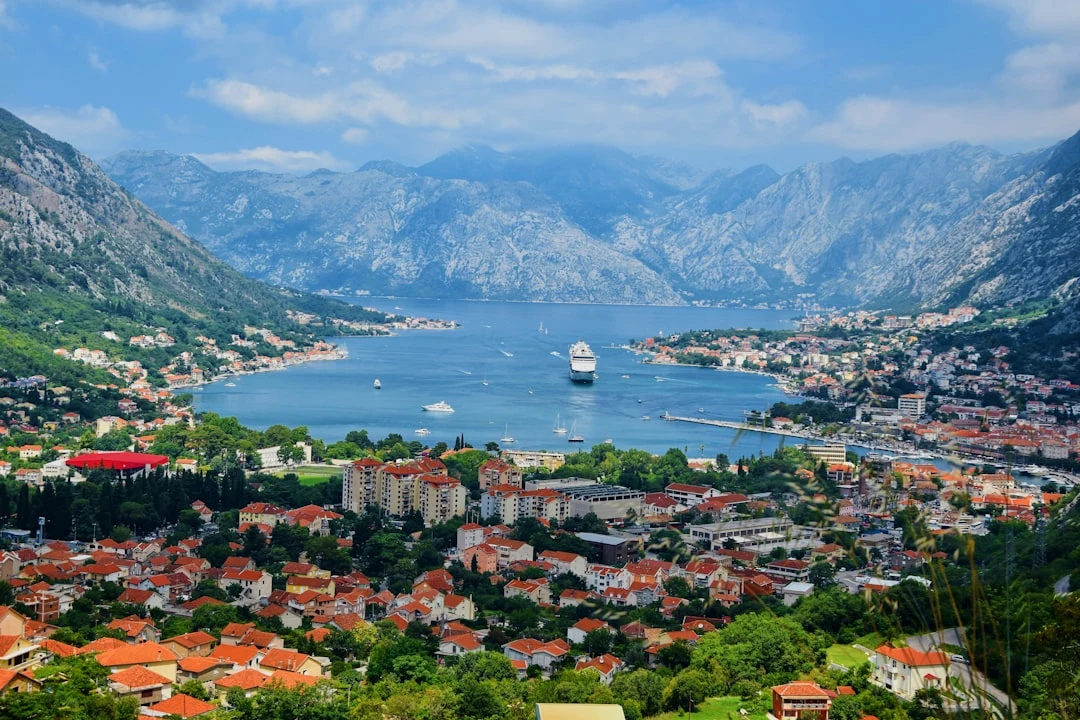
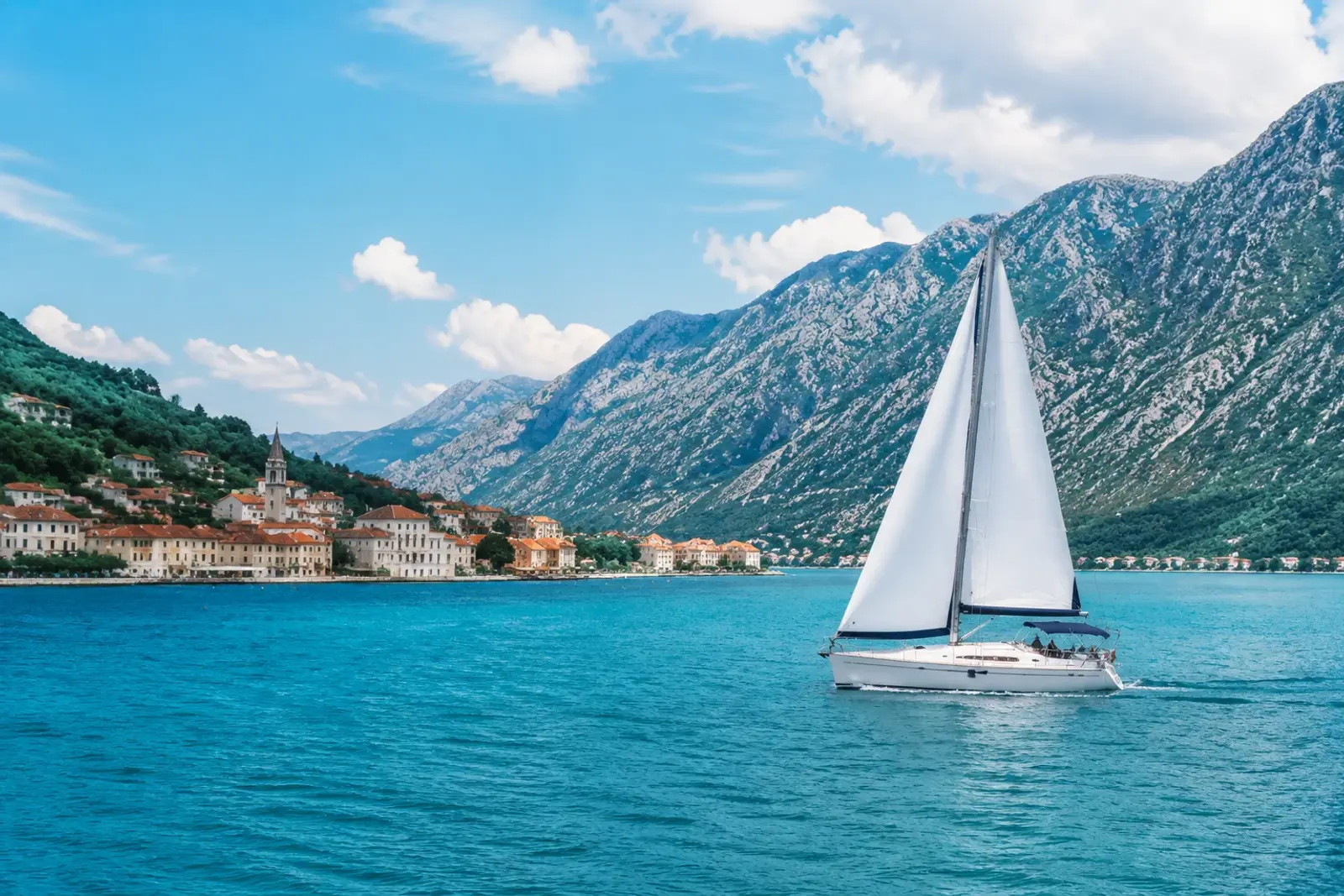
Sailing in the Bay of Kotor centers on medieval Kotor, where stone walls rise from the water's edge and narrow streets lead to fortress ruins above. Perast, 10 NM northwest, offers baroque architecture and boat access to Our Lady of the Rocks, an artificial island church built on a reef. Budva's walled Old Town sits on a peninsula with beaches on both sides, while Herceg Novi guards the bay entrance with Ottoman fortifications.
Bar serves as Montenegro's main commercial port but has a pleasant marina and access to ancient Stari Bar ruins inland. Ulcinj, near the Albanian border, features a Moorish-influenced old quarter and Ada Bojana, a river island with sandy beaches ideal for anchoring in calm conditions.
Natural highlights include Sveti Stefan, a fortified island village connected by causeway, best viewed from the water. The Blue Cave near Herceg Novi glows turquoise when sunlight filters through underwater openings. Bigova Bay and Zanjice Beach provide secluded anchorages for swimming and snorkeling, with waterfront konobas serving fresh seafood steps from your dinghy.
How Does Sailing in Montenegro Compare to Croatia?
| Feature | Montenegro | Croatia |
|---|---|---|
| Coastline | Shorter, dramatic, fjord-like bays (Bay of Kotor) | Longer, more islands, diverse coastline (Dalmatian coast, Istria) |
| Crowds | Generally less crowded, especially outside peak season | Can be very crowded, especially in popular areas during peak season |
| Cost (Charter) | Often more affordable (charter, mooring, provisions) | Generally more expensive |
| Cost (Mooring) | Generally cheaper, more free anchoring options | More expensive marinas, fewer free anchoring spots in popular areas |
| Infrastructure | Developing, fewer large marinas, more traditional ports | Well-developed, numerous modern marinas, extensive sailing infrastructure |
| Scenery | Rugged mountains meeting the sea, UNESCO sites (Kotor), dramatic fjords | Thousands of islands, ancient towns, national parks, clear turquoise waters |
| Culture | Blend of Balkan, Venetian, and Ottoman influences | Strong Venetian and Roman influences, distinct island cultures |
| Ease of Access | Tivat (TIV) airport, relatively easy to reach | Split (SPU), Dubrovnik (DBV), Zadar (ZAD) airports, very well-connected |
| Wind Conditions | Generally calmer, can have strong Bura winds in winter/shoulder seasons | More varied, Bura (NE) and Jugo (SE) winds can be strong, especially in spring/autumn |
| Food & Drink | Hearty Balkan cuisine, fresh seafood, local wines | Mediterranean cuisine, fresh seafood, olive oil, renowned wines |
| Nightlife | More laid-back, some vibrant spots in Budva/Kotor | More extensive and varied, especially in popular tourist hubs |
| Permits/Rules | Requires a vignette for sailing, generally straightforward | Requires a cruising permit, generally straightforward |
Montenegro offers 30-40% lower charter and mooring costs than Croatia, with significantly fewer crowds even in peak season. The Bay of Kotor provides unique fjord-like scenery not found in Croatia's island chains, while Croatia counters with more extensive coastline (1,777km vs 293km) and better-developed marina infrastructure.
Croatia suits sailors seeking longer passages, diverse island-hopping routes, and established sailing infrastructure. Montenegro works better for first-time charterers, families wanting short daily passages, and those prioritizing budget and tranquility over variety. The cultural experience differs too: Montenegro feels more intimate and less tourist-saturated, though Croatia offers more dining and entertainment options.
Both destinations share similar sailing seasons, Mediterranean cuisine, and UNESCO heritage sites, making either a strong Adriatic choice depending on your priorities.
For a deeper side-by-side breakdown of costs, infrastructure, and sailing conditions, see our full Montenegro vs Croatia yacht charter comparison.
Frequently Asked Questions
Is Montenegro good for sailing?
Yes, Montenegro offers calm bays, modern marinas, and diverse sailing experiences for all skill levels. The Bay of Kotor provides sheltered waters ideal for beginners, while the open Adriatic coastline challenges experienced sailors. The mix of scenic coastline and historic towns makes it a standout destination with shorter distances between anchorages than many Mediterranean alternatives.
Do you need a license to sail in Montenegro?
A valid skipper's license (ICC or RYA Day Skipper minimum) and VHF certificate are required for bareboat charters. Charter companies verify credentials before handing over vessels. No license is needed for crewed or skippered charters, where a professional captain handles navigation and boat operations.
How many days in Montenegro is enough for a sailing holiday?
A 7-day itinerary covers the highlights comfortably, allowing time to explore the Bay of Kotor, Budva Riviera, and southern anchorages without rushing. Even 4-5 days allows you to explore the Bay of Kotor and nearby coast at a relaxed pace. Longer trips can combine Montenegro with Croatia or Albania for extended adventures.
Which is the prettiest coastal town in Montenegro?
Kotor is often considered the most beautiful for its UNESCO-listed medieval old town and dramatic mountain backdrop rising directly from the bay. Perast offers Venetian architecture and island churches in a quieter setting. Budva combines a charming old town with beaches and nightlife, making all three top contenders depending on your priorities.
Montenegro delivers a sailing experience that balances accessibility with genuine adventure. The compact Bay of Kotor gives first-time charterers and families calm waters and short passages, while the wider coastline rewards confident sailors with dramatic scenery and empty anchorages. Book your charter 6-8 months ahead for July-August, or wait until 3-4 months out for the better-value shoulder season. Start your search with local operators like Sail Montenegro and Adriatic Yacht Charter. Budget €2,000-3,500 total for a week in shoulder season, more if you're chartering in peak summer. The combination of medieval harbours, protected bays, and 30-40% savings over Croatia makes Montenegro worth serious consideration for your next Adriatic sailing trip.
Explore next
Destination guide
Montenegro
Sail Montenegro's Adriatic coast, where deep fjord-like bays meet open sea. Base yourself at Porto Montenegro or Marina Budva and explore the Bay of Kotor's fortified towns.