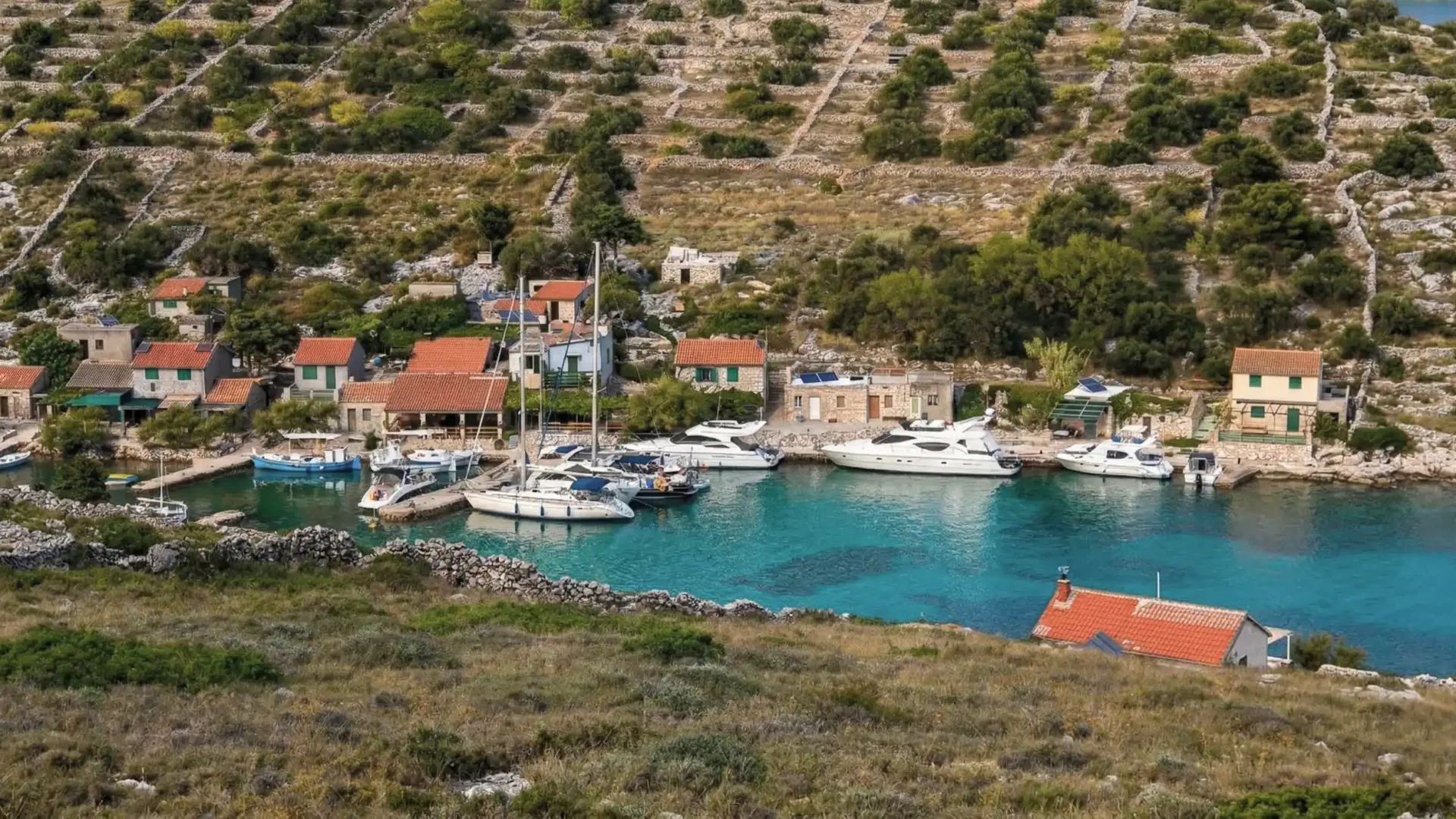
Full Description & Details
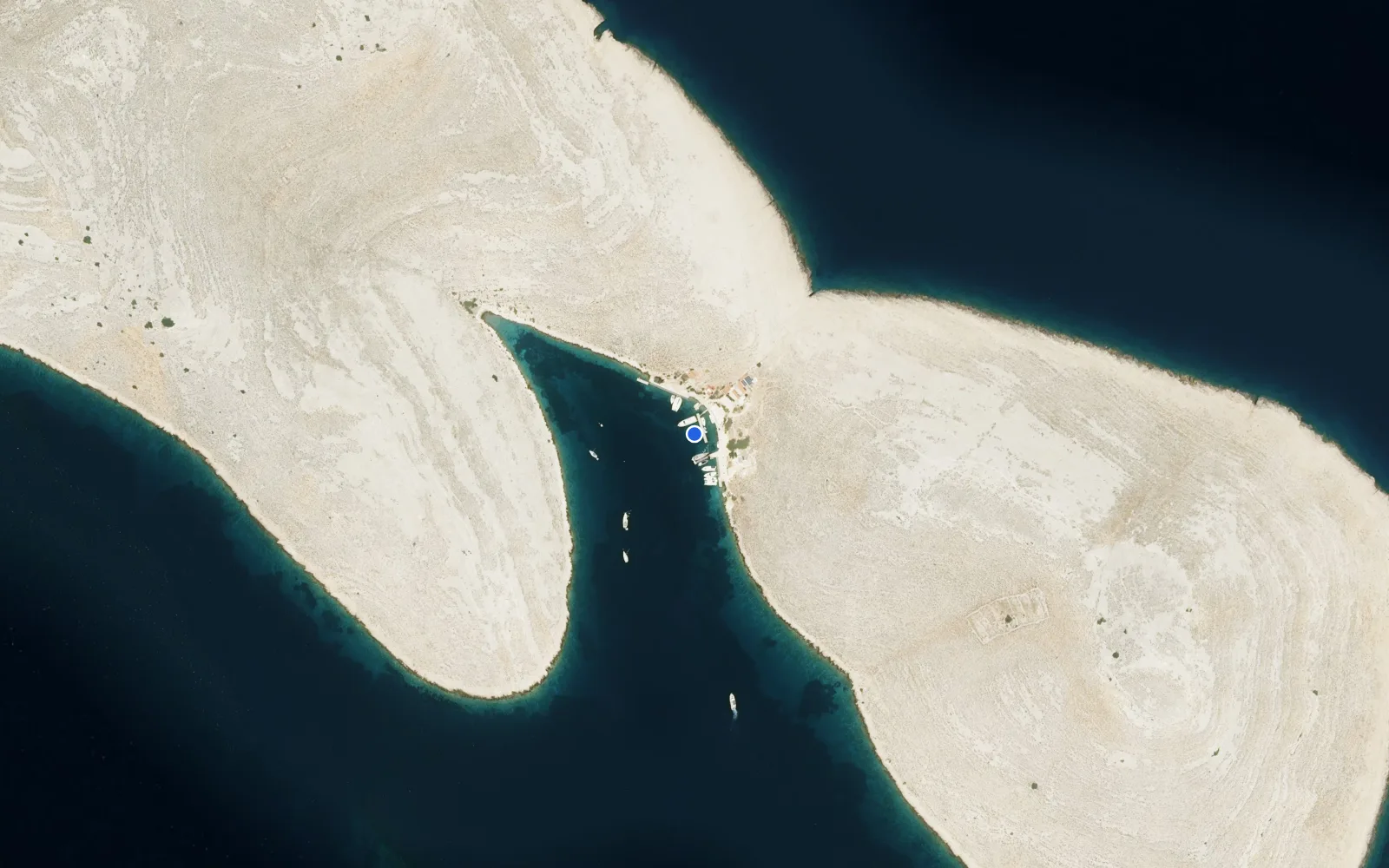
Pag harbour lies at the southern terminus of a long, sheltered inlet on the eastern coast of Pag island, accessed from the Velebit Channel. The harbour serves the historic town of Pag, a 15th-century Venetian settlement known for its salt pans, lace production and famous Pag cheese. The inlet provides reasonable protection in most conditions, though northwest winds can generate a six-mile fetch that makes the harbour choppy in the afternoons and potentially untenable in strong northwest gales.
Visiting yachts berth either alongside at the southern end of the town quay, just south of a small basin typically occupied by local boats, or stern-to on the northern section where laid moorings are available. Depths range from 2.5 to 3.5 metres depending on location. The harbour has two operational quay sections: one 102 metres long and another 122 metres long, with the remainder designated for communal berthing. Shallows extend west of the town quay, marked by buoys and posts. The harbour basin covers 223,915 square metres of water.
No facilities are available on the town quay itself, but the medieval town centre is immediately accessible, offering supermarkets, butchers, fruit and vegetable markets, a fish market, pharmacy, restaurants and internet cafes. Fuel is available at a garage on the town outskirts. Garbage bins are located behind the harbour. The harbour authority office in Zadar operates weekdays from 07:00 to 15:00, with public service hours from 08:00 to 13:00.
Sailors should note that tidal currents of 3-4 knots can run in the Velebit Channel near the inlet entrance. The harbour is not a port of entry; the nearest is Mali Losinj. Buses connect Pag to Zadar, Rijeka and Zagreb, and seasonal car ferries run from Zigljen to Prizna on the mainland.
How to get there
The approach to Pag harbour begins at the inlet entrance from the Velebit Channel at approximately 44°28.2′N, 15°04.5′E. From the entrance, proceed northwest for about one mile, then round the headland of Rt. Sv. Nikola and turn south-southeast.
The harbour lies just over two miles south-southeast of Rt. Sv. Nikola.
Tidal currents of up to 3-4 knots can run in the channel near the entrance. On the final approach, be aware of shallows extending west of the town quay, marked by buoys and then posts. Pag is not a port of entry; the nearest port of entry is Mali Losinj.
The harbour authority office is located in Zadar at Franka Lisice 77 and can be contacted at +385 23 250 563 or [email protected]. The town is accessible by road, with buses to Zadar, Rijeka and Zagreb, and seasonal car ferries operate from Zigljen to Prizna on the mainland. Pag Bridge connects the southern tip of the island to the mainland.
Frequently Asked Questions
What depths can I expect at Pag harbour?
Depths at Pag harbour range from 2.5 to 3.0 metres on the northern section with laid moorings, and 3.0 to 3.5 metres at the southern end of the town quay. When anchoring off the town, depths are 4.0 to 5.0 metres.
Can I stay overnight at Pag harbour?
Yes, overnight berthing is available at Pag harbour. Visiting yachts can berth alongside at the southern end of the town quay or stern-to on the northern section where laid moorings are provided.
What protection does Pag harbour offer from wind?
Pag harbour offers reasonably good protection in most conditions, but northwest winds can make it choppy in the afternoons due to the six-mile fetch down the inlet. A strong northwest wind may make the harbour untenable.
Are there facilities available at Pag harbour?
There are no facilities on the town quay itself, but the town centre is immediately accessible and offers supermarkets, markets, restaurants, internet cafes and a pharmacy. Fuel is available at a garage on the town outskirts, and garbage bins are located behind the harbour.
How do I approach Pag harbour by sea?
Enter the inlet from the Velebit Channel at approximately 44°28.2′N, 15°04.5′E, proceed northwest for about one mile, round Rt. Sv. Nikola headland, then head south-southeast for just over two miles to the harbour. Watch for shallows west of the town quay marked by buoys and posts, and be aware of tidal currents up to 3-4 knots near the entrance.
Is Pag harbour a port of entry for Croatia?
No, Pag harbour is not a port of entry. The nearest port of entry is Mali Losinj.
How can I contact Pag harbour authorities?
The harbour authority office is in Zadar and can be reached at +385 23 250 563 or [email protected]. Office hours are weekdays from 07:00 to 15:00, with public service from 08:00 to 13:00.
More sailing guides
Bareboat Sailing in Spain: Requirements and Licences
Everything you need to bareboat charter in Spain: accepted licences, flag-state rules, VHF requirements, and what to do if yours isn't accepted.
Yacht Charter Cost in Spain: What to Expect and How to Save
Real yacht charter costs in Spain by boat type, season, and region, plus what's included, hidden fees, and practical ways to cut the price.
How to Charter a Yacht in Spain: A Step-by-Step Guide
A step-by-step guide to chartering a yacht in Spain: choosing a charter type, budgeting, licences, booking, and what to expect once you're aboard.
Yacht Charter Provisioning Guide: Expert Tips & Checklists
Plan your sailing holiday like a pro with our yacht charter provisioning guide—food lists, meal planning, local market tips, and essential advice for every itinerary.

Best Yacht Type for Group Charters: How to Choose
Discover the best yacht types for group charters, from family reunions to corporate events. Compare sailing yacht options, capacity, cost, amenities, and legal limits.
What Information Is Needed to Book a Sailing Yacht Charter?
Discover the key information, documents, and requirements needed to book a sailing yacht charter. Learn what details charter companies need for a smooth reservation.
Yacht Charter Deposit Insurance: What It Covers & Why You Need It
Understand yacht charter deposit insurance: what it covers, costs, differences from security deposits, and how it protects your sailing holiday or commercial charter.
Related places
Aenona Harbour
Batalaža
Bozava
ACI Marina Piškera
ACI Marina Žut
Dinjiška bay
Draga
Griparica
Konoba Levrnaka
Konoba Opat