Full Description & Details
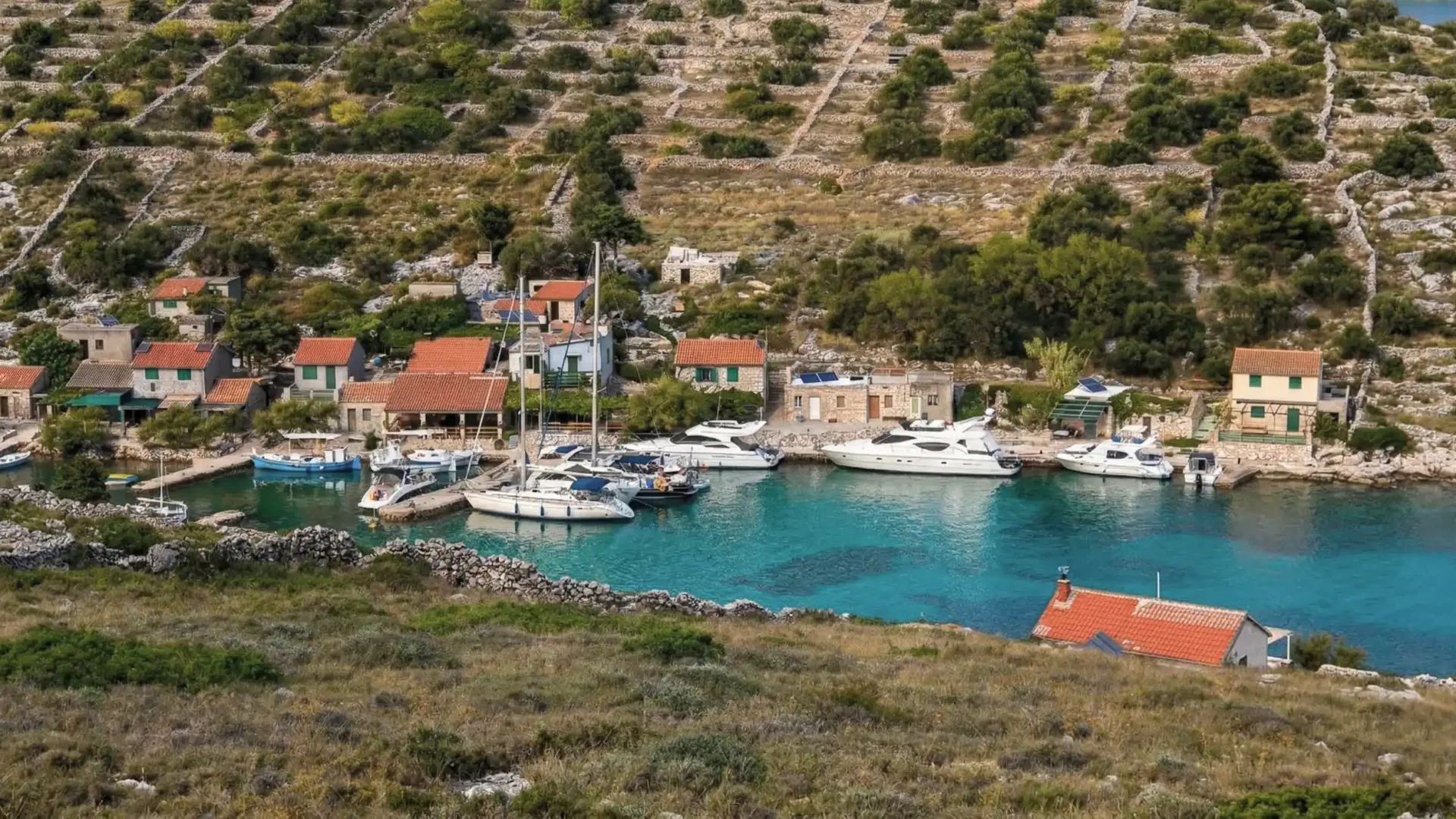
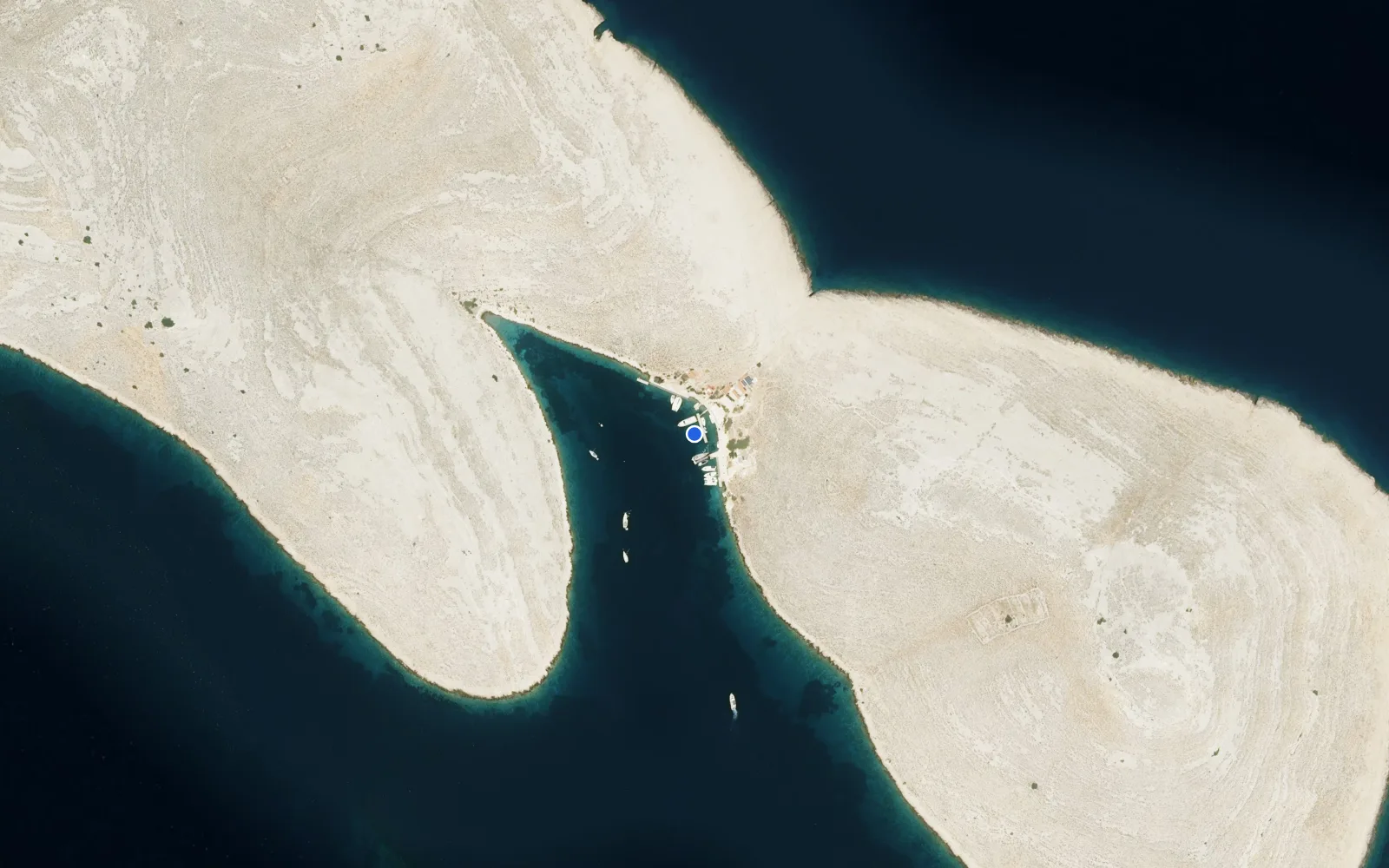
Kruscica Harbour is a small anchorage on the Adriatic coast near Tribanj, in Zadar County, Croatia. It sits along the mainland shore of the Velebit Channel, roughly opposite the island of Pag. The harbour is a simple, natural cove rather than a developed marina, so visiting yachts should expect basic facilities and a quiet, rural setting. The surrounding terrain is steep and rocky, typical of the northern Dalmatian coast, with limited infrastructure ashore.
The harbour offers shelter from winds out of the northeast and east, but it remains exposed to westerly and southerly breezes that can sweep across the channel. Depths inside the cove are moderate, with a sandy and rocky bottom that generally provides good holding. There are no dedicated berths or mooring buoys, so anchoring is the standard approach. The harbour is best suited to short stops in settled weather rather than prolonged stays.
Facilities are minimal. There is no fuel dock, no water supply, and no electricity at the quay. A few local stone quays may be used for landing a dinghy, but they are not equipped for alongside berthing of larger yachts. The nearest provisions and services are in the village of Tribanj, a short walk or dinghy ride away, where basic groceries and a couple of restaurants can be found.
Navigation in the approach is straightforward in daylight, but attention is needed to avoid the rocky shallows that fringe the entrance. The harbour is not a designated port of entry, so clearing in or out of Croatia must be done at a larger nearby harbour such as Starigrad or Karlobag. The best season for a visit is late spring through early autumn, when the weather is most stable and the channel is calmest.
How to get there
Approach Kruscica Harbour from the Velebit Channel, heading toward the mainland coast near Tribanj. The harbour entrance is open to the west, and there are no marked channels or buoys, so navigation relies on visual bearings and the chart. Depths decrease gradually toward the head of the cove, and the bottom is a mix of sand and rock.
Keep a careful lookout for isolated rocks close to the shore on either side of the entrance, especially in low light. There is no VHF working channel assigned to the harbour, so contact is not possible; monitor channel 16 for general traffic and safety calls. Once anchored, the nearest road access is from the coastal road that runs through Tribanj, connecting to the larger towns of Starigrad to the northwest and Karlobag to the southeast.
The closest airport is Zadar Airport, about 60 kilometres away by road. There are no formalities handled at the harbour itself; for customs or passport clearance, proceed to a designated port of entry such as Starigrad or Karlobag before or after anchoring here.
Frequently Asked Questions
What is the maximum depth in Kruscica Harbour?
Depths inside the cove are moderate, with a sandy and rocky bottom, but no specific maximum depth is published. Anchoring is typically done in 5 to 10 metres of water, depending on how far you enter the cove.
Are there mooring buoys or berths in Kruscica Harbour?
No, there are no dedicated berths or mooring buoys. Visiting yachts anchor in the cove, using the sandy and rocky bottom for holding.
Is fuel available at Kruscica Harbour?
No, there is no fuel dock at the harbour. The nearest fuel supply is at a larger harbour such as Starigrad or Karlobag.
Can I clear customs at Kruscica Harbour?
No, Kruscica Harbour is not a designated port of entry. You must clear in or out of Croatia at a larger harbour such as Starigrad or Karlobag.
What is the best time of year to visit Kruscica Harbour?
The best season is late spring through early autumn, when the weather is most stable and the Velebit Channel is calmest. In winter, northeasterly winds can make the anchorage uncomfortable.
More sailing guides
Bareboat Sailing in Spain: Requirements and Licences
Everything you need to bareboat charter in Spain: accepted licences, flag-state rules, VHF requirements, and what to do if yours isn't accepted.
Yacht Charter Cost in Spain: What to Expect and How to Save
Real yacht charter costs in Spain by boat type, season, and region, plus what's included, hidden fees, and practical ways to cut the price.
How to Charter a Yacht in Spain: A Step-by-Step Guide
A step-by-step guide to chartering a yacht in Spain: choosing a charter type, budgeting, licences, booking, and what to expect once you're aboard.
Yacht Charter Provisioning Guide: Expert Tips & Checklists
Plan your sailing holiday like a pro with our yacht charter provisioning guide—food lists, meal planning, local market tips, and essential advice for every itinerary.

Best Yacht Type for Group Charters: How to Choose
Discover the best yacht types for group charters, from family reunions to corporate events. Compare sailing yacht options, capacity, cost, amenities, and legal limits.
What Information Is Needed to Book a Sailing Yacht Charter?
Discover the key information, documents, and requirements needed to book a sailing yacht charter. Learn what details charter companies need for a smooth reservation.
Yacht Charter Deposit Insurance: What It Covers & Why You Need It
Understand yacht charter deposit insurance: what it covers, costs, differences from security deposits, and how it protects your sailing holiday or commercial charter.
Related places
Aenona Harbour
Batalaža
Bozava
ACI Marina Piškera
ACI Marina Žut
Dinjiška bay
Draga
Griparica
Konoba Levrnaka
Konoba Opat