
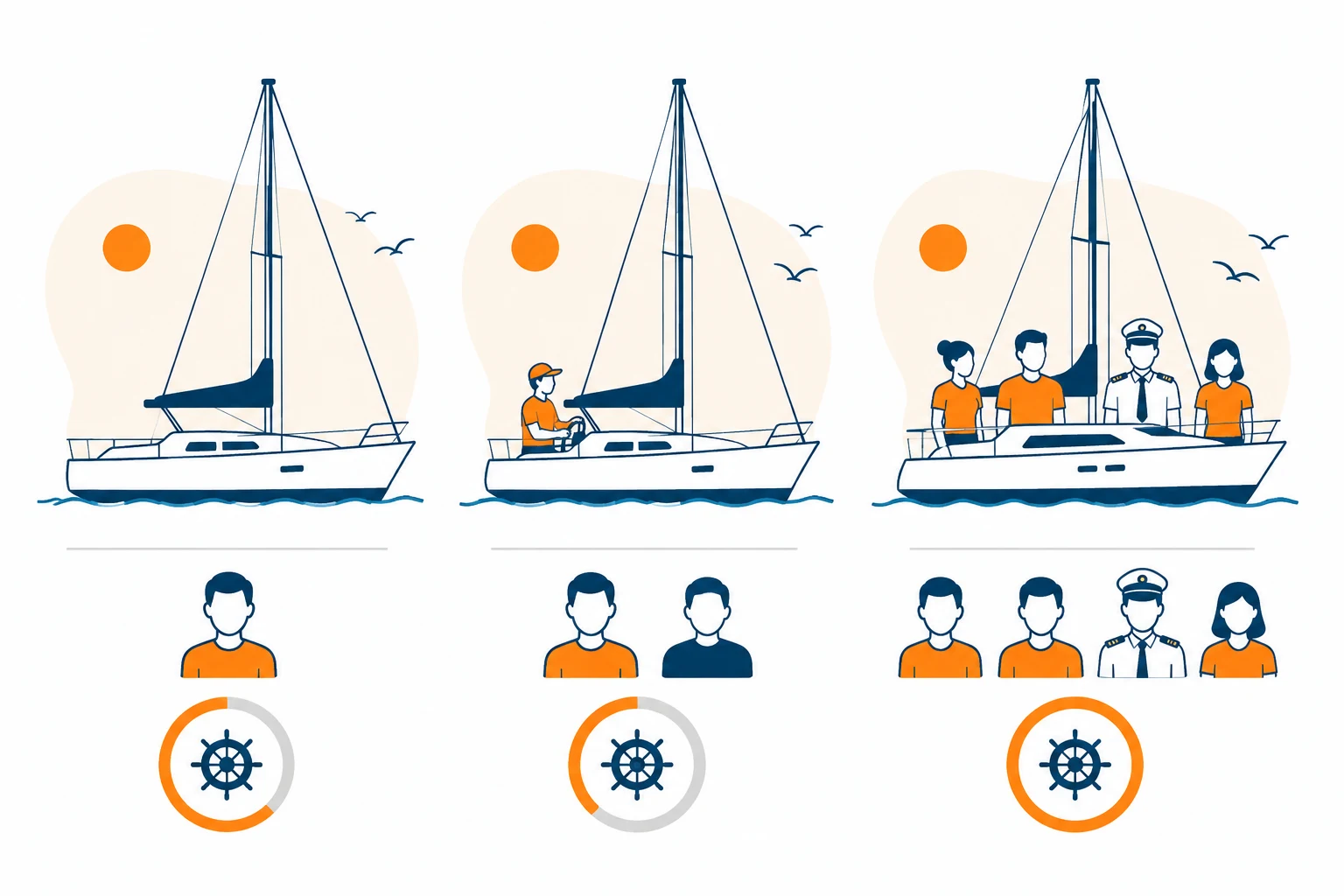
You do not need sailing experience to charter a yacht. Beginners can choose skippered or crewed charters, where a professional captain manages all navigation, safety, and boat handling. These options let you enjoy a sailing vacation without any prior knowledge of seamanship or certification requirements.
Bareboat charters, where you captain the yacht yourself, do require proof of sailing competency. Charter companies typically ask for recognized certifications and a sailing résumé documenting your experience on similar vessels. Requirements vary by destination, with some regions enforcing strict licensing rules while others taking a more relaxed approach.
The type of charter you select determines what qualifications you need, if any. Understanding these requirements helps you choose the right charter style for your skill level and ensures a safe, enjoyable experience on the water.
Types of yacht charters and experience requirements
Bareboat charters
Bareboat charters put you in command of the yacht without a captain or crew aboard. Charter companies require documented proof of sailing competency before handing over the keys. This typically means presenting a recognized sailing certification such as ASA, RYA, or ICC, along with a sailing résumé that details your experience on similar-sized vessels in comparable conditions.
Most companies want to see recent sailing history, usually within the past two years. Your résumé should include the types of boats you've sailed, approximate dates, locations, and whether you served as skipper or crew.
If you lack formal certification but have extensive practical experience, some charter companies offer a checkout sail. This short evaluation lets a company representative assess your boat handling skills before approving your charter.
Skippered charters
Skippered charters include a licensed captain who handles all sailing operations, navigation, and safety responsibilities. You pay a daily fee for the skipper's services, typically $150-$250 per day depending on the destination and yacht size. This option suits sailors with limited experience, those unfamiliar with the cruising area, or anyone who prefers a guided sailing vacation.
The skipper manages route planning, weather monitoring, docking, and anchoring. You can participate in sailing tasks if you want to learn, or simply relax while the professional handles everything.
Crewed charters
Crewed yacht charters come with a full crew: captain, chef, and sometimes additional staff depending on yacht size. The crew handles everything from sailing to meal preparation and cleaning. This is the most hands-off option, designed for guests who want a luxury vacation without any sailing duties.
Bareboat appeals to experienced sailors seeking independence. Skippered charters work for intermediate sailors or groups mixing experienced and novice crew. Crewed charters suit anyone prioritizing comfort and service over hands-on sailing.
Do you need a sailing license or certification?
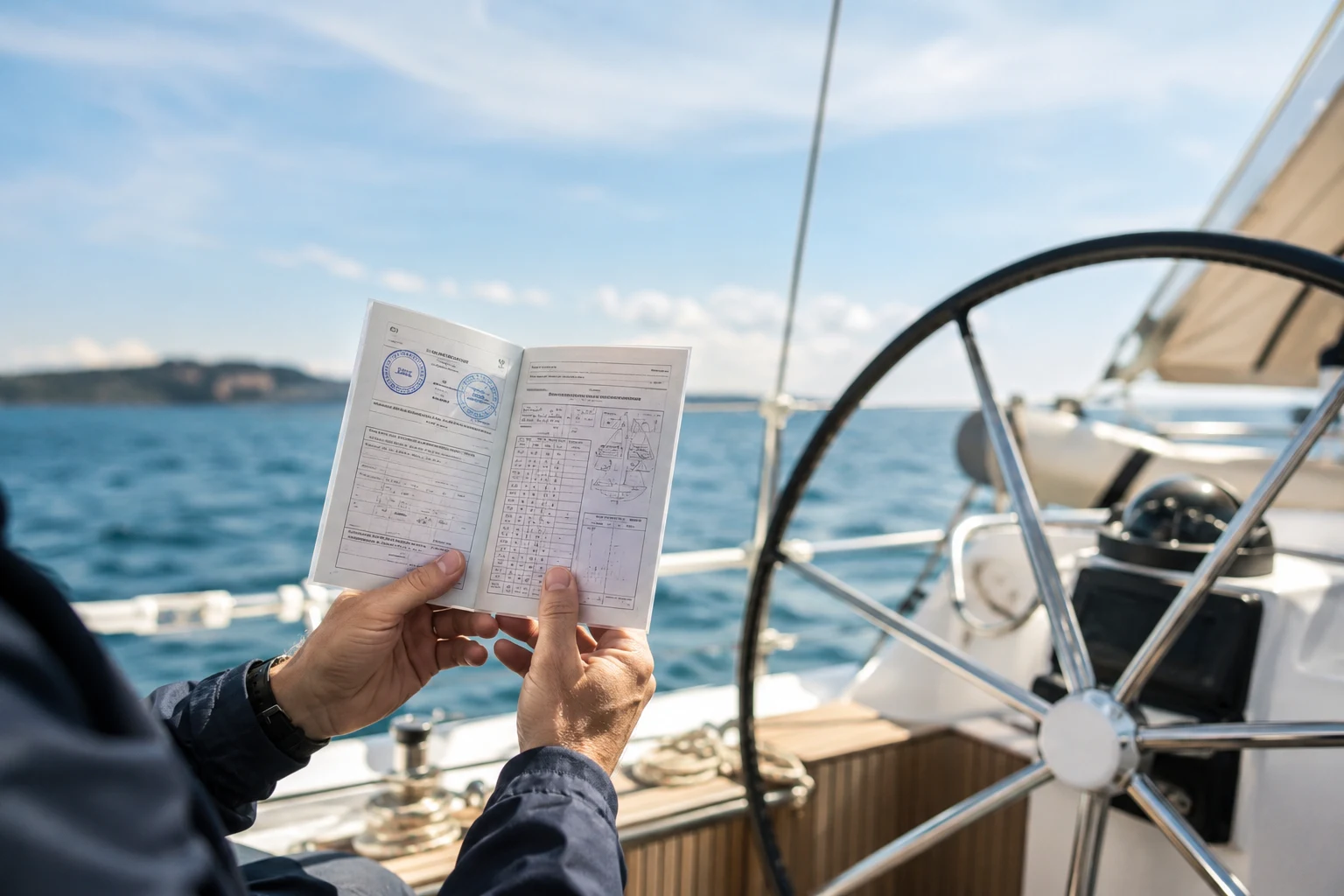
Bareboat charters typically require proof of formal sailing qualifications. Most charter companies accept the International Certificate of Competence (ICC), which is recognized across Europe and many other regions. The Royal Yachting Association (RYA) certifications from the UK and American Sailing Association (ASA) credentials from the US are also widely accepted worldwide.
Requirements vary significantly by destination. Greece, Croatia, and Spain enforce strict licensing rules and often request both certification and a logbook showing recent sailing experience. The British Virgin Islands and other Caribbean locations tend to be more relaxed, sometimes accepting a sailing résumé without formal certification. French Polynesia and Turkey fall somewhere in between, evaluating credentials case by case.
Charter companies assess your qualifications during booking. Providing clear documentation of your certification, experience level, and recent sailing activity upfront speeds the approval process and prevents surprises at check-in.
How to charter a yacht without any experience
Beginners can charter a yacht without sailing experience through four main options. Skippered charters provide a licensed captain who handles all sailing and navigation while you relax or learn. Crewed charters include a full team (captain, chef, deckhands) for a hotel-like experience on the water.
Flotilla charters let multiple boats sail together with a lead vessel, offering independence with nearby support. By-the-cabin charters work like cruise ships, where you book individual cabins on a larger yacht with crew included.
The booking process starts with selecting your charter type and destination through a broker or charter company. You'll discuss your group size, budget, preferred itinerary, and any special requests. Most companies require a deposit (typically 50%) and travel insurance.
Communicate your experience level honestly so the crew can adjust their approach. Pack light (soft bags only), bring seasickness medication even if you don't typically get motion sick, and discuss meal preferences in advance if you have dietary restrictions.
What to expect: safety, comfort, and crew roles
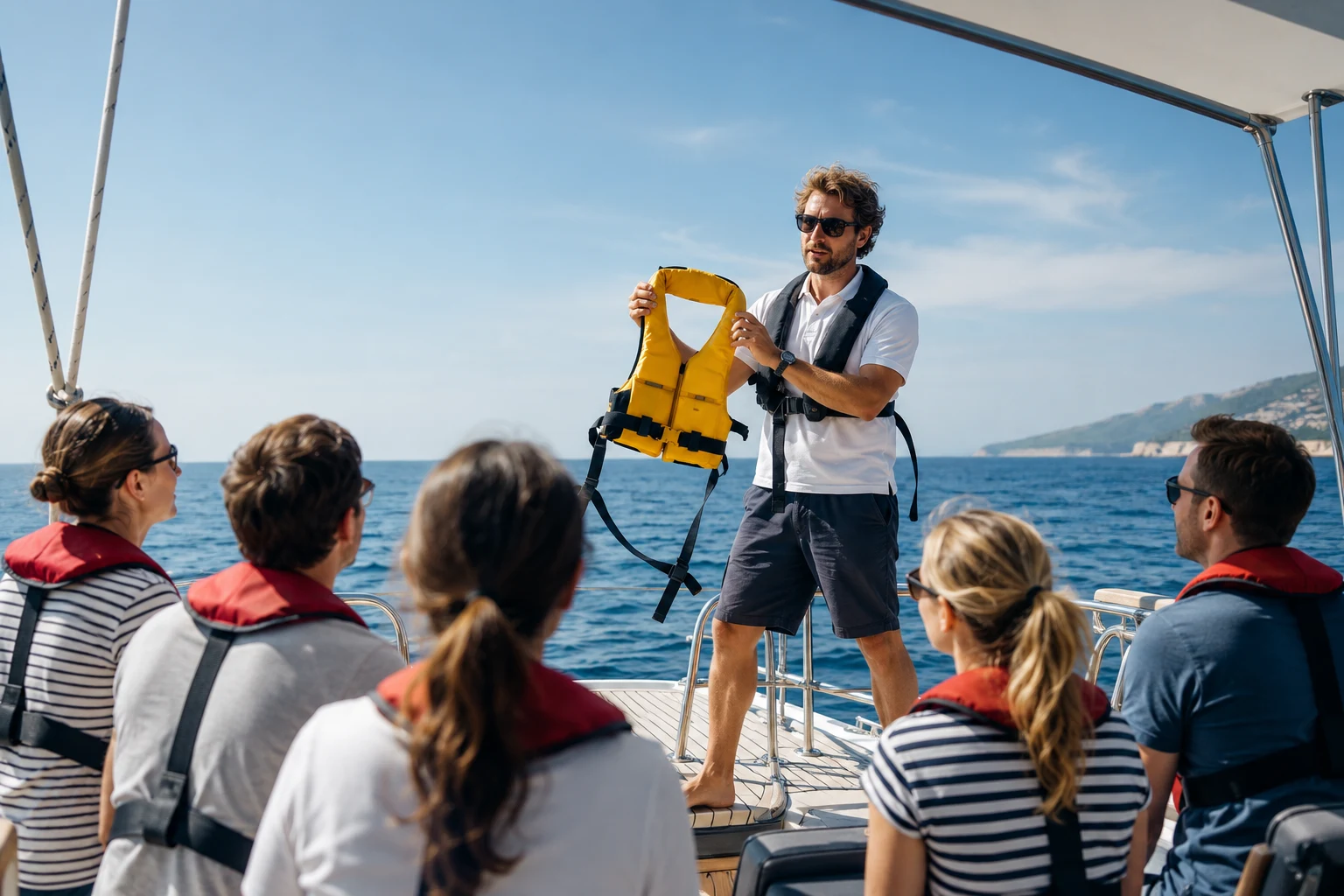
Every yacht charter begins with a comprehensive safety briefing covering life jacket locations, emergency procedures, fire extinguishers, and man-overboard protocols. This applies regardless of whether you've booked bareboat, skippered, or crewed. Charter companies must meet international maritime safety standards, and vessels undergo regular inspections.
On skippered and crewed charters, the captain handles all navigation, sail handling, docking, and weather monitoring. Crew members manage daily operations including meal preparation, cleaning, and maintenance. Your role is simply to relax and enjoy the voyage.
Most skippers welcome guests who want to learn basic sailing tasks like trimming sails or taking the helm under supervision, but participation is entirely optional.
Yacht charter destinations and experience levels
The Mediterranean offers the broadest range of options for all experience levels. Greece and Croatia remain top choices for bareboat charters but require formal certification and documented experience. The British Virgin Islands and other Caribbean destinations are more forgiving for bareboat charters, often accepting a detailed sailing résumé without rigid certification requirements.
Beginners should target skippered or crewed charters in protected waters. The BVI, with steady trade winds and short passages between islands, is ideal for first-timers. The Ionian Sea in Greece provides calmer conditions than the windier Aegean. Croatia's Dalmatian Coast offers sheltered sailing with numerous nearby harbors.
Geography and season directly affect requirements. Open-ocean destinations like French Polynesia demand more documented offshore experience for bareboat charters. Summer Mediterranean charters face lighter scrutiny than spring or fall bookings when weather becomes less predictable.
Cost comparison: bareboat vs. skippered vs. crewed charters
Bareboat charters are the most affordable option, typically ranging from $2,000 to $8,000 per week for a monohull and $3,000 to $12,000 for a catamaran, depending on size and season. Skippered charters add $150 to $250 per day for the captain's fee, plus provisions. Crewed charters with full staff start around $15,000 per week and can exceed $50,000 for luxury vessels.
Costs vary by destination, with Mediterranean peak season (July and August) commanding 30-40% premiums over shoulder months. Group size impacts value, as larger catamarans split among more passengers reduce per-person costs.
Budget-conscious charterers can save by booking shoulder season dates, choosing monohulls over catamarans, or joining a by-the-cabin charter to share costs with other travelers.
Insurance, safety, and other requirements for beginners
Yacht charter insurance typically includes hull damage coverage and third-party liability, with bareboat charters requiring proof of sailing competency before insurers approve coverage. Most charter companies offer a damage waiver or security deposit option: you either pay a non-refundable waiver fee (usually $200-$500) to eliminate financial liability for minor damage, or post a refundable deposit ($2,000-$5,000) that covers deductibles if incidents occur.
Personal travel insurance should cover medical emergencies and trip cancellation, as standard yacht policies don't include these. All charters include a mandatory orientation covering safety equipment locations, engine operation, navigation systems, and emergency procedures.
Yacht provisioning for bareboat charters means stocking food, beverages, and supplies before departure. Charter bases often provide provisioning services where you order groceries online for delivery to the boat, or you can shop locally upon arrival.
Getting ready: training, courses, and building confidence
Most sailing courses follow the Royal Yachting Association (RYA) or American Sailing Association (ASA) curriculum, with certifications recognized by charter companies worldwide. A typical progression starts with basic keelboat courses (ASA 101 or RYA Day Skipper), then advances to coastal navigation and bareboat cruising qualifications (ASA 104 or RYA Coastal Skipper).
Flotilla sailing offers supervised experience where you captain your own yacht while traveling with a group led by a professional skipper. This bridges the gap between instruction and independent chartering, giving you real decision-making practice with backup nearby.
Day charter rentals in your local area let you practice boat handling and docking without the commitment of a week-long trip. Many sailing schools also offer mile-building passages where you crew on longer voyages to gain offshore hours.
Frequently asked questions
Can I learn to sail during a skippered charter?
Yes, most skippers are happy to teach basic sailing skills during your charter if you express interest. You can learn sail trimming, helm handling, navigation basics, and docking procedures under professional supervision. This hands-on experience often motivates charterers to pursue formal sailing courses after their trip.
What happens if weather conditions become unsafe during my charter?
The captain makes all decisions about safe sailing conditions and may alter your itinerary, seek shelter, or delay departure if weather poses risks. Charter agreements typically include force majeure clauses that protect both parties when weather makes sailing impossible. Your safety always takes priority over planned routes.
Do charter companies provide training before a bareboat charter?
Charter companies provide a thorough boat orientation covering all systems, safety equipment, and local navigation rules, but this is not sailing instruction. If you lack confidence despite holding certifications, you can request a paid checkout sail with an instructor who will assess your skills and provide refresher training before you depart solo.
How far in advance should I book a yacht charter?
Book 6-12 months ahead for peak season (summer Mediterranean, winter Caribbean) to secure the best selection of yachts and dates. Shoulder season bookings can often be made 3-6 months out. Last-minute deals sometimes appear 2-4 weeks before departure, but choices are limited.
Your sailing experience determines which charter type suits you best. If you hold recognized certifications and have logged substantial time on similar vessels, bareboat chartering offers the most freedom and value. Without credentials, skippered or crewed charters provide immediate access to sailing vacations while you build skills through courses or flotilla programs.
Before booking, verify the specific requirements for your destination, as regulations vary significantly between regions. Contact charter companies directly with your sailing résumé, as they may accommodate borderline qualifications through checkout sails.