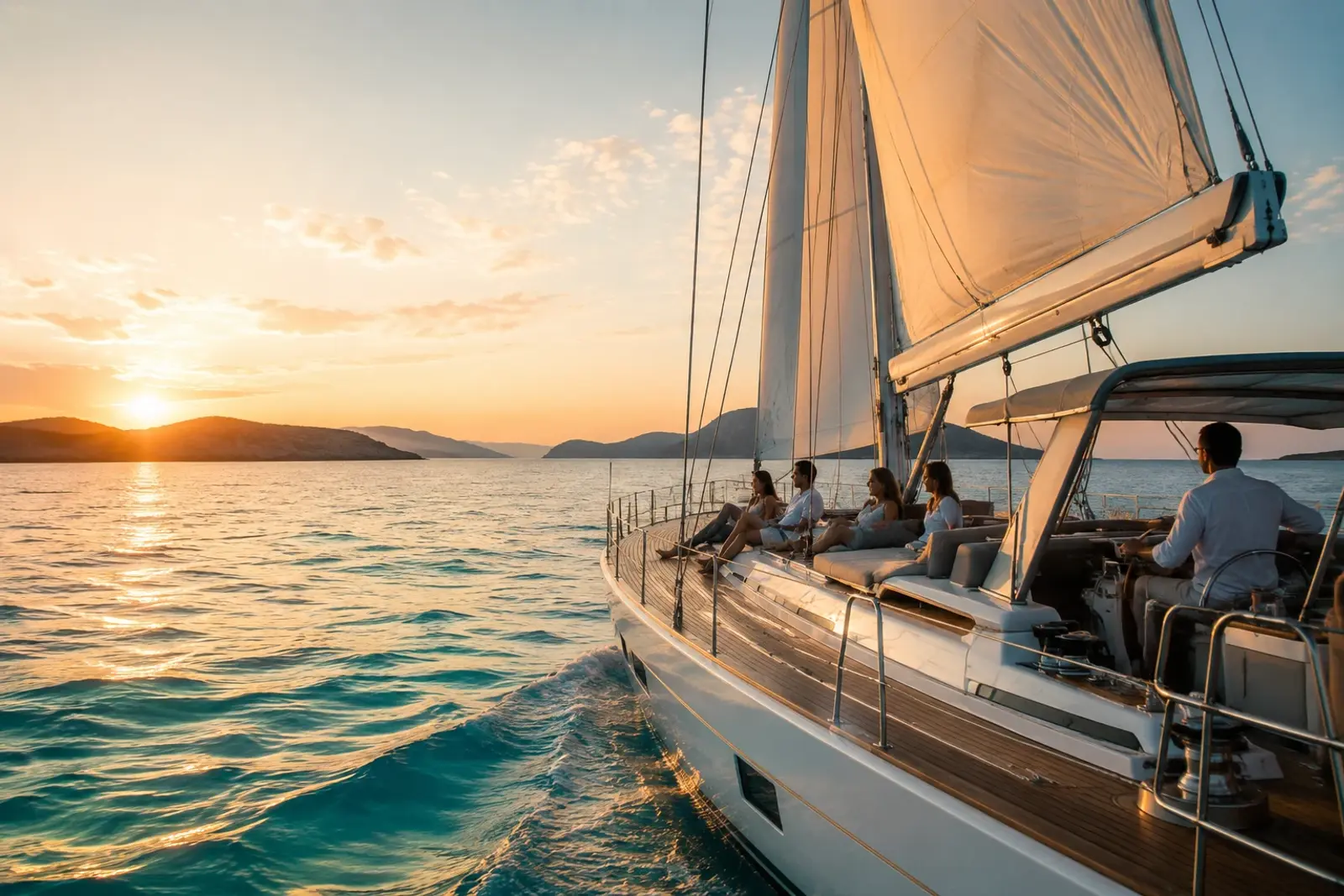
A skippered charter is a yacht rental that comes with a professional captain who takes care of all navigation, sailing, boat operations, and safety, letting you enjoy a private sailing vacation without needing any sailing experience or licenses. This arrangement sits between renting a boat yourself (bareboat charter) and hiring a yacht with full crew service.
The skipper handles every technical aspect of the voyage. They plot routes, monitor weather, manage docking and anchoring, operate the engine and sails, and ensure everyone's safety throughout the trip. Many skippers also serve as local guides, sharing insider knowledge about anchorages, restaurants, and hidden spots that typical tourists never find.
This guide covers what skippered yacht charters involve, how they work, what they cost, and how to plan one for your next vacation on the water.
What is a skippered charter?
A skippered charter provides a yacht with a qualified captain who manages all vessel operations while you and your group enjoy the journey. The skipper is responsible for navigation, sail handling, engine operation, weather monitoring, and compliance with maritime regulations. You get the privacy of a yacht rental without the technical demands of captaining it yourself.
This option differs from a bareboat charter, where you rent the yacht alone and must hold the proper sailing certifications to operate it. It also differs from a fully crewed charter, which includes additional staff such as chefs, deckhands, and stewards alongside the captain.
Most skippered charters accommodate 2-8 guests on sailing yachts or catamarans ranging from 30 to 50 feet. The skipper occupies a separate cabin, maintains a professional but relaxed presence, and typically joins the group for meals.
The arrangement works well for first-time sailors, families with children, and groups who want to explore new cruising grounds without the pressure of unfamiliar navigation. It also appeals to licensed sailors visiting regions where local knowledge proves invaluable, such as navigating Greek island channels or Caribbean reef passages.
How does a skippered charter work?
The process begins with booking a yacht through a charter company, signing a charter agreement that outlines vessel terms, payment schedules, and cancellation policies. You'll also discuss your preferred itinerary, sailing experience level, and any special requests with the skipper beforehand.
On embarkation day, you meet your skipper at the marina for a boat briefing that covers safety equipment locations, onboard systems, and basic operational procedures.
Once underway, the skipper handles all navigation, sail adjustments, engine operation, and docking maneuvers. They monitor weather forecasts, select safe anchorages, and ensure the boat remains seaworthy throughout the trip.
Guests typically help with light tasks like handling dock lines or raising sails under the skipper's direction. These activities are optional and depend on your interest level.
The skipper manages maintenance issues, communicates with the charter base if problems arise, and ensures compliance with local maritime regulations. Daily routines vary based on your preferences. Some groups sail actively between islands each day, while others prefer leisurely mornings and short afternoon passages.
Guest experience: What to expect onboard
Most skippers encourage a relaxed, conversational dynamic rather than a formal captain-crew relationship. They share local knowledge during meals, point out landmarks while underway, and adjust the day's plans based on group preferences.
Learning opportunities are a major draw. Guests who express interest can learn basic sail trim, chart reading, or knot tying. The skipper explains decisions as they happen, turning navigation choices or weather assessments into informal lessons. Participation is always optional.
Some guests steer in open water under supervision, help with mooring lines, or spot depth readings when anchoring. The skipper gauges interest early and tailors involvement accordingly.
Skippered vs bareboat vs crewed charter: Key differences
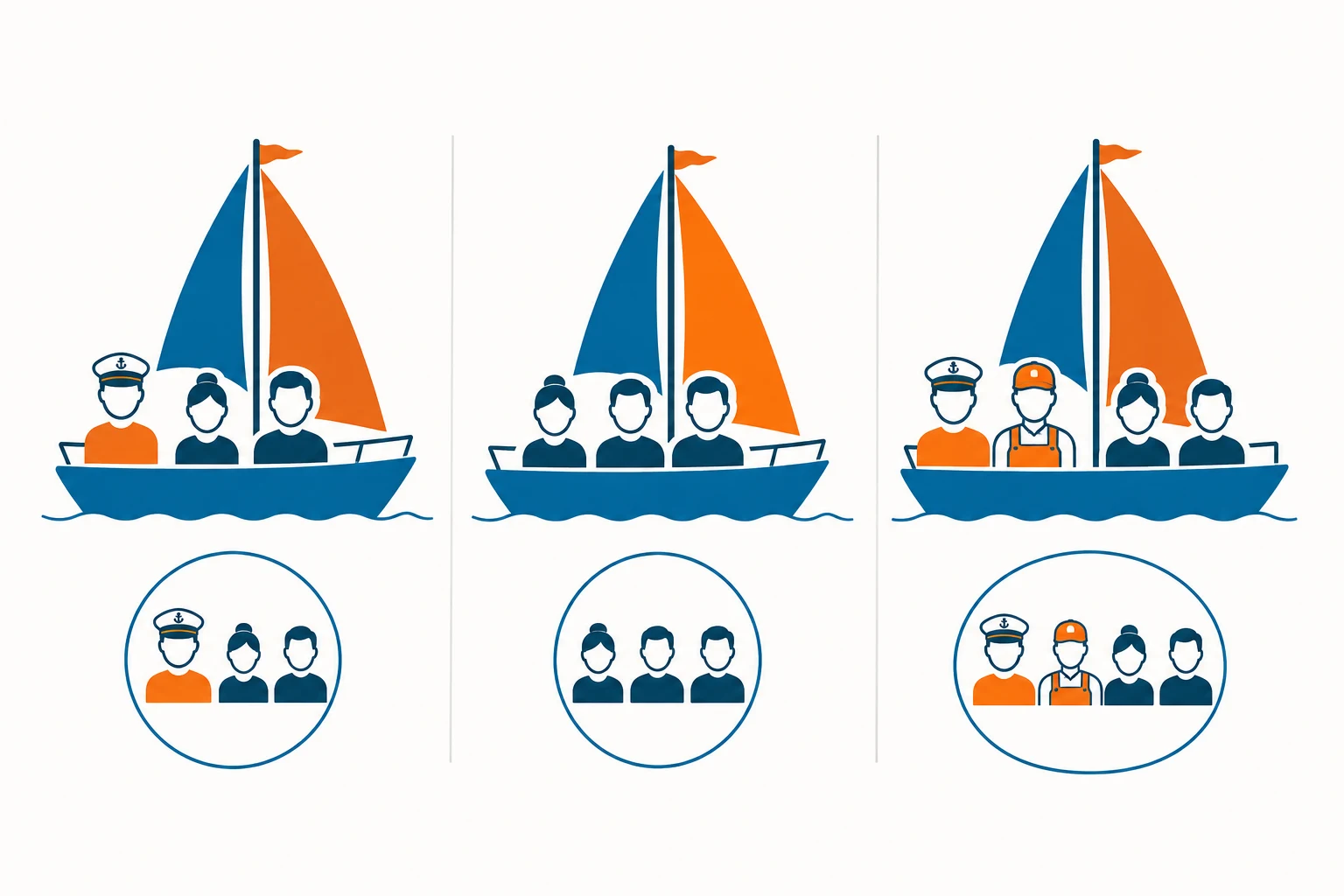
| Feature | Skippered Charter | Bareboat Charter | Crewed Charter |
|---|---|---|---|
| Definition | Yacht with a professional skipper included. | Yacht rented without a professional crew. | Yacht with a full professional crew (skipper, chef, steward, etc.). |
| Experience level | No sailing experience required. Ideal for beginners. | Requires significant sailing experience and certifications. | No sailing experience required. |
| Control | Skipper handles navigation, you relax. | You are fully responsible for the yacht and navigation. | Crew handles everything; you are a guest. |
| Responsibility | Skipper responsible for yacht safety and operation. | You are fully responsible for the yacht, crew, and itinerary. | Crew responsible for all aspects of the charter. |
| Privacy | Shared space with the skipper. | Maximum privacy. | Shared space with the crew. |
| Cost | Mid-range. Skipper's fee included. | Generally the most affordable (excluding personal expenses). | Most expensive due to full crew and services. |
| Itinerary | Skipper can suggest, but you have input. | You plan and execute your own itinerary. | Crew manages itinerary based on your preferences. |
| Food and drink | You provision and cook (or hire a chef). | You provision and cook. | All provisioning and cooking handled by the chef. |
| Services | Basic yacht operation, local knowledge from skipper. | No additional services beyond yacht rental. | Full service: gourmet meals, drinks, water sports, cleaning, etc. |
| Ideal for | First-timers, those wanting to relax, learning to sail. | Experienced sailors, those seeking independence. | Luxury seekers, those wanting ultimate relaxation and pampering. |
| Certifications | None required for guests. | Valid sailing certifications (e.g., ASA, RYA) often required. | None required for guests. |
Bareboat charters require you to captain the vessel yourself, meaning you need valid sailing certifications (typically ASA 104, RYA Day Skipper, or equivalent) plus proof of experience. You handle all navigation, docking, safety decisions, and provisioning without professional help onboard.
Skippered charters place a licensed captain aboard who manages all technical operations while you relax. No boat license or sailing experience is required.
Crewed charters include a full professional team beyond just the captain, typically a chef, deckhand, or steward depending on vessel size. All meals are prepared, cabins are serviced daily, and you have minimal responsibilities beyond enjoying the vacation.
Bareboat suits experienced sailors seeking autonomy and lower costs. Skippered charters appeal to beginners, families wanting a captain's expertise without crew formality, or experienced sailors visiting unfamiliar waters. Crewed charters fit travelers prioritizing luxury service or celebrating special occasions.
Who should choose a skippered charter?
Skippered charters suit first-time sailors with no certification or experience, families with children who want a safe introduction to sailing, and groups of friends seeking adventure without the burden of navigation. The format removes the barrier of licensing requirements while providing professional oversight.
Experienced sailors exploring unfamiliar cruising grounds benefit from the skipper's local knowledge of anchorages, weather patterns, and potential hazards. A professional familiar with regional conditions reduces risk in new waters, even for competent sailors.
The arrangement works well for those who want to learn sailing basics in a low-pressure environment. Guests can observe navigation techniques, ask questions about sail trim, and practice skills like helming in safe conditions without the stress of full responsibility.
Skippered charters appeal to travelers prioritizing relaxation over self-sufficiency. You avoid the mental load of passage planning and weather monitoring while maintaining the intimacy and flexibility of a private yacht.
Benefits of a skippered charter
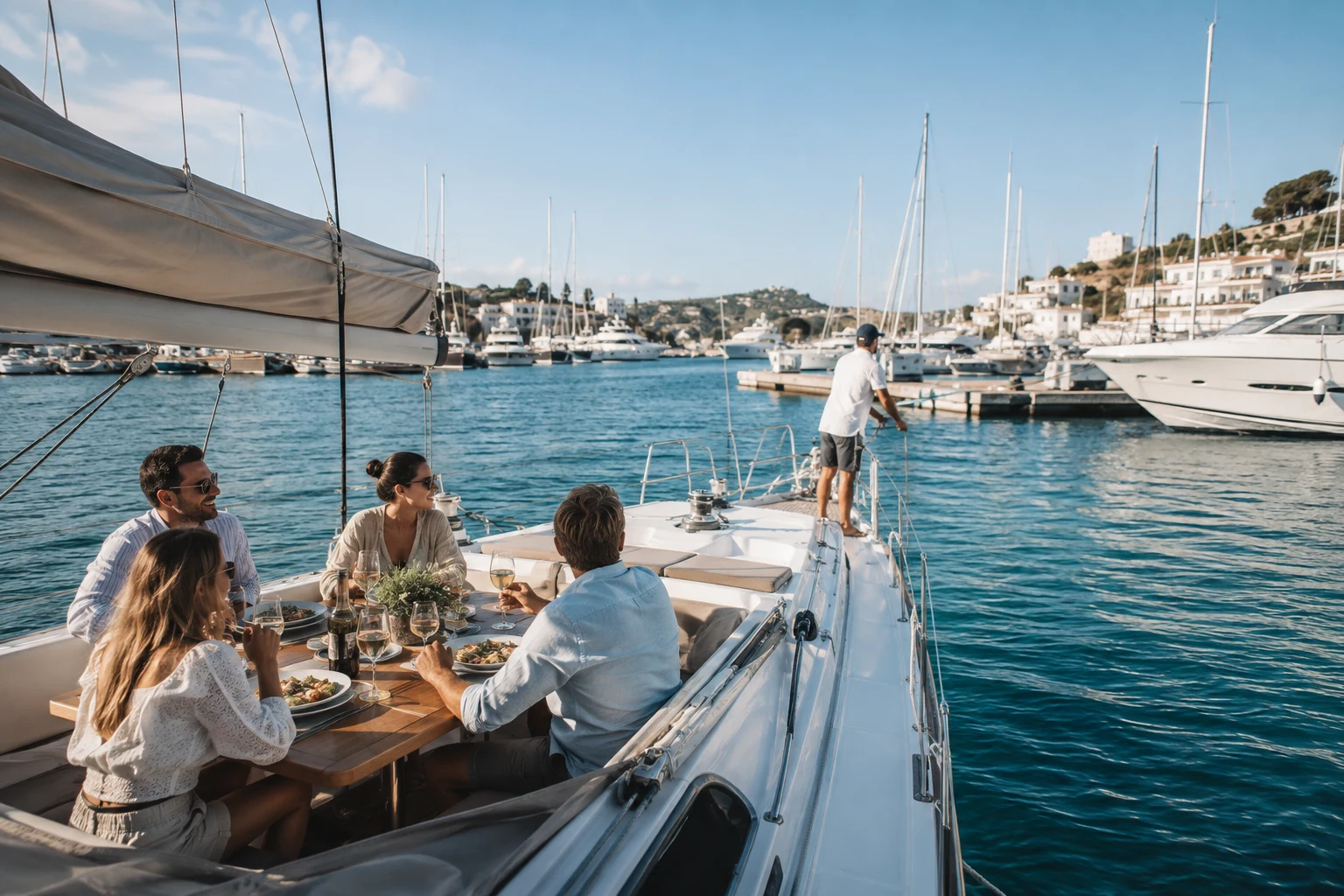
A skippered charter removes the stress of navigation and safety management, letting you focus entirely on the experience. The skipper monitors weather patterns, handles docking in tight marinas, and manages all technical decisions. This professional oversight is particularly valuable in unfamiliar waters where local hazards like shallow reefs or shifting currents are not marked on standard charts.
Local knowledge transforms a standard itinerary into something memorable. Skippers know which anchorages empty out after sunset, where to find the best seafood tavernas away from tourist crowds, and when to adjust plans based on wind forecasts. They can navigate you to swimming coves inaccessible by road and recommend hiking trails or villages that do not appear in guidebooks.
For those curious about sailing, a skippered charter offers hands-on learning without the pressure of certification courses. You can take the helm in open water, practice tying knots, or simply observe. The arrangement caters equally to active learners and those prioritizing pure relaxation.
What boats and destinations are available for skippered charters?
Skippered charters offer sailing yachts from 30 to 50 feet, catamarans up to 45 feet, and motor yachts ranging from compact day cruisers to 60-foot displacement vessels. Sailing monohulls suit couples or small groups seeking traditional performance, while catamarans provide stability and space for families or up to eight guests.
The Mediterranean dominates, with Greece, Croatia, Turkey, and the French Riviera offering protected waters and island-hopping routes. The Caribbean, particularly the British Virgin Islands and St. Lucia, attracts winter charters with steady trade winds. Emerging regions include Thailand's Andaman Sea, the Seychelles, and the Pacific Northwest coast of North America.
Group size directly shapes yacht type. Two to four guests fit comfortably on a 35-foot monohull, while six to eight require a catamaran or larger sailing yacht. Geography matters: protected archipelagos like Greece's Cyclades favor any vessel, but open-water passages to remote islands demand larger, more seaworthy boats with experienced skippers.
Costs, inclusions, and what to budget for
| Category | Mediterranean (Greece/Croatia) | Caribbean (BVI/St. Lucia) | Pacific Northwest (USA/Canada) |
|---|---|---|---|
| Yacht charter fee | €5,000 - €15,000 | $7,000 - $20,000 | $6,000 - $18,000 |
| Skipper fee | €1,500 - €2,500 | $1,800 - $3,000 | $1,500 - $2,500 |
| Crew (chef/hostess) | €1,200 - €2,000 (Optional) | $1,500 - $2,500 (Optional) | $1,000 - $1,800 (Optional) |
| APA (advance provisioning allowance) | 20-30% of charter fee | 20-35% of charter fee | 15-25% of charter fee |
| Fuel | Included in APA | Included in APA | Included in APA |
| Port fees/mooring | Included in APA | Included in APA | Included in APA |
| Food and beverages | Included in APA | Included in APA | Included in APA |
| Water toys/equipment | Often included, some extra | Often included, some extra | Often included, some extra |
| Flights | €300 - €1,000+ per person | $400 - $1,200+ per person | $200 - $800+ per person |
| Pre/post-charter accommodation | €100 - €300 per night | $150 - $400 per night | $120 - $350 per night |
| Excursions/activities | €50 - €200+ per person | $75 - $250+ per person | $40 - $180+ per person |
| Gratuities (skipper/crew) | 10-20% of charter fee | 15-25% of charter fee | 10-20% of charter fee |
| Travel insurance | €50 - €150 per person | $70 - $200 per person | $40 - $120 per person |
| Contingency fund | 10-15% of total budget | 10-15% of total budget | 10-15% of total budget |
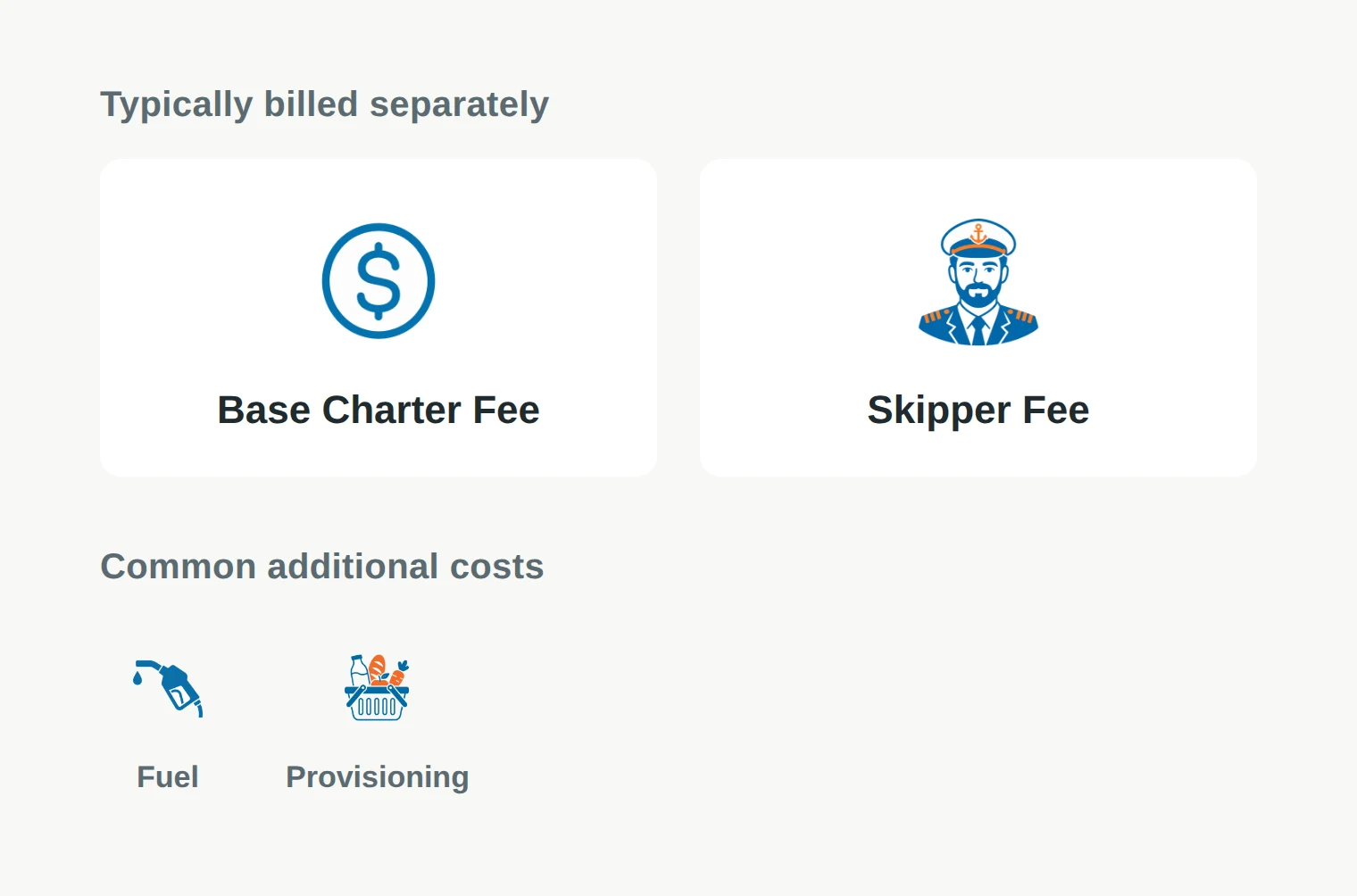
The base charter fee typically ranges from $2,000 to $8,000 per week depending on boat size, season, and destination, covering the yacht itself and standard equipment. The skipper fee is separate, usually $150 to $250 per day in the Mediterranean and Caribbean, paid directly or added to the total.
Beyond the charter and skipper, budget for provisioning (food and beverages for the crew, typically $80-150 per person per week), fuel (varies widely, $200-800+ for a week depending on engine hours and itinerary), and port fees or mooring costs ($30-100 per night in popular marinas). Some destinations require tourist taxes or national park entry fees.
The charter fee usually includes the yacht, standard safety equipment, dinghy with outboard, bed linens, and basic galley supplies. Insurance is typically included in the base rate, covering hull damage and third-party liability, though you may be responsible for a security deposit (refundable) or damage waiver fee.
Expect to tip your skipper 5-15% of the charter fee for excellent service, paid at trip's end. Sample all-in costs: a week-long skippered charter in Greece for four people on a 38-foot monohull runs roughly $4,500-6,000 total; a catamaran in the BVI for six guests averages $7,000-10,000 including all extras.
Legal, safety, and practical considerations
Maritime regulations limit most recreational charter yachts to 12 passengers plus crew, a threshold that determines whether a vessel falls under commercial passenger ship rules. Beyond 12, stricter safety equipment, certification, and crewing standards apply.
Charter agreements outline liability, damage deposits (typically $2,000-$5,000), cancellation policies, and what's covered under the base insurance. Standard policies protect against hull damage and third-party liability but exclude loss of personal belongings or trip cancellation.
Skippers must hold a recognized captain's license appropriate to the vessel size and operating region. In the EU, this often means an RYA Yachtmaster or equivalent qualification, plus commercial endorsements for paid work. Most charter companies require skippers to carry 1,000+ logged sea miles and current first-aid certification.
Safety equipment, life jackets, flares, and communication devices are legally mandated and inspected annually, with the skipper responsible for confirming everything is aboard and functional before casting off.
Planning your skippered charter: Tips for a perfect trip
Book 6-12 months ahead for peak-season travel in popular destinations like the Greek islands or British Virgin Islands. High-demand periods fill quickly, especially for larger catamarans or specific routes. Off-season bookings (shoulder months like May or October in the Mediterranean) offer lower rates and fewer crowds but may encounter variable weather.
Choose a boat size that matches your group comfortably, allowing one cabin per couple or family unit plus the skipper's separate cabin. A 38-foot monohull suits four guests; a 42-foot catamaran accommodates six to eight with more deck space and stability.
Discuss itinerary preferences early but stay flexible. Skippers adjust routes based on real-time weather, sea conditions, and group interests. Share priorities (swimming stops, taverna visits, quiet anchorages versus lively ports) without locking in rigid daily plans.
Coordinate provisioning before embarkation. Most charter bases offer provisioning services ($80-150/person/week), or groups can shop locally upon arrival. Clarify dietary restrictions and alcohol preferences with both the charter company and skipper in advance.
Frequently asked questions
Do I need sailing experience for a skippered charter?
No sailing experience or license is required for a skippered charter. The skipper handles all navigation, boat operation, and safety responsibilities throughout the trip. Guests can participate in sailing tasks like hoisting sails or taking the helm if they wish, but involvement is entirely optional and based on personal interest.
Can I choose my own itinerary on a skippered charter?
Most skippered charters offer flexible itineraries tailored to guest preferences, weather conditions, and safety considerations. You can request specific destinations, activities, or anchorages, and the skipper will advise on feasible routes based on local expertise. The skipper's knowledge often reveals hidden coves and restaurants that are not in guidebooks.
Are meals included in a skippered yacht charter?
Meals are typically not included in the base charter rate. Guests are responsible for provisioning food and drinks for themselves and the skipper, either by shopping before departure or arranging deliveries to marinas. Some charter companies offer optional catering services, meal packages, or recommendations for waterfront restaurants along your route.
What is the 12 person rule on a yacht?
Most private yacht charters are limited to 12 guests maximum due to international maritime safety regulations under SOLAS (Safety of Life at Sea). Vessels carrying more than 12 passengers for hire require special commercial licensing, additional safety equipment, and crew certification. This threshold applies regardless of yacht size.
How much does a skipper get paid?
Skipper pay typically ranges from $150 to $300 per day, depending on region, yacht size, season, and the skipper's experience level. This base rate usually covers their professional services only. Guests are expected to provide the skipper's meals and often add a gratuity of 10-20% at trip's end.
How much is a 3 day charter on Below Deck?
A 3-day charter on yachts featured in 'Below Deck' typically costs $45,000 to $60,000, including professional crew, fuel, and luxury amenities. Actual prices vary by specific yacht, destination, season, and guest requirements. These figures represent the high-end luxury charter market, not typical skippered charter rates.
Next steps
A skippered charter removes the technical barriers to a yacht vacation while preserving the freedom to explore at your own pace. Your next step is identifying your preferred destination and travel dates, then requesting quotes from charter companies that include skipper credentials and boat specifications.
Compare total costs, including the often-overlooked expenses like fuel and provisioning, to avoid budget surprises. When you book, ask for a pre-trip call with your assigned skipper to discuss route ideas and onboard expectations.