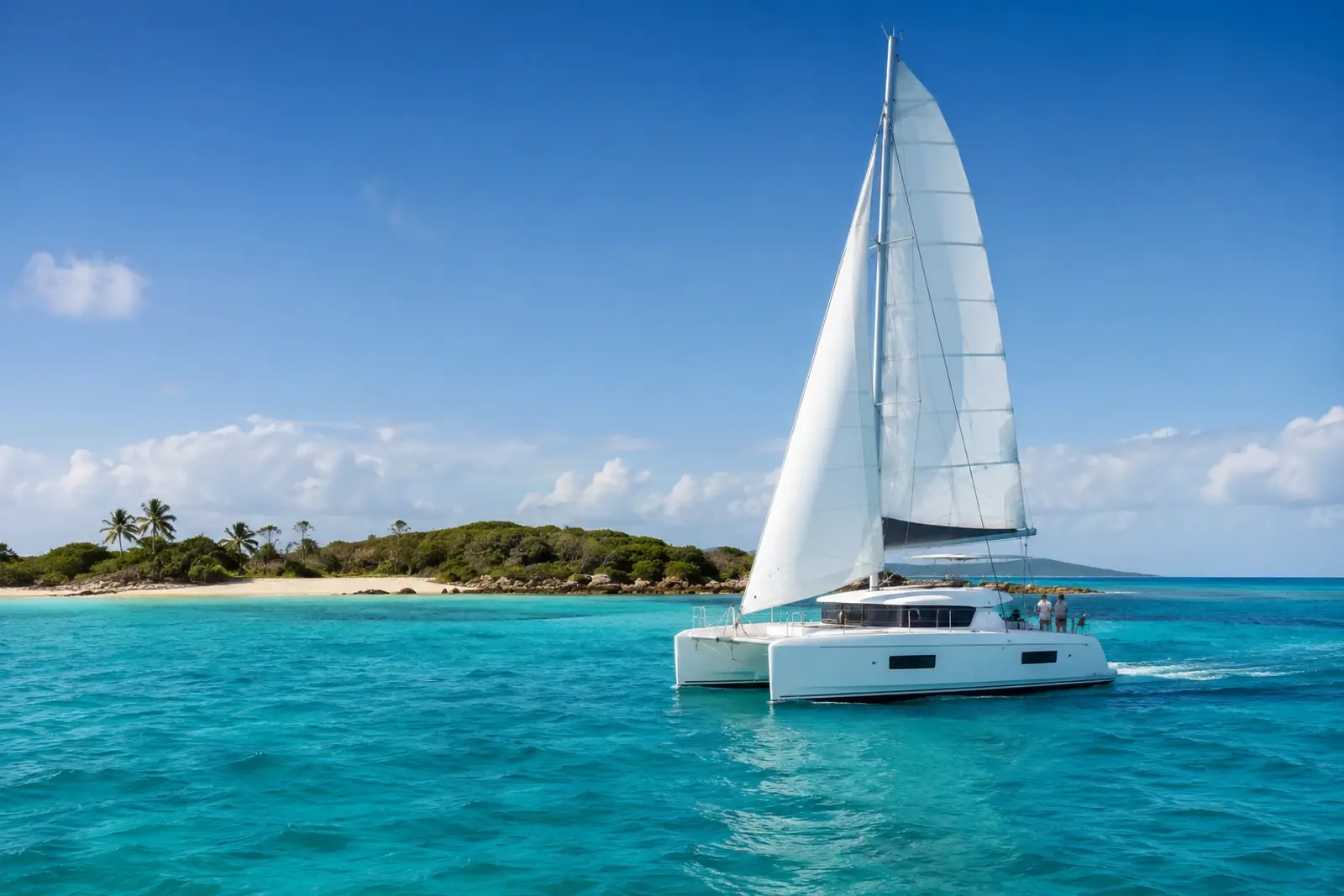
A bareboat charter is a yacht rental where you hire the entire vessel without crew or provisions, taking full responsibility for navigation, operation, and safety. Unlike skippered or crewed charters, you serve as the vessel's operator, managing everything from route planning to compliance with local maritime regulations.
What is a bareboat charter in practical terms? You arrive at the marina, complete a vessel handover and safety briefing, then sail independently for the duration of your charter period. You provision the yacht, navigate coastal waters or open ocean, and return the vessel in its original condition. The charter company provides the boat and basic equipment; you provide the expertise and assume legal liability. This guide explains the qualifications, costs, responsibilities, and planning steps for a successful bareboat charter.
Bareboat Charter Explained: Definition and Meaning
| Feature | Bareboat Charter | Skippered Charter | Crewed Charter |
|---|---|---|---|
| Responsibilities | Full responsibility for vessel, navigation, crew, provisions, maintenance, and safety. | Client responsible for provisions and personal expenses; skipper handles navigation, vessel operation, and safety. | Crew handles all aspects: navigation, vessel operation, safety, cooking, cleaning, and service. |
| Included Services | Vessel rental only. | Vessel rental, professional skipper. | Vessel rental, professional skipper, full crew (chef, steward/ess), gourmet meals, drinks, water sports equipment. |
| Qualifications Needed | Proven sailing experience, navigation skills, relevant certifications (e.g., ICC, ASA, RYA Day Skipper/Coastal Skipper). | No formal sailing qualifications required for the client. | No formal sailing qualifications required for the client. |
A bareboat charter is a yacht rental where you take delivery of the vessel without crew, captain, provisions, or fuel. You assume full operational control and responsibility for the boat during the charter period, acting as the vessel's temporary operator rather than a passenger.
The defining characteristic is independence. You navigate, provision, maintain, and manage the yacht yourself, or with your own crew.
How Bareboat Differs from Other Charter Types
Skippered charters include a professional captain who handles navigation and boat operation while you remain a guest. You have input on the itinerary but no operational duties.
Crewed charters add a full staff (captain, chef, deckhands) who manage every aspect of the voyage. These function more like floating hotels than sailing experiences.
Legal Implications
As bareboat charterer, you carry liability for damage, accidents, and regulatory compliance during your charter period. Most agreements require proof of sailing competence (certifications like ASA, RYA) and mandate comprehensive insurance coverage. You become the vessel's legal operator, responsible for customs clearance, harbor fees, and adherence to maritime law in each jurisdiction you enter.
How Does a Bareboat Charter Work?
A bareboat charter begins with a booking inquiry, where the charter company verifies your sailing credentials and reviews your itinerary. Once confirmed, you sign a charter agreement outlining liability, insurance coverage, permitted sailing areas, and the vessel's condition. Most companies require a security deposit, typically held on a credit card, to cover potential damage beyond normal wear.
On handover day, the charter company conducts a thorough briefing and vessel inspection. You'll walk through all onboard systems: engine operation, navigation equipment, water and fuel tanks, safety gear locations, and radio protocols. The charterer examines the hull, rigging, and interior for existing damage, documenting everything on an inventory checklist that both parties sign.
The charter company's role ends after handover. They provide the vessel in working order and remain available for emergency support, but they do not direct your route, manage provisioning, or intervene in daily operations.
At charter end, you return the yacht to the designated port for inspection. The company checks for new damage, verifies fuel levels match the agreement, and reviews the inventory. Assuming no issues, your deposit is released, typically within days to weeks.
What Qualifications and Experience Do You Need?
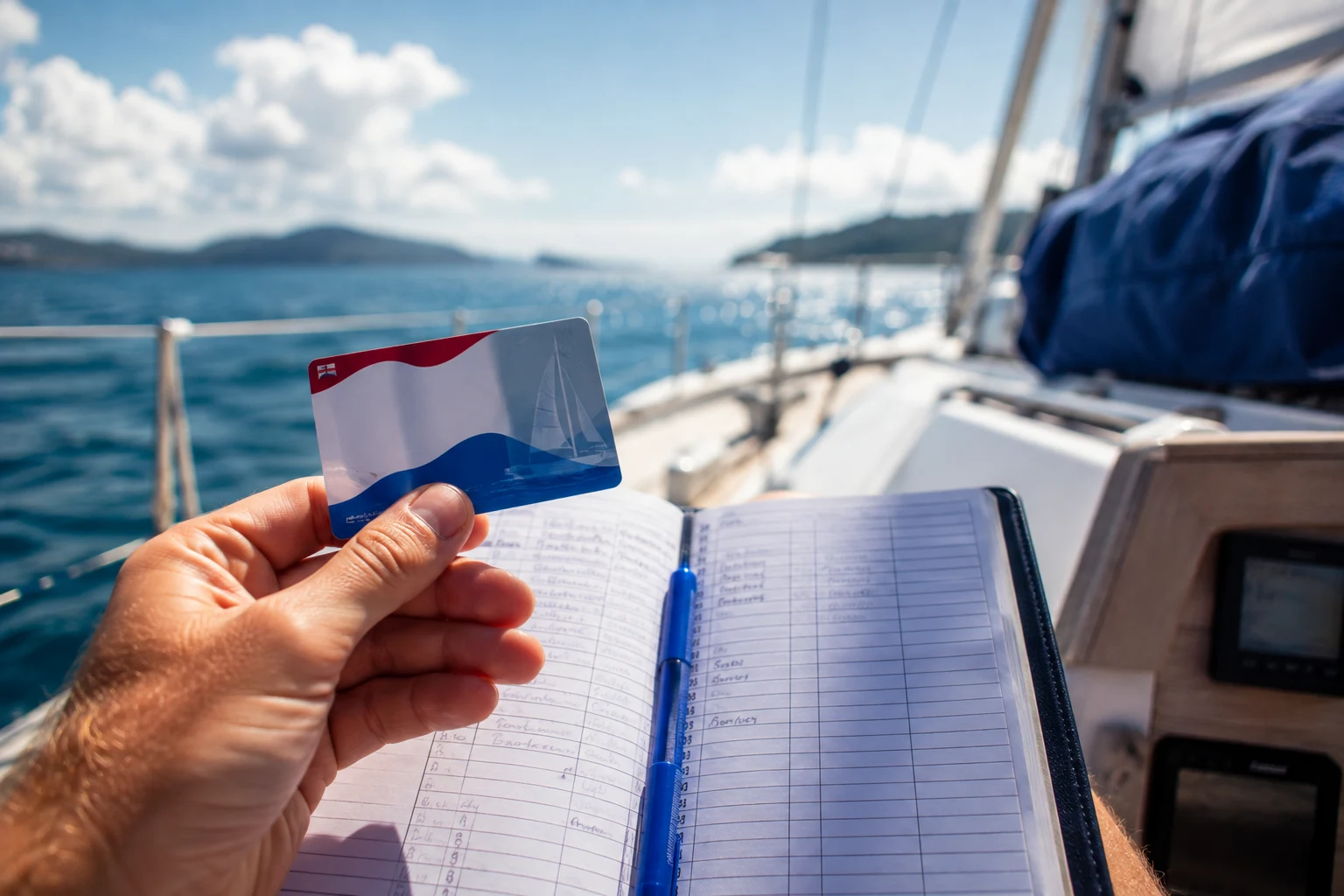
Most charter companies require proof of sailing competence through recognized certifications and documented sea time before handing over a bareboat yacht. The standard minimum is a sailing license or certificate from bodies like the American Sailing Association (ASA), Royal Yachting Association (RYA), or International Yacht Training (IYT), plus a logbook showing 50–100 nautical miles or five to ten days as skipper.
Some countries require government-issued boat licenses for their territorial waters. Croatia, Spain, and Greece enforce national licensing, though they recognize International Certificate of Competence (ICC) holders or equivalent foreign credentials with translation.
Charter companies assess each booking individually. A newer sailor chartering a large catamaran in challenging waters faces stricter scrutiny than an experienced skipper taking a small monohull in calm conditions. If you lack qualifications, skippered charters provide a professional captain, or flotilla options let you sail independently while following a lead boat with an instructor available for guidance.
What's Included and Not Included in a Bareboat Charter?
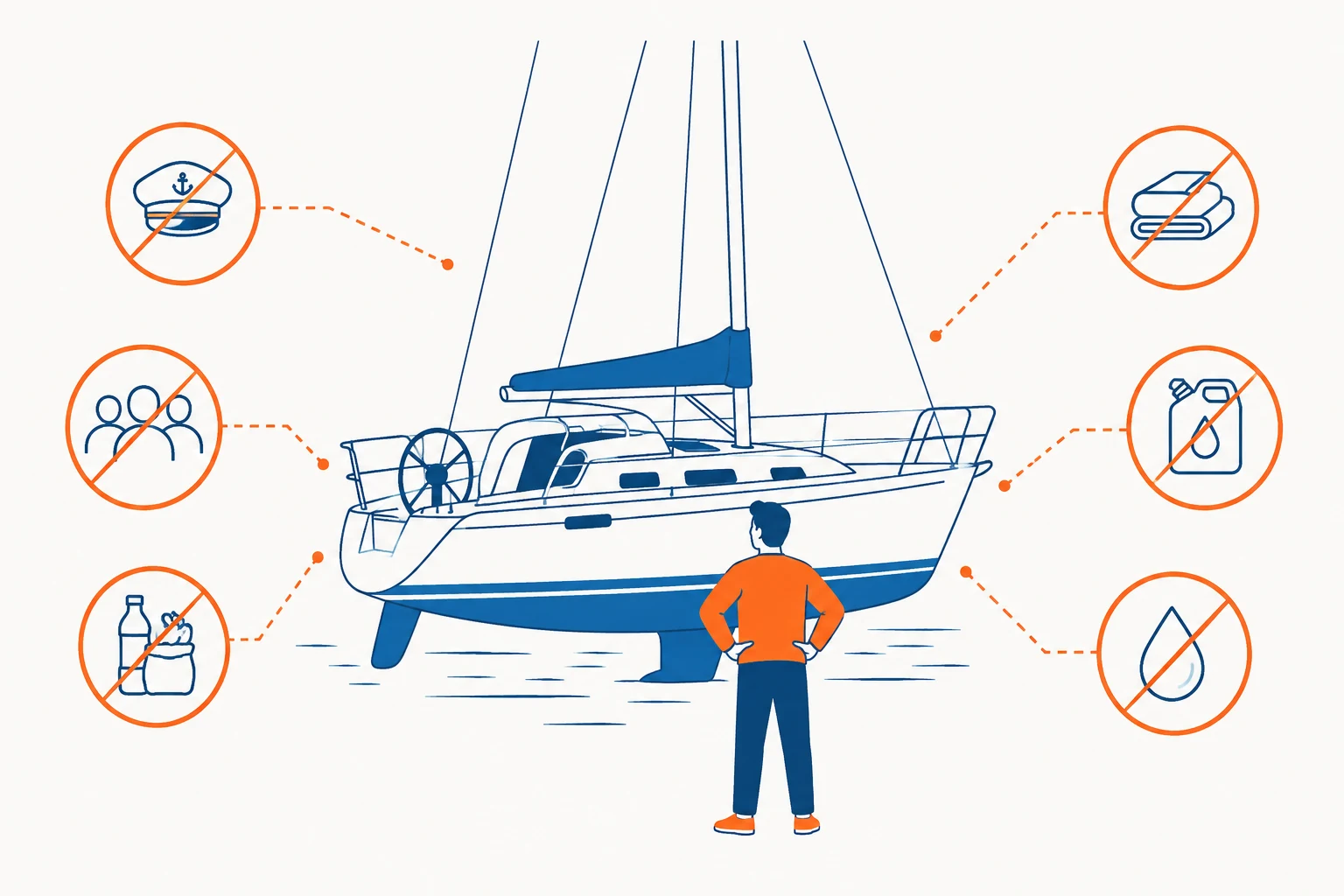
| Category | Included (Typically) | Excluded (Typically) | Optional Extras (Additional Cost) |
|---|---|---|---|
| Vessel | Fully equipped yacht (sails, engine, navigation) | Personal items, food, drinks | Early boarding, late disembarkation |
| Safety & Nav | Safety equipment (life jackets, flares), charts, GPS | Personal safety gear (e.g., specialized life vests) | Satellite phone, advanced navigation software |
| Galley & Comfort | Basic cooking utensils, bedding, towels (sometimes) | Provisions (food, beverages), personal toiletries | Professional chef, extra linen sets |
| Fuel & Water | Initial fuel fill, initial water fill | Refueling during charter, water refills | Water toys (paddleboards, kayaks), snorkeling gear rental |
| Insurance | Basic yacht insurance (with deductible/security deposit) | Personal travel insurance, medical insurance | Security deposit waiver, additional liability insurance |
| Support | 24/7 technical support, dinghy with outboard | Mooring fees, port taxes, customs fees | Skipper, hostess, provisioning service |
| Cleaning | Final cleaning (sometimes with a fee) | Mid-charter cleaning, personal cabin tidying | Fishing gear, diving equipment rental |
A bareboat charter typically includes the yacht itself, all standard equipment (sails, rigging, navigation instruments, safety gear, dinghy), and basic hull insurance covering structural damage. The vessel comes with required safety equipment per local maritime regulations, plus standard galley equipment, bedding, and mooring lines.
What's not included adds up quickly. Fuel is your responsibility, often costing €200-500 for a week depending on engine use and cruising range. Provisioning (food, water, cleaning supplies) is entirely separate. Most charters require a transit log fee (€150-300) for official documentation, plus end-of-charter cleaning fees.
Tourist taxes, marina fees, and national park entry charges are paid directly during your voyage. These vary by destination but can total €100-300 for a week in popular Mediterranean areas.
Optional extras include damage waiver insurance (reducing your liability from €2,000-5,000 to zero), skipper hire for partial assistance, early check-in, one-way charters, stand-up paddleboards, and WiFi units. These upgrades can add 20-40% to the base charter cost.
Responsibilities and Risks of Bareboat Chartering
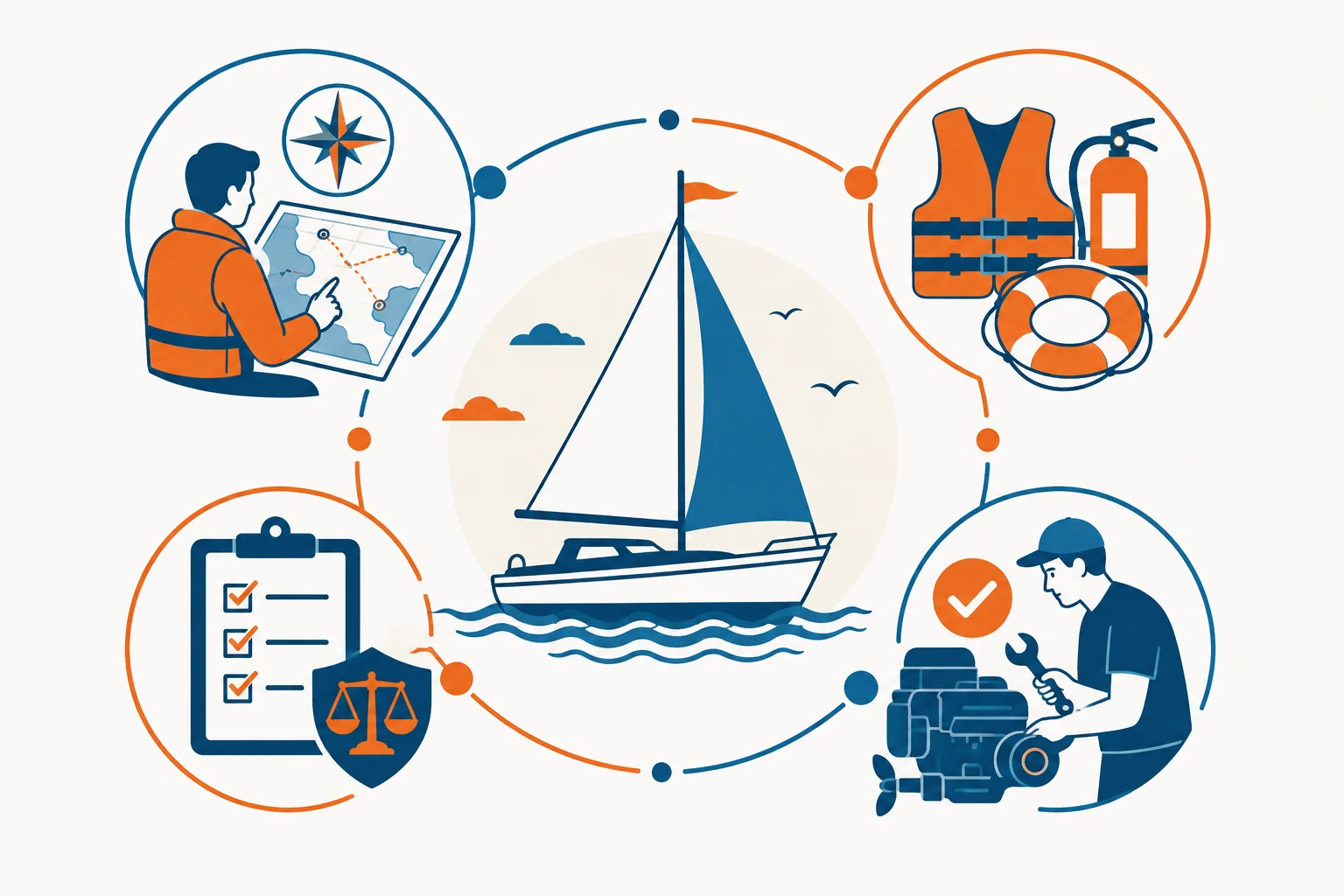
As bareboat charterer, you assume full legal responsibility for navigation, crew safety, vessel operation, and compliance with local maritime regulations. You must file float plans, observe restricted zones, follow port procedures, and ensure all crew wear safety equipment. You are also responsible for routine maintenance checks, monitoring systems, and addressing mechanical issues during the charter.
The primary risks include unlimited liability for damage to the yacht or third parties, personal injury claims, environmental damage fines, and complete loss of your security deposit. Weather-related incidents, grounding, collision, and equipment failure can result in repair costs ranging from hundreds to tens of thousands of euros.
Mitigate risks by purchasing comprehensive damage waiver insurance, which caps your liability to a fixed excess amount. Attend the pre-charter briefing thoroughly, study local navigation charts and regulations, check weather forecasts daily, and maintain contact with the charter base. Document the vessel's condition at handover with photos and video to avoid disputes over pre-existing damage.
Costs of Bareboat Charter: What to Expect
Bareboat charter cost varies widely based on yacht size, destination, and season, with weekly rates ranging from €1,500 for a basic 35-foot monohull in the off-season to €15,000+ for a 50-foot catamaran in peak Mediterranean summer. Caribbean charters typically run 10-20% higher than European equivalents.
The base charter fee covers only the yacht and standard equipment. Expect to add €1,000-2,000 per week in mandatory extras: fuel (€200-500), provisioning (€300-600 for a crew of four), transit log (€150-300), end-of-charter cleaning (€150-250), and local taxes. A refundable security deposit of €2,000-5,000 is held against damage.
Optional costs inflate the total significantly. Damage waiver insurance (€200-400/week) caps your liability but doesn't eliminate the deposit. WiFi packages run €80-150/week, while hiring a skipper for the first day costs €150-250.
Hidden fees cluster around fuel: companies charge per-engine-hour or require a full-to-full policy. Review the charter agreement for penalties on late returns (€500+/day) and cleaning surcharges for excessive mess.
Best Destinations for Bareboat Yacht Charters
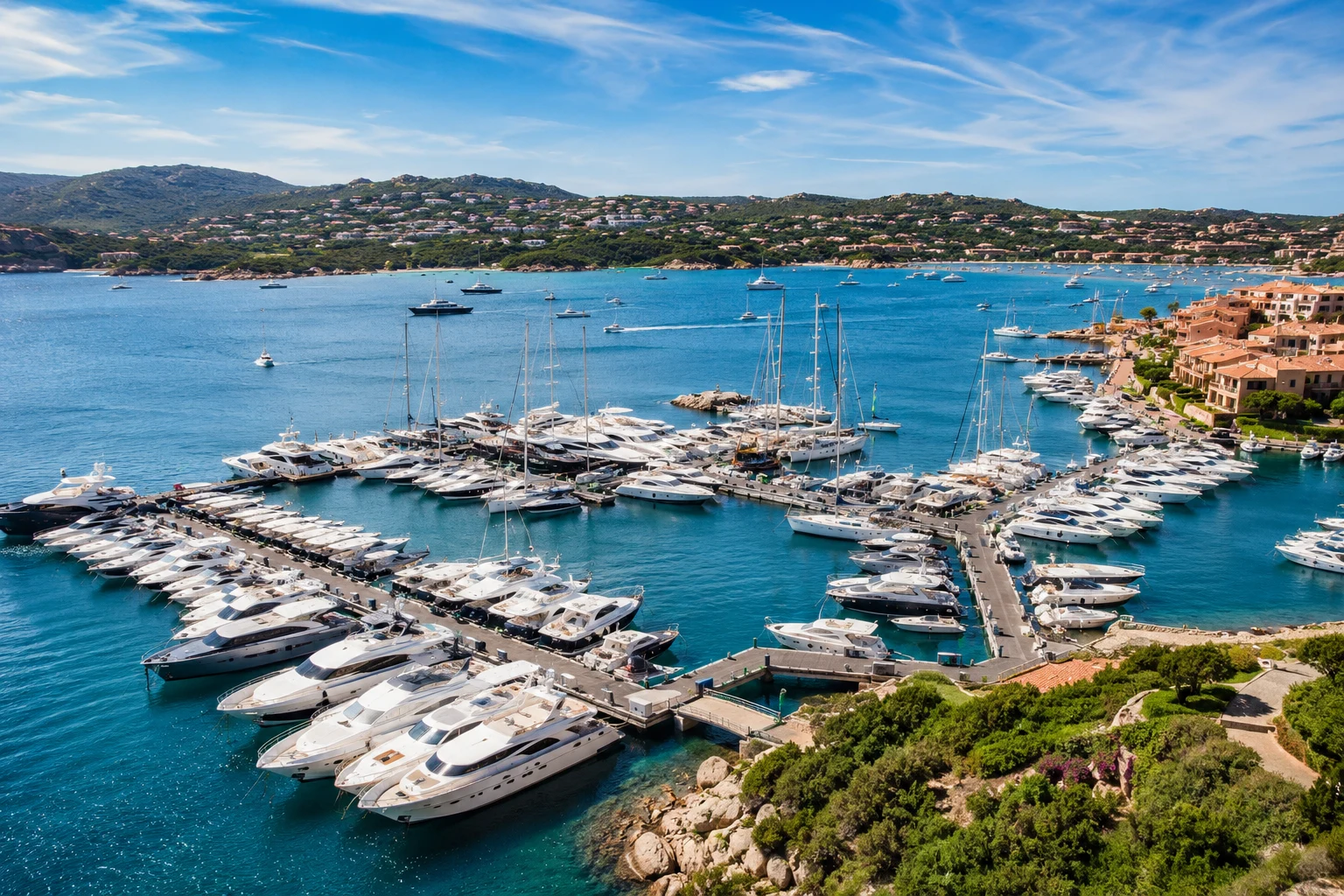
The Mediterranean and Caribbean dominate bareboat charter destinations, offering reliable infrastructure, consistent winds, and thousands of charter-base options. The Mediterranean (Greece, Croatia, Turkey) provides line-of-sight navigation, short passages between islands, and protected waters ideal for intermediate sailors. The Caribbean (British Virgin Islands, Grenadines) delivers steady trade winds, warm year-round sailing, and minimal tidal concerns but requires more open-water confidence.
The South Pacific (Tahiti, Tonga, Fiji) suits experienced sailors comfortable with longer passages, limited repair facilities, and remote anchorages. Cyclone season (November to April) restricts charter availability. The Indian Ocean (Seychelles, Thailand) offers exotic cruising but demands careful attention to monsoon patterns and less-developed marine services.
Regulations vary sharply. Greece and Croatia require ICC or equivalent certification. The BVI accepts ASA 104 or RYA Day Skipper. Thailand mandates a Thai yacht license or temporary permit.
Seasonality dictates pricing and conditions. Mediterranean peak season (July-August) brings crowds and 40% higher rates; shoulder months (May, September) offer better value and lighter winds. Caribbean high season (December-April) avoids hurricane risk but costs 30% more than summer.
Choosing the Right Yacht for Your Bareboat Charter
Catamarans offer stability, shallow draft, and more living space, making them ideal for families or groups prioritizing comfort and calm anchorages. Monohulls provide better upwind performance, lower charter costs (typically 20-40% less), and a more traditional sailing experience suited to experienced sailors and tighter budgets.
Yacht size depends on crew count and experience level. A 38-40ft monohull accommodates 4-6 people comfortably, while a 42-45ft catamaran suits 6-8. Larger yachts require more skill to dock and maneuver in tight marinas.
Match amenities to your itinerary. Air conditioning matters in tropical climates but adds €200-400 weekly to fuel costs. Watermakers extend cruising range in remote areas.
Safety equipment standards vary by charter company. Verify the boat includes liferaft, EPIRB, and VHF radio before booking.
Planning Your Bareboat Charter: Tips for a Smooth Experience
A thorough pre-departure checklist covers documents (passport, sailing certifications, charter agreement, insurance certificates), provisioning (groceries, beverages, fuel), and a realistic itinerary that accounts for weather windows and crew skill level. Stock provisions before leaving the marina to avoid delays, and confirm fuel capacity for your planned route.
Managing group expectations starts before departure. Assign roles (skipper, navigator, cook) based on experience, and agree on daily sailing hours versus leisure time. Clear communication about watch schedules, safety protocols, and decision-making authority prevents conflicts during your voyage.
In emergencies, contact the charter company immediately for technical support, medical evacuation, or salvage coordination. Most companies provide phone and VHF radio support. Carry the vessel's insurance documents and local emergency services numbers.
Frequently Asked Questions
What is the difference between bareboat and skippered charter?
A bareboat charter means you operate the yacht yourself without any crew, taking full responsibility for navigation, safety, and vessel operations. A skippered charter includes a professional skipper who handles all sailing duties, navigation, and safety decisions while you enjoy the voyage as a guest. The choice depends on your qualifications and whether you want hands-on control or a more relaxed experience.
Do I need insurance for a bareboat charter?
Yes, comprehensive insurance is required for bareboat charters, covering both the yacht and third-party liability. Most charter companies include basic hull insurance in the rental fee but hold you liable for a security deposit (€2,000-5,000) to cover the deductible. Damage waiver insurance (€200-400/week) is optional but caps your financial exposure to a fixed amount, protecting your deposit in case of accidents or damage during the charter.
Can beginners do a bareboat charter?
Beginners cannot legally bareboat charter without proper certifications and documented sailing experience. Charter companies require recognized sailing licenses (ASA, RYA, ICC) and proof of competence before releasing a vessel. New sailors should start with skippered charters or flotilla sailing, where a professional captain provides guidance while you learn. Once you've completed certification courses and logged sufficient sea time, bareboat chartering becomes accessible.
How far in advance should I book a bareboat charter?
Book 6-12 months ahead for the best selection of yachts, preferred dates, and early-bird discounts of 10-20%. Peak season charters (Mediterranean July-August, Caribbean December-April) require even earlier booking, often 12-18 months in advance. Last-minute bookings (within 2-3 months) may find availability but at higher rates and with limited yacht choices, particularly for popular destinations and larger vessels.
What happens if the yacht breaks down during my charter?
Contact the charter company immediately via phone or VHF radio for technical support and repair coordination. Most companies provide 24/7 assistance and will either walk you through repairs, send a technician to your location, or arrange a replacement yacht if the issue cannot be fixed. Your charter agreement specifies the company's obligations for mechanical failures, and you're typically not liable for damage from normal wear or manufacturing defects, though you remain responsible for navigation and safety until help arrives.
A bareboat charter demands realistic self-assessment before you commit. Verify your certifications meet the charter company's requirements and match the yacht size to your documented experience, not your aspirations. Budget €1,500-2,000 beyond the base rate for fuel, provisioning, and fees, and decide whether damage waiver insurance justifies the €200-400 weekly cost against your €3,000-5,000 security deposit.
Book 6-12 months ahead for shoulder-season discounts, then spend departure week studying the yacht's systems and local navigation rules. If your logbook shows fewer than 100 nautical miles or you lack recent sailing time, hire a skipper for the first day or choose a flotilla charter instead.