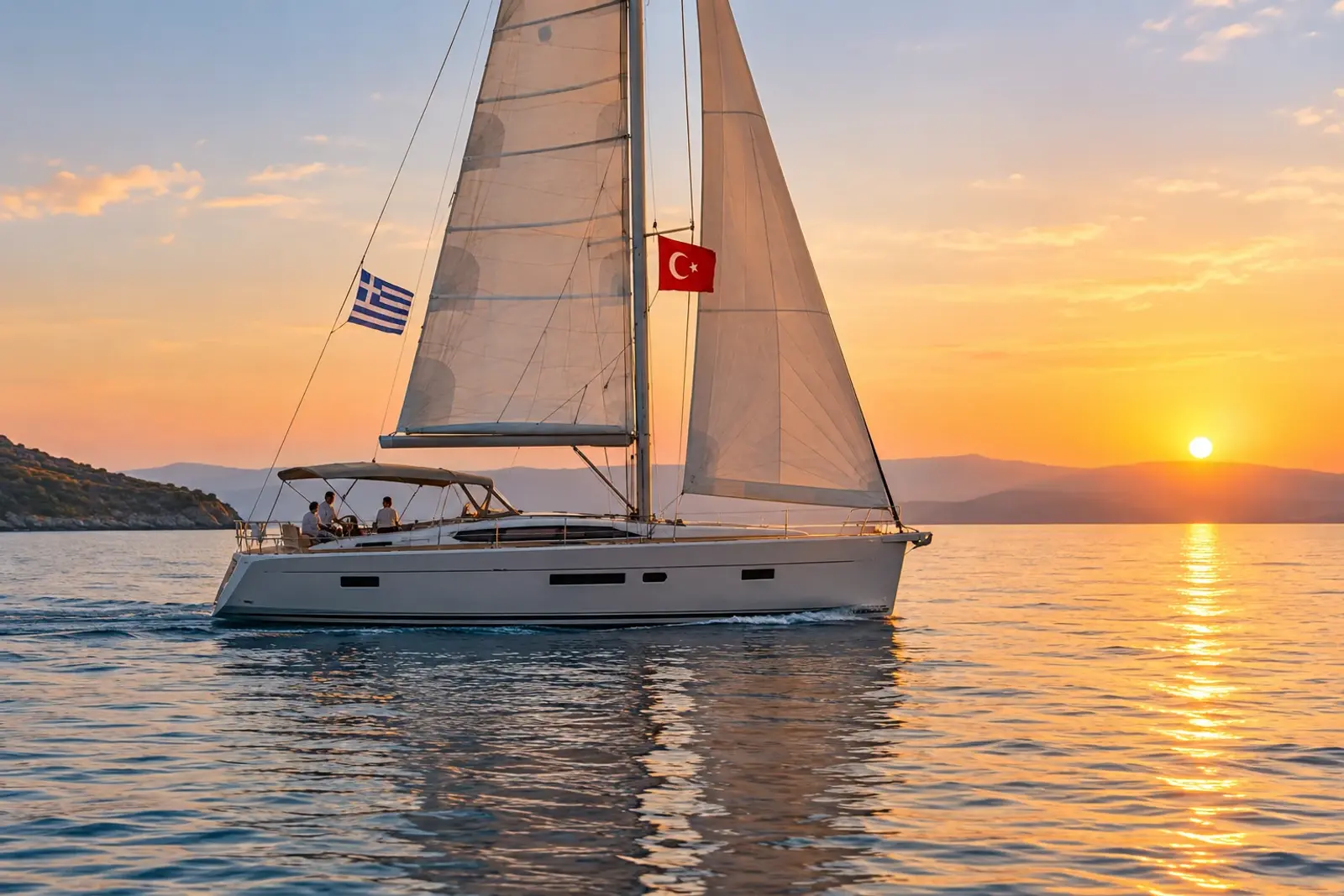
Greece offers iconic island-hopping and vibrant nightlife, while Turkey boasts calmer waters, fewer crowds, and better value for group charters. The best choice depends on whether you prefer classic Greek islands with lively ports or tranquil Turkish bays with relaxed cruising and rich coastal culture.
The Greece vs Turkey sailing comparison is about matching wind, distance, and budget to your crew's experience level. Greece rewards confident sailors with strong Meltemi winds and a new island every morning. Turkey trades that intensity for sheltered gulfs, lighter breezes, and significantly lower costs.
Sailing Turkey vs Greece: Key Differences at a Glance
| Factor | Greece | Turkey |
|---|---|---|
| Routes | Thousands of islands | Continental, longer legs |
| Costs | Higher | Lower |
| Weather | Reliable summer meltemi | Lighter breezes |
| Marinas | Higher fees | Lower fees |
| Anchorages | Varies | Sheltered bays |
| Visa | Schengen Area | Varies by nationality |
| Sailing Style | Island hopping, 20-40 NM daily | Slower pace, bay cruising |
| Crowds | Heavy summer traffic (Cyclades, Dodecanese) | More open (Gulf of Gokova, Turquoise Coast) |
| Culture | Ancient ruins, tavernas | Ottoman history, quieter villages |
Greece and Turkey deliver two distinct sailing experiences within the same stretch of the Aegean and Mediterranean. Greece offers thousands of islands, reliable summer meltemi winds, and a well-worn charter infrastructure. Turkey's coastline is more continental, with longer legs between anchorages, lighter breezes, and a richer mix of history along the shore.
The biggest practical difference is the sailing style. Greece rewards point-to-point island hopping with daily sails of 20 to 40 nautical miles. Turkey suits a slower pace, where you sail a few hours, drop anchor in a sheltered bay, and spend the afternoon swimming or visiting ruins.
Costs favor Turkey. Marinas, mooring fees, provisioning, and even some charter bases run noticeably cheaper than their Greek counterparts. Greece counters with better-developed bareboat logistics and more backup options if the wind builds.
Crowding is the trade-off. The Greek Cyclades and Dodecanese draw heavy summer traffic, while Turkey's Gulf of Gokova and Turquoise Coast feel more open, especially outside August.
Choose Greece for a classic bareboat or flotilla holiday with dependable winds. Pick Turkey for a crewed charter, family trip, or adventure-focused cruise where budget and solitude matter more.
Sailing Conditions and Weather: How Do Turkey and Greece Compare?
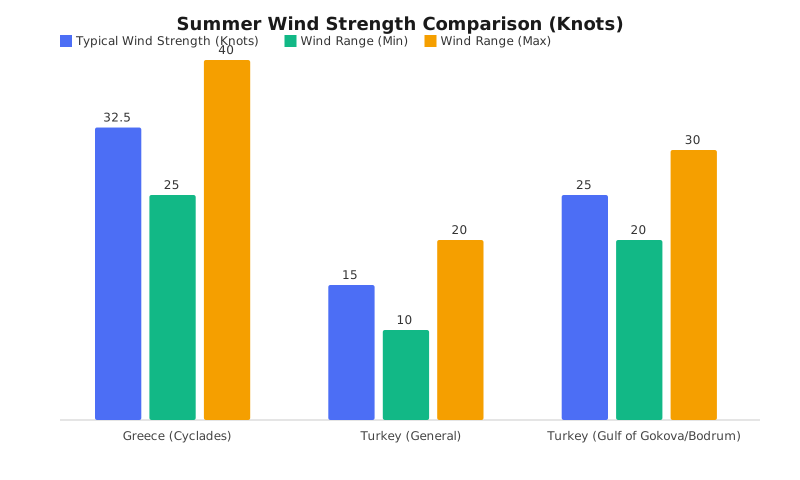
The prevailing winds are the single biggest difference between the two coasts. Greece's summer is defined by the Meltemi, a dry northerly wind that blows across the Aegean from mid-June through September, regularly reaching 25 to 40 knots in the Cyclades. Turkey's equivalent, the etesian wind system, is considerably milder, typically 10 to 20 knots, though it funnels with more force through the Gulf of Gokova and around the Bodrum peninsula.
Sea state follows wind. The open stretches between Greek islands can build a short, steep chop that makes for lively beats to windward. Turkey's more protected gulfs and coves stay flatter, making for gentler motoring and easier anchoring.
Seasonal patterns differ. July and August bring reliable wind in Greece but also crowded anchorages; the shoulder months of May, June, and September offer lighter breezes and emptier bays. Turkey's best sailing windows are May to June and September to October, when thermal breezes fill in most afternoons but the Meltemi's stronger pulses have faded.
Itinerary planning follows these patterns. A Greek route needs built-in weather days, since a strong Meltemi can pin you in port for two or three days when crossing between island groups. Turkey's coastal hops are shorter and more flexible, so a forecast shift rarely forces a major rewrite of your week.
Costs and Value: Is Sailing Cheaper in Turkey or Greece?
For most itineraries, Turkey is the cheaper sailing destination across the board. Bareboat charter rates in Turkey typically run 10-20% lower than comparable yachts in Greece, and daily costs for marinas, fuel, and food follow the same pattern.
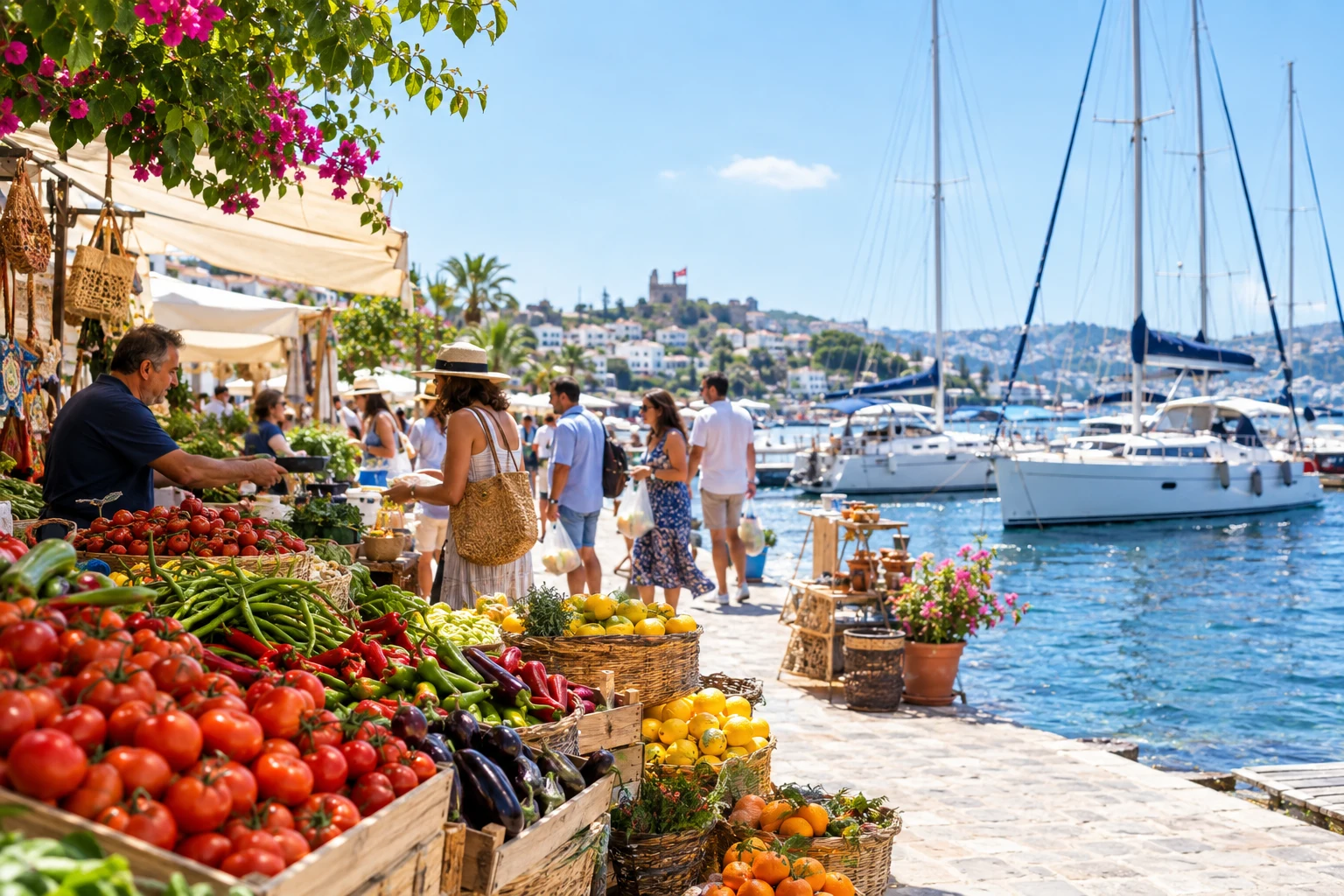
Marina fees are the biggest gap. A night in a Greek Cyclades marina can cost €80-150 for a 40-foot yacht in high season, while Turkish marinas and municipal quays in the Gulf of Gokova often charge half that. Provisioning is the other standout: local markets and supermarkets in Turkish coastal towns are consistently less expensive than Greek island shops, where nearly everything is shipped in.
VAT changes the headline numbers. Greece charges 24% VAT on charter fees, while Turkey applies 10% for foreign-flagged charters. Eating out follows the same curve: a taverna meal for two in Greece runs €40-60, while a comparable Turkish meze dinner might land at €25-40.
The value equation shifts by charter type. Bareboat crews save the most in Turkey because lower base rates and marina fees compound over a week. Crewed charters in Turkey offer the best value of all: lower operating costs mean a full crew, chef, and fuel often cost less than a bareboat in the Greek high season.
Best Sailing Routes and Itineraries: Turkey vs Greece
The Turkish Riviera and the Greek Islands offer two distinctly different sailing experiences. The Turkish coast rewards slow, bay-focused cruising between Fethiye, Gocek, and Marmaris in the Gulf of Gokova, while Greece's strength is point-to-point island hopping across the Dodecanese, the Cyclades, and the Ionian Sea.
One-Week Turkish Itinerary: Fethiye to Gocek
Start in Fethiye and head east through the Gulf of Fethiye. Day one brings you to Gemiler Island for a protected anchorage and Byzantine ruins. From there, work your way toward Gocek Bay, stopping at Oludeniz for the famous Blue Lagoon and at Cleopatra's Bath for an afternoon swim. Finish in Gocek Marina, a full-service base with excellent provisioning before you fly out of Dalaman.
One-Week Greek Itinerary: Athens to the Cyclades
Begin at Alimos Marina in Athens and sail southeast to the Cyclades. A typical week runs Athens to Kea, then on to Kythnos and Serifos, with a longer passage to Sifnos before returning. Daily hops of 20 to 40 nautical miles keep you moving without exhausting the crew. Plan for one built-in weather day, since the Meltemi can pin you in port with 30-knot gusts. The calmer alternative is the Ionian, where a week from Lefkas or Corfu loops south to Kefalonia and Ithaca with lighter winds and shorter legs.
Which Route Suits Your Crew?
Pick Turkey's Lycian Coast for a relaxed week of bay-hopping with lighter winds and minimal planning pressure. Choose Greece's Cyclades or Dodecanese if you want island variety and stronger sailing, and the Ionian if you want the Greek islands without the Meltemi's chop.
Cross-Border Sailing: How to Combine Greece and Turkey
Crossing between Greece and Turkey is possible on a single charter, but it requires the yacht to be cleared out of the country of origin and into the next at designated ports of entry. The paperwork involves passports, the charter agreement, and a cruising permit (transit log) for Turkish waters, plus a Greek customs clearance (departure form). Plan for a full day lost to formalities, plus port fees on both sides, and confirm your charter base allows the crossing.
For a mixed itinerary, the most practical route is the Dodecanese-Gulf of Gokova corridor: sail from Bodrum or Marmaris to Greek islands like Symi, Rhodes, and Kos, all within a few hours' sail. A skippered charter is the easiest way to handle the border procedures without stress. The best cruise between Greece and Turkey is typically a 7-10 day loop out of Bodrum, covering Kos, Symi, and the Datca Peninsula.
Marinas, Anchorages, and Facilities: Which Country Delivers More?
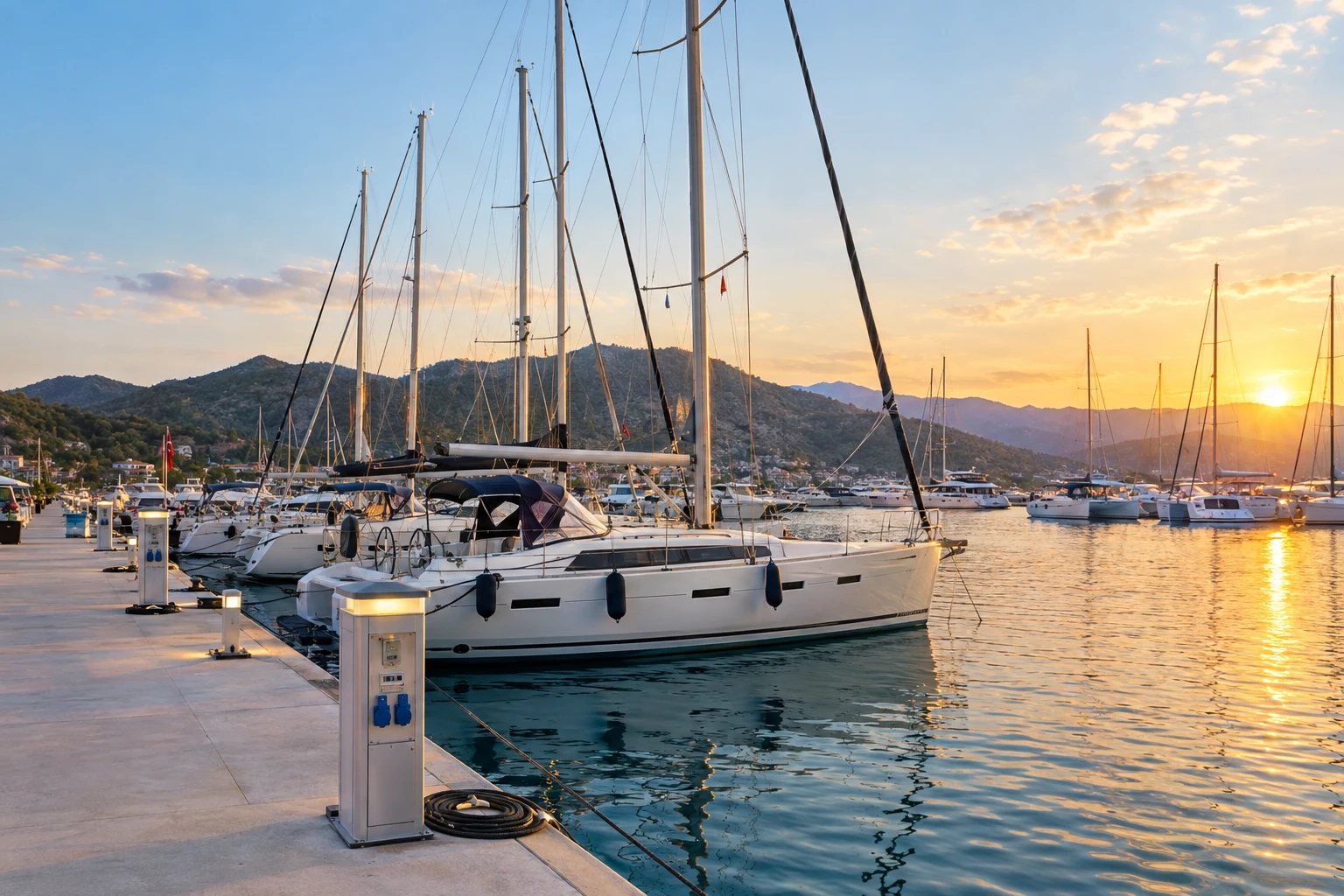
Greece and Turkey both deliver working charter infrastructure, but they excel in different ways. Turkey's marinas are newer, with wider berths, better electricity, and more reliable Wi-Fi, especially along the Gulf of Gokova near Bodrum and Marmaris. Greek marinas are older and more expensive, though the Cyclades bases like Paros and Lavrion have upgraded significantly in recent years.
For anchorages, Greece wins on sheer variety and scenic drama. Turkey counters with more sheltered, all-weather bays, which means you are less likely to surf your anchor chain when the wind pipes up overnight.
Turkey's Turquoise Coast and the Datca Peninsula hold the edge for true seclusion, with deep, pine-clad gulfs that rarely fill beyond a handful of boats. Greece's most famous anchorages are more exposed to the Meltemi and demand a weather eye. If you value easy, protected nights at anchor, Turkey delivers more consistently; if you want dramatic scenery and don't mind checking the forecast daily, Greece wins.
Sailing Culture and Onshore Experience: What Sets Turkey and Greece Apart?
The onshore contrast is as distinct as the sailing conditions. Greece delivers the classic Aegean island-hopping lifestyle: whitewashed villages, ferries buzzing between ports, and tavernas where a plate of grilled octopus and a carafe of house wine costs €40-60. Nightlife centers on vibrant harbor towns like Mykonos and Paros.
Turkey offers a slower, more immersive cultural rhythm. A gulet cruise Turkey is the defining experience: traditional wooden yachts with a crew, a full board of meze, and days spent swimming in pine-clad coves rather than ticking off islands. Your dinghy ride to shore might land at a village dock, a riverside restaurant, or ancient ruins like Kaunos.
Hospitality differs in kind. Greek service is efficient and internationalized; Turkish hospitality is more personal, with tea offered freely at marinas and shopkeepers greeting you like a regular. Sailing holidays Turkey vs Greece ultimately come down to whether you want the energy of island nightlife or the calm of a coastline where the sailing culture values anchoring for lunch over rushing to the next harbor.
Safety, Regulations, and Entry Requirements: What Should Sailors Know?

Both countries are safe for yacht charter, with no piracy concerns in the Aegean or Mediterranean. Healthcare access is better in Greece, where pharmacies and clinics are common on larger islands; in Turkey, you may need to travel to a major town like Marmaris or Fethiye for serious care.
The paperwork gap is the biggest difference. Greece is part of the EU's Schengen Area, so visa requirements Turkey Greece differ: most non-EU nationals get 90 days in Greece within 180 days, while Turkey offers many nationalities an e-visa or 90-day visa-free entry. You will need your passport, charter agreement, and a crew list for both.
For Turkey, you must complete a formal customs entry at your first port, get a transit log, and sometimes a cruising permit. Greece requires a simpler arrival procedure, but you must clear in at a port of entry before visiting other islands.
Who Should Choose Turkey vs Greece for a Sailing Vacation?
Families and less experienced crews get more from Turkey: lighter winds, flat seas, and short hops between sheltered coves mean less stress at the helm and easier overnight anchoring. Greece's Ionian is the one clear exception, offering similar calm conditions with a busier island-hopping feel.
Couples and foodies should lean toward Greece, especially the Cyclades, for dinner at waterfront tavernas and lively island evenings. Turkey suits travelers who want quieter villages, ancient ruins, and a more personal, immersive pace.
Adventure seekers and confident sailors will find what they want in the Greek islands, where the Meltemi delivers 25-40 knots and real point-to-point sailing between islands. Turkey's milder 10-20 knot breezes reward those who prioritize swimming, anchoring, and relaxed days over performance.
The deciding factor is your priority: choose Greece for varied island hopping and stronger winds, or Turkey for value, calm seas, and uncrowded anchorages. Budget-minded sailors who want the best sailing vacation Turkey or Greece can offer should pick Turkey and save 10-20% on charter costs alone.
2026 Trends: Is Tourism in Turkey or Greece Changing?
Popularity is shifting in both directions as sailors weigh crowding against cost. Greece still draws the larger share of charter bookings, but its busiest islands in the Cyclades and Dodecanese are feeling the pressure of summer crowds, rising marina fees, and the 24% charter VAT. Turkey is quietly gaining ground as the value alternative, helped by lower VAT, cheaper marinas, and lighter crowds outside August.
Some travelers are turning away from Turkey over geopolitical headlines and stricter entry paperwork, including customs clearance and transit logs. In response, Turkish marinas have invested heavily in modern facilities and English-speaking staff, while Greece continues to expand its charter bases and island networks.
Frequently Asked Questions
Which Greek islands are best to sail around for first-timers?
The Ionian Islands (Corfu, Lefkada, Kefalonia) offer gentle winds, easy navigation, and plenty of sheltered harbors, making them the top choice for novice crews. The Saronic Gulf (Aegina, Poros, Hydra) is ideal for short hops, charming ports, and accessibility from Athens, with lighter conditions than the windier Cyclades.
Do I need a sailing license to charter a yacht in Turkey or Greece?
Yes, both countries require at least one crew member to hold an ICC, RYA Day Skipper, or equivalent recognized license for bareboat charters. A VHF radio certificate is also needed. Skippered charters require no license, since the hired skipper holds the qualifications and takes responsibility for the vessel.
Can I sail between Turkey and Greece on a charter yacht?
Direct cross-border sailing is possible, but requires formal border entry/exit at designated ports and advance paperwork, including customs clearance in both countries. Some charter companies restrict international crossings, so always confirm before booking. A skippered charter is the easiest way to handle the border procedures without stress.
Are flotilla sailing holidays available in both countries?
Yes, both Turkey and Greece offer flotilla sailing, with Greece having more established flotilla routes and Turkey offering more relaxed, less crowded flotilla experiences. Greek flotillas typically run through the Ionian or Cyclades with well-organized support. Turkish flotillas are less common but provide a quieter, bay-focused alternative along the Turquoise Coast.
How do provisioning and dining ashore compare between Turkey and Greece?
Greece offers iconic waterfront tavernas and markets specializing in Mediterranean cuisine, with a meal for two running €40-60. Turkey features excellent value, fresh produce, and a unique blend of Mediterranean and Middle Eastern flavors, with comparable dinners landing at €25-40. Provisioning is consistently cheaper in Turkish coastal towns than in Greek island shops, where nearly everything is shipped in.
Greece is the right choice if you want strong winds, island-hopping variety, and lively evenings ashore. Turkey wins if you value calmer seas, shorter hops, lower costs, and quieter anchorages. For most first-time or family charters, Turkey in June or September is the safer bet; experienced crews chasing downwind runs should book the Cyclades in July or August.
Start by comparing two concrete itineraries at your preferred dates: a week from Athens with a built-in weather day, and a week from Fethiye with no such buffer. Price both fully, including the 24% Greek VAT versus Turkey's 10%, then book whichever fits your budget and your crew's comfort level. The deciding factor is rarely the brochure photos. It is how much wind you want to handle.
Explore next
Destination guide
Greece
Two seas, hundreds of islands, and a charter base to match every plan. Here is where to start in Greece.