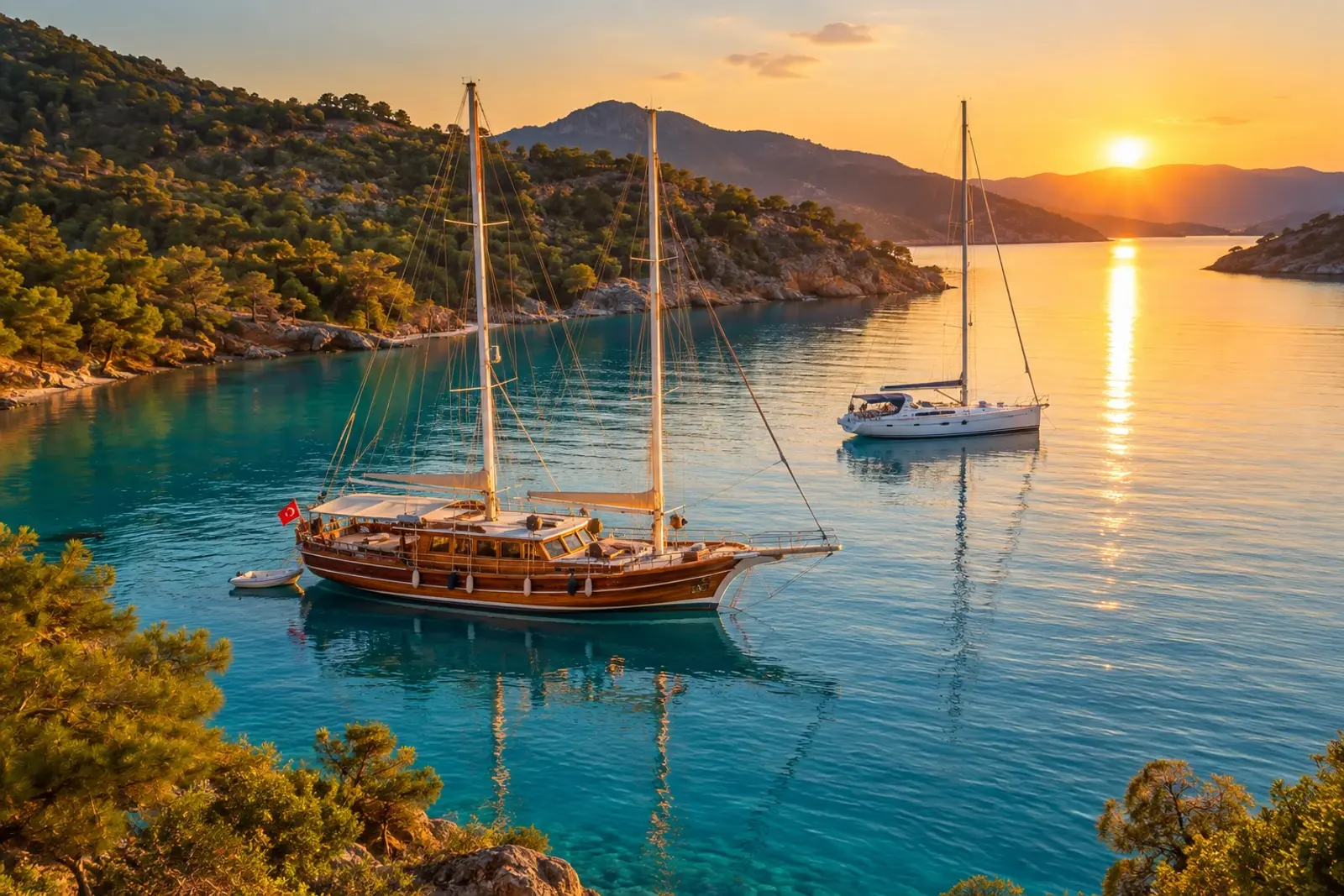
Yacht charter cost in Turkey runs roughly 1,200 to 2,500 euros a week for a bareboat sailing yacht, 2,500 to 6,000 euros skippered, and 5,000 euros up past 20,000 for a crewed yacht or gulet. How much it costs to charter a yacht in Turkey depends on boat size, the season you travel, and whether fuel, provisioning and crew gratuities are already folded into the quote or billed separately.
That range covers everything from a small monohull with a skipper's license aboard to a full-crew gulet with a chef and private cabins for eight. The sections below break down pricing by boat type, charter type, season and starting marina, along with what a quote actually includes before any extra fees show up.
Average Yacht Charter Costs in Turkey by Boat Type
| Boat type | Typical weekly price (EUR) | Typical group size |
|---|---|---|
| Bareboat sailing yacht | 1,200 - 2,500 | 2-8 |
| Skippered sailing yacht | 2,500 - 6,000 | 2-8 |
| Crewed sailing yacht | 5,000 - 20,000+ | 4-10 |
| Gulet | 4,000 - 15,000+ | 6-12 |
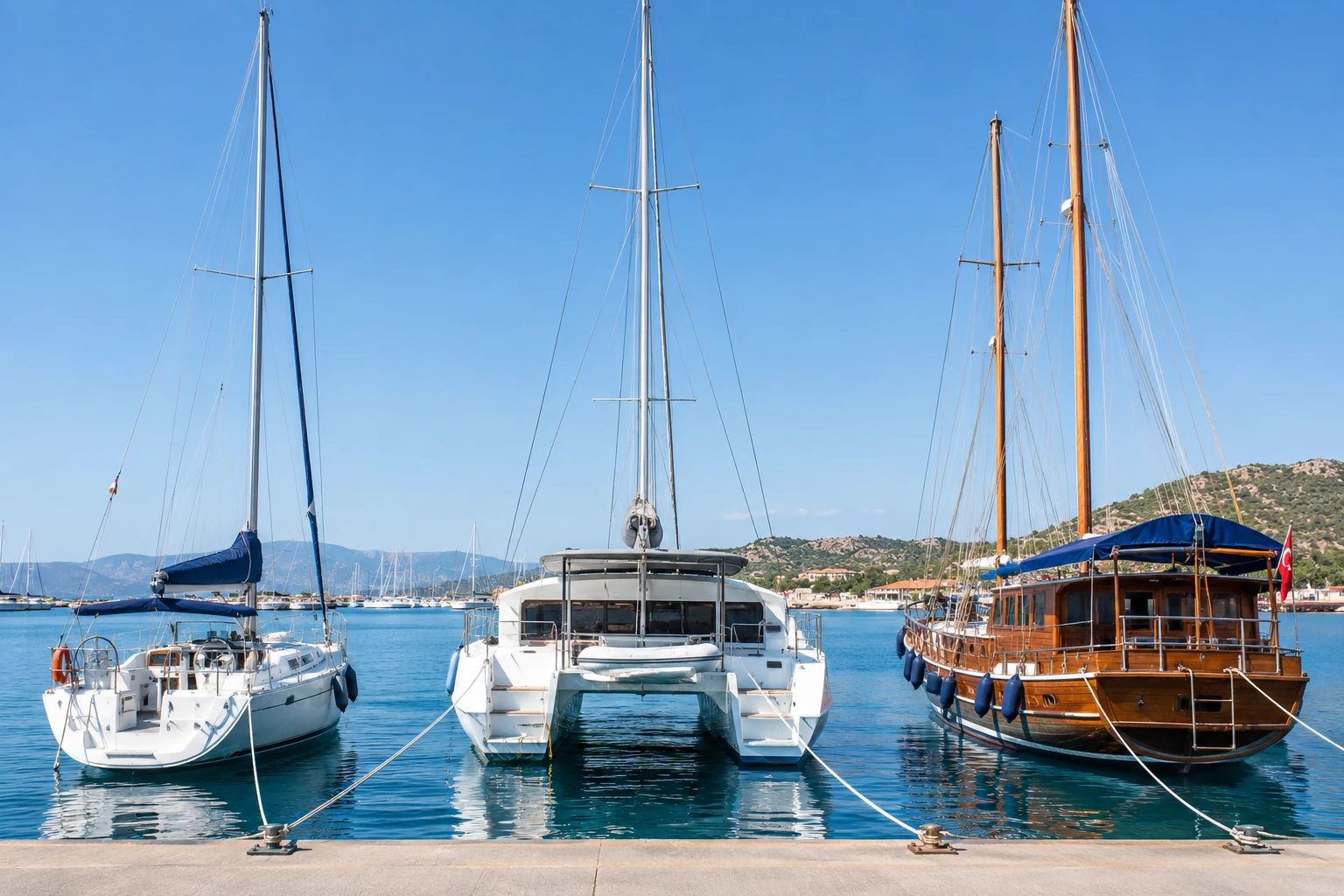
Gulets often undercut a sailing yacht of similar length, since Turkish-built wooden hulls cost less to build and crew than a Western fiberglass boat. A standard 20-meter, four-cabin gulet typically costs less per week than a crewed sailing catamaran of the same size.
A day trip on a small gulet or motorsailer runs 150 to 400 euros depending on group size and route, and a half-day sail on a smaller sloop can cost under 100 euros per person in a shared group.
Boat age and size matter most within a category. A 2010-built 40-foot monohull charters for noticeably less than a current-model boat of the same length, and price rises a few hundred euros per extra meter once a boat passes about 12 meters.
What's Included in the Price — and What Costs Extra
A charter quote comes in one of two forms: all-inclusive, where fuel, food and drinks are already covered, or "plus expenses", where you pay the base charter fee and then an Advance Provisioning Allowance on top.
The APA typically runs 20 to 30 percent of the base charter fee, paid before departure to cover fuel, groceries, drinks and dockage during the week, with any unused balance refunded at the end.
VAT applies to the base charter fee, and port and transit log fees add on top for each marina visited, usually a few hundred euros across a week-long route.
Crew gratuities sit outside the quoted price entirely. The customary tip runs 5 to 10 percent of the base charter fee, paid directly to the crew in cash at the end of the charter and split by the captain among everyone on board.
Bareboat vs skippered vs crewed: how charter type changes the price

| Charter type | Required | Typical weekly price (EUR) | Who it suits |
|---|---|---|---|
| Bareboat | Sailing licence + VHF cert | 1,200 - 2,500 | Licensed, experienced sailors |
| Skippered | None | 2,500 - 6,000 | No licence, want to sail hands-on |
| Crewed | None | 5,000 - 20,000+ | Full service, no sailing involved |
Bareboat needs a valid sailing license, usually an International Certificate of Competence or equivalent, plus a VHF radio operator's certificate, before a company hands over the keys.
Skippered drops the license requirement: a professional skipper handles navigation and docking for a daily fee of 100 to 180 euros on top of the base rate.
Crewed goes further, adding a chef, hostess, or extra deckhand depending on boat size. This is where price scales fastest: a small crewed yacht might add 20 to 30 percent over bareboat, while a large crewed gulet or catamaran with a full team can run several times the bareboat rate for the same length.
The right choice comes down to experience and budget rather than destination. Confident sailors with a license save the most money going bareboat, while anyone without sailing experience needs a skipper or crew regardless of how much they want to spend.
Gulet charter costs: Turkey's traditional wooden yachts
Gulets, the broad-beamed wooden motor-sailers built in Bodrum and Marmaris boatyards, price by cabin or berth count rather than by length alone, which keeps the per-guest cost lower than a sailing yacht of similar size.
A standard four-cabin gulet for eight guests typically charters for 4,000 to 7,000 euros a week in season, while a deluxe or luxury gulet with air conditioning throughout, a larger crew, and premium finishes runs 8,000 to 15,000 euros or more.
A shared cabin charter, often sold as a "blue cruise", prices one cabin at a time at 300 to 600 euros per person for a week, with the operator filling the remaining cabins with other travelers.
A full-boat private charter books every cabin for one group, which costs more in total but gives full control over the itinerary, meal times, and who else is on board.
How season affects yacht charter prices in Turkey
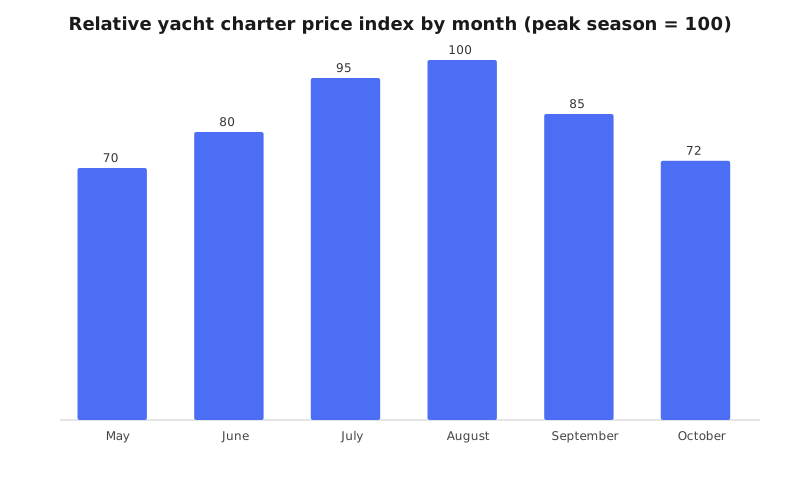
Peak season, July and August, pushes charter rates 20 to 40 percent above the quietest months of the year, driven by school holidays and the hottest, most reliable sailing weather.
May, June, September and October make up the shoulder season: steady winds, better availability, and rates 15 to 30 percent below the July-August peak, dropping as much as 40 percent in early May or late October.
November through March counts as low season on most of the Turkish coast. Charter traffic drops sharply, and a handful of operators offer deeply discounted rates for anyone willing to sail in cooler, less predictable conditions.
Booking late in the week before departure can also unlock a discount on an unsold slot, though it works against travelers who need to plan flights and time off well in advance.
Does location change the price? Bodrum vs Gocek vs Fethiye
Bodrum and Gocek hold the largest charter fleets on the Turkish coast, and that scale keeps pricing competitive: more boats chasing the same bookings leaves owners less room to charge a premium.
Fethiye and Marmaris, a notch quieter and less developed for tourism, often charter a comparable boat for 5 to 15 percent less than the same yacht based in Bodrum or Gocek. The savings come from lower marina fees and less demand rather than an older or smaller fleet.
A one-way route, starting in one marina and finishing in another, usually costs more than a round trip from a single base, since the company has to sail or motor the boat back empty. That repositioning cost typically gets passed on as a fixed fee of a few hundred euros.
Starting and finishing at the same marina avoids this fee entirely and remains the cheaper default for anyone without a strong reason to end the trip somewhere else.
How to keep your Turkey yacht charter costs down
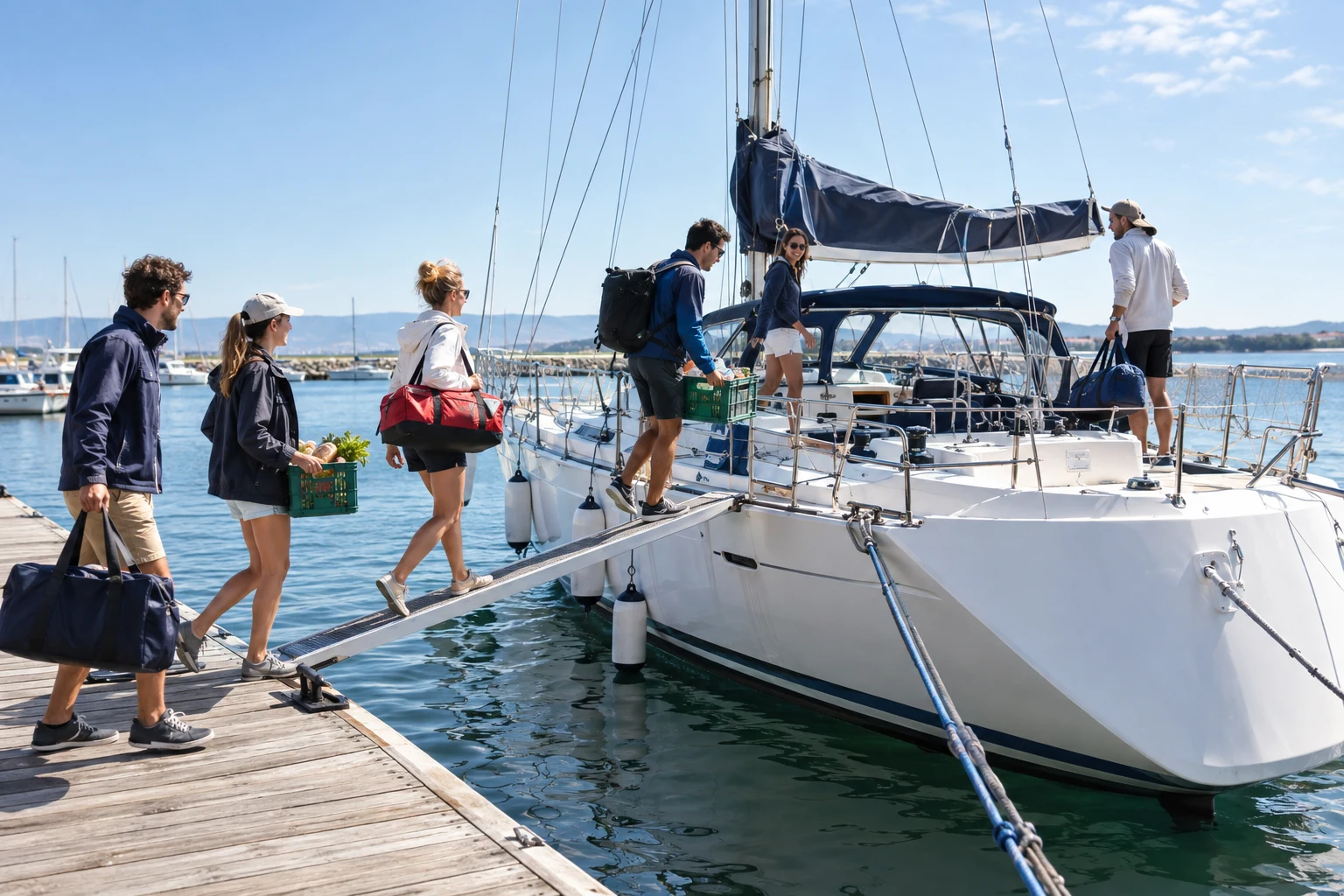
Moving the trip to shoulder season, May, June, September or October, cuts the base rate by 15 to 30 percent compared with July and August without losing reliable sailing weather.
An all-inclusive quote costs more upfront but removes the risk of an APA running higher than expected or a surprise fuel bill after a windless week. Compare two quotes only once both are converted to the same basis.
A half-empty boat wastes the fixed costs of the charter. Filling every berth in the group splits the same weekly fee, skipper cost and APA across more people, which lowers the price per person more than almost any other decision.
Bareboat and flotilla sailing, where a qualified skipper in the group takes the helm, skip the crewed-charter premium entirely. For a group that already holds a sailing license, this is the single biggest lever on the final bill.
Frequently asked questions
Is yacht charter cheaper in Turkey than in Greece?
Turkey is typically 15 to 25 percent cheaper than Greece for a comparable boat and season, mostly thanks to lower marina fees and fuel costs. Greece can still undercut Turkey on bareboat rates in some regions, so it is worth comparing specific boats rather than assuming one country always wins.
How much should you tip the crew on a Turkey yacht charter?
The customary gratuity is 5 to 10 percent of the base charter fee, paid in cash directly to the crew at the end of the charter, then split among the crew by the captain. It is never included in the quoted price.
How much does a short 3-day yacht charter cost in Turkey?
A 3-day charter typically costs 40 to 55 percent of the full weekly rate, since daily costs run higher per day than a week-long booking. Most operators set a minimum charter length of 3 to 4 days outside peak season, rising to a full 7 days in July and August.
What is the 12-guest rule on a charter yacht?
Commercial charter yachts in Turkey, like most of the Mediterranean, are licensed to carry a maximum of 12 paying guests. A larger group needs two boats or a bigger, commercially-coded vessel. The limit is a safety and certification rule, not a pricing tier.
Which country is the cheapest for yacht charter in the Mediterranean?
Turkey and Croatia are generally the most affordable options for a comparable boat, while Greece, Italy and France run noticeably higher, especially in July and August. Boat age and charter type usually move the price more than the country itself.
Do all guests on board split the charter cost equally?
The charter fee is paid once by whoever books, then typically split among the group however they agree, not by a fixed formula. Crew and skipper are paid by the charter company rather than by individual guests, and gratuities are usually pooled and split evenly regardless of cabin.
Settle on a charter type before comparing prices. A group with a licensed sailor saves the most going bareboat, while anyone without sailing experience should budget for a skippered or crewed rate instead and stop comparing those quotes against bareboat numbers.
Once you have a shortlist, ask each operator the same two questions: is this all-inclusive or plus expenses, and what is the APA percentage. Those two answers let you compare quotes on equal terms instead of being misled by a lower headline price.
If the dates are flexible, move the trip into May, June, September or October first. That single change saves more than any other decision on this page, short of switching from a crewed yacht to a bareboat one.