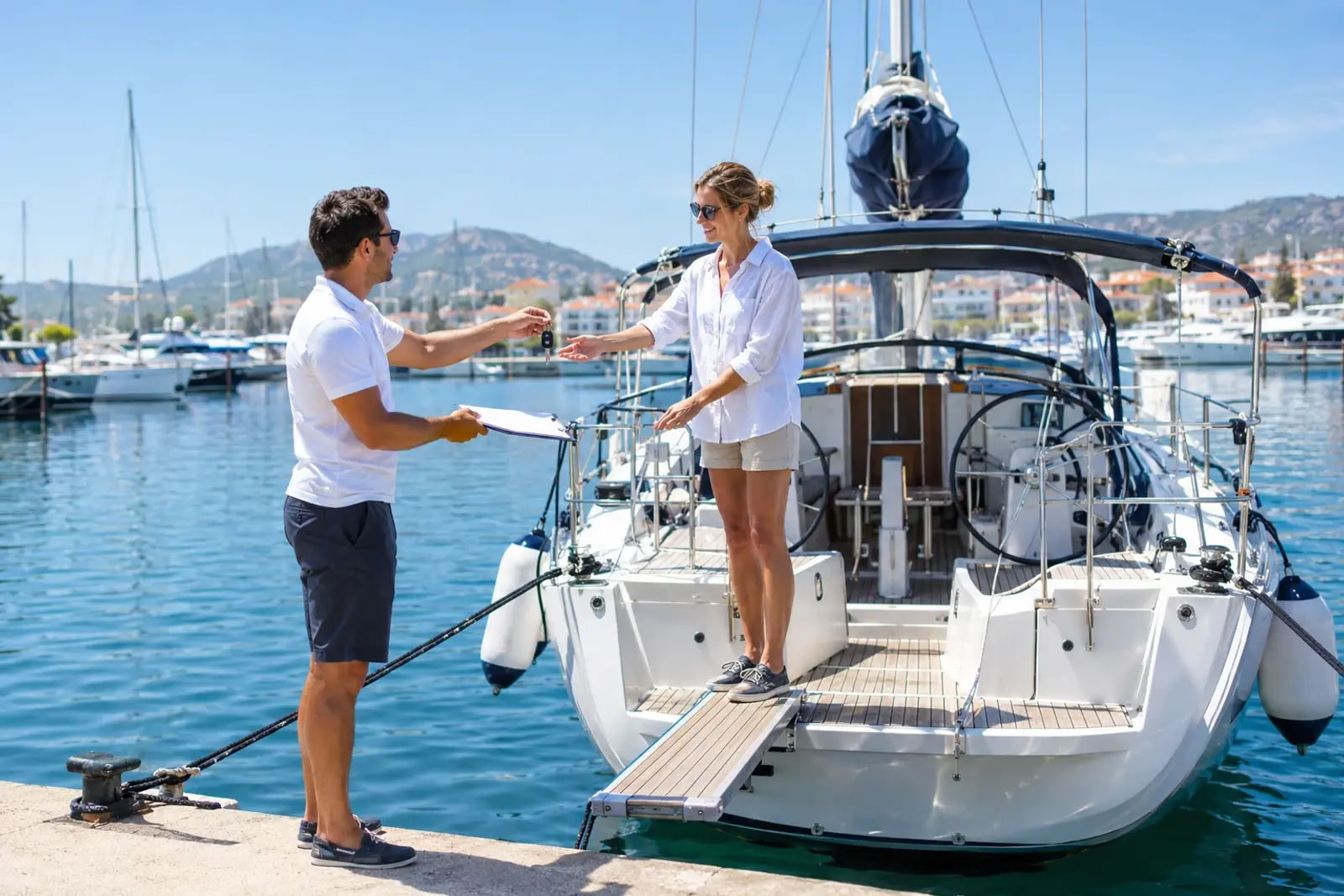
Bareboat sailing Turkey requirements start with a recognized sailing qualification, usually an ICC or RYA Day Skipper certificate, plus a VHF radio operator's certificate and a sailing resume proving you have skippered a boat close to the size you're renting. Meeting bareboat charter Turkey requirements also means letting your charter company arrange a mandatory Turkish Transit Log before you can leave the marina.
None of this is unusual by Mediterranean standards, but Turkey layers in a few specifics that catch first-timers out: the exact paperwork a base checks at handover, which waters are off-limits, and what actually happens if your licence gets questioned. The sections below cover each of these along with the practical mooring and check-in skills you'll use on day one.
Do you need a licence to bareboat charter in Turkey?
| Qualification | Who it's for | Accepted in Turkey |
|---|---|---|
| ICC (International Certificate of Competence) | Most European sailors | Yes |
| RYA Day Skipper | UK-trained sailors | Yes |
| ASA 104 Bareboat Cruising Certificate | US sailors | Yes |
| National coastal skipper licence | Most European nationals | Yes, generally |
| VHF/SRC radio certificate | All bareboat charterers | Required alongside sailing licence |
Yes. Turkish charter bases require a recognized sailing qualification, typically an International Certificate of Competence (ICC) or an RYA Day Skipper certificate, before handing over a boat with no skipper aboard.
National equivalents work too. A country-issued coastal skipper licence from most European sailing nations is generally accepted, and American sailors usually qualify with an ASA 104 Bareboat Cruising Certificate or a similar credential from a recognized school.
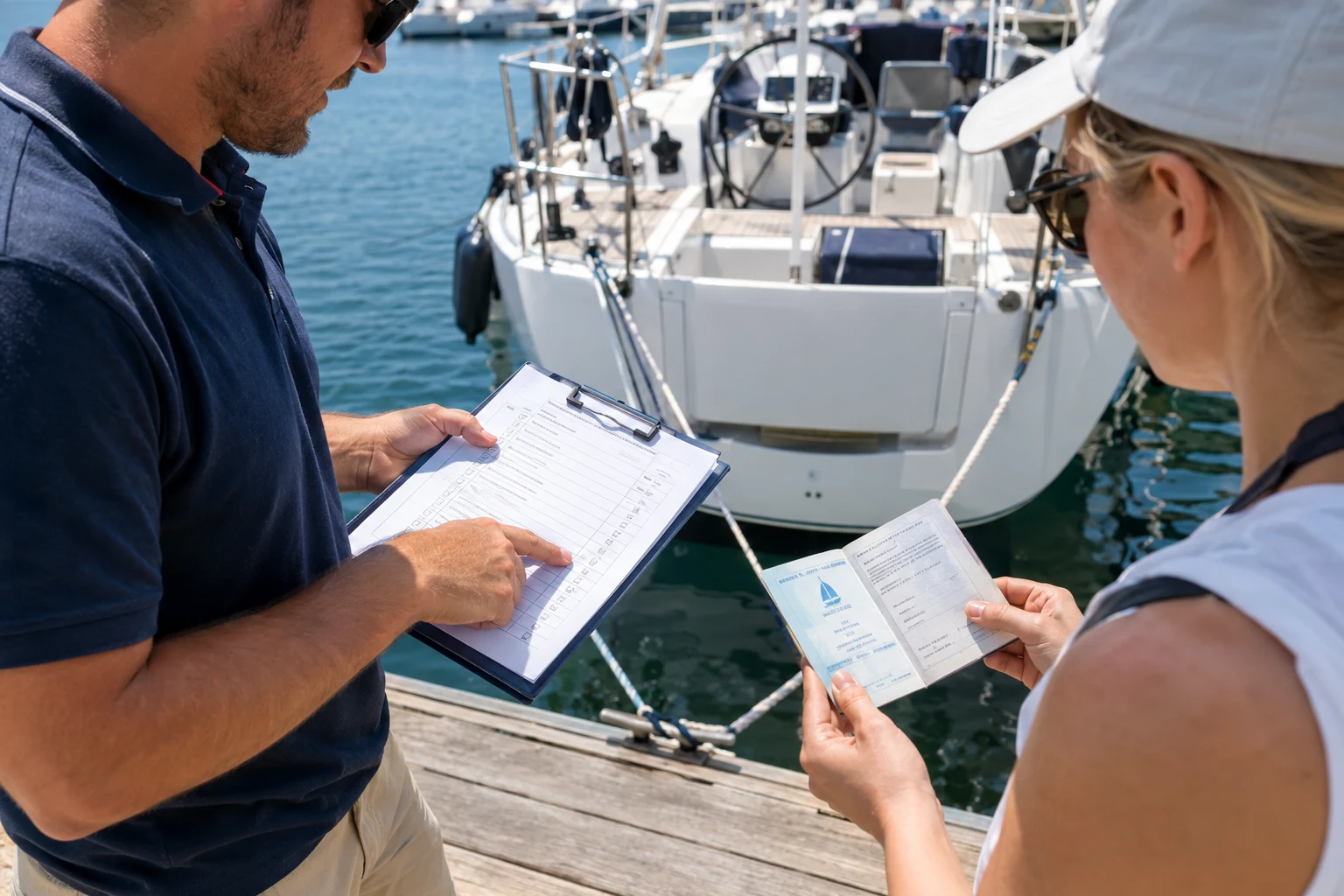
The certificate has to be the original physical document. A photo on your phone or a scanned PDF is not enough: charter companies and port officials check the real card or booklet at check-in, so pack it with your passport rather than leaving it at home.
Alongside the sailing licence, most bases also ask for a VHF radio operator's certificate, often called an SRC. This covers legal use of the boat's marine radio and is checked at the same time as your sailing qualification.
Without both documents in hand, a base will usually still let you charter the boat, just not without a hired skipper added to the booking.
What counts as enough sailing experience?
A licence alone does not guarantee a bareboat booking. Charter companies also want proof you have actually skippered a boat close to the size of the one you are renting, usually within about 10 feet of its length.
This gets checked through a sailing resume, a form listing the boats you have skippered, their length, and roughly how many days or nautical miles you logged on each. Vague entries like 'several charters' tend to raise questions; specific boat models and dates do not.
Most bases also expect at least one other competent crew member aboard, someone who can handle lines, help anchor, and take the helm if needed. Sailing entirely solo, even with a strong resume, makes some operators nervous enough to insist on a paid skipper regardless of your qualifications.
Verification does not stop at paperwork. Some bases call references listed on the resume, and others ask new charterers to complete a short check-out sail with a staff member before releasing the boat unsupervised.
The Turkish Transit Log and other required paperwork
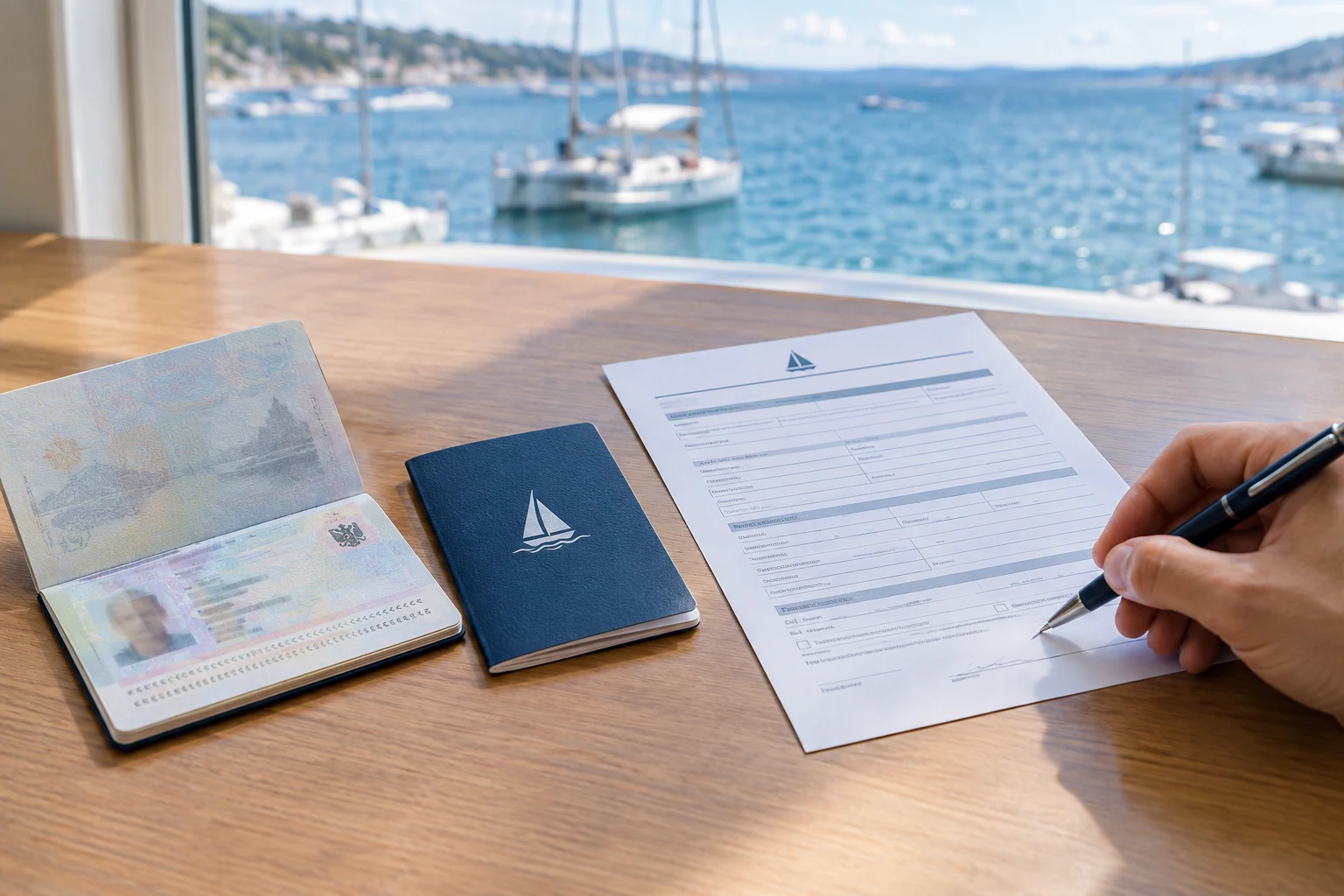
Every bareboat charter in Turkey needs a Transit Log, an official document that tracks the yacht's movements, crew list, and port entries for the length of your trip. The charter company processes it on your behalf before you leave the marina.
Processing the Transit Log carries a fee, usually added on top of the base charter price rather than included in the headline rate. Ask for this figure upfront when comparing quotes between operators.
Beyond the Transit Log itself, expect to hand over copies of your passport, sailing licence, and a full crew list at check-in. Port authorities can ask to see these again at stops along the coast, so keep the originals accessible rather than packed away in a cabin locker.
The charter company typically keeps the paperwork organized once it is filed, but it is worth confirming at handover that every crew member listed matches who is actually aboard. A mismatch between the Transit Log and your actual crew can cause delays at a port authority check.
Where you can't sail: restricted and no-go zones
Not every stretch of the Turkish coast is open to charter yachts. Military zones and naval areas sit along parts of the coastline and are marked on local nautical charts; charter companies brief new sailors on the nearest ones during handover.
Waters near the Greek maritime border need extra care. Several islands off the Turkish coast belong to Greece, and the exact boundary between Turkish and Greek waters is not always obvious from the deck. Straying across it, even unintentionally, can draw attention from either country's coast guard.
Some marine protected areas add a different kind of restriction: free anchoring is limited or banned entirely, and boats are expected to use designated mooring buoys instead to protect the seabed below.
None of these restrictions are usually a problem for a planned itinerary that sticks to the popular Bodrum, Gocek, or Fethiye cruising grounds, but they matter if you are plotting your own route further afield.
What happens if your licence isn't accepted?
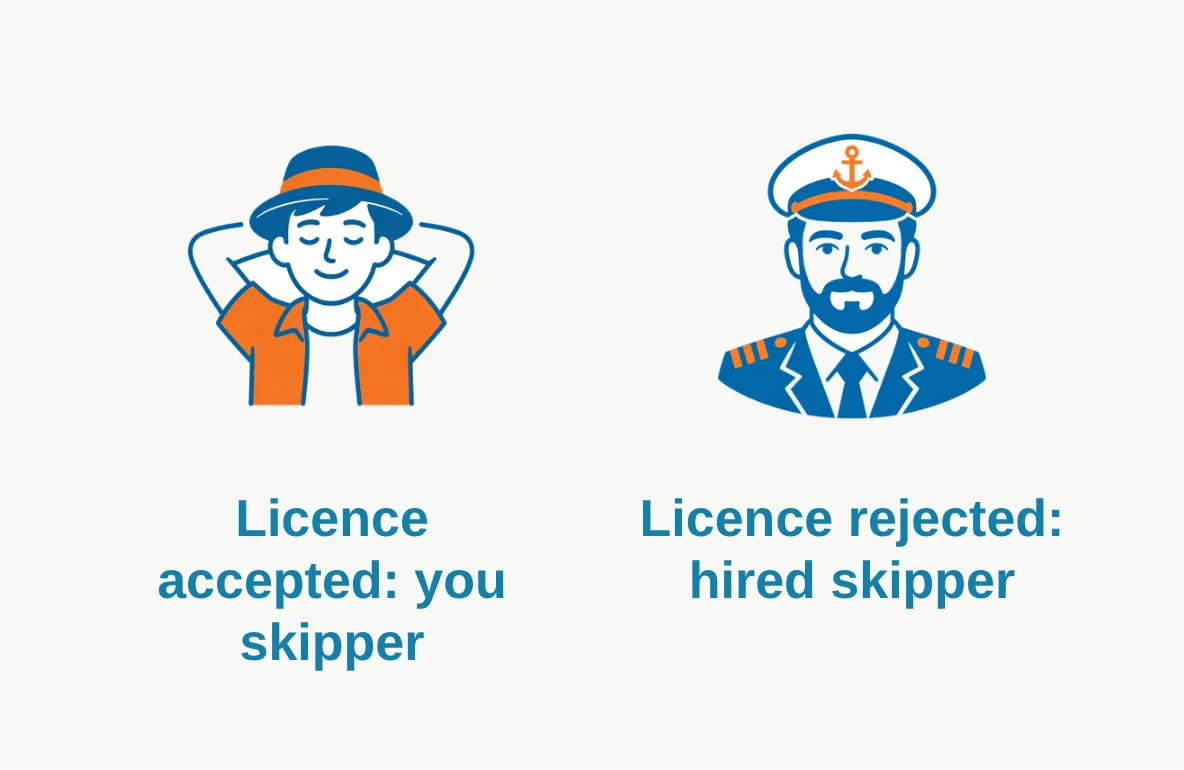
A rejected licence does not usually cancel the booking. Most charter bases offer a paid local skipper for the trip instead, which turns the charter into a skippered one for a daily fee rather than refusing you the boat.
A short check-out sail with a base instructor can sometimes resolve a borderline case on the spot. If your resume looks thin rather than genuinely unqualified, an hour on the water with staff watching can satisfy what the paperwork alone could not prove.
Joining a flotilla is another option worth asking about. A lead boat with a qualified skipper travels alongside a group of charter yachts, so you still sail your own boat day to day while the flotilla leader handles the parts a base is unsure about trusting to your paperwork.
Whichever fallback applies, it is far cheaper to sort this out before departure than to discover it at the dock. Email the base your licence details and sailing resume ahead of time and ask them to confirm in writing that it is accepted.
Mooring and check-in: practical skills you'll actually need
Mediterranean stern-to mooring, backing the boat into a berth and securing a line from the stern to the dock, is the standard technique across Turkish marinas and most restaurant-run moorings. If you have never done it, practice before you need to rely on it under pressure.
Check-in and the technical handover briefing usually take a few hours and happen in English. A base crew member walks you through the engine, electrics, safety gear, and any quirks specific to that boat before handing over the keys.
Overnight options vary beyond marina berths. Free bays are common along the coast, restaurant-run moorings often waive the fee if you eat ashore, and some stretches have no formal mooring at all, just anchoring on your own. Each comes with different etiquette around how close you can anchor to other boats and whether you need permission to use a private mooring line.
Arriving with these basics already familiar, even from videos beforehand, makes the handover faster and the first night at anchor far less stressful.
Tips for a smooth first bareboat charter in Turkey
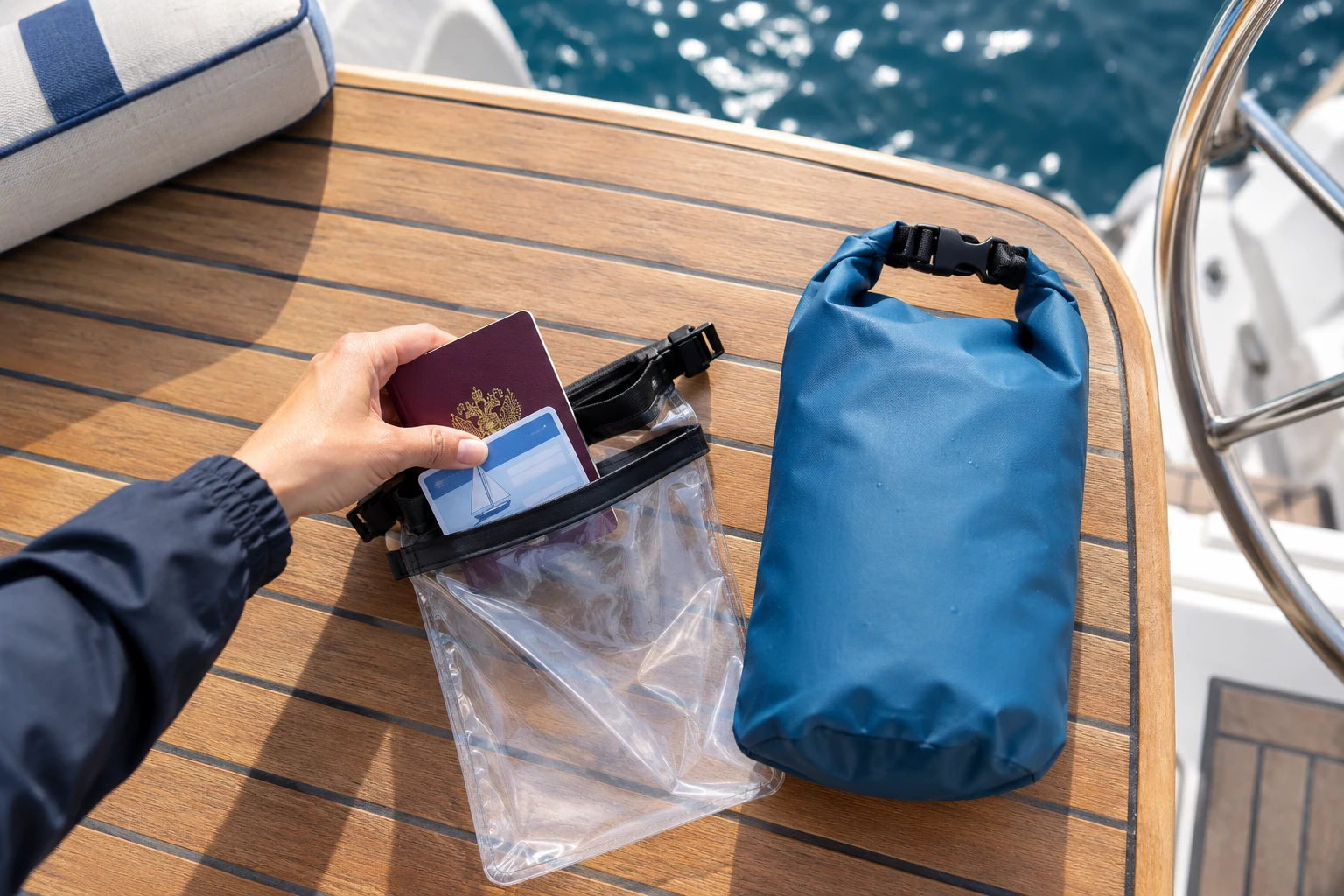
Pack original paper certificates, not photos or PDFs, and bring a spare passport photo in case a port stop asks for one. Digital copies work as a backup, never as the primary document.
Confident conversational English makes the technical briefing and any port authority stop far easier. You do not need fluency, but understanding nautical terms like helm, cleat, and fender during a fast handover matters more than casual chat.
Before signing anything, check exactly what the security deposit covers and whether damage waiver insurance is on offer. A deposit that seems high on its own often makes more sense once you see what it protects against.
Finally, confirm your Transit Log fee and any other mandatory extras in writing before you pay a deposit. A quote that looks cheaper on paper sometimes hides the same total cost once these fixed charges are added back in.
Frequently asked questions
How much does mooring cost in Turkey?
High-end marinas in popular hubs often start around 5,000 Turkish lira, roughly 170 euros, a night. Many bays and restaurant-run moorings cost far less, or are free if you eat ashore. Water and electricity are sometimes billed separately from the berth fee, so ask before assuming it's included.
Is a VHF certificate always required, or does it depend on the charter company?
Most Turkish bases ask for a VHF radio operator's certificate, an SRC, before handover, though requirements vary slightly by operator. It's worth confirming this at booking rather than assuming. Without one, some bases will still charter the boat but require a skipper aboard instead.
Do you need a crew member besides yourself to bareboat charter?
Most operators want at least one other competent crew member who can handle lines and anchoring. This isn't usually a formal licence requirement, just a practical safety expectation. Solo sailors without a second crew member may be asked to take a skipper for at least the first day.
Is English required to bareboat charter in Turkey?
Confident conversational English is expected for the pre-departure technical briefing, where nautical and technical vocabulary matters more than general fluency. Some bases can arrange an interpreter, but this should be confirmed well in advance rather than assumed on arrival.
Do non-EU sailors need anything extra to bareboat charter in Turkey?
Most non-EU nationals, including US and UK sailors, need no visa for short charter stays, and the same licence and experience rules apply regardless of nationality. Carrying a passport valid well beyond the charter dates is standard advice for any port authority check.
What's the difference between a transit log and the boat's registration papers?
The transit log tracks this specific charter's movements, crew list, and port entries for the duration of your trip. The registration papers identify the vessel itself and stay with the boat permanently. Charter companies handle both, but only the transit log needs renewing during a long trip.
Email your charter base your licence details and sailing resume before you book, not after. A confirmed yes in writing avoids the worst-case scenario: arriving at the dock to find out your qualification isn't accepted and scrambling for a skipper on short notice.
Pack the original paper certificates, bring a second competent crew member if you can, and budget for the Transit Log fee from the start rather than treating it as a surprise add-on. These three things settle more first-charter stress than anything else on this page.
Once the paperwork is sorted, the rest is just sailing: stern-to mooring, a few hours of handover briefing, and a coastline that rewards the preparation.
Explore next
Destination guide
Turkey
Turkey's Aegean and Turquoise Coast offer some of the best sailing in the Mediterranean. Here's where to base your charter and what to expect.