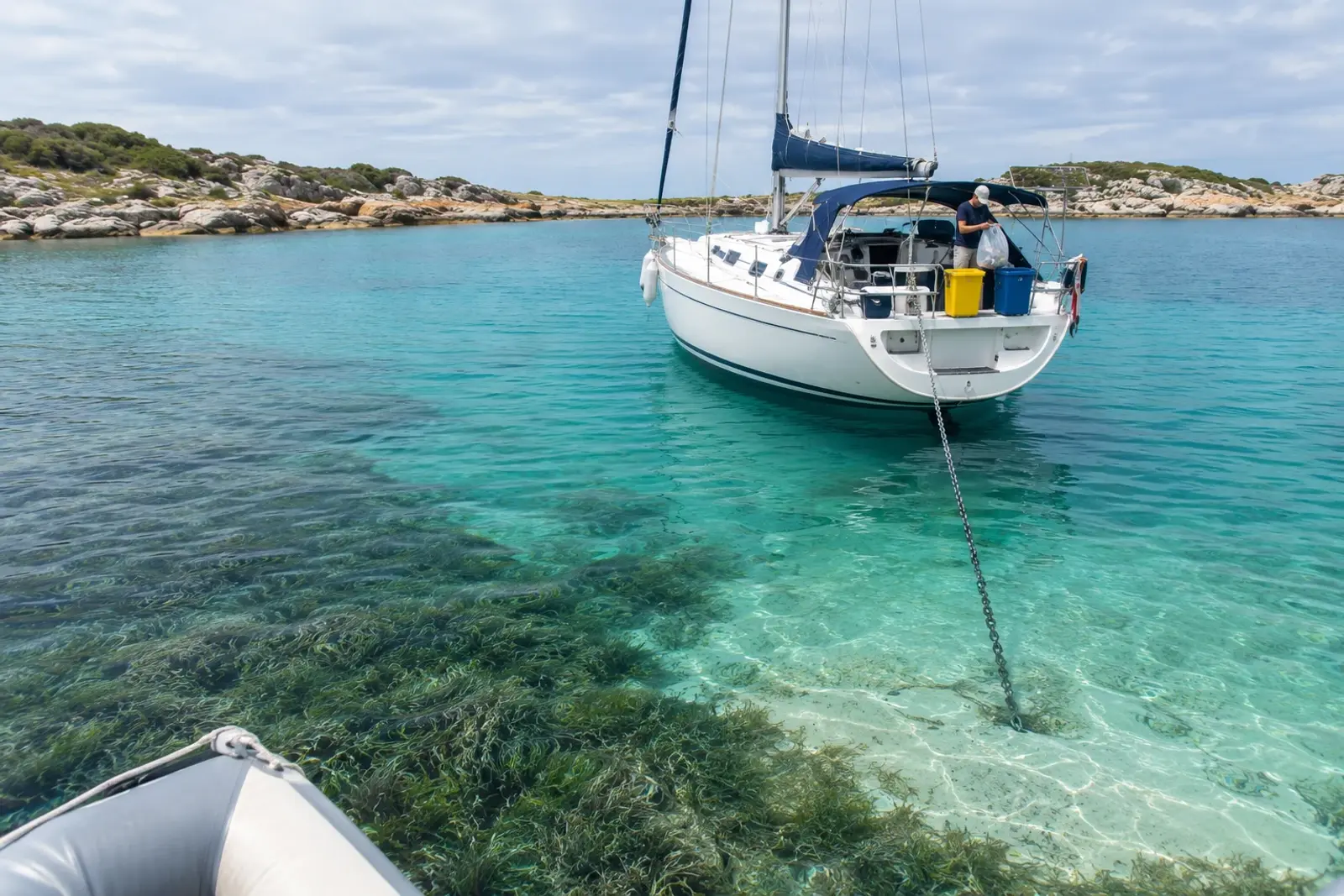
Eco-friendly sailing in Turkey means following the country's Zero Waste Blue rules on waste discharge, anchoring on sand instead of protected seagrass meadows, and choosing a boat that sources food locally and sails under wind power whenever conditions allow. Sustainable sailing in Turkey also means respecting marine protected areas like Gokova Bay, where fishing and anchoring restrictions give the ecosystem room to recover.
None of this requires giving up comfort or convenience. It mostly comes down to which boat you book and a handful of small habits once you're aboard.
What makes sailing in Turkey eco-friendly?
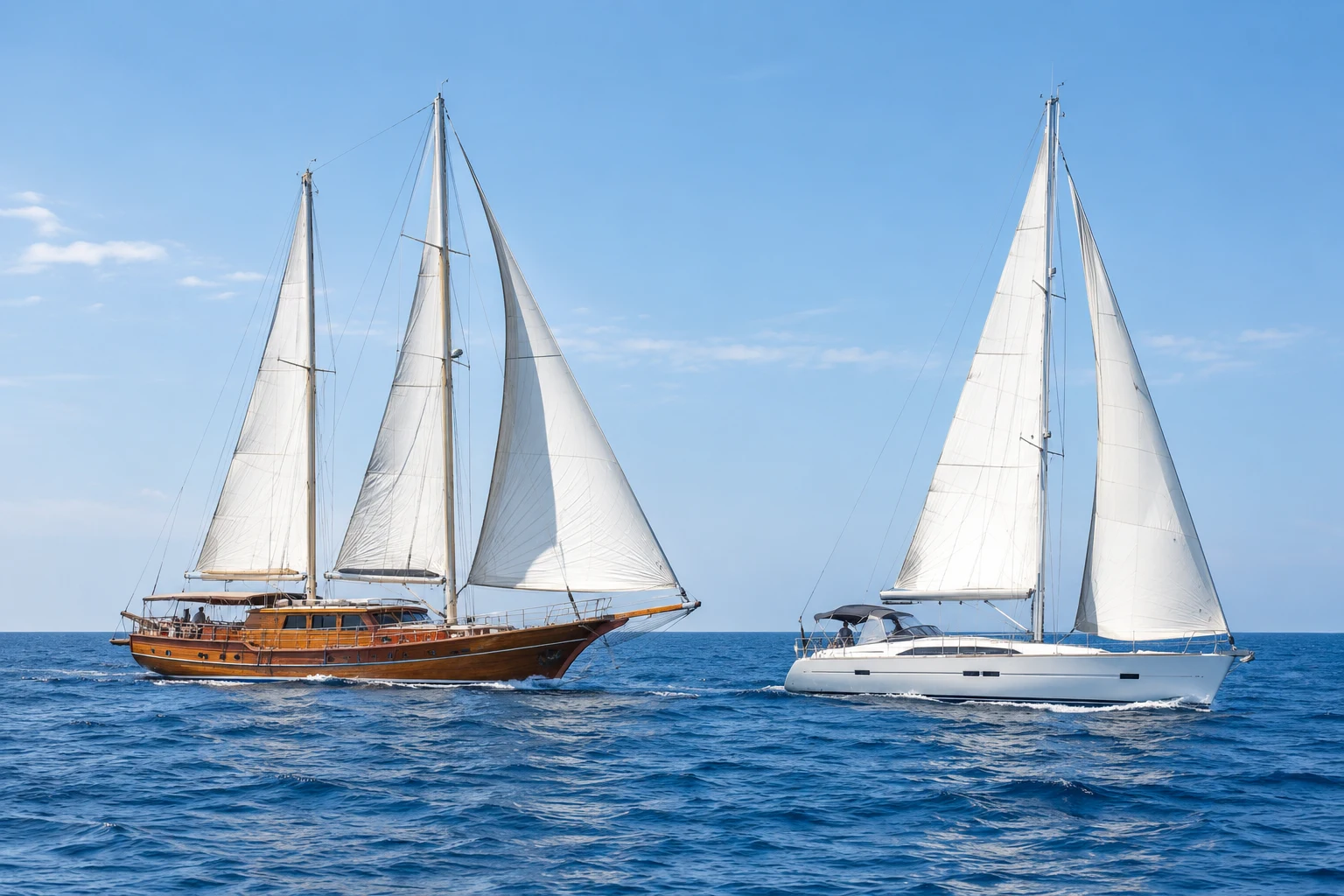
Eco-friendly sailing in Turkey comes down to how a boat handles waste, where it anchors, where its food comes from, and how often the engine runs instead of the sails. Both traditional wooden gulets and modern sailing yachts can sail responsibly or poorly depending on these choices.
The boat type matters less than the habits aboard it. A gulet that motors everywhere and dumps waste overboard is not greener than a modern yacht with careful crew, and the reverse is just as true.
Turkey backs this up with real rules rather than leaving it to individual goodwill. The Zero Waste Blue program bans untreated waste discharge at sea, and protected bays like Gokova restrict anchoring and fishing to let seagrass and fish stocks recover.
Turkey's Zero Waste Blue policy: what sailors need to know
Turkey's Zero Waste Blue program bans vessels from discharging untreated waste, sewage, or rubbish directly into the sea anywhere along its coast. It applies to charter yachts the same way it applies to commercial ships.
Boats track their waste disposal through a blue card system, logged each time they offload sewage or rubbish at an approved marina or port facility. Port authorities and marina staff can check this record, and charter companies are the ones responsible for keeping it current.
It's worth asking your charter company directly: where does greywater go, is the holding tank pumped out at proper facilities, and does the crew sort rubbish for onshore disposal?
Most established Turkish charter operators already comply as a matter of keeping their operating licence, so this is less about finding a rare exception and more about confirming the boat you book takes it seriously.
Anchoring without damaging seagrass meadows
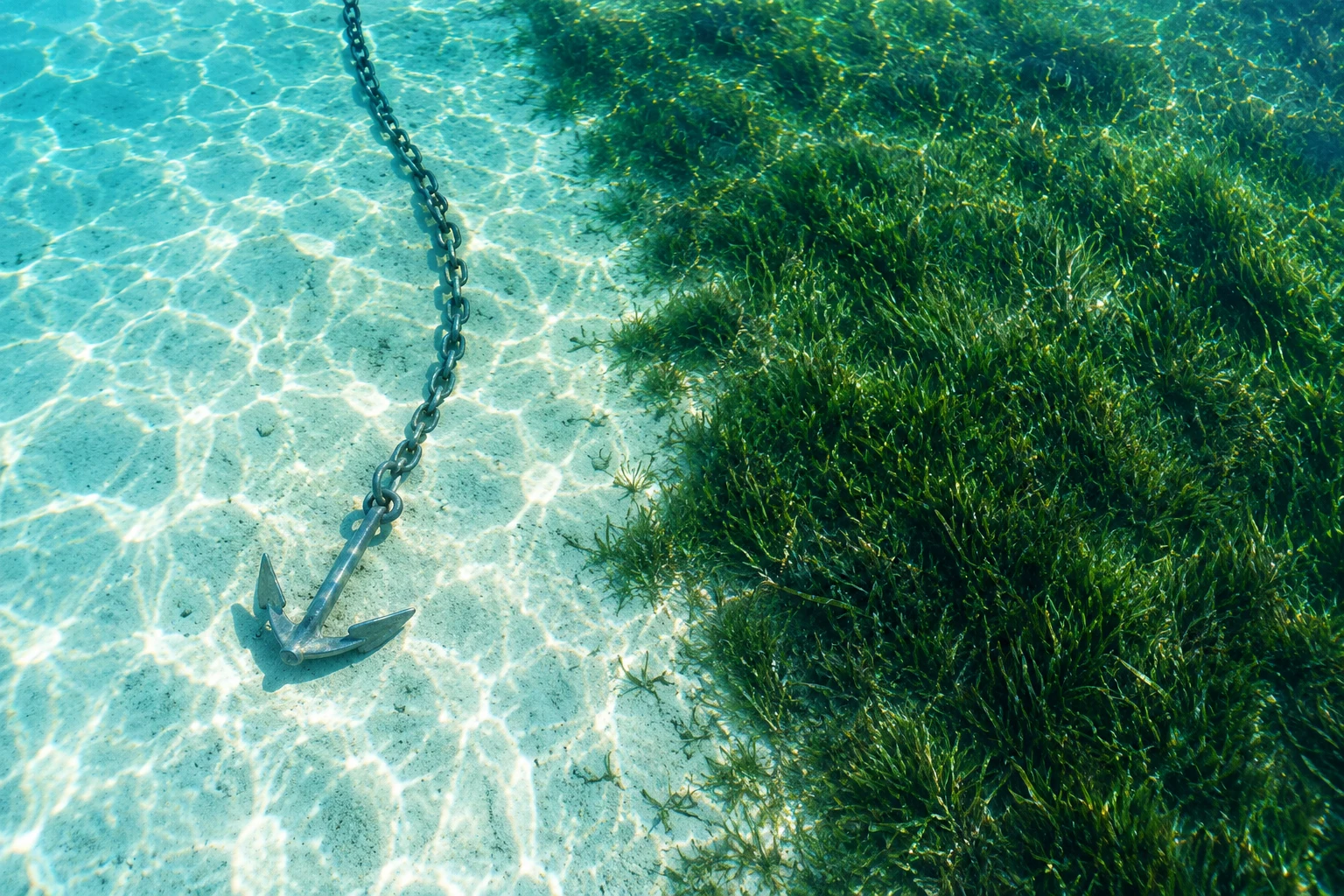
Posidonia oceanica, the seagrass that carpets much of the Turkish seabed, grows only a few centimeters a year, and a single anchor chain dragged across a meadow can tear up decades of growth in minutes.
Sandy-bottom anchorages are the safer default. Sand shows up as lighter patches of water from the surface, while seagrass reads as darker, textured green-brown. Most chartplotter apps and local cruising guides mark where meadows sit, so checking before you drop anchor takes less time than guessing wrong.
Some of the more popular bays have moved past relying on sailors to spot the difference themselves. They now require boats to pick up a mooring buoy instead of anchoring freely, which keeps every boat's chain off the seabed entirely.
Where a mooring buoy is available, using it is both easier and lower-impact than anchoring nearby to save a small fee.
Marine protected areas along the Turkish coast
| Protected area | What's restricted | Cruising relevance |
|---|---|---|
| Gokova Bay | Fishing banned | Swimming/anchoring generally fine |
| Fethiye-Gocek SPA | New development, anchoring in parts | Popular charter route, check zones |
| Other coastal MPAs | Varies: fishing, anchoring, or permit | Ask skipper per route |
Gokova Bay was set up to let depleted fish stocks and seagrass meadows recover after years of overfishing. The Fethiye-Gocek Specially Protected Area limits development and anchoring in parts of its bays to protect the same seagrass habitat.
Restrictions vary by zone, and a few require a permit or advance notice before entering, so check with your skipper for the zones along your specific route.
Choosing an eco-conscious charter operator or gulet
The clearest sign of a responsible operator is a specific answer, not a reassurance: ask how the boat handles waste and whether it tracks a Zero Waste Blue blue card.
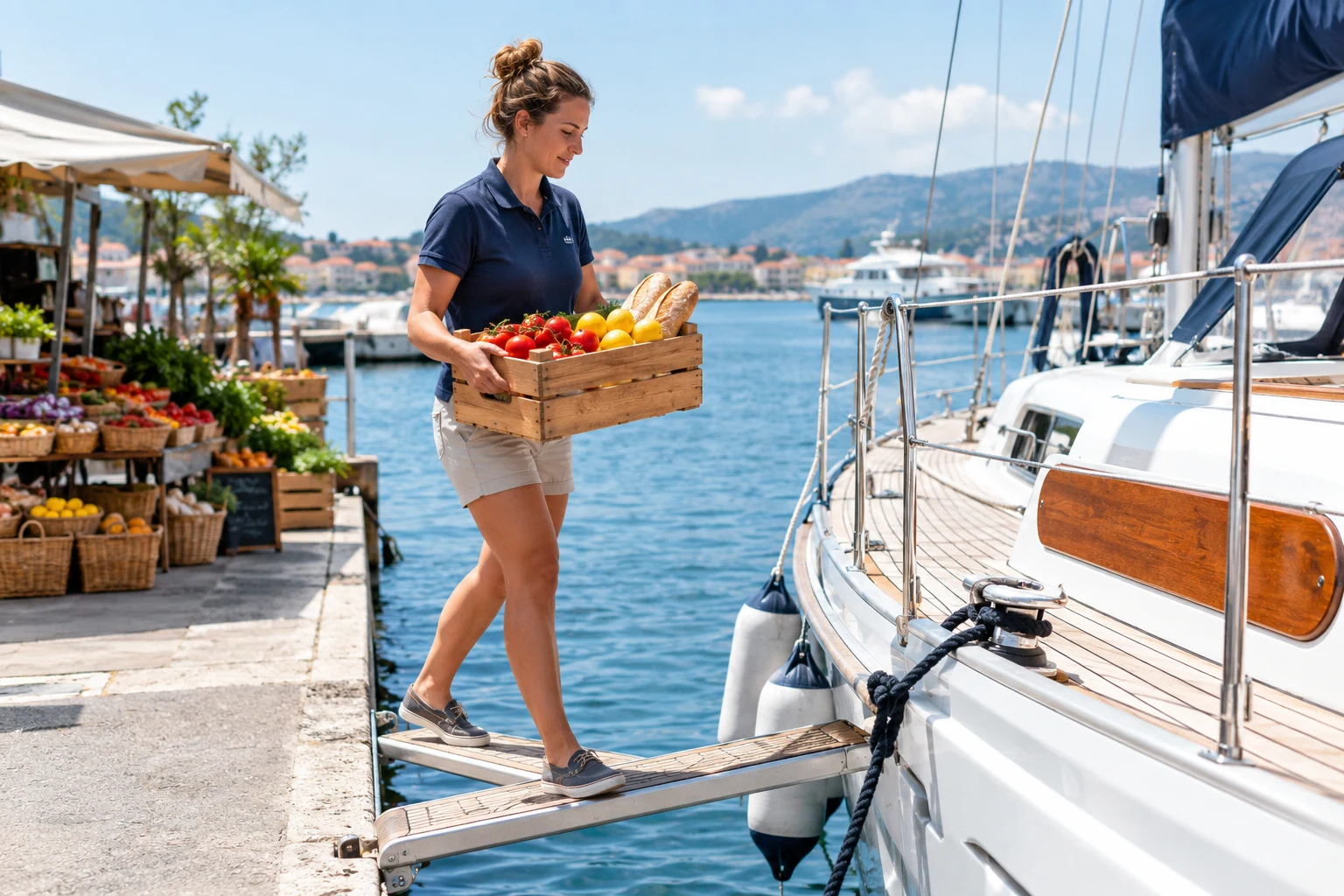
Provisioning habits matter almost as much: operators shopping at local markets and family-run suppliers cut the packaging and transport emissions of supermarket-sourced food for a week-long charter.
Some boats, particularly newer sailing yachts and catamarans, run on solar panels and efficient battery banks instead of idling the engine just to keep lights, fridges, and chargers running at anchor. This alone can meaningfully cut fuel use over a week compared with a boat that runs its engine every evening.
None of this shows up in a brochure photo, so ask directly rather than assuming from a boat's age or style.
How to spot greenwashing in an "eco" charter listing
A listing leaning on words like "eco-conscious" or "green cruising" with no explanation is a warning sign, not a credential. Real sustainability practices are specific and checkable.
A genuinely responsible operator answers direct questions about waste, fuel, and provisioning without hesitation, because these are things the crew actually does every charter, not a line written by marketing.
Reviews are often more reliable than a company's own description: past guests mentioning specific practices, local food on board, sailing instead of motoring, correct anchoring away from seagrass, carry more weight than any amount of "sustainable" language on the listing itself.
Reducing plastic and waste onboard
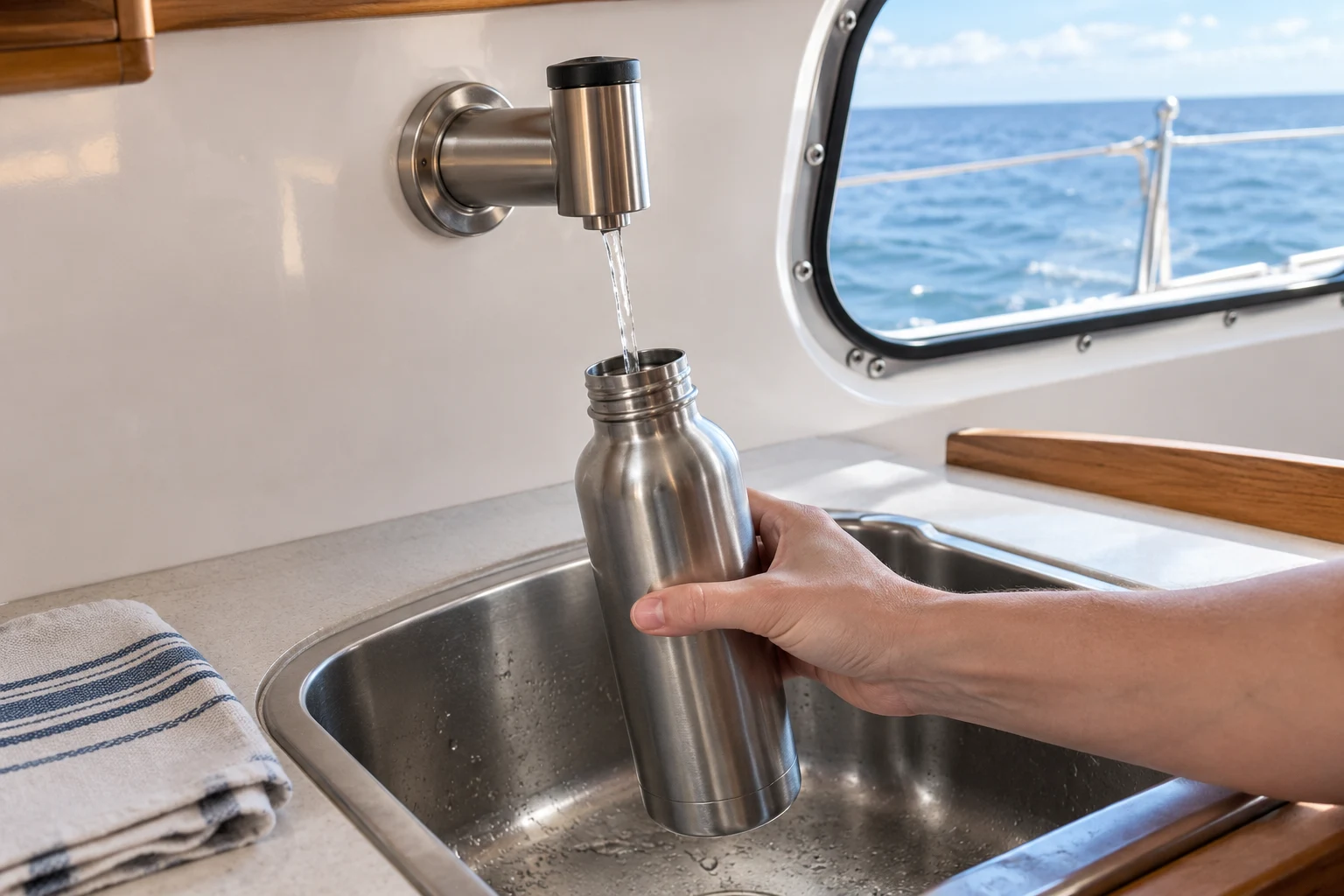
A refillable water bottle, filled from the boat's own tank or a filtered dispenser instead of a new plastic bottle every day, cuts the single biggest source of disposable plastic on most charters.
Reef-safe sunscreen, mineral-based with zinc oxide or titanium dioxide instead of chemical UV filters, washes off into the water you swim and anchor in, so pack it deliberately rather than grabbing whatever's on the shelf at home.
Shopping at a local market instead of a supermarket cuts packaging waste on its own: produce and bread sold loose instead of shrink-wrapped, fish bought whole from the morning catch rather than pre-packed in plastic trays.
Small habits add up over a week aboard: bringing your own toiletries in reusable containers, skipping individually wrapped snacks, and asking the crew where rubbish actually goes once it leaves the boat.
Sailing under wind power: when crews cut the engine
Whenever wind direction and strength cooperate, skippers turn off the engine and sail, especially inside sheltered gulfs like Gocek and Fethiye where steady afternoon breezes make it an easy call.
Motor-sailing, running the engine alongside the sails, is common when the wind is too light to hold a schedule or when a tight itinerary needs covering a set distance by a set time. It is a practical compromise, not a failure to sail properly.
Asking your skipper to prioritize sailing over motoring, when the schedule allows, is one of the simplest requests a guest can make: it cuts fuel use and noise, and is usually the more enjoyable way to cover a passage.
A flexible itinerary with a day or two of slack lets the crew wait for wind instead of motoring on a fixed deadline, often the biggest lever a guest has over how much the boat actually sails.
Frequently asked questions
What happens if a boat is caught dumping waste illegally in Turkey?
Vessels found discharging untreated waste face fines under the Zero Waste Blue program, and repeat violations can affect a charter company's licence to operate. Enforcement checks happen at marinas and through coast guard patrols along busier stretches of coast.
Can I still snorkel and dive responsibly while sailing in Turkey?
Yes, as long as you avoid touching marine life and rock or seagrass formations and don't collect shells or artifacts from the seabed. Keeping a respectful distance from fish and staying off the bottom when snorkeling in shallow water matters most. Some protected bays post specific guidelines right at the entrance.
Do gulets use less fuel than modern sailing yachts?
Not automatically. Fuel use depends more on engine size and how often it runs than on hull material, and a gulet's broader hull often sails less efficiently upwind, so crews motor-sail more. A gulet crew that prioritizes sailing over motoring can still run a lower-impact trip than a motor-heavy modern charter.
Is reef-safe sunscreen required in Turkey?
It isn't legally mandated nationwide, unlike in some other destinations. Marine conservation groups still recommend it strongly in protected bays and popular snorkeling spots. Mineral-based options using zinc oxide or titanium dioxide are the standard reef-safe choice.
Can I buy provisions from local markets instead of a supermarket?
Yes, most charter bases sit close to local markets selling fresh produce, bread, and fish. Shopping locally cuts packaging waste and supports small coastal businesses directly. Ask your skipper or charter company to help plan a market stop before departure.
How can I tell if a charter company is greenwashing rather than genuinely eco-friendly?
Vague marketing language with no specifics is the clearest warning sign. A real eco-conscious operator can explain exactly how it handles waste, fuel, and provisioning without hesitation. Independent reviews mentioning actual practices carry more weight than a company's own claims.
Ask your charter company one direct question before booking: how does the boat handle waste, and does it track a Zero Waste Blue blue card? The answer tells you more than any amount of "eco-conscious" language on the listing.
Once aboard, the biggest levers are simple: anchor on sand rather than seagrass, pack a reef-safe sunscreen, shop a local market at least once, and ask your skipper to sail instead of motoring whenever the schedule allows.
None of this asks you to sacrifice the trip. It just points the same week of sailing toward a coastline that is still worth visiting the next time you come back.
Explore next
Destination guide
Turkey
Turkey's Aegean and Turquoise Coast offer some of the best sailing in the Mediterranean. Here's where to base your charter and what to expect.