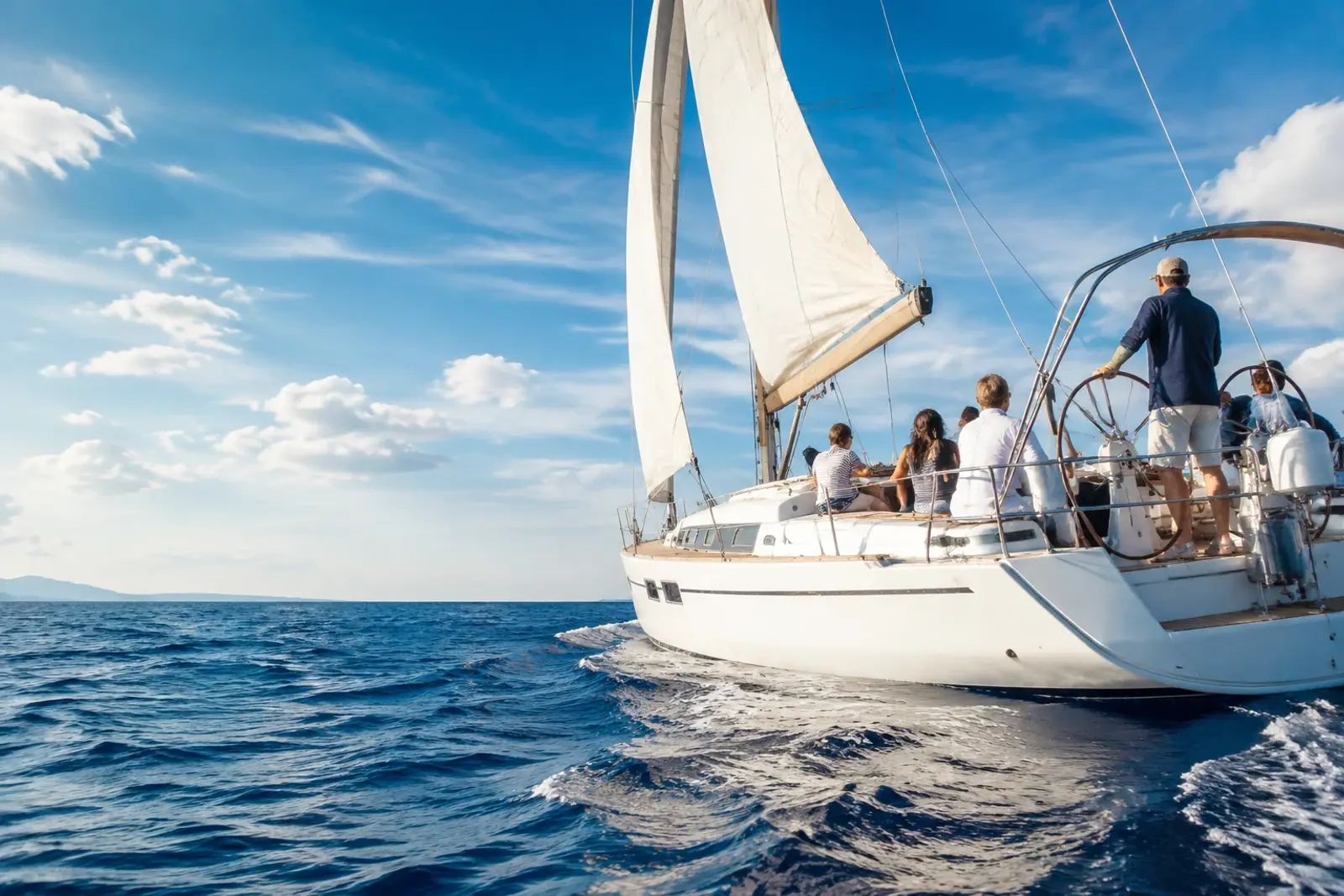
Yacht charter deposit insurance reimburses your security deposit if the charter company withholds it due to accidental damage to the yacht or its equipment during your charter. It covers costs from mishaps like broken sails, rigging, or onboard gear, reducing your financial risk. This third-party commercial policy is separate from the base's own marine insurance, and it applies to both bareboat and skippered charters.
The security deposit you pay at check-in typically runs €1,000 to €5,000, depending on the yacht and destination. When the base retains part or all of that amount for a covered incident, your charter deposit insurance commercial policy reimburses you after you file a claim.
For most charterers, the policy costs 5% to 15% of the deposit amount.
What Is Yacht Charter Deposit Insurance and How Does It Work?

Yacht charter deposit insurance protects your security deposit against accidental damage during a sailing yacht charter. When you book a boat, the charter base holds a deposit, typically 1,000 to 5,000 euros, to cover any damage you cause. If the base retains part or all of that deposit for a covered incident, deposit insurance reimburses you.
The process runs in three steps. You pay the deposit at check-in, buy the insurance policy before or during the charter, and then claim reimbursement if the base withholds funds. You file the claim with your insurer after the charter ends, attaching the damage report and the base's deduction invoice.
This cover applies to both bareboat and skippered charters. The key difference: a charter yacht damage waiver from the base often covers the same incidents but only for that one booking, while an annual policy follows you across multiple charters.
What Does Yacht Charter Deposit Insurance Cover—and What's Excluded?

| Category | Inclusions | Exclusions |
|---|---|---|
| Damage | Accidental damage | Intentional damage |
| Collision | Gross negligence | |
| Grounding | Reckless behavior | |
| Fire | Wear & tear | |
| Theft (yacht) | Theft (personal items) | |
| Loss | Total loss of yacht | Consequential loss |
| Loss of equipment | Loss of enjoyment | |
| Liability | Third-party damage | Crew negligence |
| Third-party injury | Guest negligence | |
| Events | Natural disasters | War, terrorism |
| Mechanical breakdown | Pre-existing defects | |
| Use | Standard charter use | Unauthorized use |
| Approved activities | Illegal activities | |
| Deductible | Covers deductible | Exceeds deductible |
| Repairs | Cost of repairs | Upgrade costs |
| Salvage | Salvage operations | Environmental fines |
| Legal | Legal defense | Fines, penalties |
Yacht charter deposit insurance covers accidental damage to the hull, rigging, sails, and onboard equipment during the charter period. Many marine insurance policies also include the dinghy and its outboard motor when those items are specified in the policy schedule. The operative word is accidental: the damage must result from a mishap, not from a deliberate choice.
Exclusions mirror standard marine insurance policies.
Special Considerations for Superyacht and Luxury Charters
Superyacht and luxury yacht charter insurance follows a different set of rules than standard flotilla or bareboat policies. High-value vessels mean higher claim amounts, so insurers apply stricter exclusions and more rigorous documentation requirements before paying out.
Expect higher premiums for superyacht charter deposit protection. The claim process also differs: luxury yacht charter insurance often requires a formal surveyor's report and a longer settlement window rather than the streamlined claims typical of smaller charter yachts.
Deposit Insurance vs. Security Deposit vs. Damage Waiver: Key Differences
| Feature | Deposit Insurance | Security Deposit | Damage Waiver |
|---|---|---|---|
| Cost | Percentage/Flat Fee | Large Sum | Flat Fee |
| Coverage | Damage, Loss | Damage, Loss | Minor Damage |
| Refundable? | No | Yes (if no damage) | No |
| Pros | Lower upfront cost | Refundable | Simple |
| Cons | Not refundable | High upfront cost | Limited cover |
The three protections operate at different points in the money flow. A security deposit is a refundable upfront payment held by the base, typically 1,000 to 5,000 euros, returned if the yacht comes back undamaged. A damage waiver is a non-refundable fee paid to the base that reduces or eliminates your liability for covered damage. Deposit insurance reimburses you after the fact if the base retains funds from your security deposit for a covered incident.
Third-party charter deposit insurance commercial policies are separate from the charter company entirely. You buy them from an insurer, and they pay you directly when the base withholds money. A charter yacht damage waiver is arranged with the base at check-in, and the base keeps the fee whether or not damage occurs.
Each option shifts your financial risk differently. A security deposit ties up cash but costs nothing if no damage happens. A damage waiver adds a fixed upfront cost but removes the risk of a large deduction. Deposit insurance keeps your upfront costs low but requires you to front the deposit and file a claim for reimbursement.
How Much Does Yacht Charter Deposit Insurance Cost?
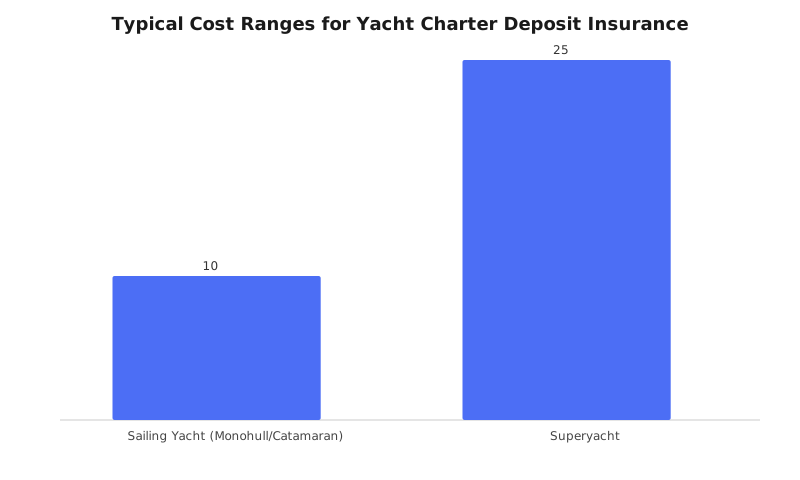
Yacht charter deposit insurance typically costs 5 to 15 percent of the security deposit amount for a sailing yacht charter. On a 2,000 euro deposit, that works out to roughly 100 to 300 euros per trip. The exact price depends on your yacht type, charter duration, destination, and the coverage level you select.
Bareboat charter deposit insurance is usually the least expensive option. Catamarans and larger monohulls cost more to insure because their replacement value is higher. Policies for destinations with limited repair infrastructure, such as remote island routes, also carry higher premiums.
Single-trip policies cover one charter and are the most common choice. Annual policies cost more upfront but usually pay for themselves after two or three charters per season.
Who Needs Yacht Charter Deposit Insurance—and Is It Mandatory?
Yacht charter deposit insurance is optional, not mandatory, for most sailing charters. No law or standard charter contract requires you to buy it, and the base will hand over the boat either way. That said, it is highly recommended for both private and commercial sailing yacht charters, because the alternative is risking your full deposit on a single trip.
Some luxury and superyacht charters are the exception. In that segment, the charter company may require deposit insurance or a damage waiver as a condition of the booking, since the vessels carry much higher values and repair costs.
Bareboat, skippered, and crewed charterers all benefit from financial protection, though the risk profile differs. Bareboat charterers carry the most responsibility, since they operate the vessel without a professional crew. Skippered and crewed charters shift some operational risk to the captain, but you still face deductions for damage caused by your actions.
For anyone chartering more than once a season, an annual bareboat charter deposit insurance policy is often the most cost-effective way to protect that 1,000 to 5,000 euro deposit.
How to Choose the Right Deposit Insurance Policy for Your Charter
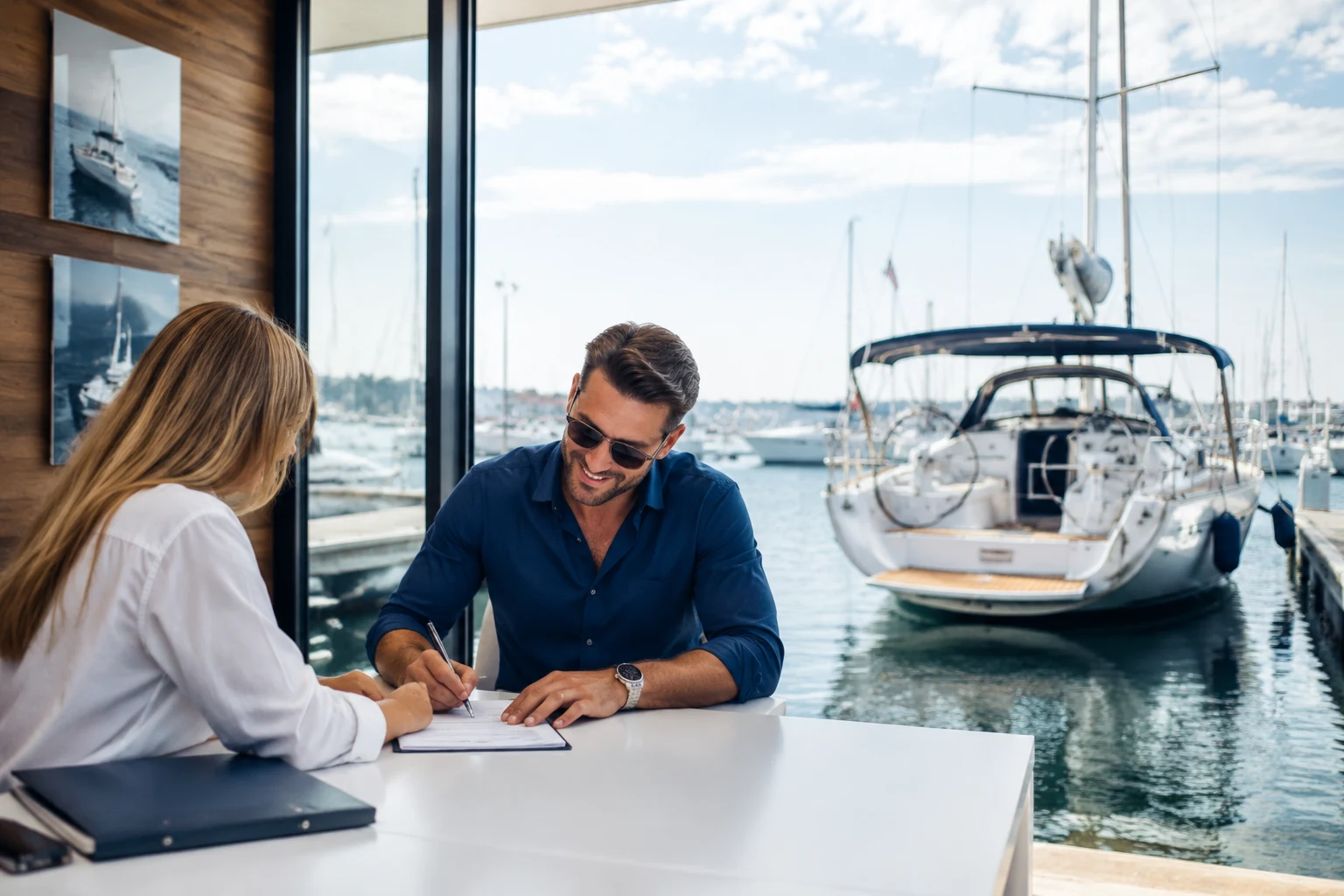
Start by assessing your charter type, yacht value, destination, and risk tolerance. A bareboat charter puts more responsibility on you than a skippered or crewed charter, so the coverage you need will differ. A higher-value yacht or a cruising ground with tricky anchorages, like the British Virgin Islands or the Ionian, may justify a more comprehensive policy.
Compare third-party insurers against the charter base's own waiver. The base waiver is convenient and often cheaper, but it may only reduce your liability rather than eliminate it, and it can exclude damage to sails, rigging, or the dinghy. A standalone yacht charter deposit insurance policy from a third-party insurer frequently offers broader coverage for a similar or slightly higher cost.
Review exclusions, claim limits, and the claims process. Some policies exclude damage caused by negligence, while others require you to report damage before the charter ends. Check whether the policy pays the base directly or reimburses you after you pay, and note any per-claim caps that could leave you exposed.
Top Insurance Providers for Yacht Charter Deposit Protection
Several specialized insurers underwrite charter deposit policies, including Pantaenius, Oyster, and AXA Schenke among others. These providers offer annual and single-trip plans specifically designed to cover deposit loss on both monohulls and catamarans.
Check with your charter broker or management company first. Reputable brokers maintain vetted lists of insurers and can confirm whether a provider is accepted by your specific charter base.
Filing a Claim: The Yacht Charter Deposit Insurance Claim Process
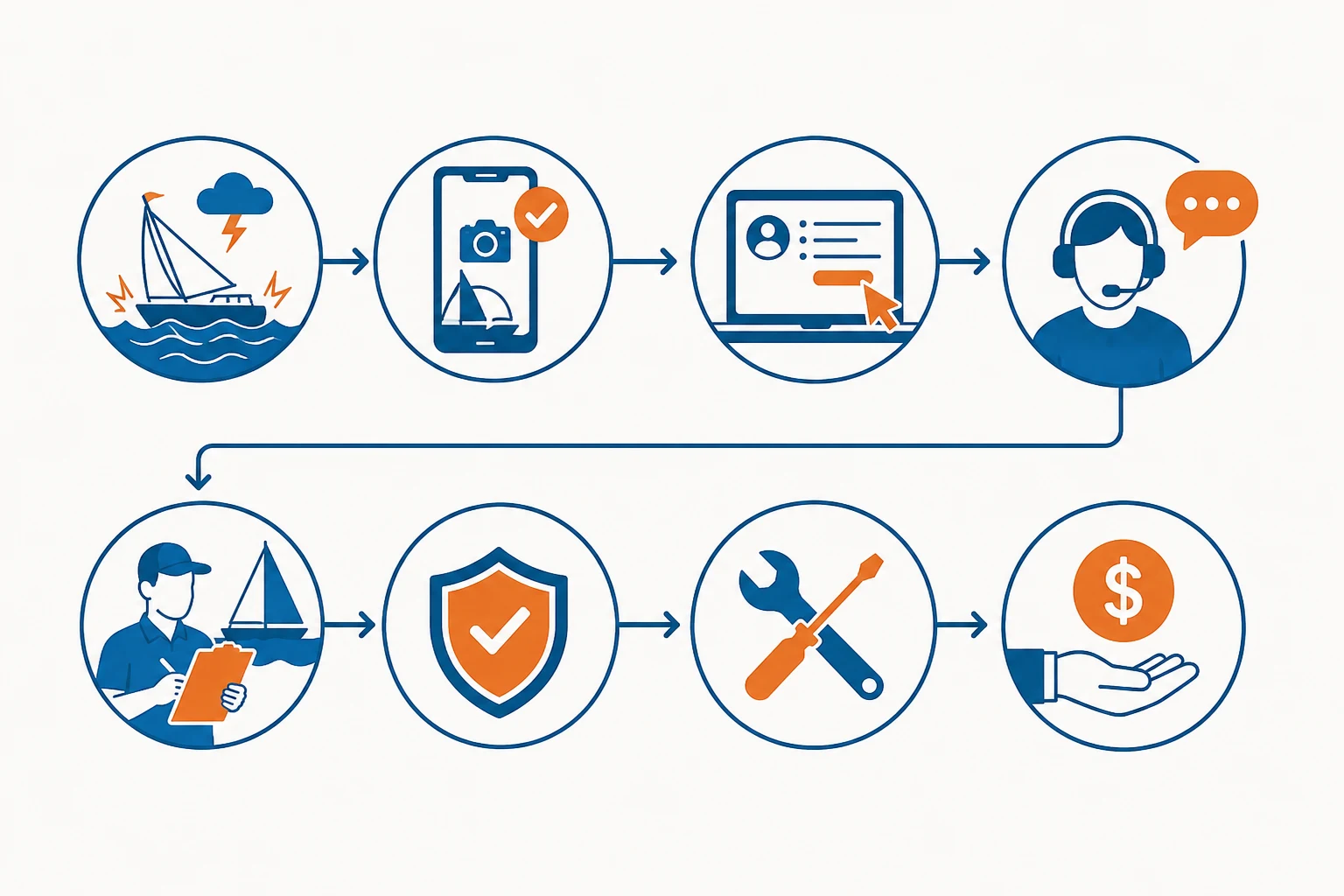
Notify your insurer as soon as the charter base withholds your deposit. Most policies set a strict reporting window, often 14 to 30 days after the charter ends, so a prompt notification protects your right to reimbursement.
Gather the core documents before filing: the signed yacht charter agreement, the charter vessel damage assessment from the base, receipts for any repairs, and proof of deposit payment. Photographs taken at check-out strengthen the file if the damage assessment is disputed.
A straightforward claim typically resolves in 2 to 6 weeks. Complex cases, such as those requiring a surveyor's report, can take longer.
The most common pitfall is filing without the base's written deduction invoice. Insurers will not process a claim on a verbal dispute. Send your claim by email with read receipt, and keep every document in one folder so you can resubmit quickly if the insurer requests clarification.
Legal and Financial Protection: What Charterers and Companies Should Know
Deposit insurance operates alongside, not instead of, the charter contract and the base's marine insurance policy. The charter agreement defines your liability for damage, the security deposit terms, and the notice periods that apply. Marine insurance covers the vessel itself; deposit insurance covers your exposure under the contract.
Charter brokers arrange the booking and should disclose the base's damage policy, but they do not carry liability for vessel damage. The yacht owner's liability is typically limited to the terms in the charter contract, which is why the deposit clause matters.
Force majeure clauses can complicate deposit recovery. If a storm or port closure prevents the charter from starting, the contract usually determines whether you receive a refund or a credit. Maritime law generally applies to the charter agreement's governing jurisdiction, so check which country's law controls the contract before you book.
Yacht Charter Deposit Insurance Trends and Tips
Digital policy management is now the industry standard. Most yacht charter deposit insurance providers offer instant online quotes, mobile apps for filing claims, and real-time policy documents rather than mailed paperwork. Look for insurers that let you upload damage photos and the base's deduction invoice directly from your phone before you leave the marina.
AI-powered claims processing is shortening settlement times from weeks to days in many cases. Insurers use automated systems to cross-check damage reports against policy terms, flagging straightforward claims for fast approval while routing complex ones to human adjusters.
New global standards are pushing insurers toward clearer, more uniform exclusion language. The International Group of P&I Clubs guidance and updated EU consumer protection rules are pressuring providers to simplify negligence clauses and standardize notification deadlines.
To maximize coverage, buy an annual policy if you plan more than one charter per year. It costs more upfront but typically undercuts single-trip premiums by 30-50%.
Avoid the common pitfall of assuming a damage waiver and deposit insurance are interchangeable. A waiver covers one booking with one base; deposit insurance follows you across destinations and charter companies.
Frequently Asked Questions
Can yacht charter deposit insurance cover damage caused by the charterer or crew?
Yes, accidental damage caused by the charterer or crew is typically covered under a deposit insurance policy. Intentional acts and gross negligence are excluded, so deliberate damage or reckless behavior will not be reimbursed. Review the specific policy wording for limitations on crew coverage and excluded activities before you sail.
Is yacht charter deposit insurance mandatory for luxury yacht or superyacht charters?
It is not universally mandatory, but many luxury and superyacht operators require a deposit waiver or insurance as a booking condition. Some contracts will not be confirmed until you provide proof of coverage or pay a non-refundable waiver fee. Always check your charter contract to see what the operator specifically requires.
What is the 12 person rule on a yacht?
Most yachts are licensed for up to 12 guests, and exceeding this limit can reclassify the vessel under stricter maritime regulations. Crossing that threshold changes the legal status of the yacht, which impacts insurance requirements, safety equipment, and crew certification. For charterers, staying at or below 12 guests keeps your deposit coverage valid and the voyage legal.
How does yacht charter deposit insurance differ from a damage waiver?
Deposit insurance reimburses your deposit if the charter company withholds it for damage or loss. A damage waiver limits or removes your liability for a non-refundable fee, meaning you pay upfront to cap your financial exposure. Waivers are often arranged directly with the charter base, while deposit insurance is a separate policy you purchase independently.
What should I do if my deposit is withheld unfairly?
Document the yacht's condition and any disputes before leaving the marina, including photos, videos, and written notes. Contact your insurer with all supporting evidence to initiate a claim as soon as you receive the deduction notice. Most policies have strict time limits for reporting, so do not delay filing.
Can I combine cancellation and deposit insurance for my charter?
Yes, many providers offer bundled policies covering both cancellation and deposit risks in one package. This gives you protection if you must cancel the trip and if the charter company withholds your deposit for damage. A combined policy is usually more cost-effective than buying two separate coverages.
Are there annual deposit insurance policies for frequent charterers?
Yes, some insurers offer annual deposit insurance plans for charterers who sail multiple times per year. These policies cover every charter you book during the policy year, which may offer cost savings compared to buying single-trip coverage each time. Frequent sailors should compare annual premiums against their expected number of charters.
What are the three main types of yacht insurance coverage?
Hull and machinery insurance covers physical damage to the vessel, third-party liability covers damage or injury to others, and deposit/damage waiver insurance protects your security deposit. Charterers should consider all three for comprehensive protection, since a bareboat contract typically requires the first two while deposit coverage is optional.
The deposit you hand over at check-in is the single largest financial risk of your charter, and it is fully recoverable only if the boat comes back undamaged. Deposit insurance converts that risk into a predictable, small cost. Before you book, compare the base's damage waiver against a standalone policy from an insurer like Pantaenius or AXA Schenke, and check the exclusions and claim window in writing.
If you charter more than once a year, an annual policy is the cheaper route and covers every trip automatically. File any claim within the stated window, attach the damage report and the base's deduction invoice, and expect resolution in two to six weeks.