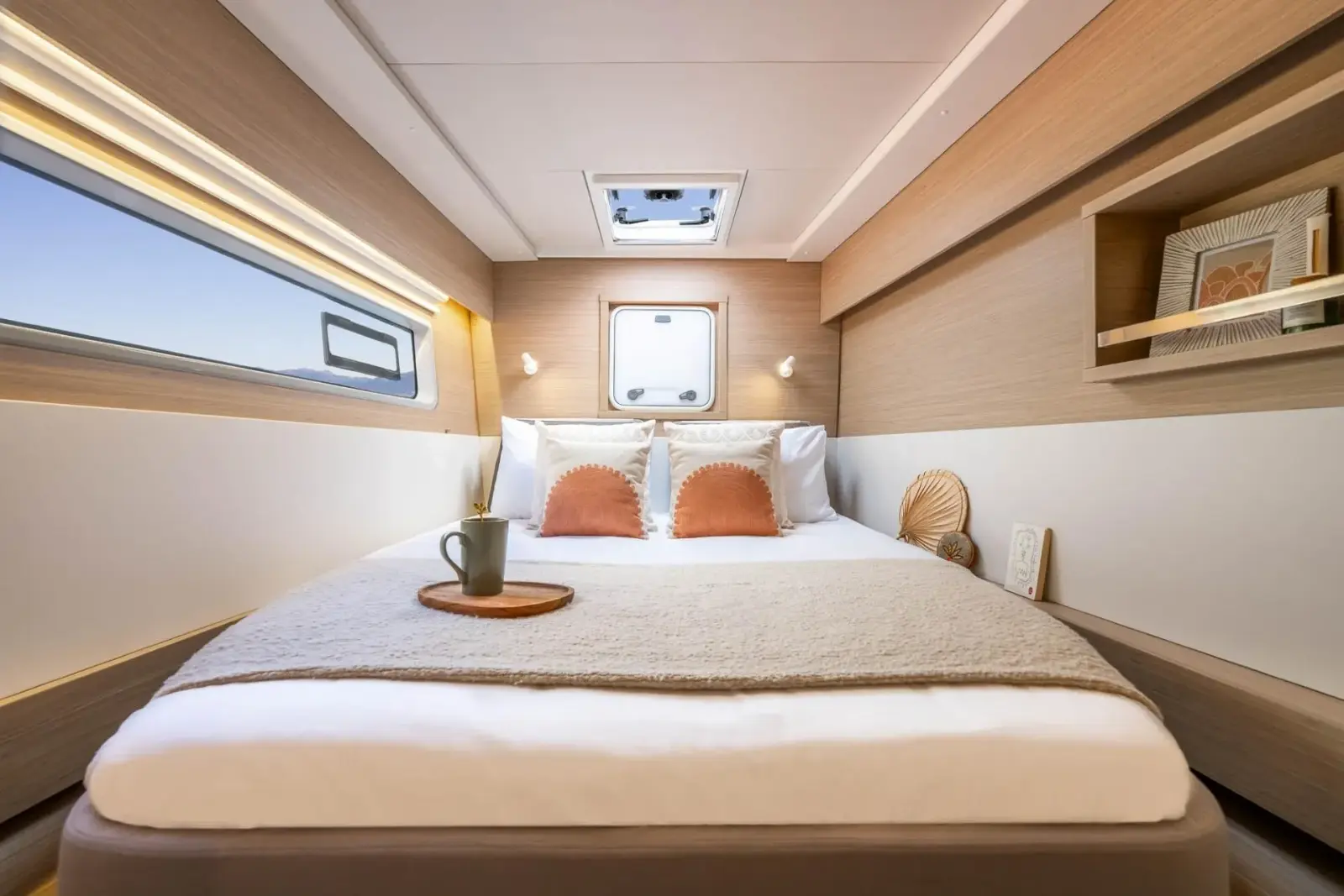
A yacht cabin is an enclosed sleeping and living space on a yacht, while a berth refers to the specific bed or sleeping spot within a cabin or other area on board. Sailing yachts offer various cabin and berth layouts to suit different group sizes and comfort needs. This guide covers yacht cabins explained and yacht berths explained in practical terms, so you can match the right boat to your crew before you book.
What Is a Yacht Cabin—and How Is It Different From a Berth?
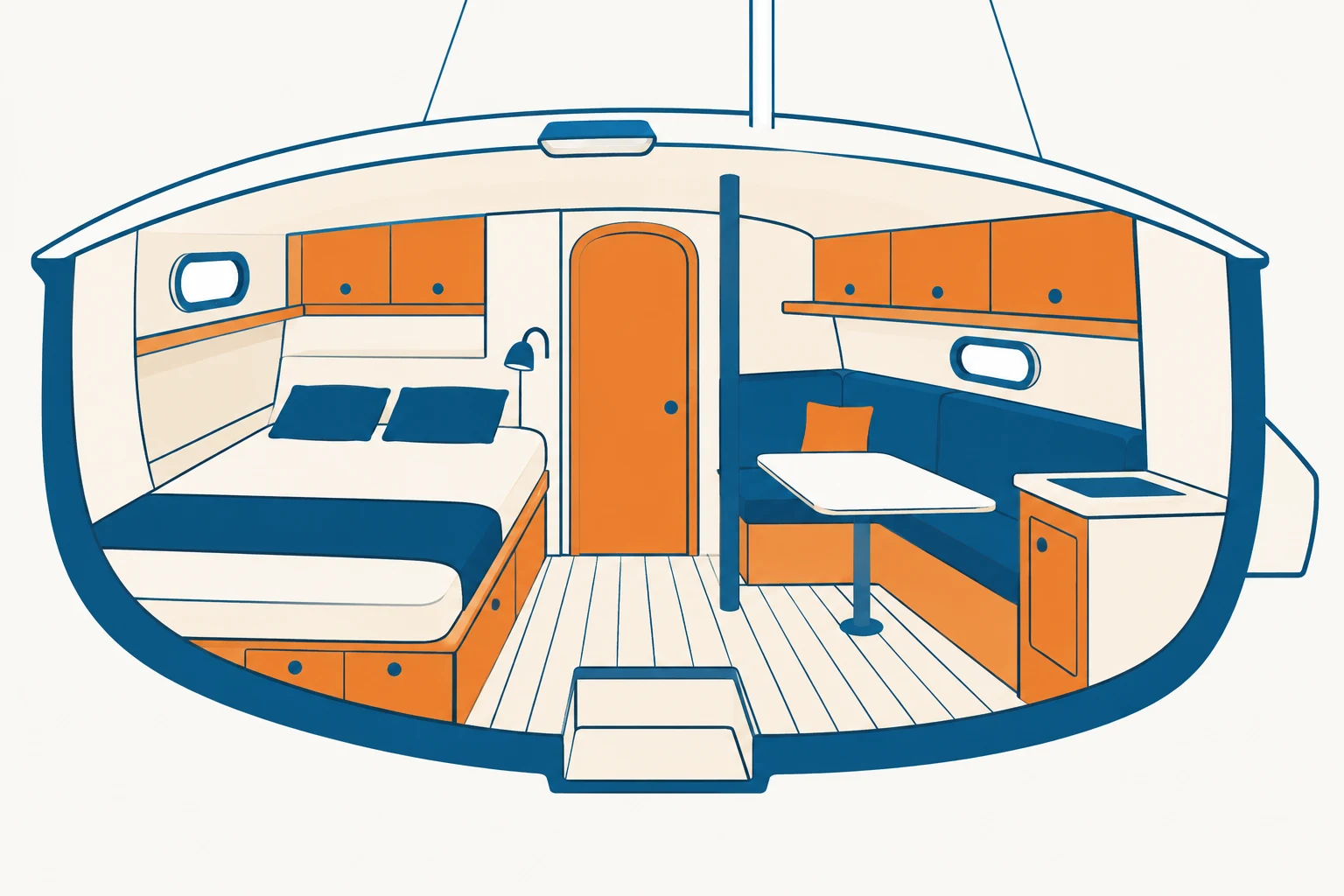
A yacht cabin is a private or semi-private enclosed space designed for sleeping, dressing, and storing personal gear. On a sailing yacht, cabins are typically located below deck and are separated from the saloon and galley by doors or companionways.
A berth is the actual bed or sleeping spot within that cabin, or in some cases, outside it. The saloon settee on many monohulls converts into a berth, and some boats have quarter berths tucked under the cockpit. When a charter listing says "sleeps 8," it means there are eight berths, not necessarily eight separate cabins.
The distinction matters for charter planning. A boat with four cabins might have six or eight berths because some cabins hold two berths or a convertible saloon berth. When you read a spec sheet, count berths for sleeping capacity and cabins for privacy.
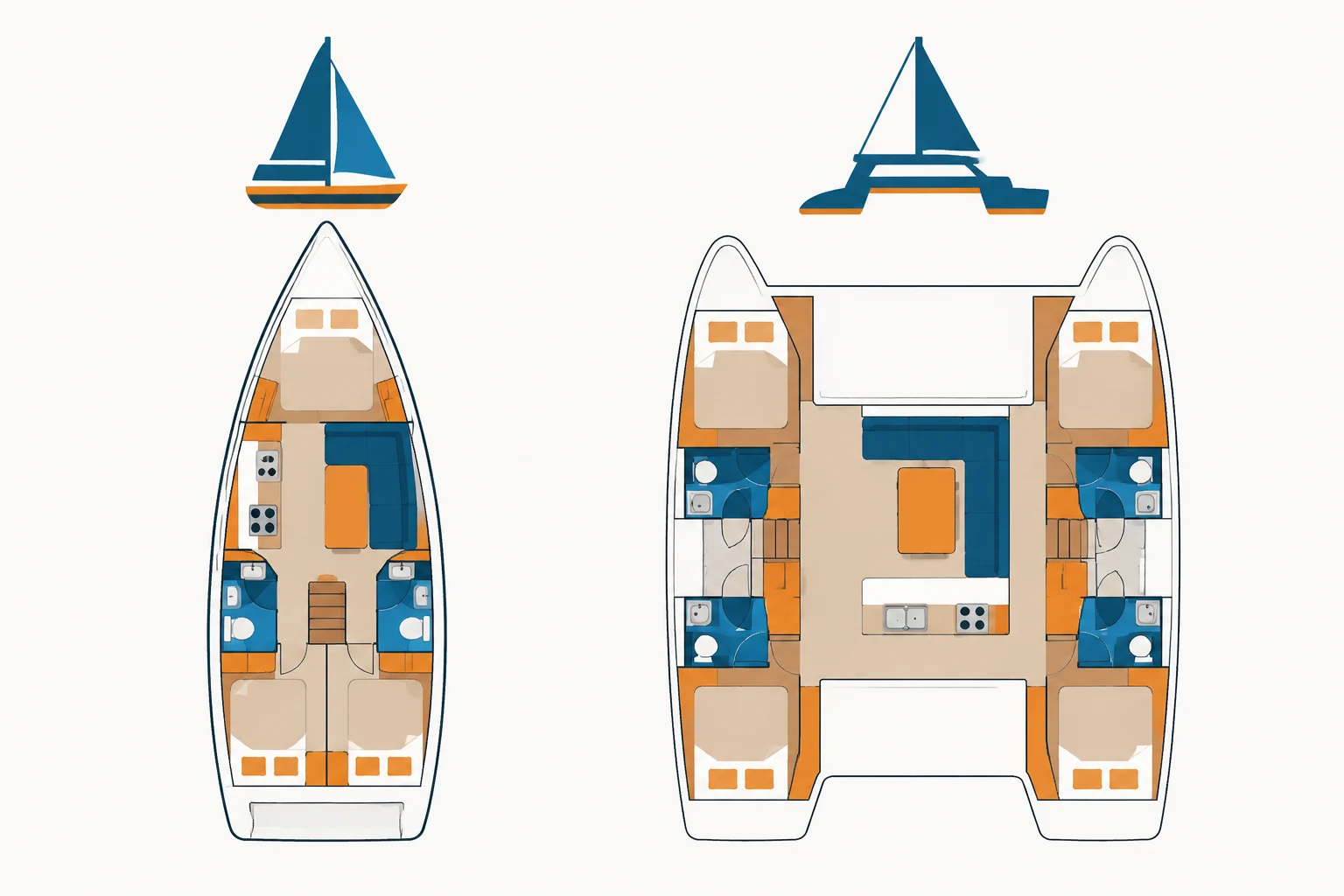
A typical 40-foot monohull has two or three cabins: a forward cabin with a double berth, and one or two aft cabins with either double or twin berths. A 40-foot catamaran usually has four cabins, each with a double berth, plus two saloon berths in some models.
Types of Yacht Cabins and Berths: Layouts and Features
| Cabin Type | Berth Arrangement | Key Amenities |
|---|---|---|
| Master Cabin | Double, King | Ensuite, Desk, Sofa |
| VIP Cabin | Double, Queen | Ensuite, Storage |
| Guest Cabin | Twin, Bunk | Ensuite, Storage |
| Crew Cabin | Bunk, Single | Shared Head, Storage |
| Pullman Berth | Fold-down single | Minimal, Compact |
| V-Berth | V-shape double | Storage, Hatch |
| Aft Cabin | Double, Twin | Storage, Access |
| Forepeak Cabin | Single, Storage | Sail storage |
Sailing yacht cabins fall into a few standard types. The master cabin is the largest, usually with a double berth and ensuite bathroom. A VIP cabin is a second cabin close to the master in size and comfort, often with its own head. Double cabins have one large berth for two people, while twin cabins have two separate single berths. Bunk cabins stack berths vertically, common in crew quarters or family boats.
Monohulls place cabins in the bow and stern, with the saloon in the middle. The V-berth forward is a classic double berth that narrows toward the bow. Catamarans spread cabins across two hulls, giving each cabin more width and often a true queen or king berth without the tapering of a monohull's bow.
Standard features include a berth with a mattress, storage lockers or drawers, a small hanging locker, and a reading light. Most charter boats have an ensuite bathroom in at least the master cabin, with other cabins sharing a head. Ventilation comes from opening portholes, hatches, and sometimes a 12-volt fan.
The terms stateroom, cabin, and suite are often used interchangeably on sailing yachts. A stateroom is a larger, more finished cabin, typically the master or VIP. A suite implies an attached sitting area or extra space, which is rare on sailing yachts. On a charter monohull or catamaran, "stateroom" usually just means a nicer cabin.
Special configurations add flexibility. Convertible berths turn a saloon settee into a double or twin bed. Pullman beds are upper berths that fold down over a lower berth or settee, common in crew cabins. Interconnecting rooms have a door between two cabins, useful for families who want proximity without sharing a single room.
Crew quarters are usually separate from guest cabins on crewed charters. The crew cabin sits forward or aft of the guest areas, often smaller and with bunk berths. On bareboat charters there is no crew, so all cabins are available to guests.
How Many People Can Sleep in a Yacht Cabin?
Occupancy depends on the berth type. A double cabin sleeps two, a twin cabin sleeps two in separate berths, and a bunk cabin sleeps two in stacked berths. Some cabins add a Pullman berth to sleep a third person, usually a child.
Families often book a twin cabin for kids or use a convertible saloon berth for extra children. Comfort limits matter: a cabin designed for two feels cramped with three.
Legal limits also apply. International regulations cap most charter yachts at 12 guests regardless of how many berths exist. This rule covers all people sleeping on board, so a boat with 14 berths is still restricted to 12 guests on a commercial charter.
Choosing the Right Yacht Accommodation for Your Charter
| Feature | Monohull Cabins | Catamaran Cabins |
|---|---|---|
| Space | Less | More |
| Privacy | Good (separate cabins) | Excellent (separate hulls) |
| Stability at Sea | More heel, rocking | Less heel, stable |
| Headroom | Often limited | Generally good |
| Natural Light | Smaller ports | Larger windows, bright |
| Storage | Compact | Ample |
| Layout | Centralized, shared | Distributed, independent |
| Noise | Engine/waves more noticeable | Engine/waves less noticeable |
| Cost | Generally lower | Generally higher |
| Families | Cozy, close | Spread out, kids' space |
| Couples | Intimate, traditional | Private, luxurious |
| Friends | Good for close groups | More personal space |
| Large Groups | Can feel cramped | Ideal, multiple zones |
Group size drives the first decision. A couple can manage a two-cabin monohull, while two couples usually prefer a catamaran with four cabins so each pair gets a private bathroom. A group of six to eight friends needs a boat with enough separate cabins to avoid sharing, which usually means a catamaran or a large monohull.
Charter type also shapes your needs. On a bareboat charter, you sail the boat yourselves, so cabin layout matters less than storage and cockpit space. On a skippered charter, the crew needs their own quarters, which reduces the number of guest cabins available.
Destination affects comfort. In the Mediterranean, summer heat makes good ventilation and a cockpit bimini critical, so cabins with multiple opening hatches are worth seeking out. In the Caribbean, trade winds do much of the cooling, but afternoon squalls mean you want hatches that close securely. In higher latitudes, cabin insulation and a heating system matter more than airflow.
Monohulls and catamarans differ in comfort and privacy. A catamaran's cabins are in separate hulls, so noise from the saloon and galley stays isolated. Monohull cabins cluster around the saloon, so sound carries more easily. Catamarans also offer more headroom and wider berths, but monohulls often have better sailing performance and lower charter costs.
Storage is the practical issue: charter sailors live out of duffels, so look for drawers, shelves, and hanging lockers near each berth. Marine bedding should be quick-drying and breathable, since dampness is a constant issue on the water. Ensuite bathrooms reduce morning congestion on a full charter.
Accessibility is a real concern on sailing yachts. Most cabins require climbing down a companionway ladder, and catamaran cabins are easier to reach than monohull bow cabins. Some newer charter catamarans offer a master cabin on the main deck, which suits guests with limited mobility. Ask the charter broker specifically about access if anyone in your group has physical limitations.
Seasonal factors change the equation. High-season charters in the Mediterranean run hot, so boats with air conditioning and good shade are worth the premium. Marina facilities matter too: some ports have limited shower facilities, making a good onboard ensuite more valuable.
What Features Define a Luxury Yacht Cabin?
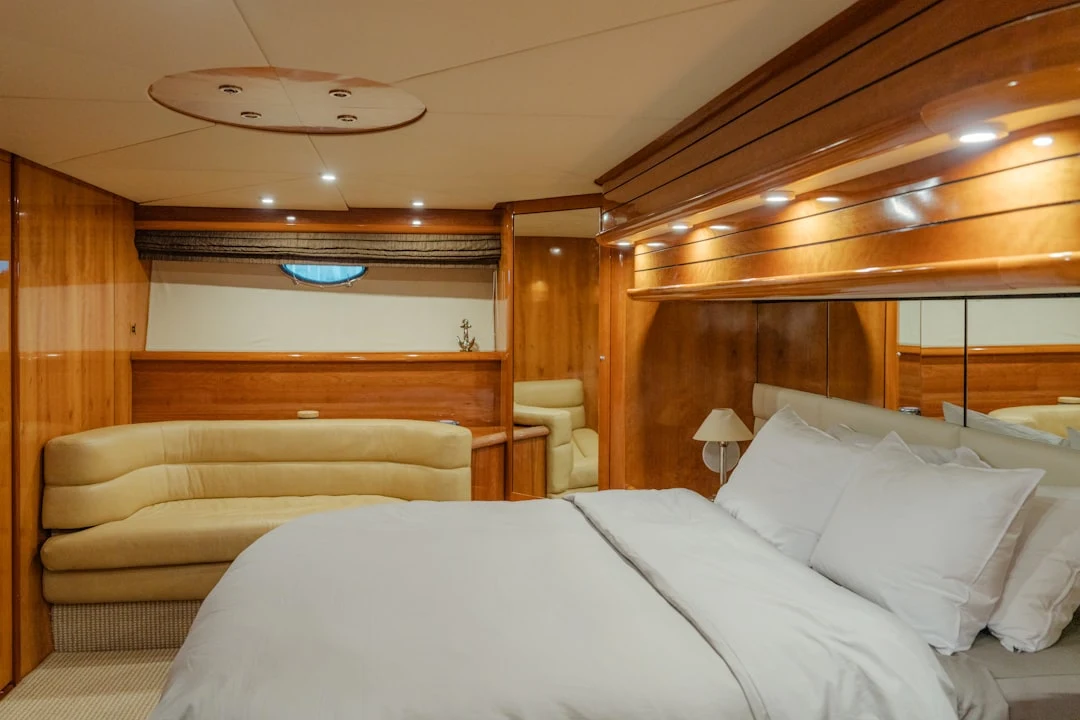
A luxury sailing yacht cabin goes beyond a bed and a locker. The defining features are an ensuite bathroom with a separate shower, high-quality marine bedding, and reliable climate control. Premium boats add reading lights at each berth, USB and 12-volt charging ports, and a small desk or vanity.
The master cabin on a luxury catamaran often occupies the full beam of one hull, with a walk-around queen berth, a settee, and a large bathroom. VIP cabins on these boats are nearly as generous. On a luxury monohull, the master stateroom sits aft with its own head and shower, while guest cabins share a second bathroom.
Advanced amenities include air conditioning, which is essential in tropical charter grounds, and entertainment systems with speakers in each cabin. On a sailing charter, most guests care more about a comfortable mattress and a quiet cabin than a screen.
Luxury features raise the charter price noticeably. A boat with air conditioning, full ensuites, and premium bedding costs more per week than a comparable boat with shared heads and opening hatches.
Frequently Asked Questions
Do all sailing yachts have private cabins?
Most charter sailing yachts have private or semi-private cabins, but smaller or older boats may offer shared spaces like saloon berths or open bunk areas. Always confirm cabin arrangements before booking. A 30-foot boat may have one small cabin, while a 45-foot catamaran typically has four private cabins.
What is a master stateroom on a yacht?
The master stateroom is the largest, most luxurious cabin on a yacht, typically located in the bow or stern for maximum space and privacy. It usually features a larger bed, an ensuite bathroom, and extra storage compared to guest cabins. On catamarans, the master stateroom often spans the full width of one hull.
How are yacht berths designed for comfort and safety?
Marine bedding, secure frames, lee cloths, and ventilation enhance sleeping comfort and safety at sea. Lee cloths keep sleepers from rolling out of berth when the boat heels. Yacht designers prioritize accessible storage and noise reduction for restful sleep, especially on longer passages.
What does 'cuddy cabin' mean in sailing yachts?
A cuddy cabin is a small, partially enclosed space, usually found on smaller sailboats, offering basic shelter and sleeping for 1-2 people. It sits forward of the mast and typically has a V-berth and minimal headroom. It lacks the full amenities of larger yacht cabins, like a separate bathroom or standing room.
What is the 12 person rule on a yacht?
International regulations limit most private and charter yachts to a maximum of 12 guests for safety and certification reasons. This includes all people sleeping on board, regardless of cabin or berth arrangements. Boats carrying more than 12 passengers must meet stricter commercial passenger vessel standards.
Start your boat search with a clear head count and a privacy requirement, then filter listings by cabin count and berth type. A catamaran with four double cabins suits two couples or a family, while a monohull with a V-berth and two aft cabins works for a smaller crew. Confirm the berth layout and the 12-guest limit with your charter broker before you sign.