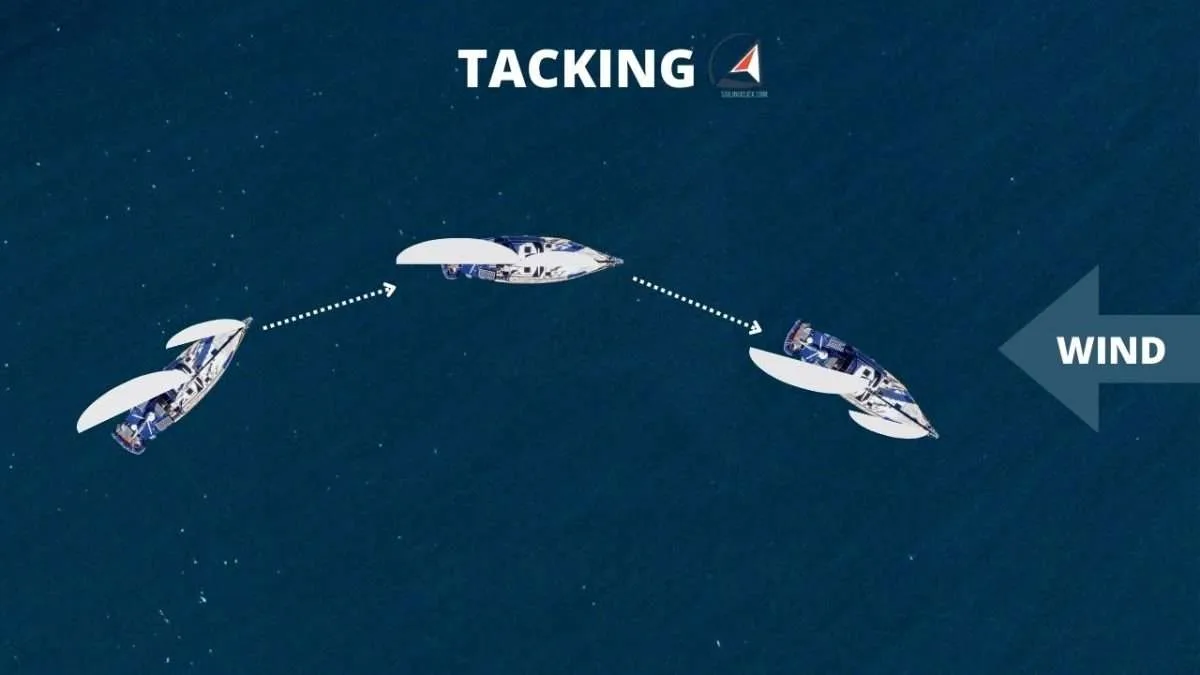
Tacking and jibing are the two ways a sailboat changes the side from which it receives the wind: a tack turns the bow through the wind, while a jibe turns the stern through the wind. Tacking is usually slower and more controlled; jibing can be faster but needs careful sail control because the boom crosses with force.
The fundamental difference lies in which end of the boat passes through the wind. During a tack, the bow (front) of the boat turns into and through the wind direction. The sails lose power temporarily as they pass through the no-sail zone, then fill on the opposite side. During a jibe, the stern (back) of the boat turns through the wind. The sails remain powered throughout most of the maneuver, and the boom swings across the boat as the wind shifts from one side to the other.
Think of it this way: tacking means turning toward the wind, while jibing means turning away from it. If you are sailing upwind and want to change direction, you tack. If you are sailing downwind and want to change direction, you jibe.
The wind angle determines which maneuver you use. Tacking occurs when sailing close to the wind (close-hauled or beating). Jibing occurs when sailing with the wind behind you (running or broad reaching). You cannot choose freely between them; your current point of sail dictates the appropriate maneuver.
How to Tack a Sailboat
Preparation makes tacking smooth and safe. The helmsperson should announce "ready to tack" or "prepare to tack" so the crew can position themselves and prepare the jib sheets. The crew member handling the jib should have the working sheet (the one currently under tension) in hand and the new sheet ready to pull.
When everyone is ready, the helmsperson calls "tacking" or "helm's alee" and pushes the tiller away (or turns the wheel toward the wind). The boat begins to turn into the wind. As the bow crosses through the wind, the jib will start to luff and then back. The crew releases the old jib sheet and pulls in the new one on the opposite side.
The helmsperson continues the turn until the boat settles on the new tack at the desired angle to the wind. The crew trims the jib to match the new course, and the helmsperson adjusts the mainsheet if needed. The boat should accelerate smoothly as the sails fill on the new tack.
Speed through the tack matters. If you turn too slowly, the boat may lose momentum and stall in irons (head to wind with no forward motion). If you turn too quickly, the boat may overshoot the desired angle. A smooth, steady turn at moderate speed works best in most conditions.
How to Jibe Safely
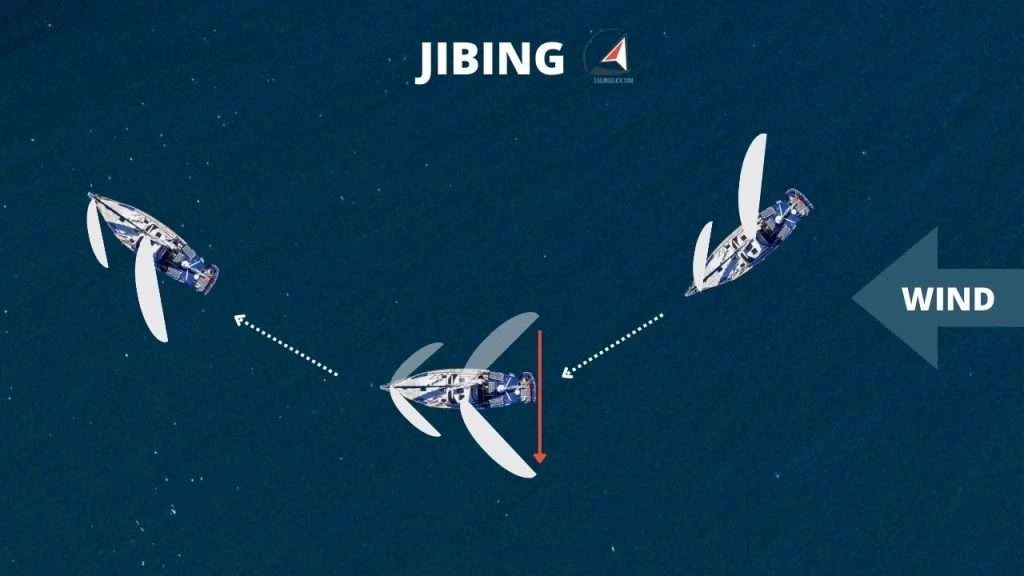
Jibing requires more attention to sail control than tacking because the boom moves with considerable force. Before starting the maneuver, check that the area around the boom is clear and that all crew members know the jibe is coming. Choose your moment carefully; jibing in strong winds or large waves increases risk.
The helmsperson announces "prepare to jibe" and begins a gradual turn away from the wind. As the boat turns, the crew or helmsperson pulls in the mainsheet to bring the boom toward the centerline. This controlled movement prevents the boom from slamming across when the wind shifts to the other side.
As the stern passes through the wind, the mainsail will flip to the opposite side. The crew immediately eases the mainsheet in a controlled manner to let the boom out on the new side. The jib (or spinnaker, if flying) is then trimmed for the new course. Throughout the maneuver, the helmsperson maintains steady steering to prevent the boat from rounding up into the wind.
A controlled jibe keeps the boom movement manageable. Pulling the mainsheet in before the wind shifts across the stern reduces the distance and speed the boom travels. Some sailors prefer to jibe in slightly lighter air or to bear away to a deeper angle before jibing to reduce the apparent wind speed.
Common Mistakes and Safety Tips
Accidental jibes pose the greatest danger. An unplanned jibe occurs when sailing downwind and the stern inadvertently crosses through the wind, often due to inattention or a wind shift. The boom can swing violently across the boat, potentially injuring crew or damaging equipment. To prevent accidental jibes, maintain awareness of wind direction and keep the boat under control when running downwind.
Clear communication prevents confusion and mistakes. The helmsperson should always announce maneuvers before executing them, giving the crew time to prepare. Crew members should acknowledge commands and report when they are ready. On boats with multiple crew, assigning specific roles (jib trimmer, mainsheet handler) reduces the chance of tasks being overlooked.
Practice both maneuvers in moderate conditions before attempting them in challenging weather. Start with tacking, which is more forgiving, then progress to jibing once you feel confident with boat handling. As conditions become more demanding, the techniques remain the same, but timing and precision become more critical.
Keep your head low and watch for the boom during both maneuvers. The boom moves across the boat during a tack (though usually with less force) and always during a jibe. Crew should stay seated or crouched when crossing the cockpit and should never stand directly in the boom's path.
Maintain control of the sheets at all times. A sheet that runs free can tangle, jam, or cause the sail to flog violently. Keep at least one wrap on the winch when handling loaded sheets, and never let a sheet slip through your hands without controlling its speed.
FAQ
What is the difference between tacking and jibing?
Tacking turns the bow of the boat through the wind, while jibing turns the stern through the wind. Tacking is used when sailing upwind, and the sails lose power temporarily during the turn. Jibing is used when sailing downwind, and the sails remain powered throughout the maneuver. The boom crosses the boat with more force during a jibe than during a tack.
Is jibing more dangerous than tacking?
Jibing carries more risk than tacking because the boom swings across the boat with greater force. The mainsail remains powered during a jibe, which means the boom can move violently if not controlled properly. Tacking is generally safer because the sails lose power as they pass through the wind, resulting in less force on the boom. Proper technique and communication make both maneuvers safe.
Which maneuver should beginners practise first?
Beginners should practise tacking first. Tacking is more forgiving because the boat slows down during the maneuver, giving the crew more time to complete each step. The reduced force on the boom and sheets makes tacking easier to control. Once a beginner can tack confidently and smoothly, they should progress to jibing under supervision in light to moderate winds.