
A yacht charter security deposit is a refundable sum held by the charter company to cover accidental damage, equipment loss, or contract breaches during your rental period. The full amount is refunded when the yacht is returned in the agreed condition, minus any deductions for verified damage or outstanding costs.
It is usually blocked on a credit card or held in escrow until a post-charter inspection confirms the boat, its gear, and its systems are intact.
Deposit amounts vary widely by vessel size, location, and charter type, and understanding what is covered can help you avoid unexpected charges at the end of your trip.
What is a yacht charter security deposit and why is it required?
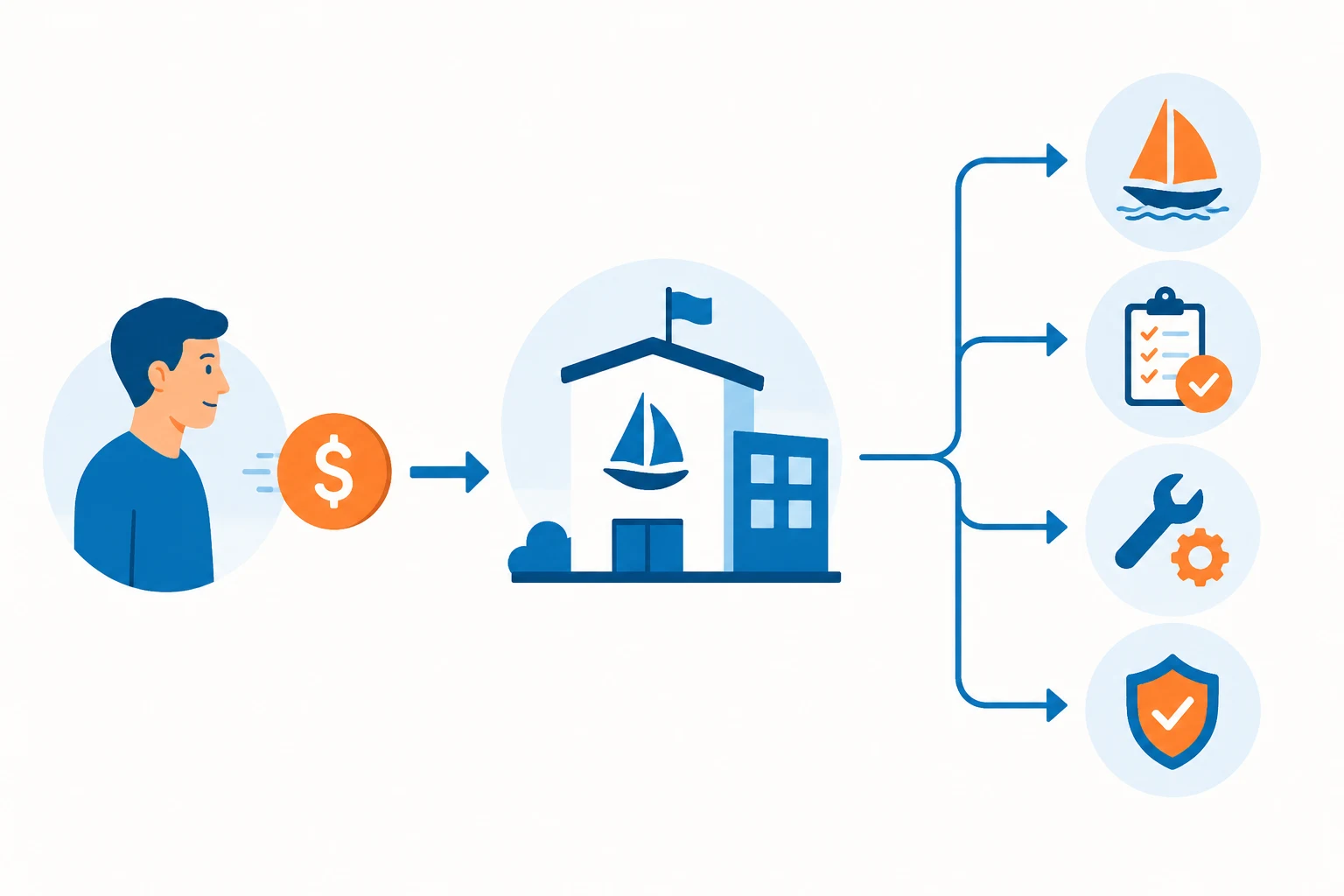
A yacht charter security deposit is a refundable sum paid before embarkation to cover potential damage, loss, or incidental charges during the charter period. It is released after a post-charter inspection confirms no deductible-level damage or outstanding fees exist.
This deposit protects owners and operators from costs tied to guest-caused damage, excessive wear, or policy violations that standard marine insurance excludes. Standard hull policies typically do not cover minor scrapes, lost equipment, or deep cleaning fees.
A commercial yacht security deposit covers these gaps on crewed vessels where passengers are not operating the boat themselves. Passengers on these voyages remain liable for negligent behavior that harms fixtures or equipment.
Charter structure changes the deposit size and terms. A bareboat charter security deposit is usually the highest because the renter assumes full responsibility for navigation, mooring, and daily operation.
Luxury and superyacht charters may treat the deposit as a distinct charter yacht damage deposit, sometimes folded into an advance provisioning allowance, often paired with detailed inventory checks and crew-signed condition reports.
Situations that trigger deposit use include damage to sails, hull scrapes, broken appliances, lost dinghies or water toys, late return fees, and major fuel shortfalls. The deposit may also cover extraordinary cleaning costs if the vessel is returned in poor condition.
A thorough check-in and check-out process with signed documentation determines whether any funds are retained.
How much is a yacht charter security deposit? (by yacht type, charter type & destination)
| Yacht Type | Charter Type | Destination | Season | Security Deposit (USD) |
|---|---|---|---|---|
| Bareboat | Sail/Catamaran | Mediterranean | High | $2,000 - $5,000 |
| Bareboat | Sail/Catamaran | Mediterranean | Low | $1,500 - $3,500 |
| Bareboat | Sail/Catamaran | Caribbean | High | $1,500 - $4,000 |
| Bareboat | Sail/Catamaran | Caribbean | Low | $1,000 - $3,000 |
| Bareboat | Sail/Catamaran | US (e.g., Florida) | All | $1,500 - $4,000 |
| Bareboat | Power | Mediterranean | High | $3,000 - $7,000 |
| Bareboat | Power | Caribbean | High | $2,500 - $6,000 |
| Crewed | Sail/Catamaran | Mediterranean | All | $5,000 - $20,000+ |
| Crewed | Sail/Catamaran | Caribbean | All | $4,000 - $15,000+ |
| Crewed | Motor Yacht | Mediterranean | All | $10,000 - $50,000+ |
| Crewed | Motor Yacht | Caribbean | All | $8,000 - $40,000+ |
| Superyacht | All | Mediterranean | All | 10-20% of Charter Fee |
| Superyacht | All | Caribbean | All | 10-20% of Charter Fee |
| Superyacht | All | US | All | 10-20% of Charter Fee |
A yacht charter security deposit typically ranges from €2,000 to €5,000 for bareboat monohulls and catamarans, €5,000 to €15,000 for crewed luxury yachts, and €50,000 to over €200,000 for superyacht charters. The exact amount depends on the vessel's value, cruising destination, and whether the deposit is held independently or rolled into an advance provisioning allowance.
Bareboat charters carry the highest deposit relative to weekly charter fees because the renter assumes full operational liability. A boat rental security deposit for a 40-foot cruising yacht in the Mediterranean usually falls between €2,500 and €4,000. High-performance catamarans or vessels over 50 feet can require €5,000 to €8,000, with some operators adding supplemental deposits for outboard motors and water toys.
Crewed and luxury yacht charter deposits are generally calculated as a percentage of the base charter rate or folded into the APA. A luxury yacht charter deposit for a 100-foot vessel often runs between €10,000 and €25,000. On superyachts over 150 feet, the superyacht charter deposit may equal 10 to 25 percent of the weekly rate, frequently topping €100,000 and occasionally exceeding €250,000 for vessels above 80 meters.
Destination and season directly influence these figures. Mediterranean ports in July and August typically demand higher security amounts than Caribbean charters during low season. Yacht management companies in Greece and Croatia often standardize bareboat deposits, while Tahiti and Southeast Asia operators may set amounts based on local repair costs and limited parts availability.
Several operational factors can adjust the final number. Limited sailing experience, large guest counts, longer charter durations, and opting out of damage waiver insurance can all push the deposit upward. Some fleets also increase the hold for events such as regattas or when pets are aboard.
Currency and payment methods vary by region. Most European operators quote the yacht charter security deposit in euros and require a pre-authorization on a Visa or Mastercard. Larger superyacht charter deposits are usually settled via wire transfer in US dollars or euros.
Reputable brokers and management firms hold funds in an escrow account rather than transferring them directly to the owner. This practice ensures the money remains available for refund once the post-charter inspection is complete and any disputes are resolved.
What does the security deposit cover, and what deductions are common?
A charter yacht damage deposit covers guest-caused damage to the hull, rigging, and onboard equipment, plus financial losses from late returns, major fuel shortfalls, or extraordinary cleaning. The yacht charter agreement defines these charterer liabilities and yacht owner responsibilities, listing exactly what costs can be deducted before any refund is issued.
Typical covered scenarios include hard contact with docks or reefs, torn sails, broken appliances, and lost items such as dinghies, paddleboards, or galleyware. Grounding incidents are among the most expensive common claims against bareboat deposits.
The charter party contract sets the threshold for retaining funds and the timeline for returning the balance. Deductions require documented evidence from the check-out report, usually supported by photographs and signed acceptance from both parties. Reputable operators itemize each charge rather than applying blanket withholdings.
Common deductions include repairs for deck scratches, upholstery stains, or electronics water damage. Missing fenders, lines, or water toys also trigger retention. Crewed charters may bill against the deposit for deep-cleaning galley spills, removing pet hair from non-pet-friendly interiors, or deodorizing smoke-affected cabins.
Unfilled fuel tanks and late returns are the most frequent avoidable charges. Late fees often apply hourly or daily beyond the charter window. Unfilled diesel, petrol, or generator tanks are charged at premium marina rates plus a service fee.
Disputes typically arise when charterers claim damage existed before embarkation. Resolution relies heavily on the signed check-in checklist and pre-charter photographs. A torn sail from an accidental jibe or a scratched hull from a tight marina maneuver are common sources of disagreement.
If parties cannot reconcile differences, escrow holders or charter brokers mediate before funds release. For larger sums, independent marine surveyor assessments or arbitration under the yacht charter agreement's governing law provide the final determination.
Review every line of the yacht charter agreement before signing. Photograph the vessel thoroughly at embarkation and clarify fuel and cleaning standards in writing to minimize the risk of unexpected deductions.
Refund process and dispute resolution
Deposits are refunded within seven to fourteen days after the charter ends, provided the post-charter inspection finds no damage or unpaid fees. If you disagree with a deduction, challenge it in writing immediately with the signed check-in report and pre-charter photos. The charter broker mediates between guest and owner, while unresolved disputes may proceed to arbitration under the maritime law yacht charter clause.
The refund timeline for the yacht charter security deposit is separate from the charter cancellation policy, which governs forfeiture if you cancel before embarkation. Most brokers release funds once both parties sign the check-out report. Wire transfers may take longer than credit card reversals.
How to protect your security deposit: insurance, damage waivers & best practices
You can protect your yacht charter security deposit with a damage waiver yacht charter plan, deposit insurance, or a yacht charter insurance deposit policy. Before boarding, photograph every existing scratch and verify the check-in inventory. During the charter, stay within licensed limits, brief guests on rules, and report incidents immediately. Attend check-out and resolve discrepancies before signing the release.
A damage waiver yacht charter option converts your refundable deposit into a smaller non-refundable premium and caps your liability for accidental damage. Yacht charter insurance deposit products from third-party providers reimburse you if the owner withholds funds for an eligible claim. Standard yacht insurance carried by the owner does not cover guest negligence or minor losses, which is why the separate security deposit exists.
The skipper bears primary responsibility for navigation decisions, weather routing, and logbook accuracy. Crew and guests must follow safety protocols and handle all equipment carefully. Their negligent behavior, such as dragging a dinghy or flushing prohibited items, is charged against the deposit.
Understand how these payments differ. The yacht charter security deposit is your cash held as collateral. An Advance Provisioning Allowance is an expense account for fuel and provisions, not damage coverage. Yacht insurance protects the owner against hull and liability losses, but the charterer remains exposed to the owner's deductible unless separate coverage is arranged.
Frequently Asked Questions
Is a yacht charter security deposit refundable?
Yes, a yacht charter security deposit is normally fully refundable when the vessel is returned in the agreed condition with no damage, losses, or breaches of the charter contract. Deductions may be taken for any damage to the yacht or its equipment, missing inventory, or violations of the charter terms.
What is the difference between a security deposit and an APA for yacht charter?
A yacht charter security deposit covers physical damage or equipment loss and is normally refundable if the vessel is returned without incident. The APA, or Advance Provisioning Allowance, is a separate fund for operational costs such as fuel, food, and port fees and is reconciled at the end of the charter.
Can you get insurance for a yacht charter security deposit?
Yes, charterers can purchase yacht charter security deposit insurance or damage waiver products that cover partial or full loss of the deposit due to covered incidents. Premiums and coverage limits vary by provider, the value of the yacht, and the charter location, so it is important to compare policies before booking.
Do all yacht charters require a security deposit?
Most yacht charters require a refundable security deposit, though some operators offer a non-refundable damage waiver as an alternative. Superyacht and luxury charters may use different financial structures or require significantly higher deposits to account for the increased value of the vessel and its contents.
How much is a normal tip for a yacht charter crew?
The standard gratuity for yacht crew is typically 10 to 20 percent of the base charter fee, depending on service quality and local customs. Tips are paid separately from the security deposit, usually in cash or arranged through the charter broker at the end of the voyage.
What is the 12 person yacht rule?
International maritime regulations generally limit commercial yachts to a maximum of 12 passengers plus crew under standard passenger vessel codes. This rule directly affects charter eligibility, vessel certification, and insurance terms, meaning yachts that want to carry more than 12 guests must comply with stricter safety and construction standards.
What are yacht charter deposit deduction disputes and how are they resolved?
Deduction disputes are resolved according to the specific terms outlined in the signed charter contract, often with the charter broker acting as an intermediary between the charterer and the owner. If the parties cannot reach an agreement, the dispute may proceed to formal maritime arbitration or the legal jurisdiction specified in the agreement.
Before you sign a charter agreement, confirm the exact security deposit amount, the hold mechanism, and the conditions for deductions.
Request a detailed check-in checklist and photograph every cabin, deck, and equipment item to create a dated record.
If the deposit exceeds your comfort level, compare the cost of a damage waiver against third-party deposit insurance.
Read the charter contract's liability clauses carefully, noting whether fuel, cleaning, or late fees are treated separately or deducted from the same deposit.
After disembarking, stay for the full check-out survey and obtain written confirmation of no damages before you leave the marina.
Taking these steps minimizes disputes and ensures you recover your funds promptly.