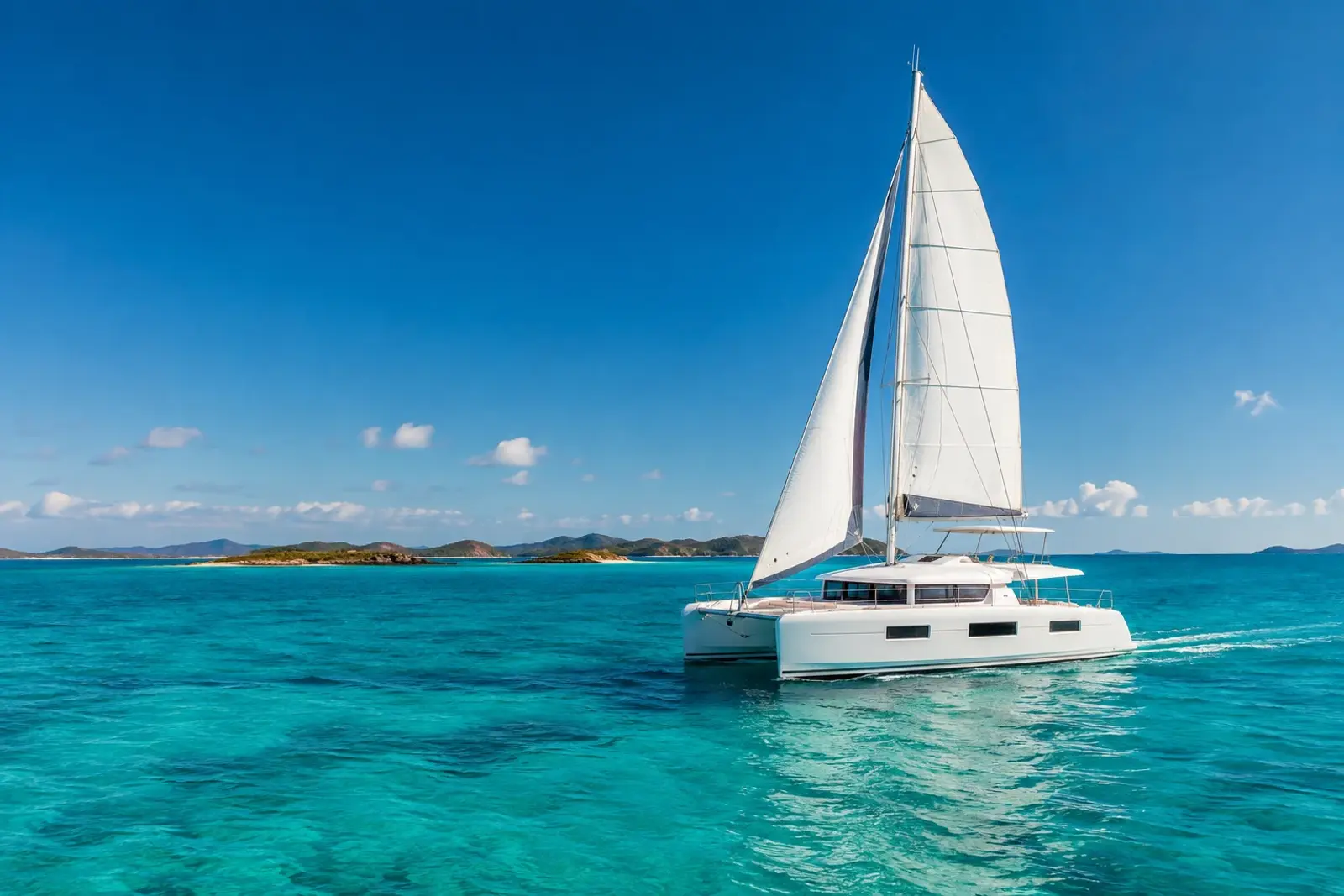
Choosing the right yacht for charter comes down to four decisions: your group size, the sailing experience you want, your destination, and your budget. Lock those in, and the rest of the selection process falls into place. This yacht charter guide walks you through each step, from yacht type to contract, so you can book with confidence.
The core choice is monohull versus catamaran, then bareboat versus crewed. A couple can happily bareboat a 38-foot monohull, but eight people need a catamaran or a larger monohull, likely with a skipper and cook. Budget and preferred dates narrow the field further, especially if you want peak season in the Mediterranean or Caribbean. Here is how to choose a yacht for charter without the guesswork.
Yacht Charter Guide: How to Start Your Planning
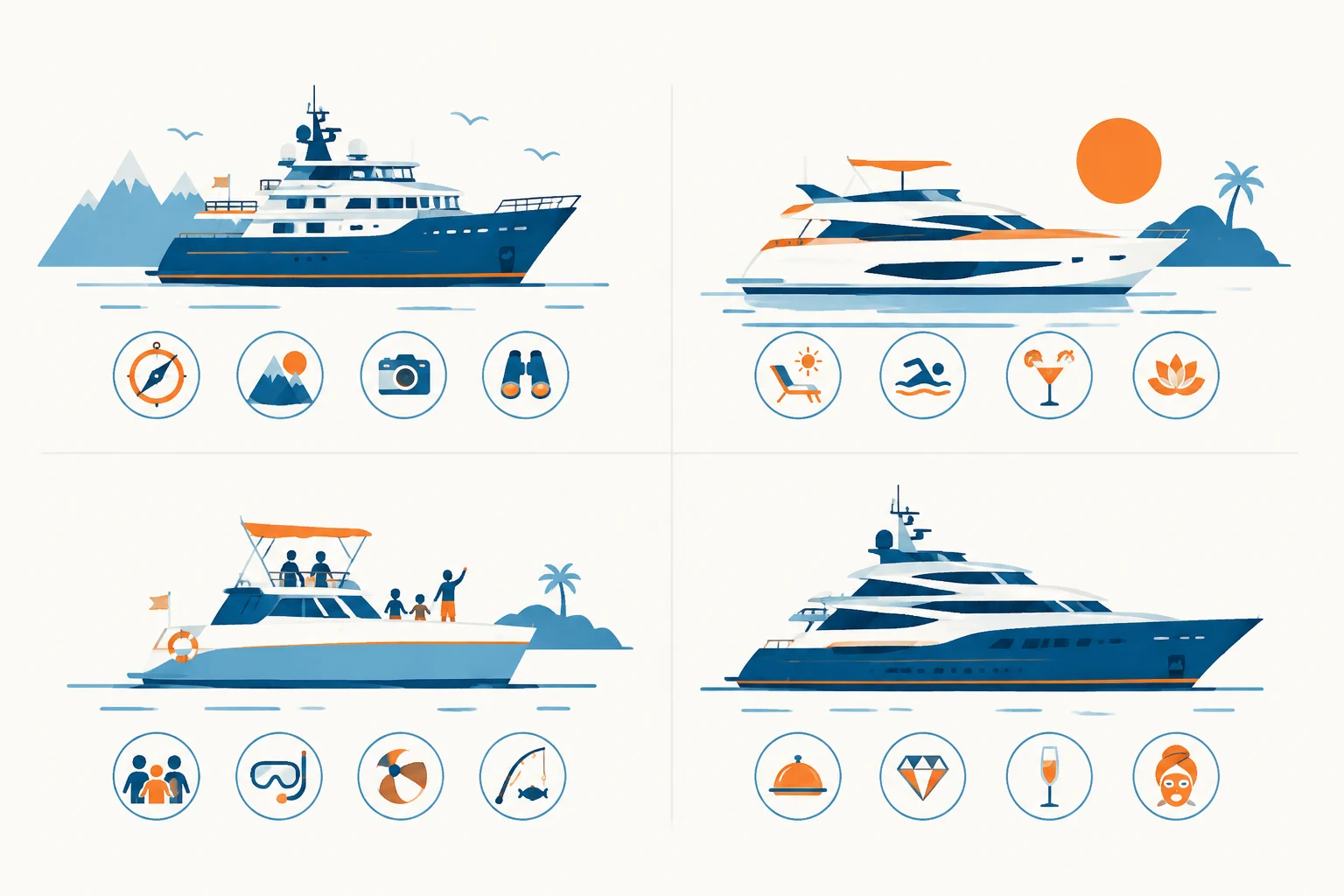
A private yacht charter planning session starts with one question: what do you actually want from the trip? Relaxation, adventure, family time, or a mix of all three changes the boat you book.
Group size is the next filter. A couple can charter a 38-foot monohull and handle everything themselves. A group of eight needs a catamaran or a larger monohull, and likely a skipper and cook. Be honest about experience level too. If no one in your group can trim a sail confidently, budget for a skippered charter rather than a bareboat.
Set your budget and preferred dates before you look at specific yachts. High season in the Mediterranean or Caribbean can cost 30-50% more than shoulder months, and availability shrinks fast.
What Types of Sailing Yachts Can You Charter?
| Feature | Monohull | Catamaran |
|---|---|---|
| Space | Less | More |
| Comfort | Heeling, less deck space | Level, spacious deck |
| Sailing Exp. | Traditional, responsive | Stable, faster off-wind |
| Draft | Deeper | Shallow |
| Stability | Heeling, can roll | Very stable, less roll |
| Cost | Generally lower | Generally higher |
The two main hull configurations are monohulls and catamarans. A monohull is the classic sailing yacht: one hull, a deep keel, and a rig designed to heel when the wind fills the sails. A catamaran has two hulls bridged by a wide deck, which keeps it upright and stable at anchor.
Catamarans are the better choice for groups of six or more. Their beam translates into spacious salons, full-size galleys, and separate cabins with private heads. The flat, stable platform suits families with children, older guests, or anyone prone to seasickness. The tradeoff is sailing character: a catamaran feels more like a floating apartment than a responsive yacht.
Monohulls reward sailors who want the physical experience of sailing. They heel, they point higher into the wind, and they respond to every adjustment of the sails. A 40-50 foot monohull sleeps four to six comfortably, though cabins are narrower and storage is tighter than on a comparable catamaran.
Onboard amenities vary more by yacht age and owner fit-out than by hull type. A bareboat charter typically includes a fully equipped galley, refrigeration, cockpit dining, and basic navigation electronics.
Bareboat vs. Crewed Yacht Charter: Which Is Right for You?
A bareboat charter puts the yacht entirely in your hands. You act as captain and crew, handling navigation, sail trim, anchoring, and docking. To book one, you must hold a recognized sailing certification, such as an RYA or ASA qualification, and provide proof of equivalent sailing experience.
A crewed yacht charter includes a professional skipper and often a cook or hostess. This is the simplest way to charter a yacht for beginners. You can relax, enjoy the sailing, and leave the anchoring and night passages to the crew.
Bareboat charters reward sailors who want independence. The yacht is your own for the week, and you set the itinerary as you please. The trade-off is responsibility: you carry the burden of weather decisions and onboard safety.
Crewed charters work best for anyone who wants pure vacation time. They suit families with non-sailors, couples celebrating a milestone, and groups who prefer a chef's meals to galley duty.
Skill level is the deciding factor. If you hold a competent qualification and have recent helm time, go bareboat. If you are a competent sailor but your crew is not, a skippered charter lets everyone enjoy the trip without the pressure.
Choosing Your Destination and Charter Season
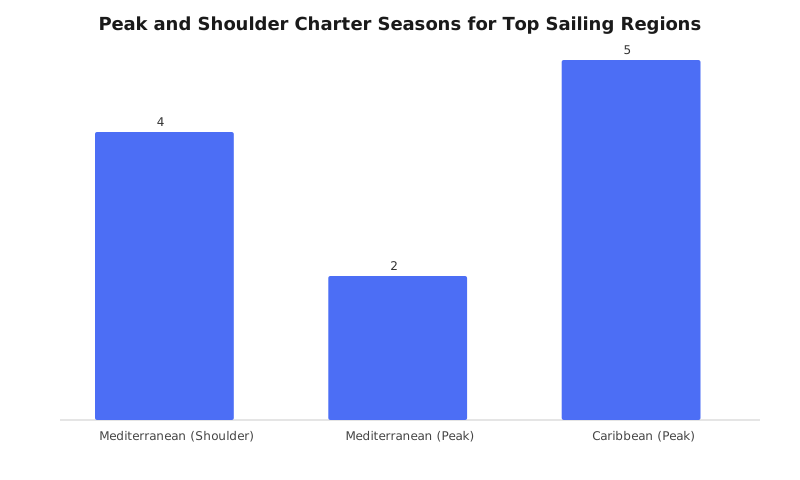
The two most popular sailing regions for yacht charters are the Mediterranean and the Caribbean, each with a distinct charter season. The Mediterranean runs from May to October, peaking in July and August, while the Caribbean is best from December to April, avoiding both hurricane season and the hottest, calmest months.
Wind patterns shape the sailing experience in each region. The Mediterranean offers reliable afternoon meltemi winds in Greece and the mistral in southern France. The Caribbean provides steadier trade winds from the east, typically 15-20 knots, which suit both monohulls and catamarans well.
Local regulations matter more than most first-time charterers expect. Croatia and Greece require a local license or sailing qualification beyond a standard RYA or ASA certificate, while the British Virgin Islands and other Caribbean bases are more relaxed for bareboat certification.
Match the destination to your group's interests as much as its weather. The BVIs suit social sailors who want a different anchorage and beach bar each night, while the Ionian in Greece offers lighter winds for less experienced crews. More seasoned sailors might prefer the stronger winds of the Cyclades or the downwind passages of the Leeward Islands.
How Much Does It Cost to Charter a Sailing Yacht?
| Item | Cost (USD) | Notes |
|---|---|---|
| Base Charter Fee | $15,000 | Yacht rental, crew |
| APA (Advance Prov.) | $4,500 | 30% of base fee |
| Taxes (VAT) | $2,250 | 15% of base fee |
| Provisioning | $1,000 | Food, drinks (estimate) |
| Fuel | $500 | Sailing yacht, less fuel |
| Dockage/Port Fees | $300 | Varies by itinerary |
| Water Toys Rental | $400 | Paddleboards, snorkel gear |
| Total Estimated | $23,950 | For a week-long charter |
A bareboat charter for a 40-foot monohull in the Mediterranean runs roughly $3,000 to $6,000 per week in high season, while a similar-sized catamaran costs $6,000 to $12,000. Crewed charters start around $15,000 per week and climb quickly with size and luxury.
The base charter fee covers the yacht, standard equipment, and basic insurance. On top of that, you pay an Advanced Provisioning Allowance (APA), typically 25-35% of the base fee, which is held by the charter company and used for fuel, food, dockage, and other operating costs. It is an advance, not a fee; unused funds are returned after the trip. For crewed charters, plan on a 15-20% gratuity for the skipper and cook, paid at the end.
Pricing shifts with season, size, and hull type. High season in the Mediterranean or Caribbean adds 30-50% over shoulder months. Catamarans cost more than monohulls of the same length because of their beam and cabin count.
For budgeting, treat the base fee as roughly half your total trip cost. A $5,000 bareboat week becomes about $7,000 with APA, taxes, and provisioning. A $20,000 crewed week becomes closer to $27,000 with APA and gratuity.
Key Factors to Consider When Selecting Your Yacht
Your group size is the first filter in yacht charter selection. A couple can sail a 38-foot monohull comfortably, but a group of eight needs a catamaran or a 45-foot-plus monohull, and likely a skipper and cook to manage the load.
Comfort and privacy needs shape the choice further. Families with children often prefer the stable platform of a catamaran, while couples chasing a physical sailing experience may accept a monohull's heeling and tighter quarters. If anyone in the group is prone to seasickness, the reduced motion of a catamaran is worth the trade-off in sailing feel.
Yacht amenities determine how the trip actually plays out. Standard bareboat charters include a fully equipped galley, basic navigation, and a dinghy. Decide early whether you need air conditioning, a generator, a watermaker, or onboard WiFi, since these are often optional or limited on older yachts.
Safety and yacht condition deserve as much attention as the onboard extras. Charter companies rotate yachts through maintenance schedules, so a newer build often signals better-maintained systems. Ask about the yacht's age, engine hours, and the last haul-out date. Verify safety gear, life raft, and radio equipment before you commit.
Match the yacht to the experience level of your crew. A bareboat charter demands confidence in anchoring, navigation, and boat handling; if your group lacks that, a skippered charter lets you enjoy the same yacht without the operational load.
Matching Yacht Features to Your Charter Experience
Once you have settled on hull type and crew model, rank the remaining features by what will matter most on board.
A group that plans long lunches at anchor should prioritize deck space, a shaded cockpit, and a table that seats everyone. A family with children might trade some sailing performance for cabin privacy, making en-suite heads and separate berths the deciding factors. Serious sailors will push equipment like a full-batten mainsail, a furling genoa, and a reliable autopilot to the top of the list.
The key trade-off in yacht charter selection is comfort against sailing performance. A boat loaded with AC, a generator, and a watermaker carries extra weight and moves more sluggishly. A lighter, simpler yacht sails better but offers fewer amenities for the group.
Write down your top three non-negotiable features before comparing boats. This turns a long equipment list into a clear shortlist and keeps the decision aligned with how you expect to spend the day.
Working with a Yacht Charter Broker
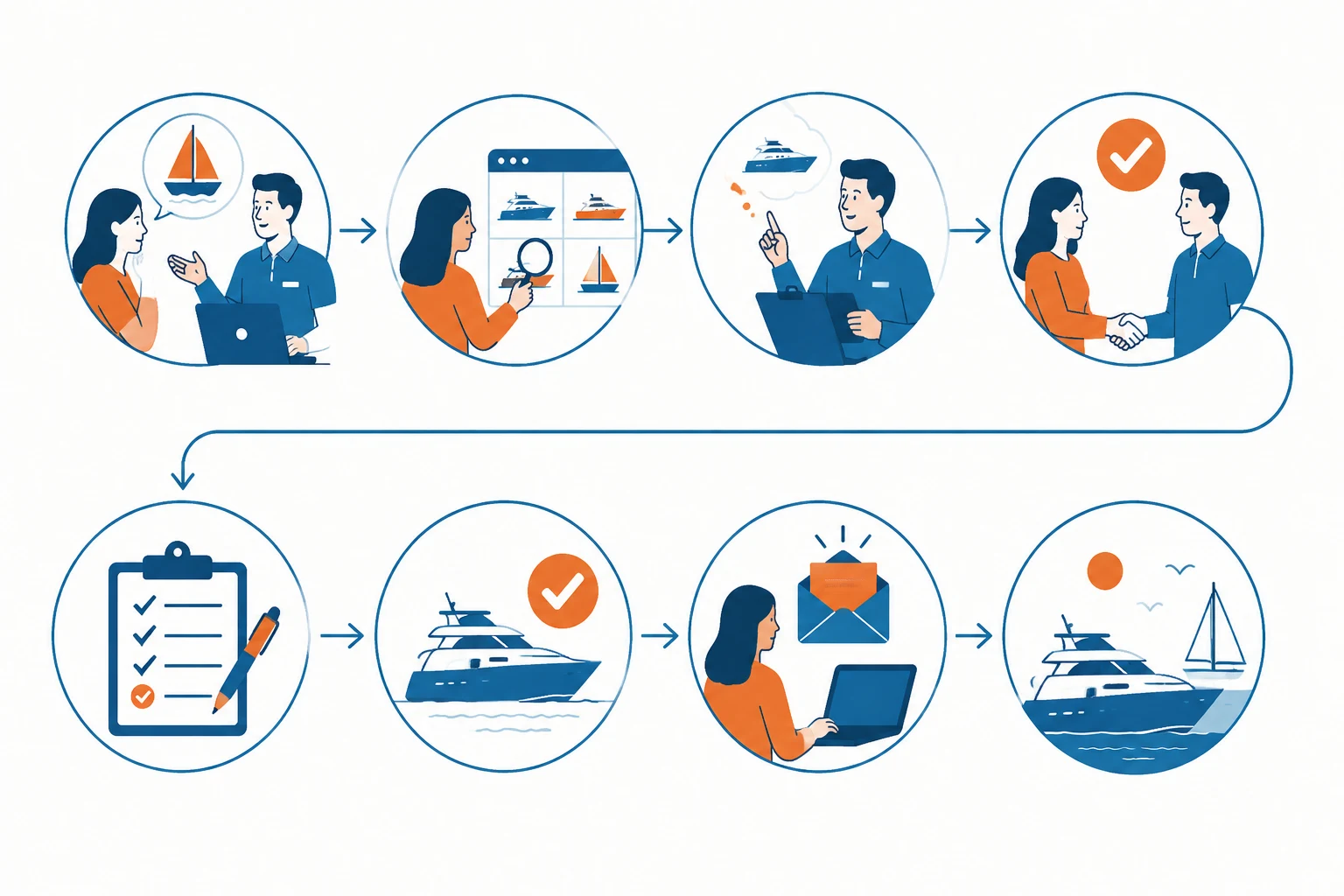
A charter broker acts as your agent in the booking process, matching you with the right yacht and negotiating the best terms. They have direct access to yacht listings, availability, and firsthand knowledge of vessels and crews that you won't find on public booking platforms. The service is typically free to you, as the broker's commission is paid by the yacht owner from the charter fee.
To get the most out of the relationship, ask your broker targeted questions before committing. Inquire about the yacht's age and maintenance history, the crew's experience and certifications, and what exactly is included in the base rate versus the APA. Ask for recent guest reviews or references, and clarify the cancellation policy and what happens if the yacht has mechanical issues mid-charter.
Before working with any broker, verify their credentials and reputation. Check if they are a member of a recognized industry association, such as the American Yacht Charter Association (AYCA) or the Mediterranean Yacht Brokers Association (MYBA). Read independent reviews on charter forums and Google, and confirm the broker has actually visited the specific yacht they are recommending.
The right broker simplifies private yacht charter planning by handling logistics, contracts, and local regulations, so your focus stays on the trip itself.
Understanding Charter Contracts, Insurance, and Regulations
The charter contract is a binding agreement between you and the yacht owner or charter company. Key terms to know include the charter period, payment schedule, cancellation policy, and the cruising area limits. The contract also defines the condition the yacht must be returned in, including fuel and water levels.
Insurance on a bareboat charter is not optional. The base charter fee typically includes third-party liability and hull insurance, but the deductible (security deposit) can be substantial, often $2,000-$5,000. You can usually reduce this deductible with a refundable deposit or by purchasing a separate waiver policy. Crewed charters generally carry their own insurance, but verify coverage before departure.
Charter regulations vary by destination. Croatia and Greece require specific sailing licenses, while the British Virgin Islands accepts a standard certificate of competence. Your responsibility begins before you step aboard: confirm your certifications meet local law, check the yacht's registration and safety equipment, and ensure your travel insurance covers medical evacuation and trip cancellation.
Planning Your Charter Itinerary and Onboard Experience
Build your charter itinerary as a flexible framework, not a fixed schedule. Work with your skipper or broker to map out cruising grounds, anchorages, and backup options based on wind forecasts. Leave at least one full day unplanned for weather delays, a favorite cove, or a spontaneous swim stop. Most charters cover 15-25 nautical miles per day, depending on conditions.
A typical day starts with a simple breakfast, a weather check, and a morning sail of 2-4 hours. Afternoons are for anchoring, swimming, paddleboarding, and exploring ashore. For yacht provisioning, most bareboat bases offer pre-order services where you specify quantities and dietary needs before arrival. Plan for one major meal per day ashore and simple onboard meals for the rest.
For smooth sailing, agree on communication basics early: morning radio checks, anchoring preferences, and watch schedules. Brief everyone on safety gear locations and the man-overboard procedure before departure.
Frequently Asked Questions
How far in advance should I book a yacht charter?
Book 6 to 12 months ahead for peak seasons or popular destinations like the Mediterranean in July or the Caribbean in winter. Early booking ensures the best yacht selection and pricing. Last-minute charters are possible, but you will have fewer boats to choose from and may pay a premium.
What amenities are typically included on a luxury sailing yacht charter?
Most include en-suite cabins, air conditioning, water toys, WiFi, and gourmet meals on crewed charters. Amenities vary by yacht, so confirm specifics with your broker. Ask about water toys like paddleboards or tenders, and whether alcohol or premium provisions are billed separately.
What questions should I ask a yacht charter broker?
Ask about yacht maintenance, crew experience, what's included, cancellation policies, and local regulations. Request references or reviews from previous clients. A good broker will also clarify the skipper's qualifications, the yacht's sailing performance, and any extra costs like fuel, dockage, or provisioning fees.
How to Choose a Yacht for Charter: Your Complete Guide
Choosing the right yacht for charter comes down to matching the boat to your group, your budget, and the sailing experience you actually want. Get those three filters right and the rest of the planning falls into place. Start with your trip goals, group size, and experience level, then work through hull type, crew model, destination, and contract details. A reputable broker simplifies the process, but the final decision is yours.