The ideal yacht size depends on your intended use, group size, budget, cruising range, and crew needs. Most private buyers choose yachts between 40 and 80 feet, while charters and luxury travel may require larger vessels for more amenities and comfort. This yacht size guide for business and commercial yacht size requirements also matters if you plan to operate commercially, since certification rules differ from private ownership.
Getting the size right affects everything from your daily running costs to which marinas you can enter and whether you need a professional skipper. Choose too small and you will feel cramped on a week-long trip. Choose too large and you may spend more time managing the boat than enjoying it.
How to Choose the Right Yacht Size: Key Factors Explained
| Use Case | Group Size | Experience Level | Recommended Yacht Size (LOA) |
|---|---|---|---|
| Private | 2-4 | Beginner | 30-50 ft |
| Private | 4-8 | Intermediate | 50-80 ft |
| Private | 8+ | Experienced | 80-150+ ft |
| Charter | 2-6 | Beginner | 40-60 ft |
| Charter | 6-12 | Intermediate | 60-100 ft |
| Charter | 12+ | Experienced | 100-200+ ft |
| Event | 10-30 | Any | 70-120 ft |
| Event | 30-100+ | Any | 120-300+ ft |
| Liveaboard | 1-2 | Beginner | 35-55 ft |
| Liveaboard | 2-4 | Intermediate | 55-80 ft |
| Liveaboard | 4+ | Experienced | 80-150+ ft |
Choosing yacht size starts with your primary purpose. A private weekend cruiser, a charter business, an event venue, and a liveaboard home all demand different lengths. A couple sailing locally can manage a 35-foot monohull, while a commercial charter operation needs enough cabins and deck space to justify its daily rate.
Group size is the next constraint. Count the maximum number of people who will sleep aboard, not just day guests. Each person needs a berth, storage, and head access. Comfort preferences matter too: some owners accept compact quarters, others want ensuite heads and a separate crew cabin. Trip duration shifts the math, since a boat that works for a weekend feels small after two weeks aboard.
Destination, season, and geography also influence the answer. The Mediterranean's crowded anchorages favor catamarans with shallow draft, while the Caribbean's open-water passages reward longer waterlines that track better in a seaway. Seasonal weather patterns, such as the Atlantic hurricane window, affect what size boat you can safely move and where you can keep it.
Experience level and crew requirements are a practical ceiling. A 40-foot sloop is manageable for a competent couple. A 70-foot yacht typically needs at least one paid skipper plus a deckhand or stewardess. If you are not prepared to hire crew, that sets a hard limit on size.
Yacht type and class change the equation independently of length. A 50-foot catamaran has roughly the interior volume of a 65-foot monohull but with a shallower draft and different sailing characteristics. Superyachts and megayachts, typically over 80 and 100 feet respectively, introduce professional crew, commercial-grade systems, and regulatory requirements that smaller vessels never face.
Safety, regulatory, and marina access constraints are the final filter. Many marinas cap berth length, and some anchorages have draft limits that rule out deep-keel yachts. Commercial operation triggers additional certification, safety equipment, and inspection requirements that add cost at any size.
Yacht Categories and Size Ranges
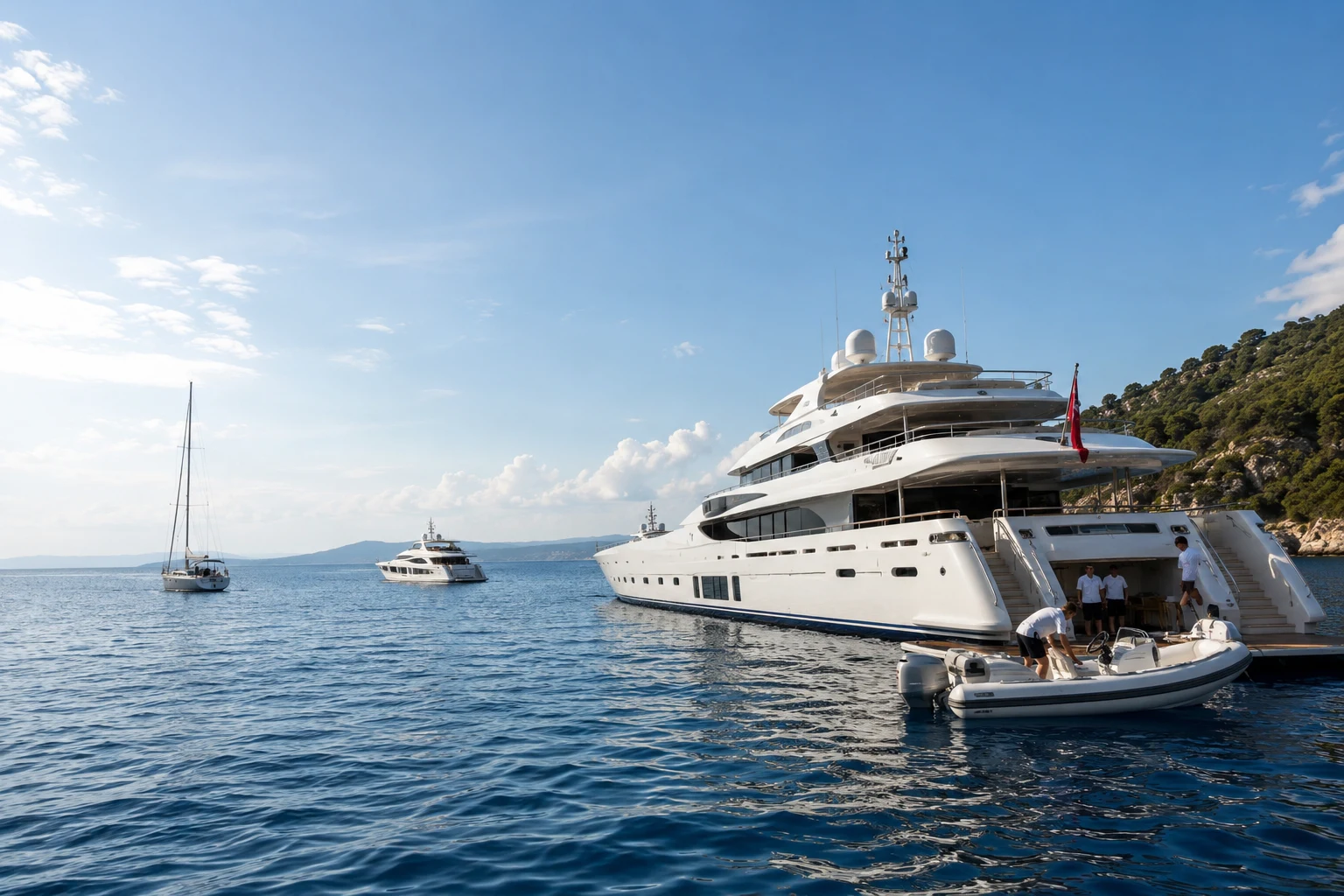
Small yachts run from roughly 30 to 50 feet and suit coastal cruising and weekend trips. Medium yachts span about 50 to 80 feet, offering multiple cabins and enough range for longer passages. Superyachts start around 80 feet, and megayachts exceed roughly 100 to 150 feet depending on the classification system used.
The practical takeaway from any yacht dimensions guide: each step up in category adds interior volume faster than it adds length, but it also adds crew, cost, and complexity. Most private owners stay in the small and medium ranges, where a couple or small family can operate the boat themselves.
How Yacht Size Affects Cost, Crew, and Ownership
Purchase price scales steeply with length. A new 40-foot production sailboat costs a fraction of a 60-foot semi-custom yacht, and the gap widens dramatically above 80 feet where fully custom builds dominate. Charter cost follows the same curve, since daily rates track the vessel's capital value, crew size, and fuel burn.
Financing options also differ by size. Banks readily lend on mid-size production yachts with active resale markets. Larger and more unusual vessels attract fewer lenders, higher rates, and larger down payments. Some buyers of superyachts use structured leases or fractional ownership instead of conventional loans.
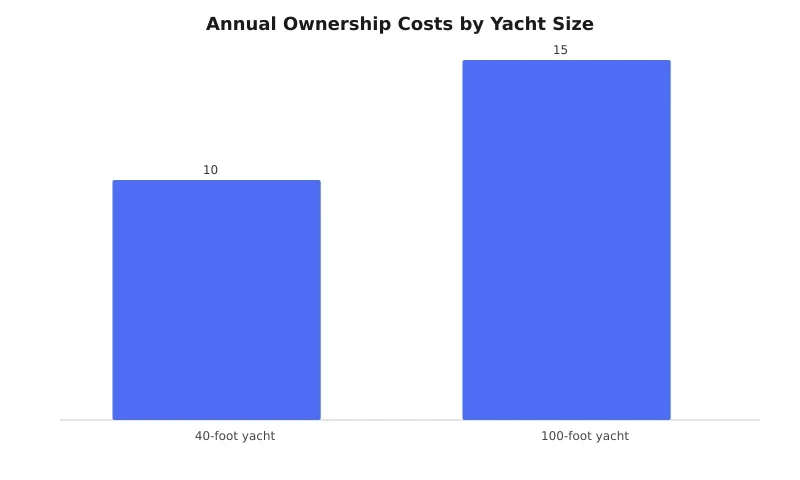
Ongoing costs scale faster than purchase price. Fuel, berthing fees, maintenance, insurance, and crew salaries all rise with length. A 40-foot yacht might cost 10 to 15 percent of its purchase price annually to run. A 100-foot yacht often costs more in absolute terms than the purchase price of a mid-size boat.
Yacht crew requirements are among the biggest cost drivers. A 50-foot yacht can operate with a couple or a single skipper. A 70-foot yacht usually needs two or three crew. Above 100 feet, expect a captain, engineer, stewardesses, and possibly a chef, each with salary, insurance, and provisions.
Resale value and depreciation trends favor mid-size yachts. The 40-to-80-foot range has the deepest buyer pool, which supports values and shortens time on the market. Very large yachts depreciate faster and can sit for years waiting for the right buyer, especially in soft economic periods.
Hidden and Long-Term Costs of Larger Yachts
Delivery services add a significant bill that first-time buyers overlook. Moving a 60-foot yacht across an ocean costs thousands in fuel, crew, and logistics, and that cost rises with length and distance. Refits, which happen every 5 to 10 years, also scale non-linearly with size.
Yacht insurance cost climbs with length because replacement value, liability exposure, and crew risk all increase. Regulatory compliance, from flag registration to commercial certification, adds inspection fees and equipment upgrades that grow with vessel size. The pattern is consistent: costs rise faster than length, so a 10 percent increase in size can mean a 20 percent increase in annual expense.
What Size Yacht Is Best? Scenarios and Recommendations
| Use Case | Size (Feet) | Key Features | Capacity |
|---|---|---|---|
| Family Trips | 30-60 | Comfortable, manageable | 4-8 |
| Luxury Charters | 80-150+ | Crewed, amenities | 8-12+ |
| Liveaboard | 50-100 | Spacious, storage | 2-6 |
| Events/Entertaining | 100-200+ | Large decks, lounges | 20-100+ |
For a couple sailing weekends and short cruises, 35 to 45 feet is the optimum yacht size. This range offers comfort, manageable sail handling, and the ability to run the boat without crew. For a family of four or five on a two-week charter, 45 to 55 feet provides enough cabins and storage without becoming a handful.
Groups of six to eight need 55 to 70 feet, especially if they want privacy and multiple heads. At this size, plan on hiring a skipper or having strong crew experience in the group. For groups of 10 to 12, look at 70 feet and up, or a catamaran, which offers more deck and cabin space per foot of length.
Charter vs private ownership changes the priority. A private owner optimizes for manageable sailing and low overhead. A charter operator optimizes for guest comfort, cabin count, and amenities that justify the daily rate. The same 50-foot yacht might be ideal for one and wrong for the other.
Seasonal and destination-specific considerations matter. The Mediterranean's summer charter market favors catamarans with shallow draft and spacious cockpits. The Caribbean's trade-wind passages reward monohulls with good upwind performance. A yacht sized for the Greek islands may feel wrong in the Atlantic.
Two rules frame the upper limit. The 12-person rule caps most private yachts at 12 passengers unless certified as commercial vessels. The 10 percent rule is a budget guideline: plan on annual running costs near 10 percent of the yacht's purchase price, which sets a practical ceiling on how much boat you can afford to operate.
Yacht Amenities and Interior Space: What Changes With Size?
Larger yachts offer more amenities, privacy, and design possibilities. A 40-foot yacht has one or two cabins and a simple galley. A 60-foot yacht adds ensuite heads, air conditioning, a generator, and space for a washer or watermaker. A 70-foot yacht can include a separate crew quarters, a flybridge, and a tender garage.
Yacht interior design freedom grows with length. Bigger hulls allow for open-plan salons, full-beam master suites, and dedicated dining areas. The trade-off is real: more space means higher yacht maintenance expenses, more systems to service, and a boat that handles less nimbly under sail or power.
Yacht Size Comparison: Dimensions, Types, and Classes Explained
| Class | Length (ft) | Beam (ft) | Draft (ft) | Crew | Cabins | Amenities |
|---|---|---|---|---|---|---|
| Small Yacht | 25-50 | 8-15 | 3-6 | 0-1 | 1-2 | Galley, Head |
| Medium Yacht | 50-100 | 15-25 | 5-10 | 1-3 | 2-4 | Salon, Deck |
| Superyacht | 100-200 | 20-40 | 8-15 | 4-15 | 4-8 | Jacuzzi, Gym |
| Megayacht | 200+ | 35+ | 12+ | 15+ | 8+ | Helipad, Cinema |
Yacht types and classes span a wide range of lengths and purposes. Motor yachts prioritize speed and interior volume, while sailing yachts emphasize range, efficiency, and the sailing experience. Catamarans offer shallow draft and spacious decks, and explorer yachts trade speed for long-range autonomy and heavy-weather capability.
Superyacht definition varies by jurisdiction, but the common threshold is roughly 80 feet (24 meters). Megayacht vs superyacht is a question of scale: megayachts generally exceed 100 to 150 feet, with some classifications starting at 200 feet. These vessels are commercial-grade operations with professional crews and support systems.
Average and popular yacht lengths worldwide cluster in the 40-to-60-foot range for private owners. Charter fleets skew slightly larger, often 45 to 70 feet, because guest comfort drives the business model. The most common new sailboat length sold globally sits around 40 to 45 feet, balancing capability with manageable cost.
Dimensions affect performance, access, and value in measurable ways. Longer waterlines improve speed and seakeeping but increase draft, which limits shallow anchorages. Beam affects stability and interior volume but also determines which marina slips you can use. A yacht dimensions guide must account for draft, beam, air draft, and displacement, not just length overall.
Frequently Asked Questions
What factors determine the ideal yacht size?
Intended use is the primary factor: private cruising, charter, liveaboard, or events. Group size, comfort preferences, and trip duration all matter, as does your budget for purchase and ongoing costs. Crew requirements and owner experience set a practical ceiling, while geography, marina access, and regulatory rules define what is actually feasible.
How does yacht length affect cost of ownership?
Larger yachts have exponentially higher running costs for fuel, berthing, crew, and maintenance. Insurance premiums and regulatory compliance costs also rise with length. A 10 percent increase in length can mean a 20 percent increase in annual expense, so size decisions compound over the life of ownership.
Is a bigger yacht always better?
Not always. Bigger yachts offer more amenities and privacy but bring higher costs, greater operational complexity, and limited marina access. The optimum size balances comfort, cost, and intended use. A 70-foot yacht that requires a paid crew can be a burden if you prefer handling the boat yourself.
What is the 12-person rule on yachts?
International rules limit most private yachts to 12 passengers unless the vessel is certified as a commercial ship. This rule affects charter and event planning for larger groups, since carrying more than 12 guests requires additional certification, safety equipment, and crew qualifications. Exceeding the limit can void insurance and invite penalties.
What is a good size for a first-time yacht buyer?
Forty to 60 feet is typically manageable for new owners, offering comfort and easier handling. This range allows for family cruising with moderate crew needs and keeps annual costs within reach. It also sits in the most liquid resale market, which helps if you decide to trade up later.
How does yacht size impact resale value?
Mid-size yachts from 40 to 80 feet often retain value better due to higher demand from both private buyers and charter operators. Very large yachts may depreciate faster and take longer to sell, since the buyer pool shrinks as price and operating costs climb.
The right yacht size balances what you can afford to buy, operate, and crew against how you actually plan to use the boat. Start with your group size and cruising style, then apply the 10 percent annual cost rule to find your ceiling. For most buyers, that lands in the 40-to-80-foot range, where comfort, capability, and resale value align. Test your assumptions with a few charter trips at different sizes before committing, since a week aboard a 50-footer will teach you more than any spec sheet.