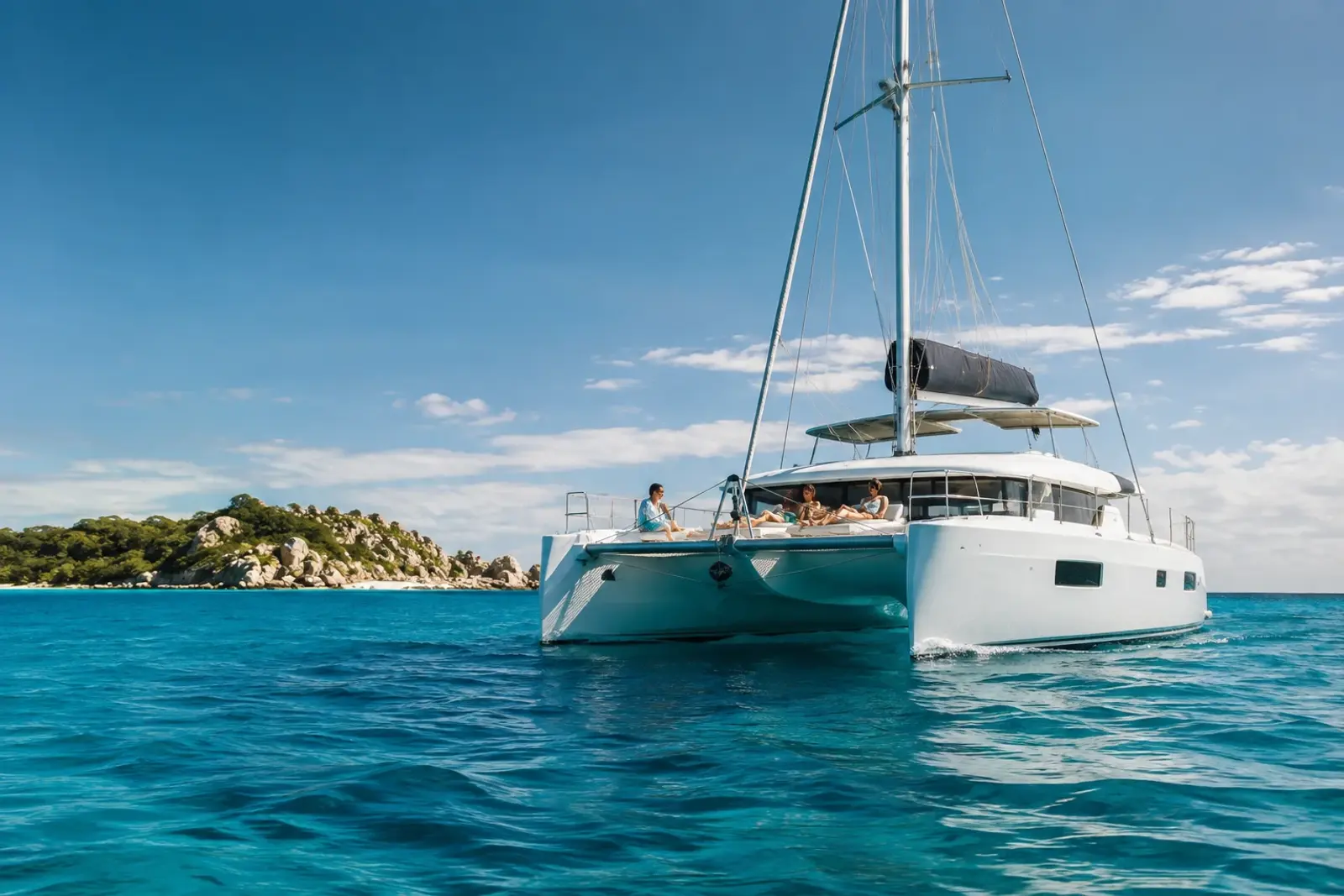
A crewed yacht charter is a private yacht rental that includes a professional crew who handle all navigation, cooking, cleaning, and guest services. Unlike bareboat charters where you captain the vessel yourself, a crewed charter means you're purely a passenger enjoying a fully customized luxury vacation on the water. The crew typically includes a captain, chef, and additional staff depending on the yacht's size.
This arrangement transforms a yacht into your private floating resort. You specify your preferences for destinations, meals, and activities, and the crew executes everything while you relax. Whether you're exploring Caribbean islands or cruising the Mediterranean coast, crewed yacht charters offer unmatched privacy and personalized service that conventional resorts and cruise ships cannot match. The experience combines the freedom of private travel with hotel-level amenities and the expertise of maritime professionals managing every detail.
What makes a crewed yacht charter different from other yacht rentals?
A crewed yacht charter places you as a guest rather than an operator. The crew assumes all responsibility for sailing, maintenance, provisioning, and safety, while you focus entirely on enjoying your vacation. This contrasts sharply with bareboat charters, where you rent the yacht without crew and must possess sailing certifications and navigation skills to captain the vessel yourself.
Skippered charters fall somewhere between these two models. You hire a captain to handle navigation, but you're still responsible for provisioning food, managing the itinerary, and often assisting with basic boat operations.
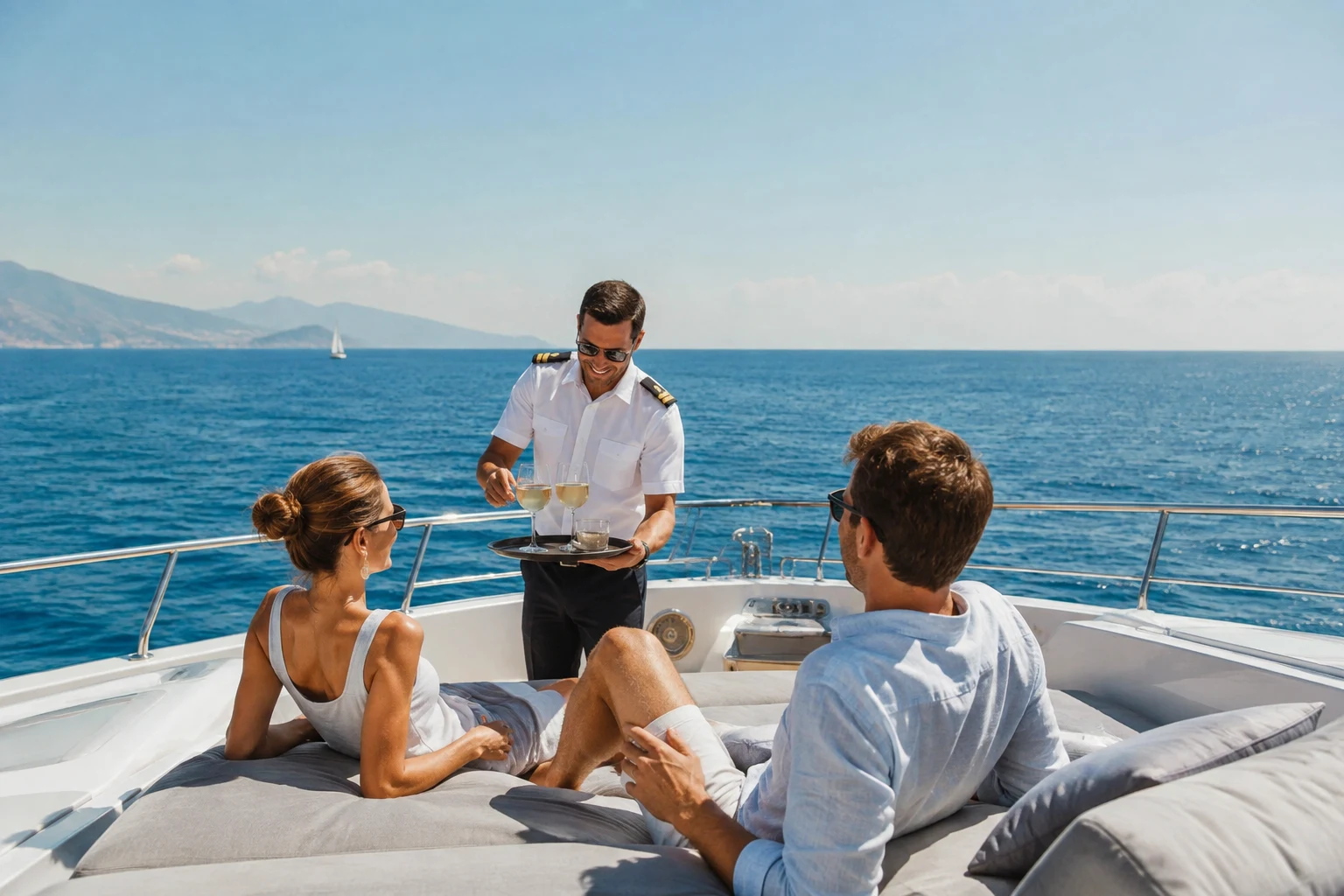
Crewed charters offer the highest service level. The crew not only operates the yacht but also prepares gourmet meals tailored to your dietary preferences, cleans cabins and common areas daily, serves drinks, manages water sports equipment, and handles all docking procedures. You never touch a line or worry about weather routing.
This full-service model means you can charter without any sailing experience. Families with children, groups celebrating special occasions, and travelers seeking pure relaxation commonly choose crewed charters because the professional crew handles complexities that would otherwise require maritime knowledge or physical effort.
What Is a Crewed Yacht Charter?
| Feature | Bareboat Charter | Skippered Charter | Crewed Yacht Charter |
|---|---|---|---|
| Crew | None (you are the captain and crew) | Professional skipper provided | Professional captain, chef, steward(s), and other crew as needed |
| Services | You handle all sailing, navigation, cooking, cleaning, and maintenance. | Skipper handles navigation and sailing; you manage other tasks. | All services provided: sailing, navigation, gourmet meals, cleaning, water sports, personalized itinerary. |
| Requirements | Valid sailing license/experience, navigation skills, boat handling proficiency. | Some sailing experience recommended, but not strictly required. | No sailing experience or licenses required; simply relax and enjoy. |
| Experience | Full independence, hands-on sailing, complete control over itinerary. | Learn from a professional, relax more, still involved in decision-making. | Ultimate luxury, pampering, stress-free, bespoke itinerary, all needs catered to. |
A crewed yacht charter is a fully staffed private yacht rental where professional crew handle all navigation, meals, cleaning, and guest services while you vacation at sea. You board as a passenger, not a sailor, with zero responsibility for operating the vessel or maintaining it.
This differs from bareboat charters, where you captain the yacht yourself and must hold sailing certifications. Skippered charters sit in between: you hire a captain to navigate, but handle your own provisioning and housekeeping.
Types of Yachts Available
Sailing yachts range from 50 to 200 feet, offering traditional cruising under sail with smaller crew teams of two to four people. Catamarans provide more deck space and stability than monohulls, popular for families seeking shallow-water access to secluded anchorages.
Motor yachts prioritize speed and interior volume, typically 60 to 150 feet, with crew sizes matching guest capacity. Superyachts above 100 feet carry full hotel-style crews including chefs, stewards, deckhands, and engineers.
The Onboard Experience
Your crew customizes daily itineraries around your preferences: which islands to visit, when to anchor for swimming, what to eat. Meals are prepared fresh onboard by a private chef. Crew handle water sports equipment setup, cabin turndown, and shore excursion logistics while maintaining complete discretion about your privacy.
How Do Crewed Yacht Charters Work?
Booking starts with a yacht charter company or broker who matches guests to available yachts based on destination, dates, group size, and budget. Once a yacht is selected, guests complete a preference sheet detailing dietary restrictions, favorite foods, drink preferences, activity interests, and any special occasions or mobility needs. This form guides the crew's preparation weeks before embarkation.
The crew uses guest input to stock provisions, plan a draft itinerary, and arrange equipment or permits for requested activities like diving or fishing. Guests can adjust plans during the trip, the itinerary remains flexible throughout the charter.
Charter durations typically range from seven days to two weeks, though shorter trips of three to five days are available in some regions. A typical week follows a rhythm of morning cruising to a new anchorage, afternoon water sports or beach time, and evenings at anchor with dinner onboard or ashore.
The captain monitors weather and coordinates daily movements, while the chef prepares three meals plus snacks, and stewards handle cleaning, service, and cabin upkeep. Guests wake to breakfast ready, return from excursions to fresh towels, and end each day without lifting a finger. The crew operates behind the scenes to maintain this seamless flow while remaining available for requests.
Who Makes Up the Crew? Roles and Duties Explained
A private yacht charter with captain and crew typically includes four to six professionals, each with specialized duties. The captain commands the vessel, navigates, monitors weather, and ensures all safety protocols are followed. On larger yachts, an engineer maintains propulsion systems, generators, water makers, and electrical equipment.
The chef on yacht charter prepares all meals from scratch using fresh, locally sourced ingredients tailored to guest preferences. Menus range from casual breakfasts to multi-course dinners, with dietary restrictions accommodated.
Stewards or stewardesses handle guest services: serving meals, cleaning cabins, managing laundry, setting up water sports equipment, and coordinating shore excursions. They anticipate needs before guests ask.
Deckhands assist with docking, anchoring, launching tenders, maintaining deck spaces, and teaching guests how to use snorkel gear, paddleboards, or diving equipment.
Crew work in coordinated shifts to provide round-the-clock safety oversight while remaining unobtrusive during guest leisure time. Their training emphasizes hospitality alongside technical competence, ensuring both comfort and security throughout the voyage.
What's Included in a Luxury Yacht Charter with Crew?
| Feature | All-Inclusive Charter | APA (Advance Provisioning Allowance) Charter |
|---|---|---|
| Food & Beverages | Typically included (gourmet meals, premium drinks) | Purchased separately using APA funds |
| Fuel | Often included for a set number of hours/miles | Purchased separately using APA funds |
| Dockage Fees | Sometimes included in base price | Purchased separately using APA funds |
| Water Toys | Usually included (snorkeling, paddleboards, etc.) | Often included, but fuel for motorized toys (jet skis) may be APA |
| Crew Gratuity | Not included, typically 15-20% of charter fee | Not included, typically 15-20% of charter fee |
| Special Requests | Limited flexibility without additional charges | Highly customizable, covered by APA funds |
| Onboard Activities | Included (e.g., fishing gear, entertainment systems) | Included (e.g., fishing gear, entertainment systems) |
| Customization | Less flexible, pre-set packages | Highly customizable, tailored to guest preferences |
| Transparency | Clear upfront cost | Detailed breakdown of expenses post-charter |
A luxury yacht charter with crew covers the vessel, professional staff, fuel for cruising within the agreed itinerary, water sports equipment, housekeeping, and guest services. Most charters also include onboard meals, beverages, and standard amenities. What falls outside this baseline depends on whether the charter operates as all-inclusive or plus-expenses.
All-inclusive yacht charter explained: one upfront price covers everything, including premium alcohol, specialty ingredients, marina fees, and fuel for water toys. Plus-expenses charters use an Advance Provisioning Allowance (APA), typically 25-35% of the charter fee, which the crew draws from to cover food, alcohol, fuel beyond standard cruising, dockage, and special requests. Unused APA funds return to guests; overages require additional payment.
Meals are tailored to the preference sheet. A typical day includes fresh pastries and tropical fruit at breakfast, grilled seafood or charcuterie boards for lunch, and multi-course dinners with wine pairings. Chefs accommodate dietary restrictions and prepare themed dinners on request.
Stewards refresh cabins daily, handle laundry, set up beach picnics, and coordinate shore excursions. Service remains discreet, with crew anticipating needs without hovering.
Is a crewed yacht charter all-inclusive?
All-inclusive yacht charters bundle the base rate, fuel, food, premium beverages, dockage fees, and water sports into one upfront price with no additional charges during the voyage. This pricing model is most common on Caribbean-based catamarans and smaller motor yachts under 80 feet, particularly in the British Virgin Islands, the Bahamas, and the Mediterranean during peak season. Larger superyachts and most Mediterranean charters typically operate on the plus-expenses model with an APA instead.
How Much Does a Crewed Yacht Charter Cost?
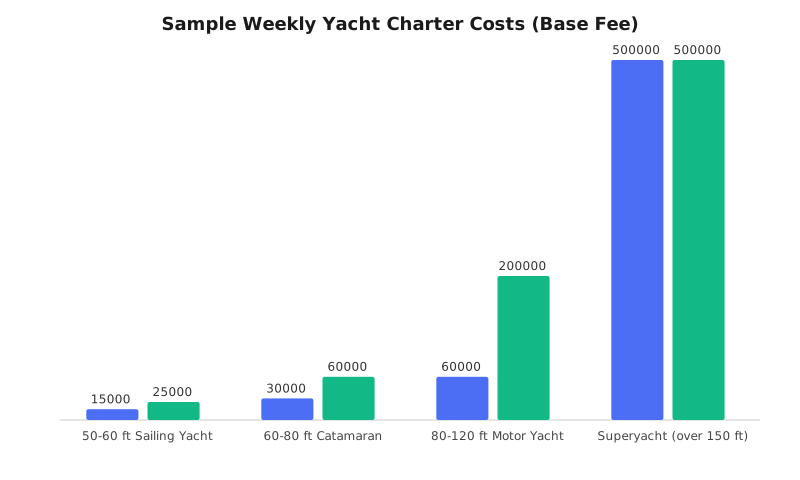
Yacht charter cost varies widely based on vessel type, season, and destination. A 50-60 ft sailing yacht with a two-person crew starts around $15,000-$25,000 per week in the Caribbean during low season. Mid-range catamarans (60-80 ft) typically run $30,000-$60,000 weekly, while motor yachts (80-120 ft) range from $60,000 to $200,000+ per week. Superyachts over 150 ft can exceed $500,000 weekly during peak Mediterranean summer season.
Yacht size is the primary cost driver, as larger vessels require more crew and higher operating expenses. Destination matters: the Mediterranean commands premium rates June through September, while the Caribbean peaks December through April. Off-season bookings can save 20-30%.
The APA (Advance Provisioning Allowance) covers variable expenses not included in the base charter fee. Guests pay 25-35% of the charter fee upfront, which the crew uses for fuel beyond the standard cruising allowance, food, alcohol, dockage, and special requests like premium wines or helicopter transfers. The captain provides an expense report at charter's end; unused funds are refunded, overages require additional payment.
Yacht charter insurance is not always mandatory but recommended, covering trip cancellation and medical emergencies. Some destinations impose cruising taxes or VAT (up to 20% in parts of Europe). For a fully crewed yacht vacation, calculate total cost as base fee plus APA, tips, and any applicable taxes.
Top Destinations for Crewed Yacht Charters Worldwide
| Popular Destinations | Best Season | Typical Itinerary Length | Highlights |
|---|---|---|---|
| Mediterranean (Greece, Croatia, Italy, France) | May - October | 7-14 days | Ancient ruins, charming villages, vibrant nightlife, exquisite cuisine, stunning coastlines |
| Caribbean (British Virgin Islands, St. Barts, St. Lucia) | November - July | 7-10 days | Pristine beaches, crystal-clear waters, vibrant coral reefs, laid-back atmosphere, watersports |
| Bahamas | November - July | 7-10 days | Shallow turquoise waters, swimming pigs, secluded cays, excellent fishing, vibrant marine life |
| South Pacific (French Polynesia, Fiji) | May - October | 10-14 days | Overwater bungalows, volcanic peaks, lush rainforests, rich Polynesian culture, incredible diving |
| Southeast Asia (Thailand, Indonesia) | November - April | 7-14 days | Limestone karsts, ancient temples, bustling markets, diverse marine life, exotic flavors |
| Galapagos Islands | Year-round (peak June-Sept, Dec-Jan) | 7-10 days | Unique wildlife encounters, volcanic landscapes, Darwin's finches, incredible biodiversity |
| Alaska | June - September | 7-10 days | Glacial fjords, abundant wildlife (whales, bears), pristine wilderness, kayaking, hiking |
| New England (USA) | June - September | 7-10 days | Historic lighthouses, charming coastal towns, fresh seafood, vibrant fall foliage (late season) |
The Caribbean offers 300+ islands across turquoise waters, with the British Virgin Islands, St. Martin, and the Grenadines serving as top yacht charter destinations. Warm trade winds, calm seas, and short passages between islands make this region ideal for first-time charterers. Peak season runs December through April, when water temperatures stay near 80°F and tropical storms are rare.
The Mediterranean draws superyacht charters to the French Riviera, Greek islands, and Croatian coast from May through October. Each sub-region delivers distinct experiences: Provence's lavish beach clubs, Croatia's medieval walled towns, and Greece's archaeological sites accessible only by water.
The South Pacific includes Tahiti, Fiji, and Tonga, where remote anchorages and coral reefs define the yacht charter itinerary. May to October offers dry weather and visibility exceeding 100 feet for diving.
Southeast Asia's Thailand, Indonesia, and Myanmar provide year-round chartering, with November through March being optimal in most areas. Limestone karsts, jungle-fringed beaches, and cultural sites create unique superyacht charter routes.
Americas destinations span Alaska's Inside Passage (May-September), New England (June-September), and the Pacific Northwest, offering wildlife and coastal scenery absent from tropical regions.
Benefits of a Crewed Yacht Charter Experience
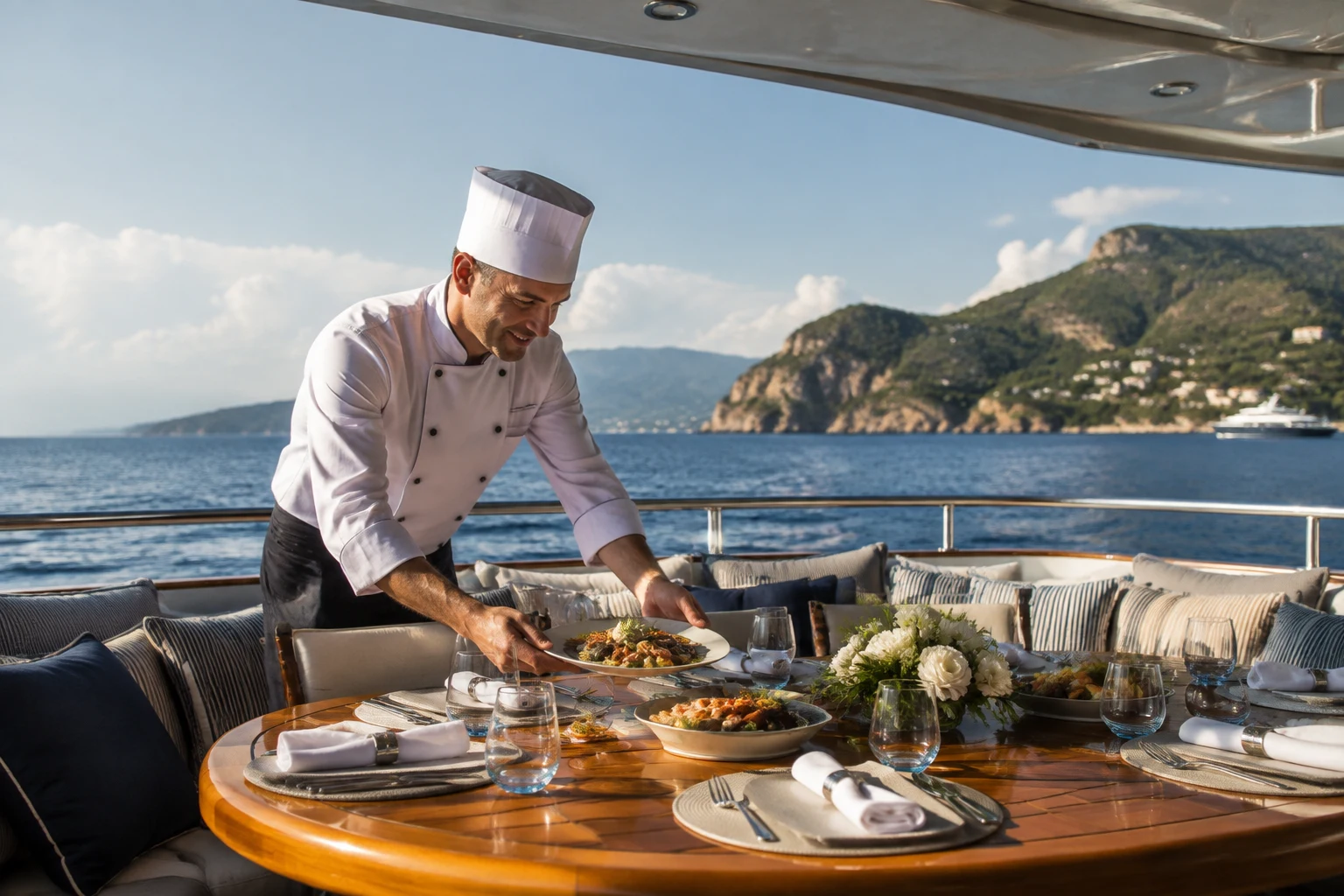
A crewed yacht charter delivers personalized service impossible in hotels or cruise ships. Your crew tailors every detail to your preferences, from meal times and menus to daily itineraries and activity schedules, all while maintaining complete privacy without shared public spaces or crowds.
The luxury travel experiences include professional chefs preparing restaurant-quality meals onboard, premium water sports equipment with expert instruction, and interior accommodations rivaling five-star resorts. Unlike land-based properties, your floating accommodation moves with you to new destinations each day.
Safety and peace of mind come standard. Certified captains handle navigation and weather decisions, engineers maintain all systems, and crew manage emergencies with professional training. You're a passenger, not responsible for vessel operation or safety protocols.
Crewed charters access remote anchorages unreachable by cruise ships or resorts. Moor in secluded bays, explore uninhabited islands, and visit small coastal villages without tourist infrastructure. Crew arrange unique activities like guided snorkeling in protected reefs, sunset beach barbecues on private islands, and water sports in pristine locations.
Compared to resorts, you avoid fixed locations and crowds. Compared to bareboat charters, you gain expertise and full service. Compared to cruises, you control the itinerary entirely.
How to choose the right crewed yacht charter
Start by defining group size and budget, which determine available yacht options. A party of four requires different accommodations than twelve guests, and charter fees should align with your overall vacation budget including APA, gratuity, and travel costs.
Match yacht type to your priorities. Sailing yachts suit travelers seeking traditional cruising, while motor yachts offer speed and spacious interiors. Destination choice depends on season and desired experience, whether that's Caribbean island-hopping or Mediterranean culture.
Evaluate yacht charter companies by reviewing their fleet portfolios, client testimonials, and industry memberships like MYBA or CYBA. Established brokers provide contracts, arrange surveys, and verify crew credentials.
Request a detailed charter agreement outlining terms, payment schedules, and liability clauses. Yacht charter insurance protects against trip cancellations, medical emergencies, and weather disruptions. Review coverage limits and exclusions before finalizing your vacation planning.
Essential Rules, Safety, and Seasonality: What to Know Before You Go
The 12 person rule on a yacht caps overnight guests at 12 for yachts under 3,000 gross tons, a maritime safety regulation enforced internationally. Yachts carrying more than 12 passengers require commercial vessel certification with stricter safety standards and crew licensing. This rule shapes yacht design and charter group sizes.
Safety procedures follow strict maritime standards. All crew hold STCW (Standards of Training, Certification and Watchkeeping) certifications covering firefighting, first aid, and emergency response. Yachts carry life rafts, EPIRBs (emergency position-indicating radio beacons), and conduct safety briefings on arrival. Larger yachts undergo annual inspections and maintain detailed safety management systems.
Crew seasonality drives availability. Caribbean charters peak December through April, Mediterranean May through October. Crew often work both seasons, repositioning yachts between regions. Off-season rates drop 15-30%, but weather and crew availability vary.
Yacht charter insurance covers trip cancellation, medical emergencies, and liability. Standard travel insurance rarely covers chartered vessels. Dedicated policies cost 5-7% of charter fees and protect against unexpected cancellations, weather disruptions, or medical evacuations at sea.
Frequently Asked Questions
What are the three types of yacht charters?
Yacht charters come in three main types: bareboat (self-skippered, no crew), skippered (captain provided, guests handle other tasks), and crewed (full professional staff). Bareboat requires sailing experience and certification. Skippered offers a middle ground with navigation covered but limited service. Crewed charters provide complete hospitality with captain, chef, anddeckhands managing all operations.
How do charter yacht crews get paid?
Crew salaries are built into the charter fee you pay upfront, covering their base wages for the duration of your trip. Gratuities are separate and customary, typically ranging from 10-20% of the charter cost, paid directly to the crew at the end. This tip is divided among all crew members based on their roles and performance.
What kind of food is served on a crewed yacht charter?
A professional chef prepares fully customized menus based on your dietary preferences, allergies, and favorite cuisines before you board. Expect gourmet meals ranging from French haute cuisine to fresh local seafood, with snacks and beverages available throughout the day. Most chefs accommodate special requests, from vegan dishes to children's favorites, adjusting menus during the charter.
Where can I go on a crewed yacht charter?
The Caribbean and Mediterranean are the most popular cruising grounds, with the South Pacific, Southeast Asia, and coastal Americas also widely available. Your itinerary within these regions is fully customizable, from island-hopping in the Bahamas to exploring Greek islands or French Polynesia. Charter availability varies by season, with yachts relocating between regions.
What is the difference between a bareboat and crewed yacht charter?
Bareboat charters require you to captain, navigate, cook, and maintain the yacht yourself, demanding sailing certification and significant experience. Crewed charters provide a professional captain, chef, anddeckhands who handle all vessel operations, meal preparation, water sports, and guest services. The latter offers a hotel-like experience on the water with zero responsibilities for guests.
A crewed yacht charter delivers a level of personalization and freedom that few vacation formats can match. Your next step is deciding where you want to go and when, then reaching out to a reputable charter broker to discuss your group size, budget, and yacht preferences. Start the conversation 9-12 months before your intended travel dates if you're targeting peak season in the Caribbean or Mediterranean. Request sample itineraries, crew profiles, and detailed breakdowns of what's included in the charter fee versus the APA. The preference sheet you'll complete isn't just paperwork — it's the blueprint for your trip, so be specific about what matters most to your group.