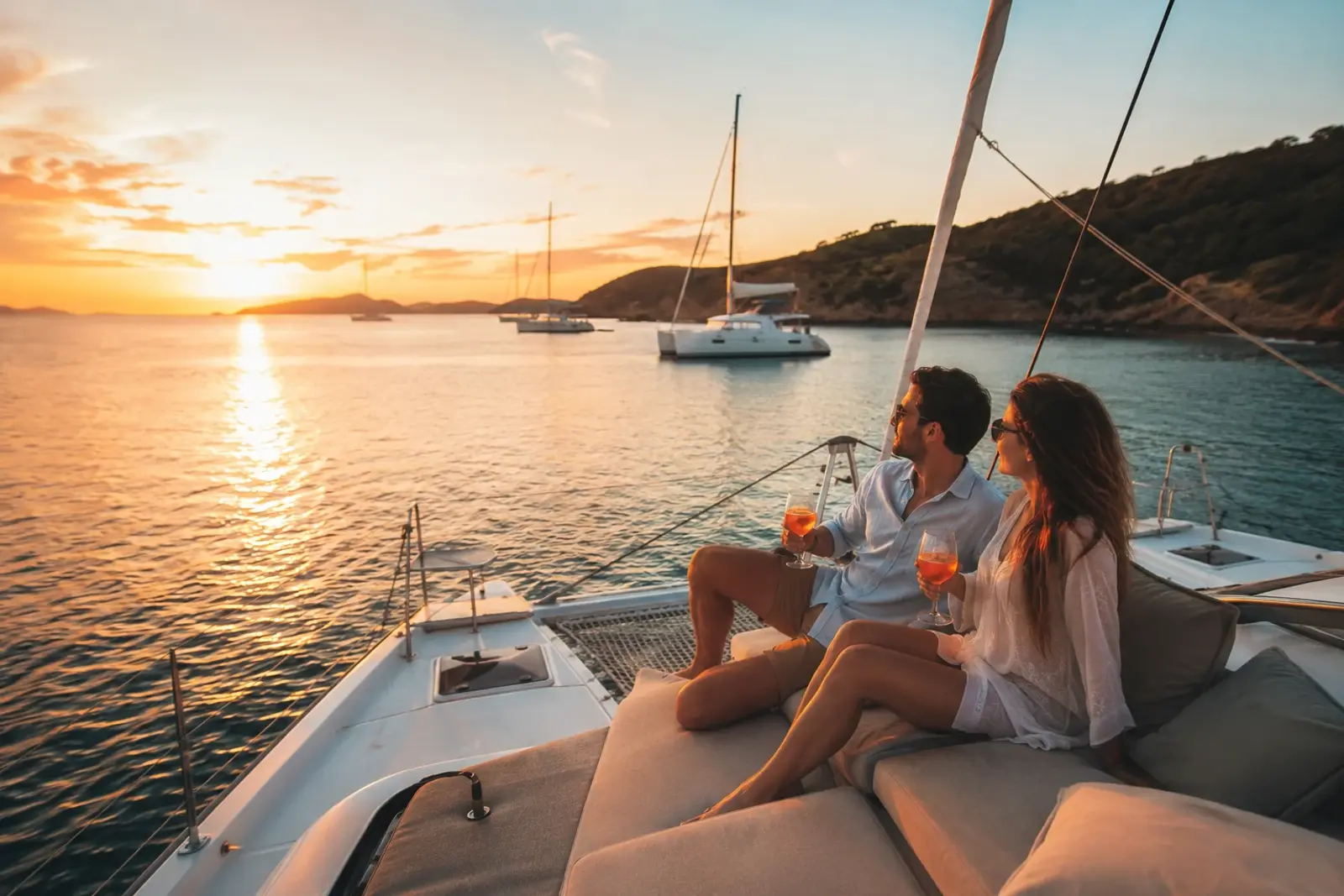
The best yacht for couples is a sailing catamaran or monohull between 34 and 45 feet, offering easy handling for two, private cabins, and romantic amenities. Catamarans provide extra space and stability, while monohulls deliver classic sailing charm. Choose based on your comfort, sailing experience, and desired destinations.
When you narrow the search for the best yacht for couples, the decision comes down to how you want to spend your time aboard. A couple's charter should balance privacy, manageable sailing, and comfort without turning every maneuver into a two-person workout. The yacht types for couples that work best keep the cockpit, galley, and helm close together, so one person can sail while the other relaxes.
Size matters as much as layout. A 34-footer is forgiving to handle but can feel tight for a week-long trip. A 45-footer offers generous space but demands more skill at the dock and in stronger winds. The right boat fits your experience level, not just your budget.
What Makes a Yacht Ideal for Couples?
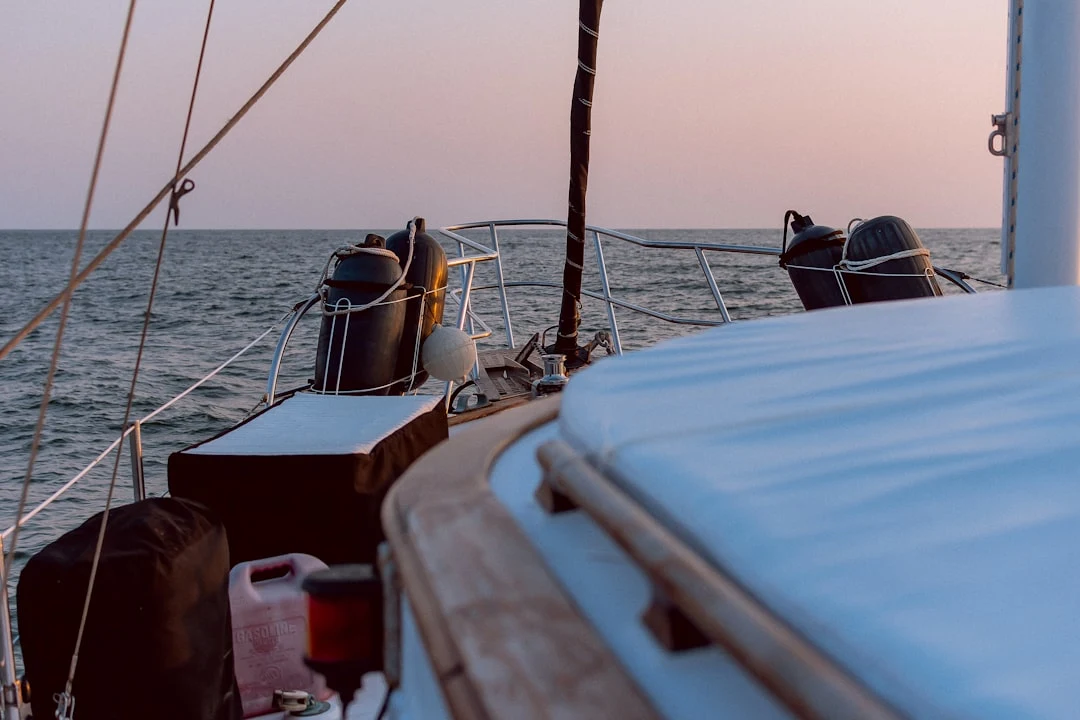
A yacht works well for a couple when it lets two people run the boat and live aboard without friction. The best yacht for couples balances privacy, easy two-person handling, comfort, and a romantic atmosphere in a way a family or group boat does not need to.
Groups need berths and social spaces; couples need the opposite. A couple's charter should minimize crew work so the focus stays on each other. That means a layout where the cockpit, galley, and helm are close together, so one person can sail while the other stays nearby. It also means a boat that sails well shorthanded, with lines led aft to the helm and manageable sail sizes.
Comfort matters more on a two-person charter because there is no one to share the load. A proper double berth rather than V-berth wedges, a real shower, and good ventilation turn a boat from a campsite into a retreat.
Yacht features for couples should favor private spaces over communal ones. A forward cabin with a door that closes, a cockpit table for two, and a swim platform for evening dips all add to the romance. For many couples, yacht amenities for couples like a deck shower, cockpit cushions, and a simple dodger matter more than extra cabins.
The ideal couples yacht is one you can sail, anchor, and dock with two people, then relax aboard without feeling cramped or constantly working the boat.
Catamaran vs Monohull: Which Is Best for Couples?
| Feature | Catamaran | Monohull |
|---|---|---|
| Privacy | Excellent (separate hulls) | Good (fore/aft cabins) |
| Space | Ample (deck/interior) | Moderate (interior) |
| Handling | Stable, easy | Responsive, heeling |
| Cost | Higher purchase/dock | Lower purchase/dock |
| Romance Factor | Open, luxurious | Classic, intimate |
The choice between a catamaran and a monohull for a couples charter comes down to how you want to spend your time aboard. Catamarans prioritize space and comfort at anchor, while monohulls deliver a more traditional sailing experience. There is no universally correct answer, only the right fit for your sailing style, destination, and comfort priorities.
Catamaran advantages for couples
Catamarans offer a level of space that monohulls cannot match. A 40-foot catamaran provides roughly the same interior volume as a 50-foot monohull, with the added benefit of a dedicated hull for each person if you want separate sleeping quarters.
Stability is the defining catamaran advantage. Because the bridgedeck sits between two hulls, the boat does not heel significantly under sail, which makes moving around, cooking, and sleeping noticeably easier. This is especially valuable for a partner prone to seasickness or uneasy with a boat leaning at 20 degrees.
Privacy is another strong draw. The two hulls create separate cabins with their own heads, so each partner can have their own bathroom and dressing area. The large saloon and cockpit also function as separate lounging zones, meaning one person can read forward while the other naps in the cockpit without disturbance.
Monohull advantages for couples
A monohull delivers the classic sailing experience many couples seek. The heel, the motion through the water, and the feel of a single hull cutting through waves connect you more directly to the sea. For sailing purists, this is the point of chartering in the first place.
Monohulls also create a more intimate environment. The saloon, galley, and cockpit are closer together, so you naturally share space rather than retreating to separate ends of the boat. A 40-foot monohull is also significantly easier to moor in tight Mediterranean harbors than a 40-foot catamaran of similar length, since it has a narrower beam and a single keel.
Which should you choose?
Your experience level matters most. If you have limited sailing time or one partner is hesitant, a catamaran's stability and forgiving handling make it the safer and more relaxing choice. If you both have solid sailing backgrounds and want the authentic feel of a boat heeling under sail, a monohull will reward you.
Destination also plays a role. In the British Virgin Islands or the Bahamas, where anchorages are open and wind is consistent, catamarans excel at comfortable at-anchor living. In the Mediterranean, where marinas are tight and mooring stern-to is common, a monohull's easier handling makes every port stop less stressful.
For a romantic getaway, the deciding factor is usually how you define romance: a stable, spacious platform for relaxing together, or a lean and lively boat that puts the sailing itself at the center of the experience. Both are valid, and both make excellent yacht types for couples.
What Size Yacht Is Best for Two People?
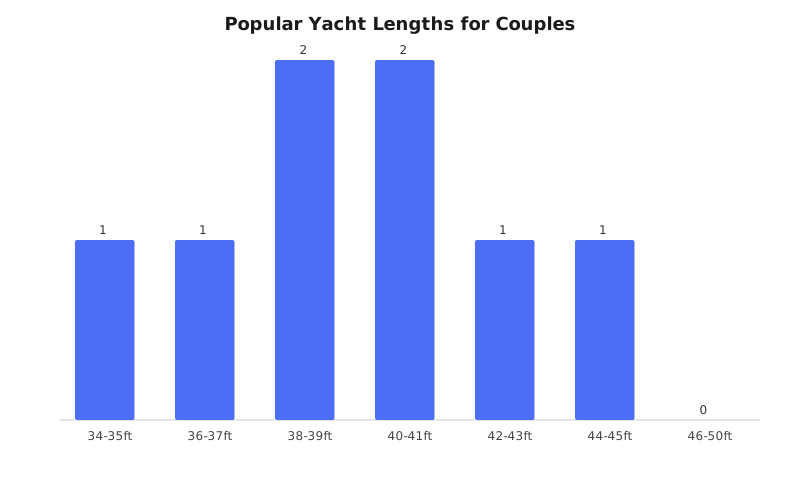
For most couples, the sweet spot is a yacht between 34 and 45 feet. This size range delivers enough interior volume for comfortable living aboard without pushing the boat past what two people can manage at the dock, at anchor, and under sail.
The key trade-off is privacy and comfort against ease of handling. A 34-footer is easier to manage but may feel cramped after a week, especially if it lacks a proper separate shower. A 45-footer gives you generous space but starts to test your limits when docking in tight marinas or handling larger sails in a blow.
The ideal size also depends on your experience level. A couple with strong sailing skills can comfortably handle a 45-foot monohull or catamaran, while a less experienced pair will find a 36-to-40-foot boat far less intimidating when the wind picks up.
Popular models in this sweet spot include the Bavaria 38, Beneteau Oceanis 40, and the Lagoon 40 catamaran, all of which are common charter options designed with two couples or a single couple and guests in mind.
How big of a yacht can two people handle is ultimately a question of your skill, not the boat's length. A well-designed 42-footer with all lines led aft to the cockpit and a furling mainsail is far easier for two than an older 38-footer with a traditional mainsail that requires someone on the mast.
Essential Features and Amenities for a Romantic Couples’ Yacht
The must-have features for a couples' yacht start with a proper master cabin. You want a double berth you can actually move around, not a V-berth that forces one partner to climb over the other. An en-suite bathroom (a "head" in sailing terms) attached directly to the master cabin is a significant comfort upgrade. Sharing a single head with the crew or guests erodes the privacy that makes a charter feel romantic.
The cockpit is where you will live on a warm-weather charter, so it needs a shaded area with a table for two. Sunbathing space matters too: a forward trampoline on a catamaran or a large coachroof cushion on a monohull gives you a place to lie out without fighting for deck space. A swim platform is non-negotiable for easy water access, especially after anchoring in a quiet bay.
Air conditioning is the single most load-bearing luxury on a tropical charter. It transforms a sticky, sleepless night into a restful one and makes the interior bearable for afternoon heat. Wi-Fi is a close second, not just for streaming but for weather forecasts and keeping in touch with the charter base. Water toys, from paddleboards to a simple snorkel set, add hours of shared activity without any sailing effort.
Interior design touches that enhance romance are subtle: warm LED lighting instead of harsh fluorescents, a cushioned settee deep enough to curl up on, and a galley with a real two-burner stove and a proper fridge. A well-equipped galley means you can cook a decent meal at anchor rather than eating every dinner ashore.
Privacy is the final piece. On a two-person charter, the layout should keep the master cabin separate from the companionway traffic, and if you have a skipper or crew, their quarters need a physical door and separate head. Sound insulation between cabins and the engine compartment matters more than most couples realize; a noisy generator or a creaking bulkhead can ruin the mood at anchor.
Bareboat vs Crewed Charter: What’s Better for Couples?
| Feature | Bareboat Charter | Crewed Charter |
|---|---|---|
| Privacy | High | Moderate |
| Cost | Lower | Higher |
| Skill Required | High | None |
| Romance Factor | Adventure, Intimacy | Pampering, Relaxation |
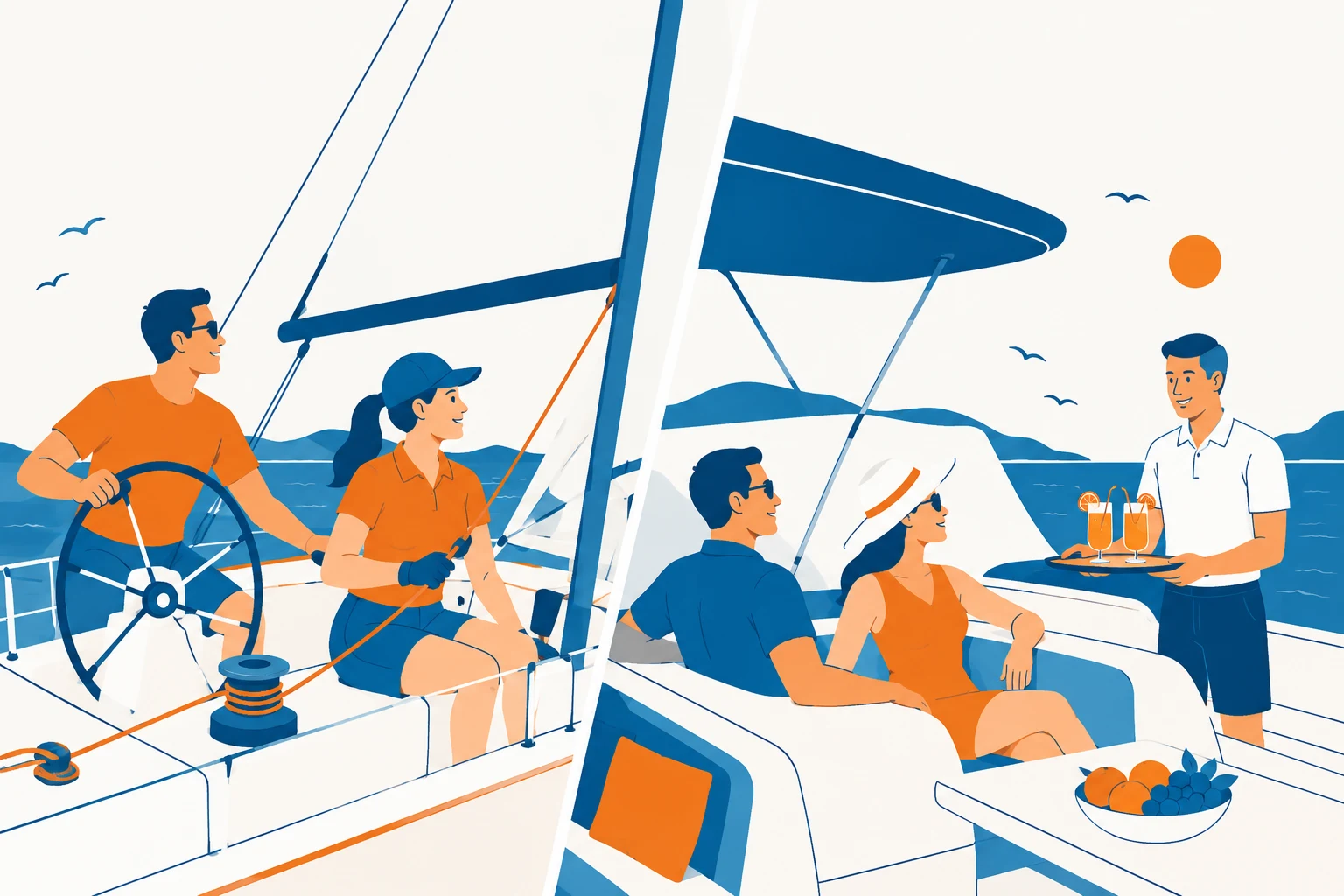
The core difference is who does the work. A bareboat charter puts you and your partner in full control of sailing, navigation, anchoring, and docking, while a crewed charter hands those duties to a skipper (and often a cook or hostess). Your choice comes down to whether you want a sailing adventure or a floating hotel.
The case for bareboat
Bareboat charters offer total privacy and autonomy. You set the itinerary, choose the anchorages, and never share your boat with strangers. For couples who sail regularly, handling a 40-foot yacht together is part of the appeal, and the sense of accomplishment after a tricky mooring adds to the trip.
The cost is the main advantage. Bareboat rates typically run 30 to 50 percent less than a comparable crewed charter, and you control food and dockage spending. The tradeoff is that all the work falls on you. If one of you is a less confident sailor, the stress of docking in a crosswind or anchoring in a crowded bay can strain the romance.
The case for crewed
A crewed charter is the better choice when relaxation is the goal. A skipper handles the sailing, so you can focus on each other, the scenery, and the swim stops. Many couples find that not having to plan every leg of the journey is what makes the trip feel like a true vacation.
Crewed charters also open up destinations that are harder to sail bareboat. You can cover more distance in a day, and the crew's local knowledge gets you into the best anchorages. The downsides are the higher price, the need to tip the crew, and the reduced privacy of having staff on board, though good crews are skilled at giving you space.
How to decide
Choose bareboat if you both sail regularly and enjoy the hands-on challenge. Choose crewed if you want a romantic escape where neither of you has to think about the boat, or if your experience levels are mismatched.
The deciding factor is usually the trip's purpose. A week of island-hopping with a skipper is a honeymoon. A week of honing your sailing skills together is a bareboat adventure. Both are valid yacht charter for couples options, but they deliver very different experiences.
How Much Does It Cost to Charter a Yacht for Two?
| Yacht Type | Model | Destination | Low Season (USD/week) | High Season (USD/week) |
|---|---|---|---|---|
| Catamaran | Lagoon 40 | BVI | 6,000 | 12,000 |
| Catamaran | Bali 4.1 | Greece | 5,500 | 11,000 |
| Catamaran | Fountaine Pajot Lucia 40 | Croatia | 5,800 | 11,500 |
| Monohull | Jeanneau Sun Odyssey 410 | BVI | 4,500 | 9,000 |
| Monohull | Beneteau Oceanis 40.1 | Greece | 4,200 | 8,500 |
| Monohull | Bavaria Cruiser 41 | Croatia | 4,300 | 8,800 |
A weekly bareboat charter for two typically runs $2,500 to $6,000, depending on the yacht and destination. A crewed catamaran with a skipper and cook will cost roughly $8,000 to $20,000 per week, with luxury yachts pushing well past that. The yacht cost for couples trip varies more by model and season than by the number of people on board.
Catamarans cost about 30% more than monohulls of similar length because of their wider beam and twin engines. A 40-foot monohull in the Mediterranean might rent for $3,500 weekly in shoulder season, while a comparable catamaran runs closer to $5,000. In the Caribbean, high-season winter rates can double those figures.
The main cost drivers are season, destination, yacht size, and charter type. High season in the Mediterranean runs July and August; in the Caribbean it is December through April. Booking shoulder season cuts costs by 20 to 40% while keeping most of the good weather. Add 15 to 20% for insurance, mooring fees, fuel, and provisioning.
For a luxury yacht for couples experience, a crewed catamaran in the BVI or Greece offers the best value per dollar of comfort. A yacht rental for two is cheapest in less crowded destinations like Turkey, Croatia, or the Ionian Islands, where weekly prices can undercut the French Riviera by half.
Top Romantic Yacht Charter Destinations for Couples
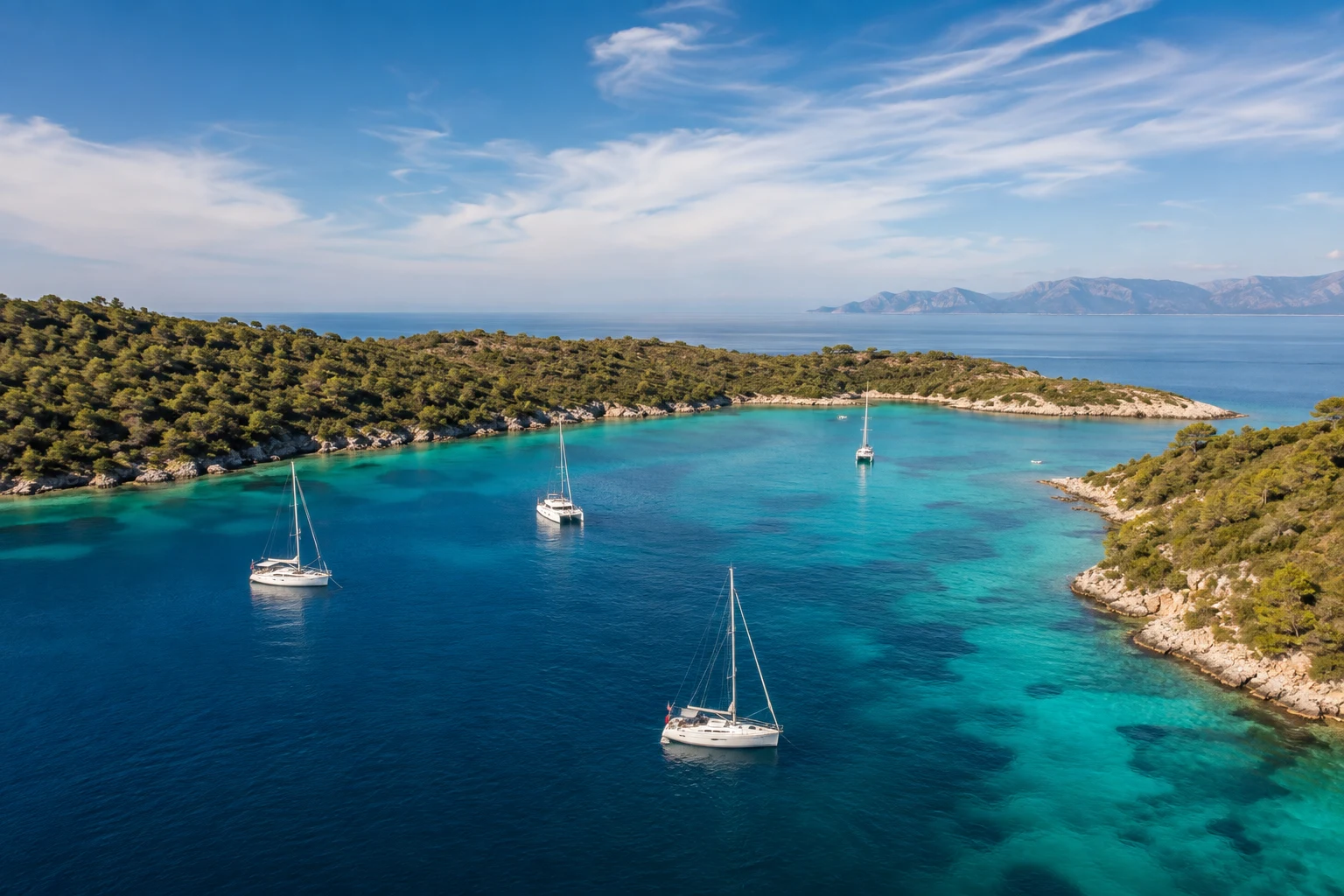
The best yacht charter destinations for couples share three traits: protected anchorages, reliable sailing breezes, and quiet spots to drop the hook away from the crowds. The Mediterranean, the Caribbean, and the South Pacific deliver all three, each with a different flavor of romance.
The British Virgin Islands is the top choice for a honeymoon yacht charter. The sailing is easy, with short hops between islands and steady trade winds, and the anchorages are sheltered. A sample week runs from Tortola to Jost Van Dyke, then on to the Baths at Virgin Gorda and a final night at Anegada's white-sand beaches.
For an anniversary yacht trip with more culture, the Greek Islands offer calmer seas and taverna-lined harbors. The Cyclades route from Athens to Mykonos and Santorini pairs sunset calderas with reliable Meltemi winds in July and August. The Ionian, by contrast, is flatter and more forgiving, ideal for less experienced couples.
The South Pacific suits couples who want true remoteness. Tahiti and Bora Bora deliver dramatic lagoons and overwater views, but passages are longer and the season is narrow, from May to October.
Timing matters more than destination. Book the Mediterranean in June or September for warm weather without the peak crowds, and the Caribbean from December to April for the driest trade-wind season. Shoulder season cuts costs and secures the most private anchorages.
Planning the Perfect Couples’ Yacht Vacation: Tips & Activities
A couples yacht vacation works best when the itinerary balances active sailing with long, unhurried stops. Plan for a mix of short passages, morning swims, and afternoons on anchor so the trip never becomes a delivery run. Anchorages that are sheltered and uncrowded are worth the extra few miles, since they deliver the privacy that defines a romantic yacht for two.
Onboard, keep the pace slow. Breakfast in the cockpit, an afternoon snorkel from the swim platform, and sundowners on the foredeck cost nothing and create the rhythm most couples actually want. Excursions like a dinghy ride to a beachside taverna, a hike to a viewpoint, or a paddleboard lap around the bay add variety without killing the relaxed mood.
For privacy on a charter, pick a boat where the master cabin sits forward and the guest cabin stays unused. Drop the anchor away from the mooring field when conditions allow, and use a cockpit table set for two rather than the large saloon table.
Pack soft-sided bags that stow under the berth, a couple of swimsuits each, reef-safe sunscreen, and layers for evening breezes. Provision for light breakfasts and one big meal a day; you will eat ashore more than you expect.
To personalize the trip, book a proposal or anniversary celebration through the base. A skipper can position the boat for sunset, and a local caterer can deliver a beach dinner. These small touches turn a standard bareboat week into a specific, memorable occasion.
Choosing the Best Yacht Model for Your Couples’ Charter
For couples, the best yacht models are those that sail well with two people and still feel roomy after a week aboard. The Lagoon 42 is a top catamaran pick, pairing a huge forward master suite with a cockpit that flows into the salon, making it easy to live indoors and out. The Bali 4.2 offers a similar layout with an open galley and a unique front lounge, which is ideal for anchoring out in places like the BVI.
On the monohull side, the Bavaria C42 and Dufour 412 are strong choices. Both have lines led aft to the helm, so one person can handle sail changes without going on deck, and both offer a private forward cabin with an en-suite head. A monohull like these suits couples who want a classic sailing feel and plan to use marinas, since the narrower beam makes mooring easier than on a catamaran.
When you talk to a charter company, ask three things: how the sails are reefed from the cockpit, whether the master cabin has a separate shower, and the boat's age and recent refit status. Ask about the tender and whether the charter includes a bimini or sprayhood for shade.
For a quick shortlist, match your profile to the boat:
Always verify the exact model and year before booking, since charter fleets update boats frequently. The right fit is one that both of you can handle comfortably, not the biggest boat available.
Frequently Asked Questions
What is the 12 person rule on a yacht?
The 12-person rule limits most yachts to carrying no more than 12 passengers, excluding crew, due to international maritime safety regulations. For couples, this is rarely relevant, but it’s good to know if inviting guests or chartering a larger yacht.
What is the 10 rule for yachts?
The '10 rule' is a guideline suggesting that the largest yacht two people can comfortably handle is around 10 meters (33 feet) in length. Modern designs and equipment now make it possible for couples to manage yachts up to 45 feet, especially with electric winches and bow thrusters.
What is the Rolls Royce of boats for couples?
For couples, the 'Rolls Royce' of sailing yachts are luxury brands like Oyster, Hallberg-Rassy, or high-end catamarans such as Lagoon SEVENTY 7. These offer exceptional comfort, craftsmanship, and privacy—ideal for a romantic getaway.
The right yacht for a couple comes down to one honest conversation about how you two want to spend the week. If you want the classic feel of heeling through a breeze, tight Mediterranean harbors, and a more intimate space, book a 34 to 45-foot monohull. If you want stability, separate hulls for privacy, and room to spread out at anchor, a 40-foot catamaran delivers roughly the interior volume of a 50-foot monohull without the motion.
Match the boat to the least experienced sailor, not the most ambitious one. A well-designed 42-footer with lines led aft is easier to handle than an older 38-footer, and a boat that exceeds your skills will turn a romantic week into a stressful one.
Start with your destination and your comfort level, then pick the model. For a first charter or an open-anchorage destination like the BVI, choose a catamaran such as the Lagoon 42 or Bali 4.2. For experienced sailors heading to the Mediterranean, the Bavaria C42 or Dufour 412 with its private forward cabin and en-suite head is a strong pick.
Book shoulder season for better prices and quieter anchorages, and tell the charter company if it is a honeymoon or anniversary. The best trip is not the biggest boat, but the one that leaves you both relaxed enough to actually enjoy each other.