Full Description & Details
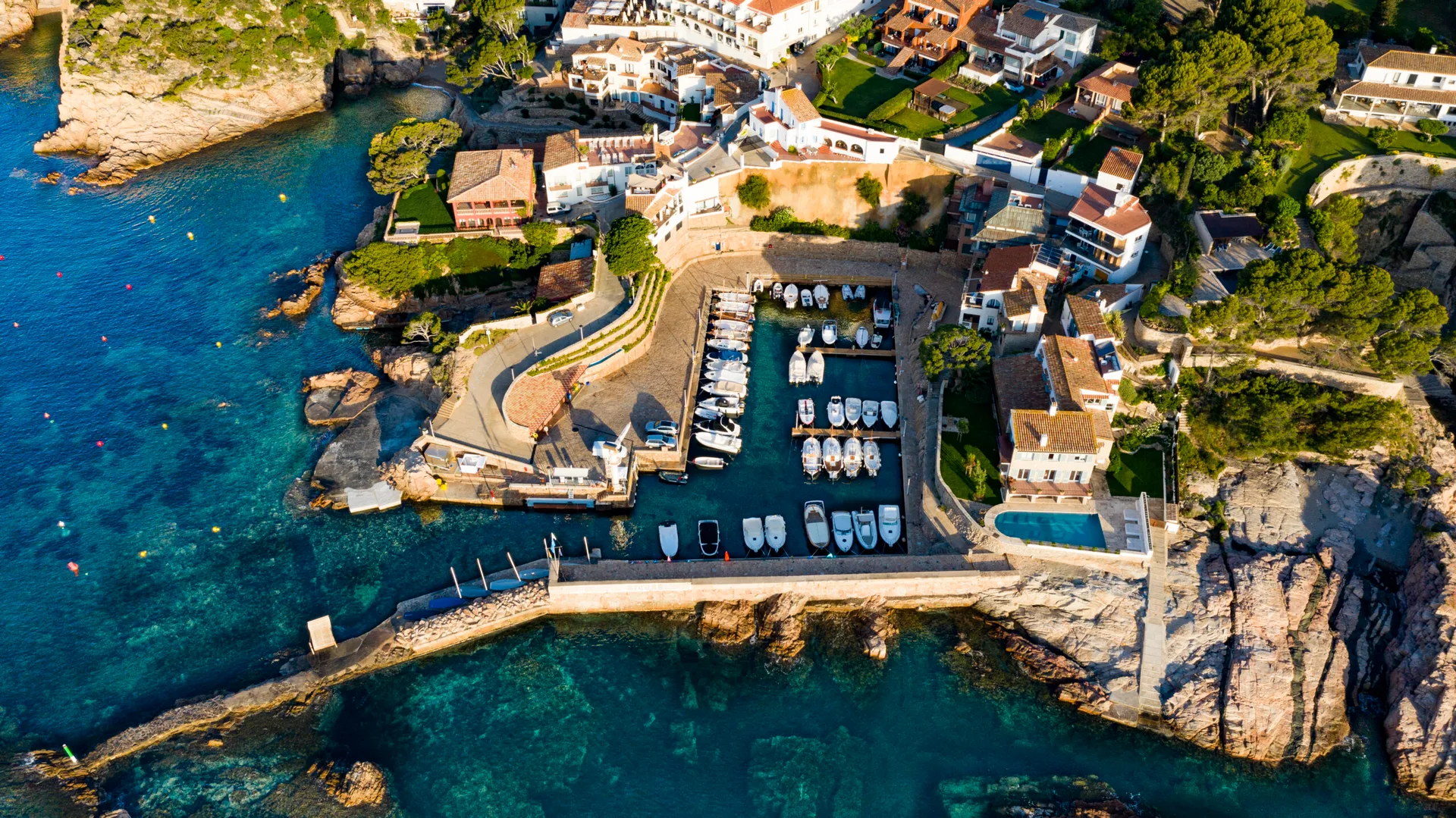
Port de Llafranc is a small marina in the village of Llafranc, part of the municipality of Palafrugell in the Lower Emporda region of Catalonia, Spain. It sits on the Costa Brava, at the left side of Llafranc beach, and is protected from the tramontana wind by Cap de Sant Sebastia. The marina was opened in 1970 and is owned by Ports de la Generalitat, managed by Club Nautic Llafranc. It is a compact harbour, with 140 berths for boats up to 15 metres in length, though one source lists a maximum length of 12 metres. The entrance channel has a depth of 5 metres, while the interior depth ranges from 2 to 4 metres, with a maximum draft of 2.65 metres. Mooring types include buoys, mooring lines, stern-to-dock, and catways. Overnight stays are allowed, and reservations are recommended during peak season.
The marina offers water and electricity at berths, showers, restrooms, a fuel station with diesel and petrol, a sewage water facility, WiFi, a boat ramp, recycling, and a lifting crane. There is no travel lift, no supermarket, and no bank on site. A bar and restaurant are available, and the village has several restaurants and cafes along the promenade, plus small shops and boutiques. The harbour master's office provides berth reservations and weather information. The marina has video surveillance and a night watchman. Basic maintenance services may be available, but there is no workshop. The nearest pharmacy is in the village, and first aid is available.
For safety, the marina is small, so larger vessels need to navigate carefully, especially during peak times. The harbour is protected from the tramontana, but other winds may affect the anchorage. The marina does not have a waiting dock, and there are no berths for transit boats, according to one source. The best season is the summer, when the village is busy with tourists. Boaters should check depth details before entering, as the interior depth is limited. The marina is part of a marine protected area, so local regulations should be followed to preserve the environment. The village offers a sandy beach, coastal walks to Calella de Palafrugell, and nearby historical sites like the San Sebastia lighthouse.
How to get there
Approach Port de Llafranc on VHF channel 9. The marina is located at approximately 41 degrees 53.57 minutes North, 3 degrees 11.80 minutes East. The entrance channel has a depth of 5 metres, but the interior depth is shallower, so check the depth carefully.
The harbour is protected from the tramontana by Cap de Sant Sebastia, but be aware of other winds. There is no waiting dock, so plan your arrival accordingly. Llafranc is a village within the municipality of Palafrugell, and the marina is at Zona Port, s/n, 17211 Llafranc, Girona.
The village is accessible by road, and the nearest airport is likely Girona-Costa Brava, though no specific airport is mentioned in the sources. The marina is at the edge of the village, with shops and restaurants within walking distance. For formalities, contact the harbour master's office by phone at 972 30 07 54 or visit the website nauticllafranc.net.
Frequently Asked Questions
What is the maximum boat length and draft at Port de Llafranc?
Port de Llafranc has berths for boats up to 15 metres in length, though one source lists a maximum of 12 metres. The maximum draft is 2.65 metres, and the interior depth ranges from 2 to 4 metres.
Does Port de Llafranc have fuel and other facilities?
Yes, Port de Llafranc has a fuel station with diesel and petrol, water, electricity, showers, restrooms, WiFi, a boat ramp, and a lifting crane. There is no travel lift or supermarket on site.
What VHF channel does Port de Llafranc use?
Port de Llafranc monitors VHF channel 9 for communications.
Can I stay overnight at Port de Llafranc?
Yes, overnight stays are allowed at Port de Llafranc. Reservations are recommended during peak season.
Is Port de Llafranc protected from the tramontana wind?
Yes, Port de Llafranc is protected from the tramontana wind by Cap de Sant Sebastia.
More sailing guides
Bareboat Sailing in Spain: Requirements and Licences
Everything you need to bareboat charter in Spain: accepted licences, flag-state rules, VHF requirements, and what to do if yours isn't accepted.
Yacht Charter Cost in Spain: What to Expect and How to Save
Real yacht charter costs in Spain by boat type, season, and region, plus what's included, hidden fees, and practical ways to cut the price.
How to Charter a Yacht in Spain: A Step-by-Step Guide
A step-by-step guide to chartering a yacht in Spain: choosing a charter type, budgeting, licences, booking, and what to expect once you're aboard.
Yacht Charter Provisioning Guide: Expert Tips & Checklists
Plan your sailing holiday like a pro with our yacht charter provisioning guide—food lists, meal planning, local market tips, and essential advice for every itinerary.

Best Yacht Type for Group Charters: How to Choose
Discover the best yacht types for group charters, from family reunions to corporate events. Compare sailing yacht options, capacity, cost, amenities, and legal limits.
What Information Is Needed to Book a Sailing Yacht Charter?
Discover the key information, documents, and requirements needed to book a sailing yacht charter. Learn what details charter companies need for a smooth reservation.
Yacht Charter Deposit Insurance: What It Covers & Why You Need It
Understand yacht charter deposit insurance: what it covers, costs, differences from security deposits, and how it protects your sailing holiday or commercial charter.
Related places
Associació Front al Mar
Club Nautic Sant Pere Pescador
Empuriabrava
Badia de Tossa
Embarcadero de Sa Tuna
Alcaidesa Marina
Alcudiamar
AMARILLA MARINA (Marina San Miguel)
Enseada do Loeiro
Formentor buoys
Peirao de Chapela